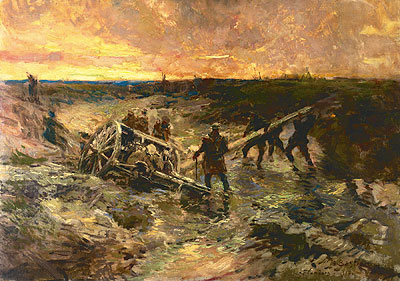
Now all roads lead to France and heavy is the tread
Of the living; but the dead returning lightly dance.
Edward Thomas, Roads

Wednesday, November 15, 2017

Remembering a Veteran: Soldat Maurice Chevalier, 31st R.I., French Army


Maurice Chevalier, 31st R.I.

On August 1914, a young Parisian star called Maurice Chevalier was stationed in Belfort, north-eastern France, with a year of national service to complete before he could return to where he really wanted to be—the stage. Chevalier had made his name as a singer and dancer in musicals as a child and hooked up with two of the era’s biggest actresses/singers, Fréhel and Mistinguett—the latter 13 years his senior when he became her 23-year-old lover and dance partner at the Folies Bergère.

But then war broke out. “That meant putting aside my stage ambitions for a while. For how long, who could guess?” he told the journalist Percy Cudlipp in 1930 when compiling his memoirs. As an infantry private, Chevalier kept in practice by entertaining his comrades. “But when we went into the trenches, there was no more singing or dancing,” he said. “Our losses were severe. One by one, my friends were killed or wounded, and I was beginning to think myself a very lucky fellow to remain unscathed.”

In the first weeks of combat a shrapnel shell exploded in Chevalier’s trench, hitting his chest, and entering his lung. “Then it was, as the English Tommies used to say, that I got my packet.” He recalls the pain, blood oozing from his mouth, and soldiers carrying him to a village behind the lines. The next day the Germans took the village: those too badly injured to move, including Chevalier, were captured.

His Prisoner of War Accommodations
Do Not Seem Too Uncomfortable 

Chevalier was in hospital at Magdeburg before being moved to Altengrabow prison camp. “That was a bitter experience for discipline was strict,” he said. He feared the injury had ruined his singing voice, but he was relieved to find he could still entertain his fellow prisoners, “just as I had done some months before, when we were all free men”. Chevalier learned to speak English in Altengrabow from Ronald Kennedy, a teacher who had been with the Durham Light Infantry. “I suppose just as I welcomed any opportunity to sing or dance, Kennedy longed for work in which he could apply his teaching gifts. He found it by starting a class at which French prisoners could learn English. Every other day we met, and made great strides. Kennedy was a wonderful teacher, and a very real friend,” Chevalier said.

But he was desperate to escape and found a way involving King Alfonso XIII of Spain, the only king of a neutral country related to both British and German royal families—and an admirer of Mistinguett. “Through the King, it had been arranged that the French and Germans should exchange prisoners who were ambulance workers,” Chevalier told Cudlipp. “So I became an ambulance worker. That is, I altered my identification papers, then claimed a mistake had been made in that I should have been sent back to France. Had the deception been discovered, my punishment would have been severe.’’
Chevalier with Mistinguett

After two years and four months as a prisoner of war, Chevalier was free. He returned to Paris and was declared unfit to carry out further war service. He was discharged and awarded the Croix de Guerre. Soon after, the theatre called—and so did Mistinguett, with whom he rekindled his stage partnership. Chevalier captured the spirit and imagination of postwar Paris like no other before, enjoying fame in London, Broadway, and Hollywood. But he didn’t put his wartime past behind him entirely. In the Second World War, he returned to Altengrabow to perform for the prisoners, liberating 10 people in return for his services. Chevalier died in Paris in 1972, aged 83.

P.S. Here is a small tidbit of interest regarding Maurice Chevalier. In the movie La Grande Illusion the actor Julien Carette plays the role of the funny guy (Cartier), always wisecracking and making jokes. Cartier is a POW who in the movie was in the music halls before the war, which is why he gets to do several musical numbers when the soldiers put on a play. 

Sources:  The Telegraph Website, 29 November 2013; Tony Langley, Photos and Anecdote

Tuesday, November 14, 2017

Border Conflict: Villistas, Carrancistas, and the Punitive Expedition 1915-1920
Reviewed by Dennis Linton


Border Conflict: Villistas, Carrancistas, and 
the Punitive Expedition 1915–1920

by Joseph A Stout, Jr.
Texas Christian University Press, 1999

Pancho Villa was not over five feet ten, with the chest and shoulders of a prizefighter and a perfect bullet-shaped head…A small black mustache serves to mask a mouth which is cruel even when it is smiling. New York Times, 1914


Border Conflict is a study of the Mexican Revolution of 1910–20. Joseph Stout's research of Mexican correspondence and field reports is insightful as it shows the conflict through the eyes of Mexican soldiers and political leaders. The book primarily covers the time frame of 1915–1920 when the United States crossed into Mexico to stop raids and incursions on the U.S.–Mexico border. Besides extensive coverage of the internal Mexican conflict, the book looks at the activities of the Punitive Expedition that President Wilson sent in to find Pancho Villa.

Pancho Villa's relationship with the United States was complicated. However, after he led 500 men across the border and attacked Columbus, New Mexico, on 9 March 1916, Wilson ordered Villa captured dead or alive. General John Pershing took command of primarily cavalry soldiers in pursuit of Villa into Mexico. When Pershing's Punitive Expedition entered Mexico, the American Army's total troop strength in the continental United States was only 24,602. Pershing had parts of four cavalry regiments, two field artillery batteries, and various horse-drawn and motorized supply units totaling 4,800 men and 4,175 animals. Pershing also had an aerial reconnaissance unit, one of the first deployments of a nascent Army Air Corps. The Punitive Expedition would be one of the last times U.S. horse cavalry regiments would see action in battle.

The author does an excellent job of setting the background of the Mexican Revolution and the rise of Venustiano Carranza to the presidency. The book looks at the internal dynamics of Carranza's Constitutionalist forces as well as its campaign against Villa. The use of Mexican sources provides essential context for understanding Villa, the Constitutionalist Army and their clashes with each other and U.S. forces in 1916 and 1917. Joseph Stout's research shows that Carranza actively sought to defeat Villa's forces, contrary to other books based solely on U.S. sources. While Carranza saw the American intrusion as a possible long-term threat, he was more worried about Villa, Zapata, and various other revolutionary factors posed to his regime survival. The Constitutionalist Army fought battles with Villa but was hampered by lack of unity of command, inconsistent provisions, and poor pay for the troops. Additionally, Villa used Pershing's incursion into Mexico as a propaganda tool asserting Carranza could not protect Mexicans from the gringo army.

Although both countries had Nationalist factions calling for war, neither Wilson nor Carranza wanted or could afford a costly and protracted conflict. Carranza still had not consolidated power in Mexico, and the possibility of entering World War I was on Wilson's mind. However, after direct negotiations failed on 9 May 1916, in El Paso, Texas, the Constitutionalist Army was ordered to oppose the U.S. forces.

While there was much posturing, there was little actual fighting between the American and Constitutionalist forces; both spent most of their energy and forces protecting against attack instead of taking offensive actions. The book does go into detail with the one significant fight between the 10th U.S. Cavalry and the Mexican Army in the battle of Carrizal, where the U.S. suffered twelve killed, ten wounded, and 24 taken prisoner. The fight at Carrizal brought both nations to the brink of war. The U.S. used the new powers of the Defense Act of 1916 to call up 100,000 citizen soldiers of the newly formed National Guard to defend the U.S.-Mexico border.

Pancho Villa with His Irregulars

While this was a big military move, the reality was that both countries made overt diplomatic gestures to avoid war. During the protracted negotiations, the soldiers of the Punitive Expedition stayed in Mexico, but not in close contact with Mexican forces. The Punitive Expedition engaged Villa forces in many small skirmishes, but it did not succeed in capturing Villa; he retired as Pershing's forces withdrew and was assassinated in 1923. However, the U.S. expedition did enable Carranza to escalate anti-American sentiment and strengthen his position as president. Border Conflict is well worth the read to understand the context of the Mexican Revolution and the American forces before the United States entered World War I.

Dennis Linton, COL, U.S. Army, retired. Assistant Professor, U.S. Army Command and General Staff College, Fort Leavenworth, KS. Docent at the National World War I Memorial and Museum.

Sunday, November 12, 2017

Doughboy Basics: Why Did the U.S. Marines Get Everywhere?


After America joined the war, the U.S. Marine Corps commandant was determined his service would play a major role in the Great War, and on 29 May 1917 President Wilson approved sending a Marine regiment of 4,000 men equipped as infantry. This unit, the 5th Marine Regiment arrived in France on 27 June, the first of 32,000 Marines to be deployed to France during the war.  Many of the the later arriving Marines were given security missions, naval shore support duties, jobs with the new Marine Corps aviation effort, and so forth. But historical attention focuses primarily on those first Marines who were joined by a second regiment, the 6th Marines, and a machine gun battalion, also number the 6th. Gathered together they formed a brigade, the 4th, composed of 280 officers and 9,164 enlisted men. The brigade was assigned to the Army's 2nd Division, which formed up and began training in early 1918.

Getting over there early, they were destined to see a LOT of action. The early-arriving divisions, the 1st and 2nd regulars, and the National Guard divisions that were ready to ship over early, like the 26th Yankee, 28th Pennsylvania, and 42nd Rainbow Division, had two things in common, they saw action early, and because they were now the most experienced of Pershing's units, they were sent to combat over and over. The 2nd Division, including the 4th Marine Brigade, was the most extreme case. They fought at Belleau Wood, Soissons, St. Mihiel, Blanc Mont, and the Meuse-Argonne. The division had more men killed and wounded than any other division in the AEF, including 11,366 wounded and 3,459 dead. If you have been following the numbers, you can see that the Marines suffered more than 100 percent casualties.

The 4th Brigade, however,  was a lesser part of the 28,000 man division, and the 2nd Division was only one of 41 divisions of similar size that made it into Europe before the Armistice. Yet, in every general history of the AEF and accounts of every major operation and most smaller operations of Pershing's forces the Marines—totally out of proportion to their relative numbers—put in a major appearance.  Why is this?

The fighting record of the Marine Brigade doesn't fully explain why they are so prominent in accounts of the war. Other divisions had excellent combat records and suffered near comparable casualties.  Why do the Marines continue to jump out?  I have two theories about this; let me call them the Then and Now approaches.

Then—
Belleau Wood Captured the World's Spotlight

2nd Battalion of 6th Marines after Belleau Wood

The first major action of the AEF was fought by the 1st (all Army) Division at Cantigny in the Somme sector, and began on 28 May 1918. Cantigny got some attention, but it had been over a month since there was serious fighting in the area, so there wasn't much urgency attached to the action. Two days later, however, Germany launched an offense from the Chemin des Dames pushing toward the Marne river,  apparently intending to cross and head for Paris. Initially successful, the assault  alarmed all the Allied nations because there didn't seem sufficient forces available to stop the enemy. This is when General Pershing released two of his divisions, the 2nd and 3rd, to the French Army to defend the Marne river line.  

The 3rd Division's machine gunners arrived first and prevented any crossing of the river at Chateau-Thierry and to the east. Other elements of the 3rd arrived soon after and stopped any threat of a crossing. The 2nd Division was deployed northwest of the town, with the 3rd (Army) Brigade on the flank of the 3rd Division with the 4th (Marine) Brigade farther north in front of a dense mile-square wood called Bois de Belleau. The Marines launched an assault on the wood a week after the action along the Marne. 

Somehow out of all the action that ensued from the German offensive, what the world heard about most was the action at Belleau Wood. A noted correspondent, Floyd Gibbons, was with the Marines and got himself wounded during the battle, so his dramatic account got a lot of coverage back home. Furthermore, recall now that the Marines were not part of the War Department, but of the Navy Department, and there is much anecdotal evidence that the Navy Department, particularly its assistant secretary, Franklin D. Roosevelt, sidestepped Army control of the news flow and trumpeted the Marines' part of the victory before anything was known in the States about the actions of the 3rd Division or the 3rd Brigade of the 2nd Division. The long-term effect of this is that there are more books written about Belleau Wood than about the Meuse-Argonne Offensive,  which was the largest American battle of the war. The two best-known quotes from the war are from Marines at Belleau Wood:

Retreat, hell we just got here.  Capt. Lloyd Williams

Come on ya sons-of-bitches, ya want to live forever?  Gunnery Sgt. Dan Daly

Now—
More Than Any Other Service the U.S. Marine Corps Embraces Its World War I Experience

Aisne-Marne Cemetery, Memorial Day 2012

Another aspect of the Marine Corps' strong representation in accounts of the war is that—of all the services—the Marines have done the best job of building upon their First World War experience, and the battle for Belleau Wood is the centerpiece of their effort. The Corps became the Devil Dogs at Belleau Wood, the battle is well represented at the Marine Corps Museum, and all the Corps' publications, and every Memorial Day, there is a huge commemoration at the Aisne-Marne Cemetery at the foot of Belleau Wood, featuring appearances by the U.S. diplomatic community, the commandant, the Marine Corps Band, and the Silent Drill Team.  When I was a U.S. Air Force recruit, I was never told about Billy Mitchell and the St. Mihiel Offensive, which included the greatest American air operation of the war, but, I'm pretty sure every new Marine hears about Belleau Wood very early in his service.

To sum up—The Marines got everywhere on the Western Front because they were attached to the most active division of the AEF.  Their service is probably disproportionately represented in histories of the war, but a part of this is because they have—in the spirit of John MacRae's "In Flanders Fields", taken the "Torch" from their brethren—"The Torch; be yours to hold it high."  Good for the U.S. Marines.

Saturday, November 11, 2017

What Pvt. Clarence Richmond, USMC, Was Up To on the First Armistice Day


Editor's Note:  I thought it was appropriate to recall Veterans, formerly Armistice, Day by honoring a veteran who was serving in France on the day the Armistice was signed.  Pvt. (later Corporal) Clarence Richmond had participated in one of the last actions of the American Expeditionary Force during the war, the crossing of the Meuse River 10–11 November 1918.  This excerpt from his war diary picks up on the morning of the 11th.


Clarence Richmond, USMC
At daylight, we had traveled a little over two miles up the river. The fog still protected us during the early hours of the morning. Along with some others, I began to dig in, behind a terrace that ran along the hillside. This gave us good protection from machine gun fire, which bothered us considerably. The 43rd, however, moved on and helped take a farm house and several other buildings a hundred yards or so ahead of us.

Soon after daylight, a runner swam the cold river and carried a message back to headquarters. We gave him a little cheer after he had made a safe crossing. He was soon lost in the fog.

The ground where I was digging my hole was pretty rocky, which made it hard digging. I had some tea left from the canteen full I had gotten on the afternoon of the 9th. This I warmed over a can of alcohol. After drinking the hot tea, pulled off my shoes and rubbed my feet, putting on a dry pair of socks. Felt much better. I kept well concealed during the morning, and dozed some. Do not know just what all took place. Trench mortars dropped all around us, and machine gun bullets clipped the top of the little ridge right above our heads.

Just up the river from us about a mile and a half or two miles was the town of Mouton. I could see the church steeples.

As noon approached, we became conscious of an unusual quietness all around us. Firing of all kinds had almost entirely ceased. The Germans were not firing even a machine gun, though our artillery continued to send over a shell now and then. The Germans occupied the crest of the ridge along the river, and if they had had sufficient numbers, could easily have cleaned us up. After eleven o'clock, all firing ceased entirely, not a sound any where. Soon everyone was talking about it. No word had reached us yet.

A wounded fellow from our company was discovered, down near the river bank, where he had laid since before daylight. Getting a stretcher, McDermott and I went to him and dressed his wound. He was shot through the hip, and just about unconscious, as a result of his exposure to the cold. We wrapped him in a blanket, and laid him on the stretcher..

While we were getting ready to take our wounded man to the rear, a runner appeared' with the official news that an Armistice had been signed. Most everybody let out a few healthy yells, but I did not. For one reason, didn't feel much like yelling. I had some difficulty getting three more fellows to help me carry the stretcher. The one I did get had to stop every few minutes and rest. I kept urging the necessity of getting the fellow under medical care as soon as possible, for he was badly in need of attention. As we had to go back along the river bank to where we had crossed during the preceding night, I had a good opportunity to see just what we had done, and the hazardness of our undertaking.

It could be seen that the hillside or bluff along the river was lined with machine guns and trench mortars. From their elevated position, they commanded a full sweep of the river, and it was very evident that had there not been a heavy fog during the night, which had made the flares of no avail, we would have suffered greater casualties, if not complete annihilation. Near the small bridge, the bank of the river was strewn with our dead. I counted about twenty-five within a distance of a hundred yards. Several shells had hit directly where we had laid along the bank of the river. Nearly all of one platoon of one of the other companies had been either killed or wounded. All the dead still lay where they had fallen.

Getting our patient across the bridge was our next problem. We had to shift the stretcher to two persons, and the bridge was too narrow for two abreast, also the weight of five persons would make it sink under the water too far. The planks went under a little as we crossed, with just two carrying the stretcher.

Meuse River Site Where Clarence Richmond Crossed the Night of 10 November 1918

On the opposite side of the river, the dead were more numerous. Here we had suffered our greatest casualties. As many as four and five dead could be seen around many single shell holes, and in two or three instances, I saw as many as eight lying around a single shell hole. The sight of all this made me sad, and at the same time breathe a fervent prayer of thanksgiving at being permitted to live through it.

One of my helpers said he was exhausted, so had to get another volunteer to help us. An ambulance soon came along, and we dispatched our patient, and saw him on the way back to the hospital. A dead Major was lying near us, but no one seemed to know who he was.

While we were standing around, some French refugees from a nearby village came along, carrying their scant belongings.

Before we started back to our company, we were given somehow chow at a galley belonging to the 23rd Infantry. We were invited to eat all we wanted, and I for one did not have to be asked the second time. We thanked them for the meal, and started on our way back. We did not hurry any on our way , as there was no necessity for us doing so.

I asked myself the question why had all this loss of life been permitted, when those high in command knew that an armistice was pending. From one standpoint it seemed a needless waste of life, then on the other hand, Germany was not yet decisively beaten, and every blow was needed to make her realize that a victory was not for her. Looking at it from that view point, one had to grant the wisdom of the attack.

Clarence was awarded the Distinguished Service Cross, the Navy Cross, and the French Croix De Guerre for his heroism for the earlier action of 3 October 1918, in the assault on Blanc Mont Ridge His nephew Robin Richmond traveled with me to  both Blanc Mont and the battlefield described in the passage in 2012.  Robin makes his relative's absolutely outstanding war diary available at:

http://www.robinrichmond.com/wardiary/

If you would like to read about other interesting veterans of the Great War just type "Remembering a Veteran" in the search box at the upper left hand corner of this page.

Friday, November 10, 2017

100 Years Ago: The Battle of Passchendaele Comes to a Close


A century ago today one of the signature battles of the Great War was concluded in the Ypres Salient. It was the Canadian Corps, commanded by General Arthur Currie, that was placed at the cutting edge of the final action; they were given the job of securing Passchendaele Ridge.

Canadians at Passchendaele: The Artist's View

On 6 November, the Canadians launched their third attack on the ridge. They succeeded in capturing it and the ruins of Passchendaele village from the exhausted German defenders. A fourth assault, which secured the remaining areas of high ground east of the Ypres salient, was carried out on 10 November—the final day of the more than four-month battle.

Canadian Machine Gunners Near Passchendaele: The Real Deal

Nine Victoria Crosses, the British Empire's highest award for military valor, were awarded to Canadians after the fighting. Among the recipients was Winnipeg's Robert Shankland who on 26 October had led his platoon in capturing a series of German gun emplacements—and holding them against repeated enemy counterattacks—on a critical piece of high ground called the Bellevue Spur.

Canadian Memorial at Crest Farm, Passchendaele Village

More than 4,000 Canadians were killed and another 12,000 wounded—almost exactly the casualties predicted by Arthur Currie. These were among the 275,000 casualties (including 70,000 killed) lost overall to the armies under British command at Passchendaele. The Germans suffered another 220,000 killed and wounded. At the end, the point of it all was unclear. In 1918, all the ground gained there by the Allies was evacuated in the face of a looming German assault.

Source:  The Canadian Encyclopedia

Thursday, November 9, 2017

Billy Mitchell – Aviation Pioneer

We have finally begun implementing our new design and overall upgrading for our award-winning Doughboy Center.  All we have completed are our navigational pages and 1 of our 390 articles on the American Expeditionary Forces.  However, it is on one of the most fascinating figures in American Military History, General Billy Mitchell.


Since it was first placed online in 2003, much new material has been produced on Mitchell.  Rather than a single essay on him, this modernized page is more of a portal to the best articles about him on the web.

As our upgrading program proceeds, we will post other articles that have been improved since they first appeared.


See the full Billy Mitchell article at the Doughboy Center here:


Go to our home page to see the new graphics on our navigational pages:


Wednesday, November 8, 2017

An Invitation to Roads to the Great War Readers


In you can't attend and would like to stream the event, here's some information on how to do so from the Centennial Commission.


Ceremonial GROUNDBREAKING for AMERICA’S WWI MEMORIAL


On Thursday 9 November at 11 a.m. EST the U.S. World War I Centennial Commission @WW1CC will host a ceremonial groundbreaking for America’s World War I Memorial to engage the American people in remembering our veterans from WWI. Watch a live stream of the groundbreaking through Facebook Live at www.facebook.com/ww1centenniall

The ceremony will have distinguished leaders, well-known guest speakers, and music from the U.S. Army’s “Pershing’s Own” Brass Quintet. The groundbreaking shovels will turn soil from the memorial site and from the Meuse-Argonne.

To see the latest renderings and to support the Memorial’s construction, please visit www.ww1cc.org/memorial

Tuesday, November 7, 2017

American Journalists in the Great War
Reviewed by Dr. Margaret Spratt


American Journalists in the Great War: 
Rewriting the Rules of Reporting

by Chris Dubbs
University of Nebraska Press, 2017

A good war sells newspapers. In 1914, that was the accepted axiom. The war correspondent was the messenger breaking news in a world that depended on the paper to bring it into the everyday lives of its readers. Telegraph cables that traversed oceans meant that by the advent of the Great War "battlefield action viewed in the morning could be cabled back to America in time for a newspaper's evening edition." Newspaper sales depended on immediacy and excitement. This war produced more and bigger stories than were imaginable at any time before it.

Correspondent Richard Harding Davis
The job of the war reporter was to convey sensational events on all sides of the conflict that usually meant engaging in adventurous exploits with no regard to personal safety. This took a certain kind of person. One veteran reporter described his newly minted colleagues as "men of sporting instincts and jaunty confidence" who were eager to "see a bit of fun." This sounds much like the qualities sought for in young men chosen as pilots in the air corps. Danger didn't seem to be much of a deterrent to the cub reporters who clamored for an overseas assignment. American journalists jumped on ocean liners and headed for Europe within hours of declarations of war. The pursuit of the "big story" was the object, and getting to the front became the ultimate goal of the war correspondent. However, appropriate credentials were essential for traveling in a war zone. If the enemy apprehended a credentialed reporter, he was treated as a prisoner of war; a non-credentialed civilian was shot as a spy.

Two veteran reporters, Richard Harding Davis and Frederick Palmer, made their way to Brussels, the perfect place to cover the beginning of the war but none of the Allies—the French, the British, or the Belgians—were allowing reporters at the front. So with U.S. passports, letters from editors, and travel passes from a local civil or military authority they set out each day for a different location hoping to pick up a good story. Davis hired a luxury auto and adorned it with all the Allied flags he could find. After a day of wandering about in the countryside looking for a Belgian unit or a group of refugees, he would return to Brussels, file his story, and then settle down to a "perfectly served dinner and a luxurious bed." (p. 23) This "free-for-all" period did not last long.

At a time when an automobile could bring a reporter from his hotel room to the battlefield in a few hours, and telegraphs, the wireless, and telephones could transmit his story home the same day, the military on all sides began to realize they had a problem. Banning reporters from the front was important in order to assure secrecy in terms of locations, troop movements, and other classified information. But the stakes were so high for journalists that freelancers took chances and ignored military restrictions on travel. The appetite for news was so insatiable they were willing to risk being arrested. Neither were publishers that concerned over the veracity of this news that came from the front.

A Devastated Louvain

In late August of 1914 two trainloads of American correspondents were deported from occupied Belgium. Richard Harding Davis and a few others had gotten wind of the orders and left on their own, heading for neutral Holland. Along the way, they witnessed an atrocity that transformed their journalistic outlooks. Stopping in the Belgian university town of Louvain, these journalists saw the burning of the city and terrified residents running for their lives and heard shots of a firing squad ring out. The conundrum of the journalist's profession rose to the forefront once again: how does one remain dispassionate and neutral in the face of such human atrocities? Thus began a deluge of articles condemning the Germans for their treatment of civilians in Belgium. An entire subgroup of reporters emerged, those who expressly searched for stories about these atrocities. Davis gave up all pretext of objectivity and his reports "characterized the German army as a heartless, efficient machine of destruction, at war with civilians and civilization itself" (p. 42). He advocated for an end to American neutrality.

Karl von Wiegand, the Berlin correspondent for United Press and the New York World, had a different perspective on the war. Since the beginning of hostilities, he had been writing from inside Germany and had traveled around the Western Front with German officers. In the first week of October 1914, Wiegand traveled with his military escorts from Berlin to Russian Poland. From the vantage point of a hilltop and armed with a pair of binoculars, this reporter watched the third day of the Battle of Wirballen. As hordes of Russians advanced on the German line, he viewed a baffling sight. He wrote, "The men literally went down like dominoes in a row." Machine gun fire stopped all in its wake, causing panic and quick retreat.

Wiegand described this as the biggest story of his journalistic career. "Today I saw a wave of Russian flesh and blood dash against a wall of German steel. The wall stood. The wave broke–was shattered and hurled back. Rivulets of blood trickled back slowly in its wake. Broken bloody bodies, wreckage of the wave, strewed the breakers. Tonight I know why correspondents are not wanted on any of the battle lines. Descriptions and details of battles fought in the year of our Lord 1914 don't make nice reading" (p. 65). His was the first eyewitness account from a reporter at the battlefront in the Great War and the first report on the impact of the machine gun against massed ranks. His account of Wirballen also made Wiegand the favorite journalist of the German high command, and they rewarded him with exclusive interviews that propelled him and the German cause onto the front pages of American newspapers. The Central Powers had learned the advantages of working with the press. It would take a while longer for the Allies to catch on.

Correspondents John Reed and Louise Bryant, 1915

By the time the U.S. entered the war in 1917, attitudes about the usefulness of the war correspondent had evolved. Rather than viewing them, at best, as nuisances, and at worst, as unwitting spies, the military embraced the significance of accurate and sympathetic reporting. As General Pershing noted, "In this war, I consider a trained newspaperman worth a regiment of cavalry" (p. 203). This transformation is at the heart of the narrative of this book.

This book's author, Chris Dubbs, can spin a yarn to rival even the great American journalist Richard Harding Davis. Of special note is the chapter on the Russian Revolution and the lengths to which reporters like John Reed and Louise Bryant went to cover it. He is best when recounting an anecdote, but make no mistake, those anecdotes are evidence to reinforce the major themes of the study.

One veteran reporter noted: there were two types of reporter in the Great War, the "cable man" and the feature writer. Dubbs shows the sensibilities of the feature writer who describes the atmosphere and emotions in order to provide a big picture. On the other hand, Dubbs understands the economy of narrative of the "cable man."

After reading this entertaining volume, one can conclude that recent hyperbole about the relationship of the press and current U.S. politicians is only a new take on an old refrain. When history is researched and written well, we are reminded of the similarities between past events and contemporary issues. This is history at its most accessible and significant.

Dr. Margaret Spratt

Monday, November 6, 2017

100 Years Ago: The October Revolution in Russia Begins

In 1917 the Great War and a dedicated band of professional revolutionaries destroyed the Romanov dynasty and the Russian state. Discontent with the prosecution of the war led to the tsar's abdication, and the Provisional Government that succeeded him tried the impossible—continuing the war with a demoralized army and a population longing for peace at almost any cost. In its eight-month history, the Provisional Government was repeatedly reorganized and suffered a series of debilitating crises, mostly self-inflicted. 

Leon Trotsky, Key Strategist of the Coup

On 6–8 November (October 24–26, O.S.) the Bolsheviks, well prepared and brilliantly led by Leon Trotsky, perfectly executed a coup d'éat, occupying government buildings, bridges, telegraph stations, and other strategic points with only a thousand Red Guards, the Soviets' paramilitary forces, actively involved. Kerensky's government simply dissolved as his ministers were arrested in their offices. The centerpiece of the coup, destined to be its historical symbol, was the capture of the Winter Palace, completed at 2 a.m. on 26 October. 

Red Guards of Petrograd's Vulkan Factory

However, the capture of the Winter Palace was simply "frosting on the cake." The Bolsheviks had de facto taken the reins of power on the first day of the action using small squads of Red Guards, radicalized soldiers and sailors, and technical specialists. The leader of the Provisional Government, Alexander Kerensky, had set off the end game when, out of desperation, he sanctioned the closure of the Bolshevik printing presses including Pravda and Izvestiya and sent word to military units in Reval (now Tallinn), Estonia, the closest reliable forces, to march on the capital. The revolution evolved just as Trotsky desired and prepared his forces. His small squads were ordered to capture control of Petrograd—its main centers of communication and infrastructure, including roads, bridges, the Post Office, and so on. Meanwhile, the Estonian Soviets ensured that the soldiers that Kerensky summoned remained in their barracks. The crew of the cruiser Aurora, fully committed to the revolution, was called on for support and eventually anchored menacingly opposite the Winter Palace, headquarters of the Provisional Government.  Trotsky's forces proceeded to take control the capital and surround the now impotent Provisional Government.  Almost no one realized the coup had decisively succeeded. 

Minor Damage at the Winter Palace, Afterward

Remarkably, there was almost no blood spilled in the takeover. On the evening of 8 November, Lenin was able to announce to the Congress of Soviets: "We shall now take up the formation of the socialist state..." The Congress immediately approved the formation of a new government composed mainly of Bolshevik commissars. The Bolsheviks now controlled the government of Russia but would require several more years to spread their totalitarian regime across the entire nation.

Sunday, November 5, 2017

Doughboy Basics: Was General Pershing the Only Notable General of the AEF?


Something has happened with the AEF that has taken place with most of America's other wars, but in its most extreme form.   The personality and story of U.S. Theater Commanders traditionally seems to suck up most of the oxygen for military biographers.  For instance, most Americans know that Douglas MacArthur was Supreme Commander of the Southwest Pacific Theater in World War II, but a far lesser number know much about his invaluable lieutenant, General Walter Krueger,  who commanded the Sixth Army. For the Great War, there are a few lower level flag officers like Billy Mitchell and Douglas MacArthur that get some continued attention, but more in the context of their broader resumes. 

Below is an image from an issue of  Relevance, the Journal of the Great War Society, we produced in 2011.  It shows six generals who served with GREAT distinction during the war.  These individuals were featured in separate articles in the issue, in which we tried to make the point that there were a larger number of excellent commanders and senior staff in the AEF.  These were just some of the best examples. 


Going counterclockwise from the upper right,  Hunter Liggett saw success as a division,  corps, and army commander during the war.  He was the commander of the First Army during the last phase of the Meuse-Argonne Offensive we featured in the post of 29 October 2017. He, of course, has a huge army base in California named after him.  John Hines rose from major to major general during the war and commanded the III Corps that forced the Meuse River in November 1918. He later succeeded Pershing as chief of staff of the Army.  Fox Conner was the chief of operations of the AEF.  He performed outstandingly but is probably better know for being a champion and mentor for future generals George Marshall, George Patton, and Dwight Eisenhower.  Dennis E. Nolan can very well be called the father of U.S. Army intelligence for the work he did organizing the intelligence section of General Headquarters. He looked like a professor, but he could fight with daring and courage, winning the Distinguished Service Cross in the Argonne Forest.  John Lejeune, USMC, future Marine Corps commandant and namesake of Camp Lejeune, was commander of the 2nd Division—the most active in the AEF—at St. Mihiel, Blanc Mont,  and Meuse-Argonne. Last, Peyton March was promoted from Pershing's chief for the AEF's artillery to chief of staff of the Army, after two months in France. When he arrived back in Washington, the War Department was floundering in the demands of mobilization. As one of the General Staff officers commented: "He took the War Department like a dog takes a cat by the neck and he shook it." Historian E.M. Coffman called March "the greatest unsung American general of the Great War."

There's a much longer list of AEF Generals who deserve more attention from historians and biographers.  Some interesting cases include:

  • Charles Summerall, commander of Vth Corps and future chief of staff
  • James Harbord,  chief of the Services of Supply
  • Charles Dawes, Purchasing chief
  • Mason Patrick,  Air Service chief
  • Malin Craig, chief of staff of a division, corps, army, and future chief of staff
  • Edward Lewis, commander, 30th Division
  • William Haan, commander, 32nd Division
  • Charles Menoher, Commander, 42nd Division
  • Henry Allen, commander, 90th Division
  • Wendell Neville, commander, 4th Brigade (future Marine Corps commandant)
  • Ulysses Grant McAlexander, commander 38th Infantry (Rock of the Marne) and 180th Brigade


Saturday, November 4, 2017

The AEF's Sole Cavalry Attack

The 2nd Cavalry at St. Mihiel


[Ed. Note: The men of the four American cavalry regiments that were sent to France usually found themselves fragmented and set to such prosaic tasks as directing road traffic, guarding prisoners, and carrying messages. Historian and friend E.M. Coffman brought to my attention an account written by a cavalry troop commander (who would go on to greater fame as one of the "fightingest" generals of World War II), Captain Ernest Harmon, on his unit's (F Troop of the 2nd Cavalry) support of the St. Mihiel Offensive in September 1918.] 

2nd Cavalry Just After Its Arrival in France

His commander's summary action report noted Harmon's mission and its results:

8. Troop F, sent north, surprised the enemy at Vieville and caused him to abandon a four-gun battery of heavy guns, and prevented him from burning part of the town. In St. Maurice it engaged a rear guard of mixed troops, mounted and dismounted. A number were killed and several prisoners were taken, including a Major with a very good horse. From St. Maurice patrols were pushed out to Hannonville, where liaison was established with the French troops, and to Woel where a force of the enemy was encountered without loss. From Woel patrols were sent forward to Doncourt and to within a kilometer of Jonville. As a result of the day’s work the Cavalry secured early news that the enemy had completely withdrawn from the St. Mihiel salient and that he was reforming on the line Champlon-St. Hilaire and Jonville. 

In all about three hundred prisoners and three horses and a large amount of arms and ammunition captured. The enemy was either of poor quality or badly demoralized and surprised by the rapidity of the American advance. If a regiment of Cavalry well mounted and well trained had been sent through the line of the First Division about noon of the 12th, it is my opinion that a large number of prisoners would have been taken. 
O. P. M. HAZZARD
Lt. Col., Cavalry

Harmon's Account of the Mission:

Lieutenant Colonel Hazzard [on 13 September 1918] gave F Troop the following mission: to proceed north along the main line of railroad running from St. Mihiel toward Metz, to gain contact with the enemy; locate his new line of resistance and to procure, if possible, liaison with the French who were expected to come through from the west side of the Salient...

Flank patrols were sent out on both flanks, keeping abreast of the head of the column. The patrol on the right, due to the open country, kept well over from the road, that on the left kept at the foot of the ridge with scouts on the ridge. Realizing that much valuable information could be obtained by even a small unit as a troop and anxious to redeem our first brush with the enemy, the troop moved out at a brisk trot in the regular formation of point, advance party, and main body, in columns of troopers on either side of the road. The advance led through town already ablaze, left burning by the German retreat. To go through the towns keeping on the main road was a reckless proceeding, as a few machine guns well posted could do us great damage but to circle around would lose time and Captain Harmon, desiring to get back information quickly, took the chance and kept up a fast trot going north on the main road. The men were instructed that if in passing through the towns, machine gun fire was encountered, to leave the road from the right and left and get between the houses under cover. The first town passed through was Hattonville, about two kilometers north of Vigneulles. This town was deserted but was all afire, the flames scorching us as we passed through.

Capt. Harmon After the War
Our point was fired upon from a stable on the right near the outskirts of the village. From the fire it was very easy to see that not more than two or three Germans were located there. The advance was not halted but a squad turned out of the column, dismounted, and surrounded the barn, killed one German and took the other occupant prisoner. All along the road were wagons of loot and supplies left in the flight, the drivers evidently unhitching the horses and mounting them. The next town, Vieville, was in flames and apparently deserted. The troop kept up its advance, not stopping to search the town. The next town, Billy, six kilometers north of Vigneulles, was on fire and here we found a battery of Artillery being limbered up by about twenty of the enemy. They were taken by surprise and offered no resistance to being captured, in fact seemed greatly shaken in nerve. The prisoners were sent to the rear under escort and the advance was continued. St. Maurice is now reached. This town was of considerable size and many Germans were seen running about in the streets upon our approach. The road forked to the right here. The troop charged into the town, the advance party and the point establishing a temporary outpost on the road north of the town, while the right flank patrol was placed on the road leading out of the town to the right toward Jonville. Patrols were hurriedly scattered to reconnoiter the town, the main body of the troop being formed at the crossroads for action of any sort.

A German staff officer, mounted on a large black horse, was discovered leaving a side street. He was captured and his horse was turned over to the captain who immediately mounted him, his own having gone lame during the advance. About 25 stragglers and wounded men left behind, were captured and sent down the road toward Vigneulles under escort. Messages were sent from each town describing our progress and the information available. The villagers all came out to see us and were very enthusiastic. The men were hungry and it was with difficulty that the civilians were kept away from the men. To their credit, however, it must be said that the men behaved splendidly, realizing that they must keep good order and be ready for anything, as we were ten kilometers from any supporting troops. Our best information came from the former mayor of the village. Captain Harmon, being able to speak French, talked with him and got very valuable information. A German officer had told the old French mayor where the new line of defense was to be established, namely on the line formed by the towns of Champlon, Doncourt, Jonville and Chambley. This information was sent back in a message for what it was worth and with St. Maurice as a base, patrols were sent out toward Champlon, Doncourt, and Jonville. . . The next message received from Lieut. Dockler was that he had made a junction with the advance point of the French Infantry at Hannonville, three kilometers north of St. Maurice. The message was sent back to the rear, thus accomplishing one part of our mission.

...Shortly after the Lieutenant’s report a message came from the patrol toward Doncourt, stating that they had come under machine gun fire on approaching the town, having one horse wounded. Word was sent back to reconnoiter thoroughly and to return and report his patrol. Two hours later this patrol returned, having established the fact that the enemy were entrenched in and about the town and had wire entanglements across the road...At this time a message came from the patrol toward Jonville stating that a large force of Germans were approaching St. Maurice from that direction. Everything was put in readiness for a hurried departure in case of a counterattack, as our force was too small and too far from our base to meet a counterattack of any size. A second message corrected this error and the Captain rode out and met the patrol.

At Woel, four kilometers east of St. Maurice toward Jonville, the patrol had been fired upon from a church steeple. The patrol brought back five prisoners, one of whom was badly wounded in the stomach by a .45. In order to reconnoiter Jonville, it was necessary to clear Woel and being convinced it contained only a few stragglers and a weak rear guard, the captain ordered all patrols to feed their horses and men and after a half-hour interval, proceeded with fifty men to attack Woel. This force was led up a dry creek bottom to the edge of the town where it was dismounted under cover of the brush. The captain, with the dismounted men, worked up the main street of the village and was fired on from the church. The church was surrounded and five prisoners were taken. The party returned to their horses and were mounting when an aeroplane swooped down on them. However, no damage was done as the circles on the wings soon showed it was one of our planes sent out to locate us, as was afterward found. 


2nd Cavalry on the Move, St. Mihiel Sector

A[nother] patrol was sent to Jonville and brought back the report that it was fired upon, and from his field glasses the sergeant could distinguish wire entanglements about the town. It was now 7 p.m. and our mission having been accomplished the troop was assembled and began its march back to Vigneulles. Everyone was greatly fatigued and the horses were jaded as they had been going at fast gaits all day. However, it was felt that we had successfully accomplished our missions and everyone was in good spirits. On our way back we met our Infantry advancing and digging in for the night to hold the ground.

Great quantities of stores were found by the Infantry and they were rolling barrels of beer down the road and through the streets. The troop was halted and the willing doughboys gave each of our men a sack of German hardtack and three bottles of beer, a very acceptable ration after our long absence from our wagon train. We arrived at Vigneulles at 9 p.m. Here we found the rest of the squadron in camp, in a field, and to our joy, saw the rolling kitchens and the wagons ready with a hot supper. The Mess Sergeant of H Troop, Sergeant Rock, by his push and pluck had gotten his wagon train through the jam of traffic and had the rations ready. 

Sources: Captain Harmon's account appeared in the Cavalry Journal in 1922.

Friday, November 3, 2017

The Decline of the Turkish Army After Gallipoli


The high point of the Ottoman war effort was of course the Gallipoli campaign of 1915. After the repulse of the Franco-British attempt to force the straits by naval force alone had ended in a totally unexpected Ottoman victory, the Ottoman Army just managed to block the allied attempt at a breakthrough overland on the Gallipoli peninsula. There can hardly be any doubt that this was a great strategic victory that gave the empire a new lease on life (or prolonged its misery, whichever way you choose to look at it). The victory over first the British fleet and then the Allied expedition force was a tremendous morale booster for the Ottomans, but in the long ran it broke the back of the army.

A Sharp Anti-Aircraft Team Poses for a
Photo at Gallipoli, March 1917
The Dardanelles campaign cost the Ottomans nearly 90,000 dead and 165,000 wounded and sick (by their own official figures, which are certainly an underestimate), almost all of them from the best equipped and most experienced divisions in the army. In spite of the carnage at the Dardanelles, the Ottoman Army reached its peak numeric strength at the beginning of 1916, the year the British general Sir Charles Townshend had to surrender to the Ottomans at Kut-al-Imara, but in terms of quality, the damage caused by Gallipoli could not be repaired. After 1916, quality went down and numbers started to dwindle. When the unfortunate Third Army in Eastern Anatolia had to face attacks by much superior Russian forces in terrain where neither its supply trams nor its medical service could follow in the winter of 1916, it was thrown back and lost both Trabzon and Erzurum. Following the defeat a large part of the Third Army simply melted away. According to one source, the Third Army alone had 50,000 deserters at this time.
.
The Second Army lost about two-thirds of its strength (over 60,000 men) on the southern section of the same front (the Mus-Bitlis area) in the winter of 1916–17. As a result, the total number of combatants went down to 400,000 in March 1917 and 200,000 in March 1918 When the Armistice was signed in October 1918, less than 100,000 troops remained in the field. This dwindling of the numeric strength of the army was due mainly to two causes: disease and desertion. 

Malaria, typhus, typhoid, syphilis, cholera and dysentery were rampant. Especially in winter the ubiquitous lice carried in clothing and upholstery caused typhus to spread all along the routes to the front, killing soldiers, Armenian deportees, and Muslim refugees alike. Among the Ottoman troops casualties were very high. Without treatment, the disease killed about 50 percent of those affected. Even among the Germans, who were very well cared for by their own medical service, mortality was 10 percent.

Turkish Wounded or Sick in Mesopotamia, November 1917

In terms of loss of available manpower, however, desertion was an even bigger problem for the army than was disease. Over the years it became a problem of unmanageable proportions. By December 1917, over 300,000 men had deserted. By the end of the war, the number stood at nearly half a million.

From: Between Death and Desertion: The Experience of the Ottoman Soldier in World War I,  Erik Jan Zürcher.

Thursday, November 2, 2017

The British Mark I Helmet

The Mark I helmet, from a design by British inventor John L. Brodie, was the standard steel helmet used by the British Empire forces. It protected soldiers’ heads from shrapnel bullets, shell fragments, and other flying debris on the battlefield. Brodie's design using hardened manganese steel (the type A) entered service in the fall of 1915.  It was criticized widely.  The improved Mark I version entered service in May 1916 and was used by a number of armies up through the 1960s.  The helmet was adopted by American forces when they entered the war. The U.S. manufactured version was designated the Model 1917.


In the early months of the war, the French Army was the first to experiment with steel head protection. A simple bowl-shaped helmet called la cervelière (the “brain pan”) was worn underneath a regular cloth cap. Its close-fitting design made it terribly uncomfortable to wear, so an improved design, called the Adrian helmet was developed. By the end of 1915, France was mass-producing the first general-issued steel helmet of the 20th century.

As early as November 1915, British military authorities recognized that every soldier on the battlefield should be equipped with a helmet at all times. It took several months before the Mark I helmets could be manufactured in quantities sufficient to meet demand. In February 1916, for example, there were only enough helmets for the Canadian forces to equip about one in five soldiers. As a result, helmets had to be shared.  When soldiers from the forward trenches were relieved they turned in their helmets for redistribution to the incoming men. By the end of 1916, the supply increased to the point that every soldier was issued a helmet, which he retained at all times. 

The Mark I in the Trenches

The Mark I helmet weighed 950 grams. With its wide brim, the helmet offered protection from above, but it left the sides and back of the head exposed. The earliest Mark I helmets had a smooth paint finish, which reflected the sunlight, offering poor camouflage. Later helmets were finished with a rougher surface to minimize reflection of light. It was also common for burlap or cloth covers to be fitted over top of the helmets, to hide the shine completely and break up the silhouette. This practice was officially sanctioned by military authorities, although it is unclear if the covers were factory-sewn or improvised closer to the front, possibly from sandbags.

The Mark I helmet reduced the rate of serious head injuries. For example, a wartime survey revealed that among 960 wounded soldiers equipped with helmets admitted to a casualty clearing station during a 24-hour period, there were a total of seven head injuries. Before helmets had been introduced, a sample of this size would have included approximately 30 serious head injuries.


Source:  Canadian War Museum

Wednesday, November 1, 2017

Biggles's First Fighter


What is that pusher-type aircraft  that is about to be crash-landed  by Captain W.E. Johns's character,  James Bigglesworth, aka Biggles, shown on the book cover above?  It is an F.E. 2b from the Royal Aircraft Factory that Biggles flew when he  started his operational career in the fictional 169 Squadron.  It was a most interesting airplane of the Great War and surprisingly saw service for three years on the Western Front, right up to the Armistice (and beyond).


First introduced as a two-seat fighter on the Western Front in late 1915, the Beardmore-engined Royal Aircraft Factory F.E. 2b and its successor the similar Rolls-Royce engined F.E. 2d were later used extensively in the night bomber role in Europe, which is the variant represented by the RAF Museum's aircraft at Hendon.

When the RAF was formed on 1 April 1918, there were seven squadrons of F.E.2s serving as night bombers and a further four squadrons of the type used for night flying training. The last of the type in frontline service served with occupation forces in Germany until March 1919. The pilot occupied the rear cockpit and the gunner the front, giving his one or two Lewis machine guns an unobstructed field of fire of over 180 degrees. Used in offensive patrols over enemy lines to escort unarmed reconnaissance aircraft, with a 160hp Beardmore engine giving a maximum speed at sea level of 147km/h/91.5 mph, the F.E.2s were generally outperformed by German fighter aircraft by late 1916 which led to their nighttime rather than daytime use. The F.E.2b was specifically designed for large-scale wartime production by companies inexperienced in aircraft production.

Note the Gunner's Rather Precarious Situation

The life of the gunner/observer on the F.E. 2b was especially exciting.  The arrangement was described by Frederick Libby, an American ace who served as an F.E.2b observer in 1916:

When you stood up to shoot, all of you from the knees up was exposed to the elements. There was no belt to hold you. Only your grip on the gun and the sides of the nacelle stood between you and eternity. Toward the front of the nacelle was a hollow steel rod with a swivel mount to which the gun was anchored. This gun covered a huge field of fire forward. Between the observer and the pilot a second gun was mounted, for firing over the F.E.2d's upper wing to protect the aircraft from rear attack...Adjusting and shooting this gun required that you stand right up out of the nacelle (housing) with your feet on the nacelle coaming. You had nothing to worry about except being blown out of the aircraft by the blast of air or tossed out bodily if the pilot made a wrong move. There were no parachutes and no belts. No wonder they needed observers.

RAF Museum,  Biggles.info, Wikipedia, Military Wiki