Now all roads lead to France and heavy is the tread
Of the living; but the dead returning lightly dance.
Edward Thomas, Roads

Saturday, February 15, 2014

Ireland at War


Over 200,000 Irish fought in the war for the British Army and over 35,000 died.

The majority who served — even taking into account the 36th "Ulster" Division, which was formed from the exclusively protestant Ulster Defence Force — were Catholics.

Recruitment was lower by percentage in Ireland than in England, Scotland, or Wales, but this was due primarily to Ireland's higher proportion of population committed to agriculture.

Irish immigration to America was halted in 1915, otherwise some of the participants in the 1916 Easter Uprising could have been in America.

Due to the war, important improvements in nutrition and child care were implemented in Ireland.

Because of war restrictions, the output of Irish breweries and distilleries was only half in 1918 of what it was in 1916.

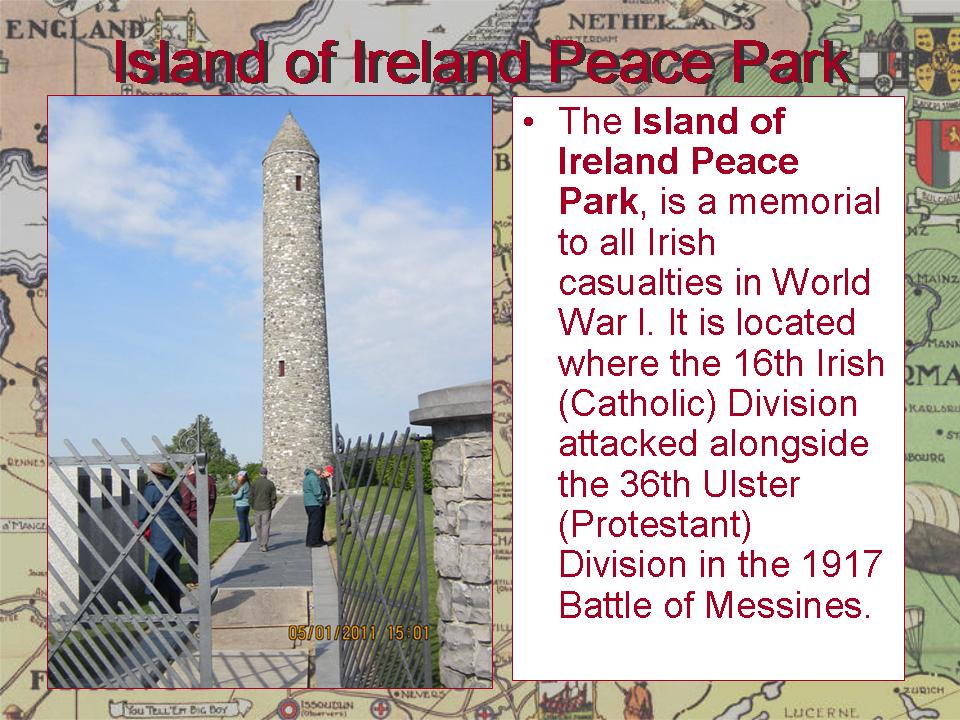
Irish Peace Tower, Messines, Flanders, Located Where Irish 16th (Catholic) Division Attacked  Alongside 36th Ulster (Protestant) Division, 7 June 1917

Friday, February 14, 2014

Western Front Virtual Tour —
Stop 8: Messines and "Plug Street"


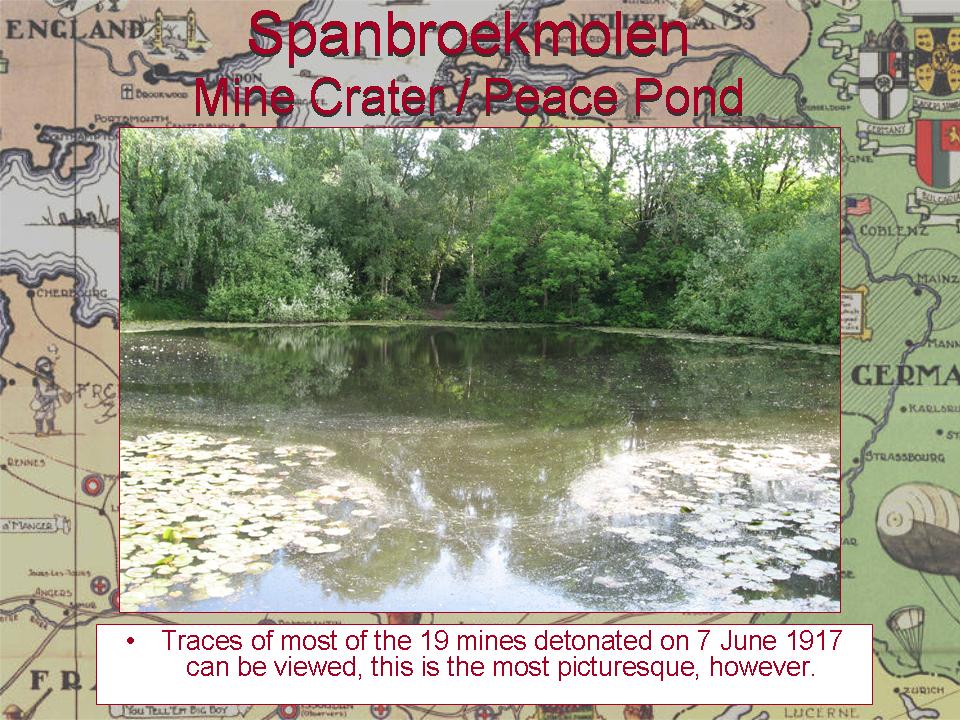
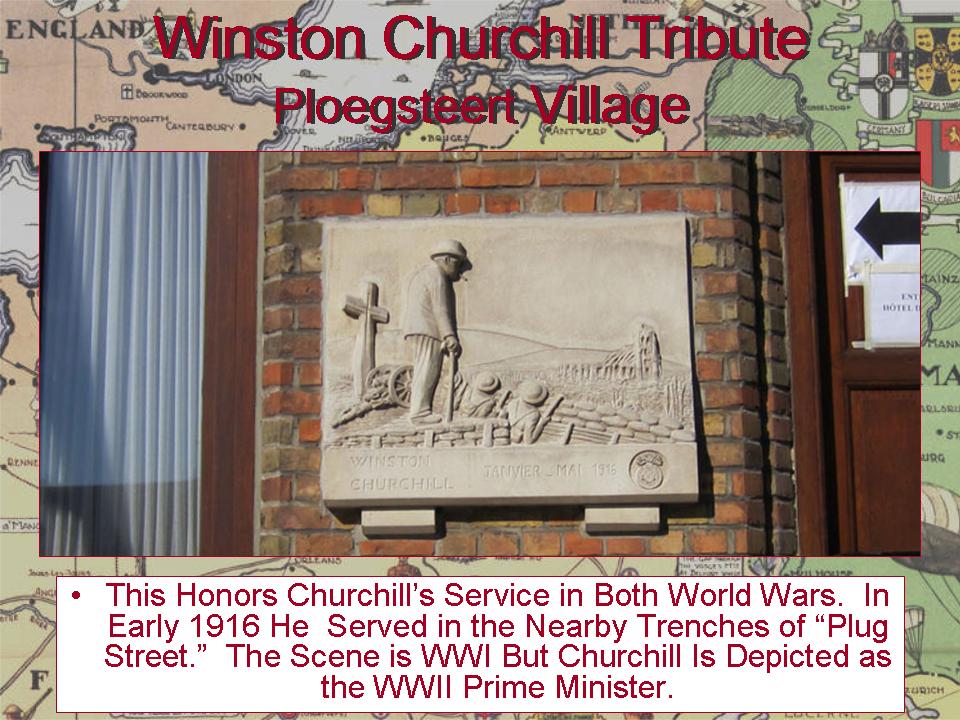
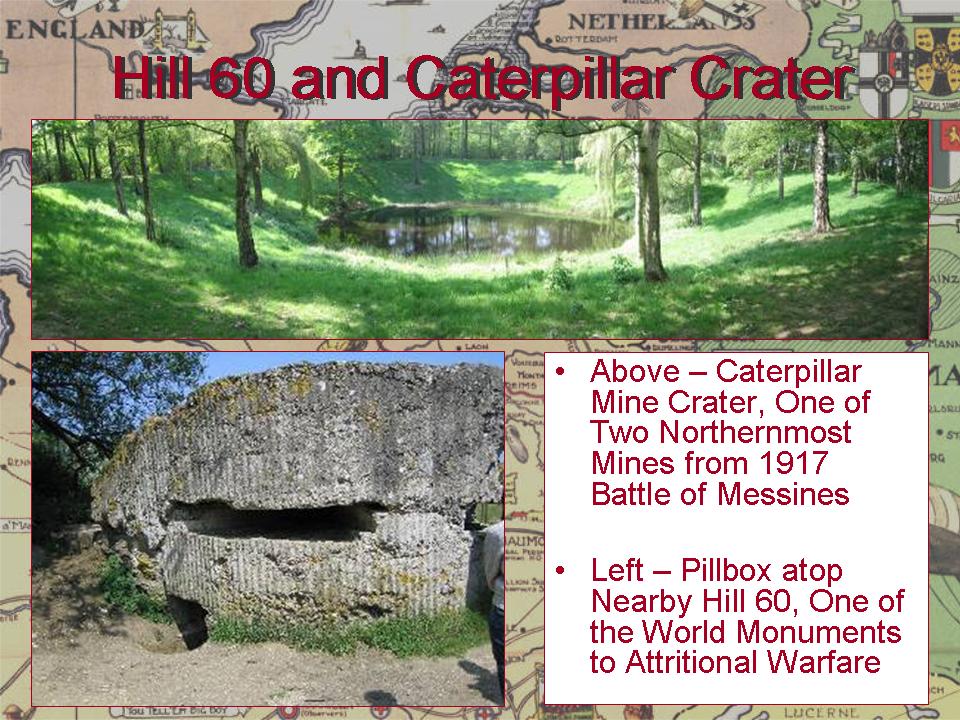
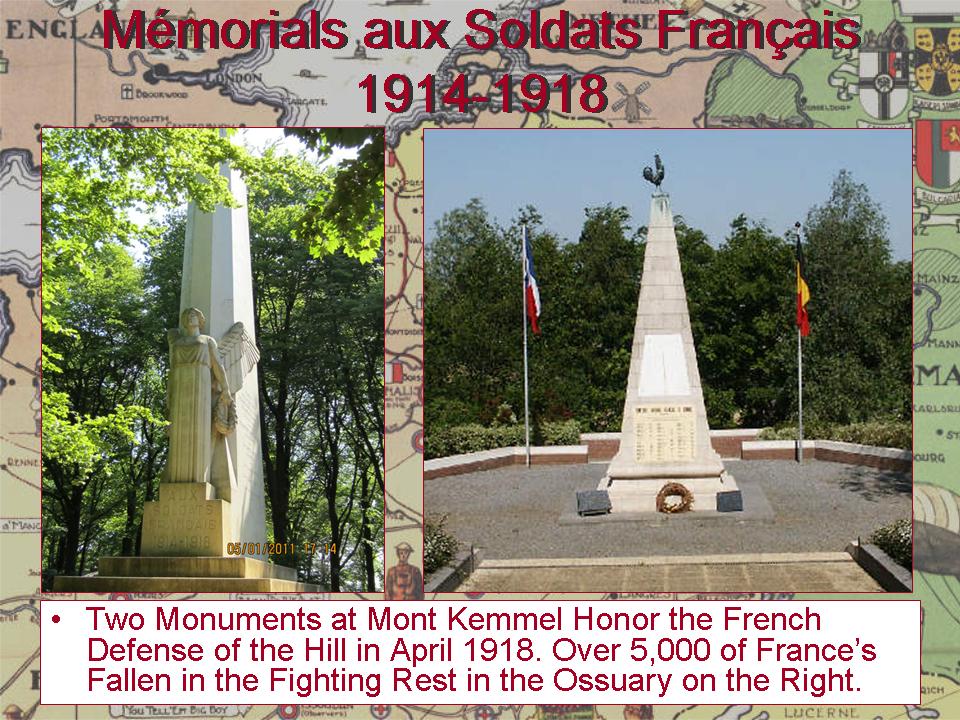
This week we visit some of the most famous sites south of Ypres, between the villages. The area is most famous for two events, the 1914 Christmas Truce and the 1917 campaign which began on 7 June with the explosion of 19 mines. As always, there are many more interesting things to see in the area than we have space to show you in this entry.


Click on Image to Expand


Click on Image to Expand


Click on Image to Expand


Click on Image to Expand


Click on Image to Expand


Next Week: Antwerp


Thursday, February 13, 2014

The Sad Tale of the Bonus Marchers

THE SAD TALE OF THE
BONUS MARCHERS


Bonus Marchers on the Capitol Steps

Following World War I, the U.S. federal government anticipated that its war-risk insurance plan would adequately protect American soldiers and sailors who had served during the war and that there would be no demand for compensation to those who had suffered no injury during their service in the army or navy. In 1924, however, Congress enacted a law, over the veto of President Calvin Coolidge, providing for a system of adjusted compensation based on length of service, with a distinction made in favor of service overseas. Under this plan, veterans entitled to receive $50 or less were to be paid in cash; those entitled to receive more than $50 were to receive certificates maturing in 20 years.


How much was the bonus?

Veterans up to the rank of major with at least 60 days service each received a dollar for each day of domestic service up to $500 and $1.25 for each day of overseas service up to $625. The bond that each received in 1924 (in lieu of cash) would accumulate compound interest, resulting in an average payment of about $1,000 for each veteran in 1945. 

In order to meet full payment of these certificates when they matured in 1945, Congress provided that a trust fund be created through the appropriation of twenty annual installments of $112 million each. This would yield a total of $2.24 billion. Interest compounded annually would increase this sum approximately to the amount required to meet the face value of the certificates at maturity. By April 1932, there were 3,662,374 of those certificates outstanding, bearing an aggregate face value of $3.638 billion. By this time eight annual installments of $112 million had been paid into the fund by Congress, making a total of $896 million, and accrued interest had added $95 million, bringing the fund to $991 million. 

Children at the Marchers' "City"

However, because of the Great Depression, in 1931 Congress expanded the privilege of borrowing with an amendment adopted over the veto of President Herbert Hoover, increasing the loan value of the certificates from 22 1/2 per cent to 50 per cent of face value. 

By April 1932, loans amounting to $1.248 billion were outstanding. The difference between this figure and the total face value of the certificates, $3.638 billion, was $2.390 billion. This was the additional sum which the veterans would receive if Congress, again over the President's veto, approved a new proposal for immediate redemption of the certificates at face value, 13 years before maturity in 1945. 

This early redemption capability came to be referred to by members of Congress and veterans groups as a bonus, and during the early months of 1932 the bonus was a topic of ongoing discussion in the legislature. Because of the opposition of President Hoover and many senators and members of the House, due primarily to the fact that the country was trying to work its way out of the Depression and this action would put a severe strain on the federal budget, veterans groups began to organize around the country with the idea of marching on Washington, DC to press their demands. 


Marchers' Camp Burned

Beginning in May 1932, groups of World War I veterans began difficult journeys across the country, traveling in empty railroad freight cars, in the backs of trucks, in cars, on foot, and by any other means that became available. By mid-June it was estimated that as many as 20,000 veterans and some family members had arrived in Washington and were camping out, often in dirty, unsanitary conditions, in parks and military bases around the city, depending on donations of food from a variety of governments, churches, and private citizens. On 16 June, the House passed the bonus bill by a vote of 209–176, but on 18 June the Senate defeated the bill 62–18. 

At this point, the federal and district governments began to make arrangements to force the veterans to go home, but very few accepted the offer, vowing to stay until they received their bonus. Throughout July the veterans, known as the Bonus Expeditionary Force, continued to hold marches and rallies despite the fact that they were receiving ultimatums to leave, with the White House proposing use of troops to force an evacuation. 

Then, on 29 July 1932, troops did storm several buildings that the veterans were occupying as well as their main camp, setting tents on fire and forcing an evacuation. When it was over, one veteran had been killed and about 50 veterans and Washington police had been injured in various confrontations. Over the next several months, a much smaller group of Bonus Expeditionary Force members continued to pressure Congress, and in May 1933 about 1,000 veterans marched again on Washington. Newly elected President Franklin Roosevelt also opposed the bonus but demonstrated his concern for the unemployed veterans by issuing an executive order permitting the enrollment of 25,000 of them in the Civilian Conservation Corps for work in forests. When the veterans realized that President Roosevelt would also veto the bonus bill but was offering an alternative solution they gradually backed away from their demands, and the issue of the veterans' bonus eventually faded from the news. 


Chief of Staff Douglas MacArthur and President Herbert Hoover Suffered Irreversible Damage to Their Reputations After the Affair.

A footnote: The breakup of the Bonus Army in Washington was conducted by Army Chief of Staff and World War I veteran Douglas MacArthur, assisted by Majors George Patton and Dwight Eisenhower. MacArthur is considered to have exceeded President Hoover's intentions [and possibly his explicit instructions] with his heavy-handedness. MH

Wednesday, February 12, 2014

Vauquois: The Four-Year Battle for a Strategic Position in the Argonne

Contributed by Jeffrey Aarnio, ABMC


Butte de Vauquois: Once Site of a Forest Village

Located roughly 20 kilometers west-northwest of Verdun, Vauquois was a village like many that found itself in the middle of intense shelling between the Germans and French beginning in August 1914. By September 1914 the German Imperial Army took this strategic hill with exceptional observation in every direction, especially overlooking the rail lines that supplied Verdun. The French counterattacked quickly, regaining the hill of Vauquois between October 1914 and February 1915.

The Village of Vauquois Before the War
The Church Stood at About the Location of the Current Monument


By mid-March 1915 opposite trench lines stabilized between the German half of the hill and the French side after the town of 168 inhabitants was evacuated. The villagers would never again see their village at the top of the hill. What followed was a stalemate so intense that it forced both sides to dig down deeper into the hill to seek shelter in tunnels and mine shafts dug by special military units. Soon both sides used pioneer and sapper troops to dig tunnels under the enemy lines in order to set off large explosive charges. This became known as the war of mines. Unlike other parts of the Western Front where mine warfare took place, Les Eparges, the Argonne Forest, and Vimy Ridge, to name a few, Vauquois unites several factors making this a truly unique site. Vauquois Hill became a veritable honeycomb of activity that included underground barracks, operating rooms, command and communication posts, electric air pump stations, and even an underground rail station. This is the site of the only village completely destroyed by underground or mine warfare.

The Barren Butte After Four Years of Mining Operations
(The Star Indicates the Site of the Former Church and Monument)

For three and a half years the Germans and French detonated over 500 charges (199 German, 320 French), the largest of which was a German charge of roughly 60 tons of explosives set off in May 1916 that killed over 100 people. The underground shafts are as long as 1,500 meters and comprise three distinct levels, totaling up to seven kilometers of tunnels as each side raced to set off an explosion underneath the opposing force. 

Restored Trenches Along the Crest

For most of 1918 the hilltop of Vauquois lost some strategic importance with the increased use of the airplane as an observation platform. However, the brutal fighting between the French and Germans continued until its liberation by the American 35th Infantry Division on 26 September 1918, the first day of the Meuse-Argonne Offensive. The cratered landscape that remains is marked by a French monument to the fallen soldiers at Vauquois, and one can still descend into the kilometers of galleries and tunnels that traverse the hill. 

The Monument and a View from Another Direction

Guided tours are offered every first Sunday of the month from 9:30 to 11:00 a.m. To find out more about the American overseas military cemeteries, maintained and operated by the American Battle Monuments Commission, and the Meuse-Argonne American Cemetery located 40 km. northwest of Verdun, visit:  http://www.abmc.gov/ 

Mining Tunnels and Living Quarters Beneath the Butte


Tuesday, February 11, 2014

KINGDOMS FALL-The Laxenburg Message — Reviewed by Dennis Linton


KINGDOMS FALL-The Laxenburg Message
By Christopher Clark.
Published by Amazon Digital Series, 2013

The centenary of the onset of World War 1 begins this summer and the printing presses are humming with new, and sometimes rehashed, accounts of the war. Edward Parr's Kingdoms Fall series takes a fresh approach offering a combination historical fiction/spy thriller trilogy. If the initial book of the series, Kingdoms Fall-The Laxenburg Message, is indicative of the books to follow, readers will enjoy a few years of high adventure. The first installment is an enjoyable spy thriller and an accurate introduction to the various campaigns of the war.


Order Now
The prologue sets the stage for Gavrilo Princip's assassination of Archduke Franz Ferdinand, heir to the Hapsburg Empire. That fateful day in Sarajevo serves to spark the flame to war, regardless of all the other debated causes of World War 1. This beginning settles the reader back in time and becomes an important thread later in the book. Edward Parr does a masterful job of describing the historical setting in the beginning of each chapter, providing enough background to lesser-known theaters of the war where the action in the story transpires. The story provides a look at the aspects of political intrigue and espionage behind the scenes of the shifting power structures of the empires involved in the conflict. I must admit, this really piqued my interest at times, and I found myself researching additional background on the political events. It became evident the author did extensive historical research; however, he never bogs the story down with extraneous details.

The real story opens in Gallipoli during the disastrous Dardanelles Campaign. When the British attempt to reinforce the besieged ANZAC forces with an amphibious landing at Suvla Bay, we are introduced to the two main characters. Aristocratic Captain James Wilkins is leading an infantry company in combat for the first time. He enlists the experience of his newest lieutenant, David Gresham, an early veteran of the Western Front. As the opening battle scenes unfold, the author does a wonderful job of illustrating the futility of the British frontal attacks in combination with the ineptness of the senior leadership. Within the first few pages, the British advance vividly initiates the reader to the brutality faced by men moving forward under constant artillery barrages and machine gun fire. Questions arise about young David Gresham, as the intelligence office at General Headquarters requests his immediate presence. We quickly figure out that Lieutenant Gresham is not whom he seems, and thus begins a spy thriller set during World War I  in the spirit of Ian Fleming or John LeCarre. The rest of the story weaves in the beginning days of the British Secret Intelligence Service, later better known as MI-6, with the actions on the battlefield.


Click on Image to Expand


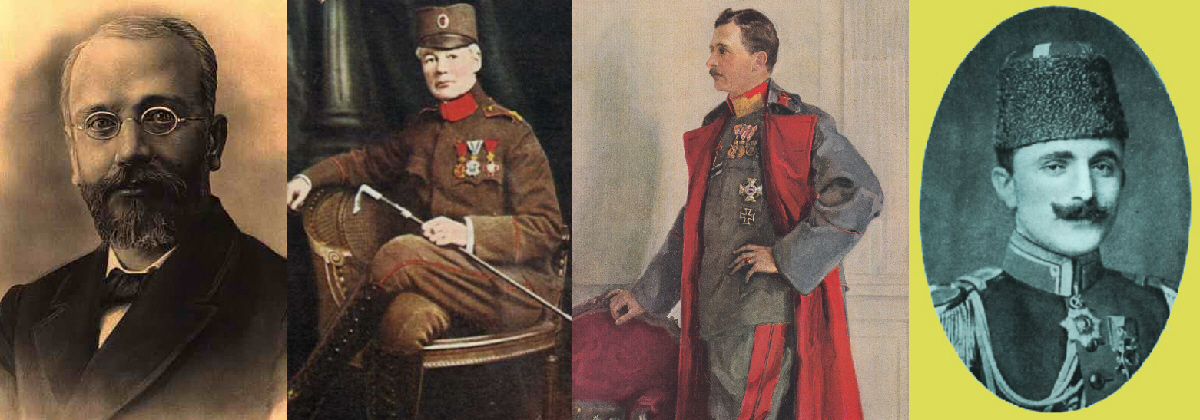
Dramatis Personae
Eleftherios Venizelos, Flora Sandes, Future Emperor Karl, Enver Pasha


The exciting plot develops fast as Gresham recruits young Wilkins to join him on a series of quick-paced missions attempting to influence political actions in favor of Britain and her allies. At times, the action literally leaps from one critical event or decision to another as the setting shifts from behind enemy lines at Gallipoli to Greece, followed by Serbia and ultimately to Austria. While it is not fathomable our heroes would be able to influence so many events in one year, it does make for fast-paced reading.

Throughout the novel the author interlaces some of the less well known, but influential personalities during the war such as Enver Pasha, Flora Sandes, and Greek Prime Minister Venizelos. The story swiftly shifts gears to high intrigue as the duo makes their way to Vienna to attempt to influence Archduke Karl before he ultimately becomes the Emperor of the crumbling Hapsburg Empire in 1916. In Vienna, in a setting of the Laxenburg Castles, the threads and meaning of the title of the book become apparent. The conclusion leaves the reader pondering the effects of espionage on the war and the blurring between fiction and history.

The book is an enjoyable read from both a historical fiction and spy thriller perspective. It leaves the reader waiting for the next adventures of David Gresham and James Wilkins in the Kingdom Falls series.

Dennis Linton

Monday, February 10, 2014

Who Was Gertrude Bell?


You may have seen her name in the news during the Iraq War. Gertrude Bell (1868–1926) was an English traveler, writer, archaeologist, and mountaineer who played an important role in the Middle East toward the end of the Great War. She went to Oxford to read history, and, at the age of twenty and after only two years study, she left with a first-class degree. In the years immediately following, she spent time on the social round in London and Yorkshire, travelled extensively in Europe, and visited Persia and visited friends in Jerusalem in 1899–1900. 


Fascinated by Arab peoples, she learned their language, investigated their archaeological sites, and travelled deep into the desert, accompanied only by male guides. Her knowledge of the area and its tribes therefore made her a prime target for recruitment by British Intelligence during the First World War. Later, as a political officer, and then as Oriental Secretary to the High Commissioner in Baghdad, she became a kingmaker, being largely responsible for the selection of Faisal I. Her first love, however, was always archaeology, and, as Honorary Director of Antiquities in Iraq, she established in Baghdad the Iraq Museum. Never married, Bell became chronically ill and died from an overdose of sleeping pills at age 58.  She is remembered for one quote that seems pertinent today:

We people of the West can always conquer, but we can never hold Asia. 
That seemed to me to be the legend written across the landscape

Sunday, February 9, 2014

Starvation at War

Starvation is one of those unpleasant topics glossed over in most general histories of the Great War.  Refugees, prisoners of war, the Armenians in Turkey, all suffered horribly.  Here is another story:

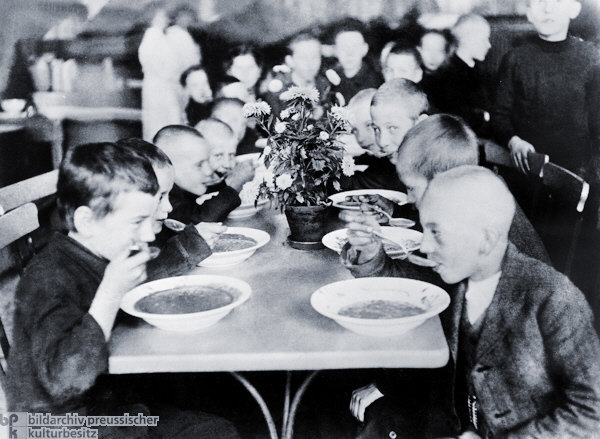
The state of nutrition worsened during the course of the war in all European belligerent countries. Germany was heavily dependent on food imports, which were stopped by the Allied blockade. Additionally, the domestic production of foodstuffs suffered a serious decline. The combination of these two factors led to a massive nutrition crisis, particularly for those living in cities. Charitable organizations started soup kitchens (Kriegsküchen, literally, “war kitchens”) to mitigate the greatest need, the nutritional needs of children.

Click on Image to Expand

Children Eating in a Berlin Charity Soup Kitchen, 1917


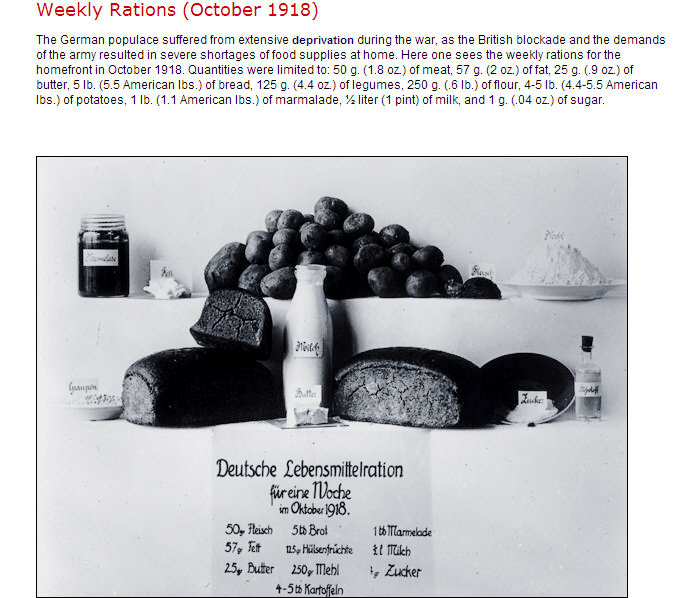
Below is the weekly ration in Germany for October 1918.  After the war, during the Paris Peace Conference, the Allies brutally maintained the blockade on Germany. Official statistics attributed nearly 763,000 wartime deaths in Germany to starvation caused by the Allied blockade. This figure excluded the further 150,000 German victims of the 1918  influenza pandemic, which inevitably caused disproportionate suffering among those already weakened by malnutrition and related diseases. These statistics are from British sources; other sources (I've not found German government figures) place the total dead at well over one million.

Click on Image to Expand


Sources:  German Historical Documents; U.K. National Archives

Saturday, February 8, 2014

Winter Olympic Sites: Cortina d'Ampezzo, Sarajevo, Sochi, and World War I


For four centuries the sleepy mountain town of Cortina d'Ampezzo led a peaceful existence under the Hapsburg Empire (not counting a few years of dealing with that Napoleon fellow). Then war came to Cortina in 1915.

The First World War would be a very hard period for Cortina: the city was occupied by the Italian army at the beginning of the hostilities, on 24 May 1915. Then the front stabilized around its wonderful surrounding mountains, where a terrible trench war was fought with thousands of deaths.

Battlefield Remains Over Cortina

At that time, the inhabitants of Cortina had to cohabit with 20,000–30,000 Italian soldiers, whose camps, depots, and field hospitals caused many dislocations and discomforts for the civilians. This lasted 17 months, until the Italian defeat at Caporetto  (October–November 1917). In the ensuing retreat, the Italian Army had to abandon its mountain positions and form a new defensive line along the Piave river. The situation swung again the following year, and in the autumn of 1918 Italian troops occupied Cortina again. With the Armistice, Cortina went back to Italy permanently.  


Cortina had been a tourism center for the upper crust for over a century before the war. Afterwards, as skiing became more popular, Cortina became an increasingly attractive winter destination and it was selected as the venue for the 1944 Winter Olympics, which were cancelled. The city was subsequently awarded the 1956 games and had the benefit of the television coverage that gave Cortina an international reputation for winter sports that remains today. A secondary attraction is the nearby accessibility of the battlefields of the Great War surrounding the city.


Sarajevo, of course, is remembered as the site of the assassination of Archduke Franz Ferdinand. Two world wars and 70 years later it was selected as the site of the 1984 Winter Olympics. They were well organized, and, as with Cortina before, Sarajevo benefited greatly from the worldwide television coverage.


Opening Ceremonies at Sarajevo
(Note all the construction cranes in the background)
And then tragedy struck Sarajevo again.  After the fall of Communism, the patched together pseudo-country of Yugoslavia dissolved.  War came to Bosnia, and Sarajevo underwent a terrible siege from which it is still recovering. The beautiful facilities built  for the games are shambles and the city is being rebuilt. On 28 June 2014, Sarajevo will once again be the focus of the world's attention. The Vienna Philharmonic is playing a concert to commemorate the event that set off the Great War 100 years earlier. It's likely, though, that Sarajevo will never become a world-class resort center like its sister Great War veteran Cortina d'Ampezzo.

Wrecked Olympic Ski Jumping Runs Today

But what about Sochi?


It turns out that taking the broad view of the Great War to include the Russian Revolution and Civil War (which is the point of view of all veterans of the Great War Society, like your editor) there is a wartime story involving Sochi that should be told.  We will share that in a future posting on Roads.


Sources: Cortina  and Sarajevo Tourism Sites; Wikipedia

Friday, February 7, 2014

Western Front Virtual Tour— Stop 7: Ypres, South of the Menin Road


This week we visit some of the most famous sites on the south side of the Menin Road.  Please keep in mind we are just showing a selection of the most impressive sites on the Western Front. The Ypres Salient has dozens of sites worth stopping at.


Click on Image to Expand


lick on Image to Expand


Click on Image to Expand


Click on Image to Expand


Click on Image to Expand


Next Week: Messines, Plug Street, and the Christmas Truce


Thursday, February 6, 2014

Another "First to Fight" — The Princess Patricia’s Canadian Light Infantry

Contributed by Jim Patton

Regimental Badge

The Princess Patricia’s Canadian Light Infantry was formed on 10 August 1914 by Andrew Gault, who pledged CD$100,000 to raise in Canada a regiment of men with prior military experience to serve in the British Army. Gault got approval from Governor General the Duke of Connaught (a brother of King Edward VII), father of the regiment’s patroness, Princess Patricia of Connaught. Thus, the PPCLI was unusual in that it wasn’t exactly British and it wasn’t exactly Canadian, as it wasn’t under the control of Sir Sam Hughes’s Ministry of Militia and Defence. The PPCLI were the first Canadians to fight on the Western Front, beginning on 6 January 1915, and they served with the British 80th Brigade until December, when they were absorbed into the Canadian Expeditionary Force.

Princess Pat's in Camp in England Before Moving to Western Front
(Initially over 80 Percent of the PPCLI Was English-Born)

At the battle of Frezenburg on 8 May 1915, the PPCLI lost half of its strength and at the end was commanded by a lieutenant. The regiment won three VCs in the Great War. Pvt. Guy Dwyer was the first Canadian casualty of the war. Members of the PPCLI served with the 260th Bn. CEF in Siberia in 1919. 

Princess Patricia Decorating the Regimental Colors in 1919


Much later, in 1951 the 2nd Battalion greatly distinguished itself at the Battle of Kapyong in Korea, for which the regiment won a U.S. Presidential Unit Citation. Familiarly know as "The Patricias," the regiment still exists, three battalions strong, plus a fourth of reservists (also known as the Loyal Edmonton Regiment). Recently they served in Afghanistan until May 2010.

Wednesday, February 5, 2014

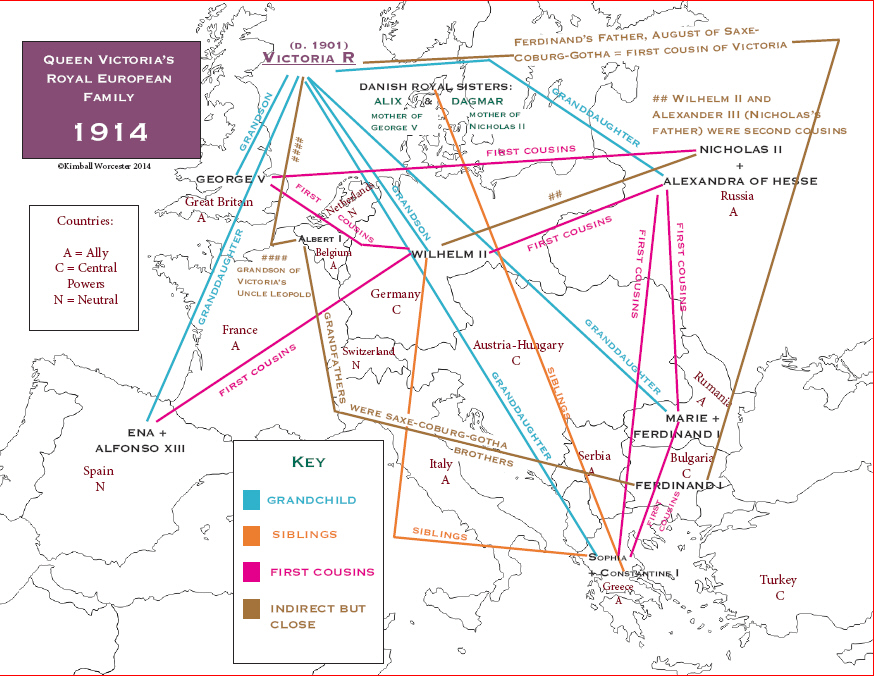
Queen Victoria's Ghost: Her Majesty's 1914 European Family


Created by Assistant Editor Kimball Worcester

It was not just the cousins Nicky, Willy, and Georgie who went to war in 1914.

Click on Image to Expand

Tuesday, February 4, 2014

The Sleepwalkers: How Europe Went to War in 1914 — Reviewed by Clark Shilling


The Sleepwalkers: How Europe Went to War in 1914
by Christopher Clark.
Published by Harper Collins, 2013

In The Sleepwalkers Cambridge professor Christopher Clark delivers a well-written and strongly argued account of how the Great War began. The author's approach and conclusions are unique in several ways. First of all, his focus is on the Balkans in general, and Serbia in particular, whose history he feels is one of the lost keys to understanding the outbreak of the war. The first third of the book is devoted to the tangled and very violent history of Serbia up to 1914. The second third of the book describes the diplomacy that led to the polarization of the five Great Powers into two antagonistic camps. It is only in the final third of the book that we arrive at the assassination of the Archduke Franz Ferdinand on 28 June 1914 and the unfolding of the crisis that would lead to the outbreak of the war.

This book is also a revisionist history, presenting Austria-Hungary and Germany in a more favorable light at the expense of France and Russia. Moreover, rather that apportioning blame, the author feels that all of the powers were culpable in the collapse of peace. To quote from his conclusion,

There is no smoking gun in this story; or rather, there is one in the hand of every major character. Viewed in this light, the outbreak of war was a tragedy, not a crime.

Click on Image to Expand


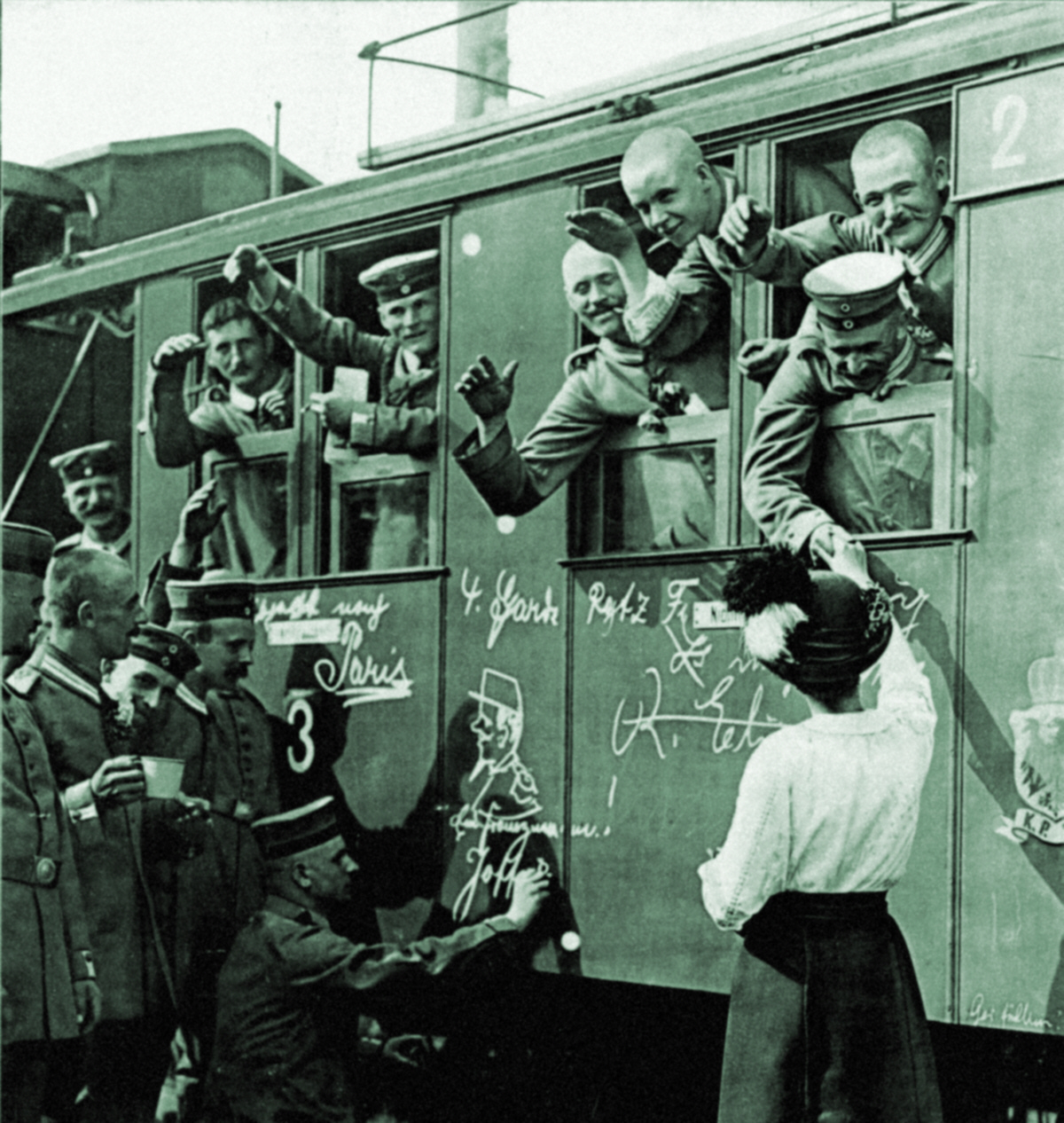
German Troops Departing Berlin, August 1914


Dr. Clark in great detail reconstructs the various threads that went into the making of each of the protagonists' foreign policies and world outlook. He does an outstanding job of considering all of these factors, including internal politics, imperial rivalries, institution limitations, and the personalities of the decision makers. The author contends that the diplomatic crisis erupting in the summer of 1914 was one of the most complicated in history. This complexity was compounded by the fact that each of the major powers often spoke with competing or conflicting voices that sent mixed messages to opponents, creating confusion that would lead to misreading of intent during the July crisis.

The author rejects the premise that Austria-Hungary was on its last legs. He presents statistics indicating the empire was rapidly industrializing and experiencing sustained economic growth. That is not to say that he ignores the ethnic challenges facing the Dual Monarchy, but he finds it ironic that the man whom he felt was best placed to deal with these problems was the doomed Archduke.

The assassination is presented as part of a series of terrorist actions aimed at the destruction of Hapsburg authority in the Balkans and the creation of a Greater Serbia. The small group of young pro-Serbian zealots, the equivalent of modern suicide bombers, if not sponsored by the government of Serbia, were at the very least trained, equipped, and infiltrated into Bosnia by officials of that government.

Dr. Clark feels that Austria had a just cause for war against Serbia. The problem was that it took Austria too long to secure the backing of Germany and to gain a consensus with Hungarian leaders before it could issue its ultimatum. Outrage over the assassination had subsided, and Russia had time to build a case that Serbia was not involved in the assassination, thus putting the onus of aggression on Austria.

The author rejects the idea that the German high command used the crisis to engineer a preventive war against Russia. In fact, Dr. Clark contends that Germany was the least involved of the powers until the last weeks of the crisis. In another point of revision, he claims that the Serbian reply to Austria's ultimatum, rather than a near complete capitulation, was instead, a "highly perfumed rejection on most points."


Order Now
So the crisis moved on toward war. Dr. Clark points out that while Germany is often blamed for giving Austria a blank check, France gave Russia the same assurances just before the crisis.

The author believes that war occurred in great part because of a mind-set shared by the decision makers of 1914. Previous crises had taught them to hold firm and not back down. Allies had to be fully supported. While no one wanted war, each of the major players viewed their own actions as defensive and that the decision for war or peace lay with their opponents. Only this time there was no bluff to be called and no one would throw in their hand.

This is a provocative book challenging much of the standard accounts of the beginning of the war. It is well researched and colorfully written. The author does an exceptional job portraying many of the characters in this tragedy, from the aloof and diffident Sir Edward Grey to the bombastic Conrad von Hötzendorf, the Austrian chief of staff who had counseled war during each crisis but, when finally given the green light to go to war against Serbia, had to admit that his army was not ready to fight. This publication deserves a place on the bookshelf of every student of the approach of the Great War.

Clark Shilling

Monday, February 3, 2014

Something from Ghent

Contributed by Tony Langley


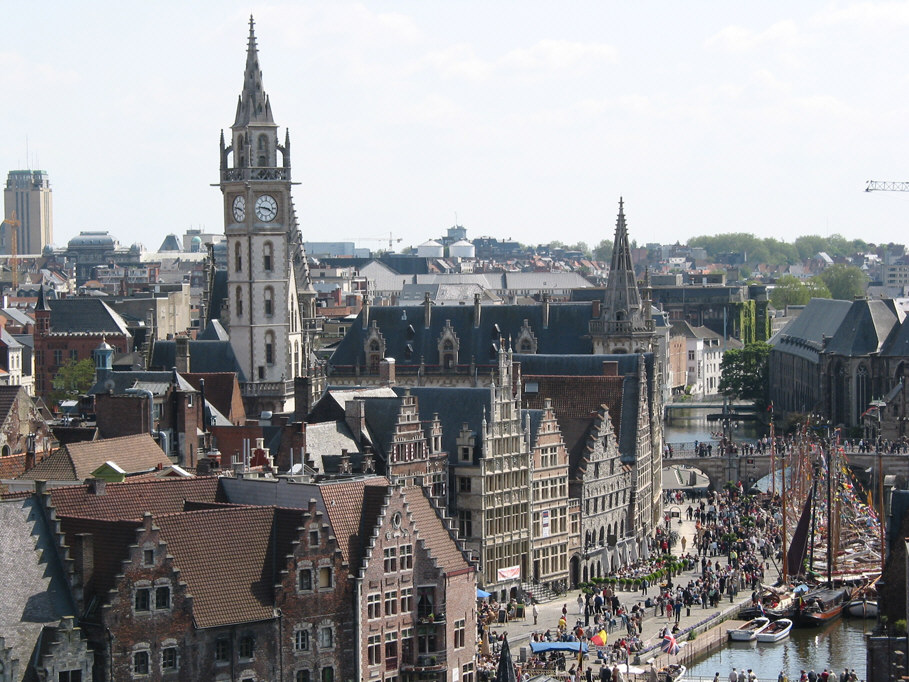
Possibly, you think in terms of Ghent in medieval terms — the affluent wool-producing port and capital of Flanders. And because of this heritage, that it's a tourist Mecca today.


Click on Image to Expand


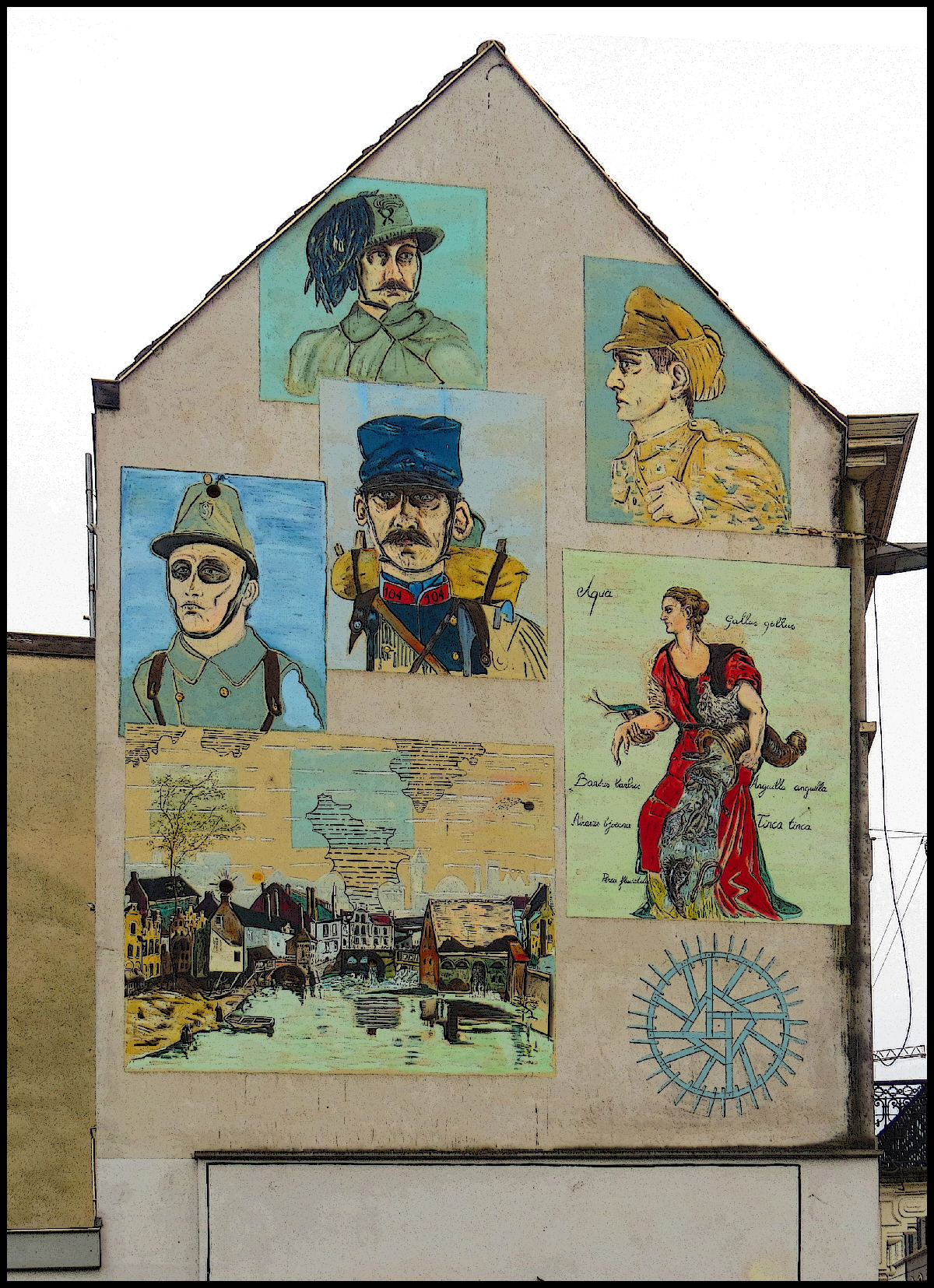
But contemporary Ghent is a city known for its many colorful murals. Throughout the streets in the city's center one can turn a corner and unexpectedly be confronted with an otherwise blank wall painted in a riot of color and shapes. These are executed with a high degree of skill, though usually with very modern themes more reminiscent of 1960s underground press art, punk art, various Third World art styles, or derivatives of sword and fantasy illustrations. A class apart are the realistic animal murals made by the world renowned muralist from Ghent itself named Roa. His work graces many walls in New York, San Francisco, Paris, London, Warsaw, and other places around the globe.


Click on Image to Expand


This mural is something of a departure from the usual themes, but it fits in the overall urban look of the city very well. Obviously commemorating the centennial of the Great War, it depicts an Italian, British, French and a very gaunt-eyed Belgian soldier in 1914 uniforms. The lower part of the mural shows a scene in a Belgian village somewhere along the Ijser front, most probably Dixmuide where fierce fighting took place in the autumn of 1914. 

The female figure on the bottom right is something of a mismatch on the wall, since it apparently shows the goddess Fortuna, bringer of fortune and wealth and plenty. In the incarnation we see here, she is dispensing the bounty of the sea which is perhaps a connotation referring to the Ghent harbor.

Sunday, February 2, 2014

The AEF Super Bowl

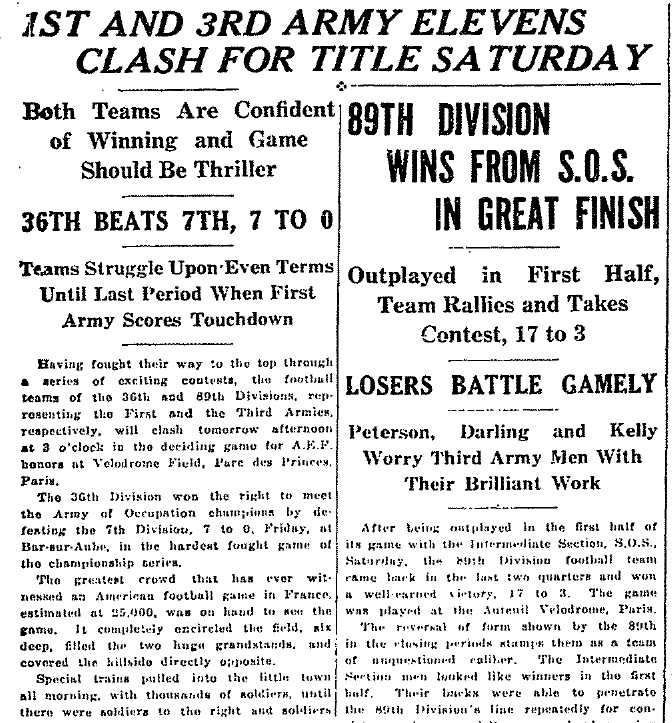
The First World War had its own Super Bowl! The divisions and large bases of the American Expeditionary Force in Europe had their own football tournament. The championship game between the 89th (Midwest Division) and the 36th (Texas-Oklahoma National Guard) divisions was played on 29 March 1919, before a crowd of 15,000 at the Paris Velodrome that included General Pershing.

Just like today's Super Bowl it had pre-game hype:


Click on Image to Expand


Stars and Stripes Article, 28 March 1919


The field was muddy, but the football played was of the highest order. In the first quarter the 89th worked the ball to the one-yard line and on the fourth down tried for a field goal, but the slippery ball went wide. After neither side had gained much advantage in close play in the middle of the field, Mahseet delivered a terrific punt that carried more than fifty yards and passed the safety man of the 89th, who let it roll over the line for a touchback. On the first play, the ball was passed badly to Lindsey, who fumbled and the ball rolled over the line. McCuller fell on it for the first touchdown of the game. Mahseet missed goal. The quarter ended without further scoring.

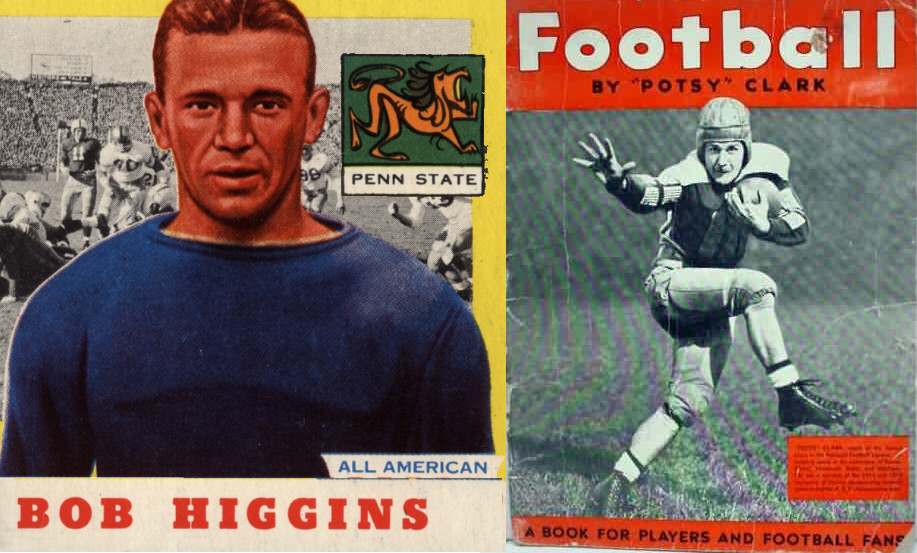
It had star players:


Click on Image to Expand


Bob Higgins  of Penn State and George "Potsy" Clark of Illinois Were Notable Players on the 89th Division Squad; Clark Would Be the Star of the Championship Game; Both Would Later Have Distinguished Coaching Careers


Between halves, in addition to the usual scorching talks from the coaches, General Winn spoke to the team. Many of the players afterward said that his appeal to their pride in the division, his encouragement of their efforts, was one of the most effective of such appeals that they had ever listened to. Certain it is that something was instilled into the team between halves that called forth reserve powers that had not been displayed before.

Beginning the third quarter, Lindsey returned the Indians' kick-off 41 yards by one of the most brilliant runs of the game. In three plays on the line the 89th gained first down. The 36th then stiffened and a punting duel followed, in which a blocked punt gave the 89th the ball on the seven-yard line, but a fumble by Clark lost the chance to score. Finally a pretty forward pass to Clark and a run netting 22 yards put the ball within striking distance. Lindsey and Gerhardt dropped back as if to try for a field goal. Gerhardt received the ball, shot it back to Lindsey, who passed it far down the field to Clark. Clark received it almost on the goal line and stepped across for the first touchdown. Clark kicked a difficult goal, and the 89th, amid a bedlam of cheering, went into the lead, not to be headed again.


Click on Image to Expand


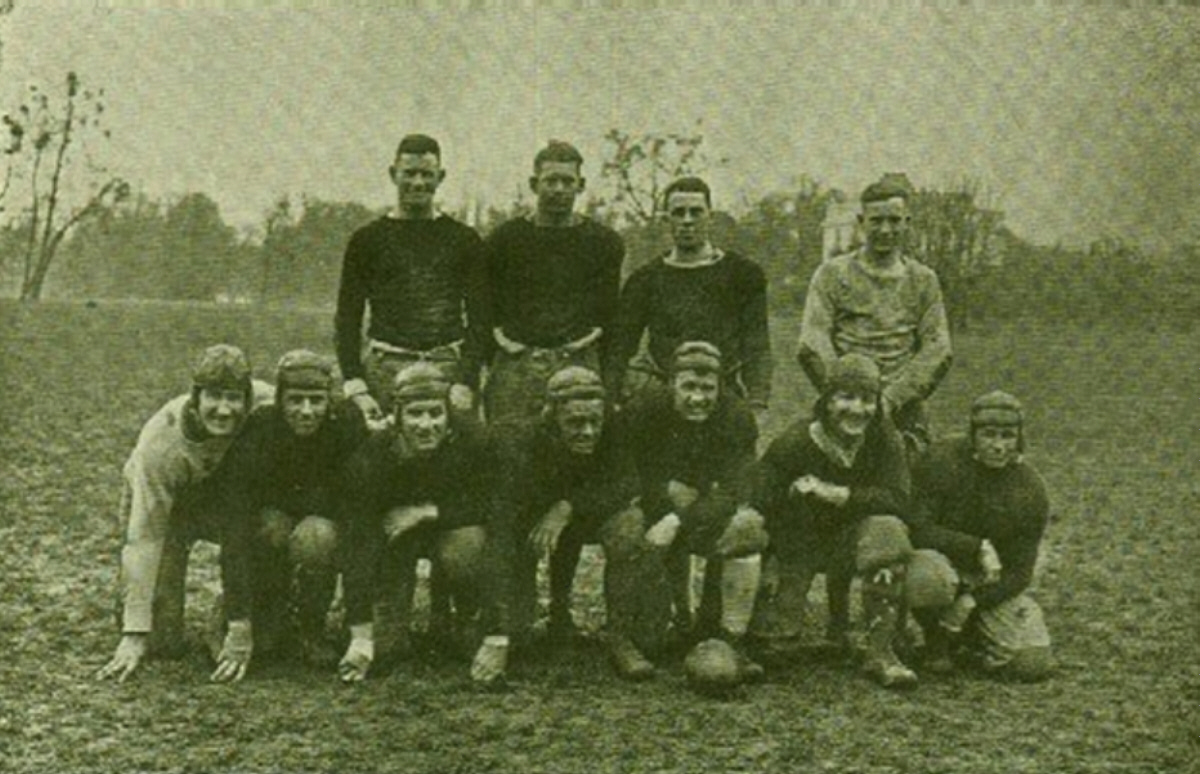
AEF Champions — 89th Division
The final score was 14 to 6, the 89th, as usual, coming from behind and emerging with the victory after it had seemed that the game was lost. Before the close of the game, General Pershing came upon the field, personally greeted the players and congratulated them on their splendid game and fine spirit. Paris was not dull that night.
Sources:  The Kansas Collection; Library of Congress

Saturday, February 1, 2014

1 February 1917: Germany Announces Resumption of Unrestricted Submarine Warfare

Preliminaries

Germany only had about 28 U-boats available in the early months of the war, but they achieved some spectacular successes:

  • 5 September 1914: U-21 sinks Royal Navy light cruiser Pathfinder — first combat victory of the modern submarine.
  • 22 September 1914: U-9 sinks three British armored cruisers, Aboukir, Cressy, and Hogue.


Triumphant U-9 in Harbor

A push came from within the German Navy to wage unrestricted submarine warfare.

The gravity of the situation demands that we should free ourselves from all scruples.
German Admiral Frederich von Ingenohl, November 1914

It has been demonstrated that our submarines have not succeeded now for a long time in gaining any results worthy of note, despite the fact that they have been making cruises for a long time and have carried them out with great boldness. In the future prosecution of the war we will therefore be able to count neither on an equality of strength before the battle due to the use of our light forces nor on the opponent's changing his strategy as long as we continue ours unchanged.
Kapitän zur See Zenker, 28 December 1914

First Declaration

The waters round Great Britain and Ireland, including the English Channel, are hereby proclaimed a war region. On and after February 18th every enemy merchant vessel found in this region will be destroyed, without its always being possible to warn the crews or passengers of the dangers threatening.
Admiral Von Pohl, Chief of Marine Staff, Berlin,  4 February 1915

  • At this time the German Navy has 30 U-boats available, an increase of two since the war's opening.
  • 7 May 1915: RMS Lusitania sunk off of Queenstown, Ireland, by U-20. Of the 1,195 lives lost, 128 were U.S. citizens. The ensuing controversy brought unrestricted submarine warfare to a temporary halt, but contributed to the rise of American sentiment for entering the war against Imperial Germany.


Burial of American Victim of Lusitania Sinking


Unrestricted Submarine Warfare Resumes in February 1917:


All shipping, enemy and neutral, including passenger ships, would be liable to attack without warning in war zones. The principal war zones included the waters encompassing the British Isles, including the Channel, the western half of the North Sea, and the waters extending 400 nautical miles from the west coast of France. Also declared a war zone was the entire Mediterranean Sea with the exception of Spanish coastal waters and a lane, 20-nautical miles wide, set aside for Greek steamers. In March, the Barents Sea was added to the list. Further expansions, encompassing broad swaths of water around the Azores and Canary Islands and, eventually, most of the North Atlantic, were declared in November 1917 and January 1918.

  • At this time the German Navy has 142 U-boats available, an increase of 114 since the war's opening.
  • 6 April 1917: The United States declares war on Germany, which was expected by the German leadership.
  • 860,334 tons of Allied shipping sunk in April 1917 — greatest one-month losses of the war.

The unprecedented losses suffered during the last fortnight of April [1917], especially in the approach areas, greatly strengthened the hands of those who advocated the general introduction of the convoy system...  
Seaborne Trade, Ernest Fayle.

We Are Losing the War!
Admiral William Sims, U.S. Navy, April, 1917

  • May 1917: The convoy system is implemented, eventually reducing the losses markedly, but never eliminating them entirely.


American Troops En Route to France Via Convoy

  • In October 1918, last full month of the war, losses were 116,237 tons. At the Armistice, the German Navy had 134 boats in service with 229 more under construction.