Now all roads lead to France and heavy is the tread
Of the living; but the dead returning lightly dance.
Edward Thomas, Roads

Thursday, May 8, 2014

Monte Pasubio and the Road of Heroes

Massive Monte Pasubio, Italy's Southern Anchor of the Trentino Sector

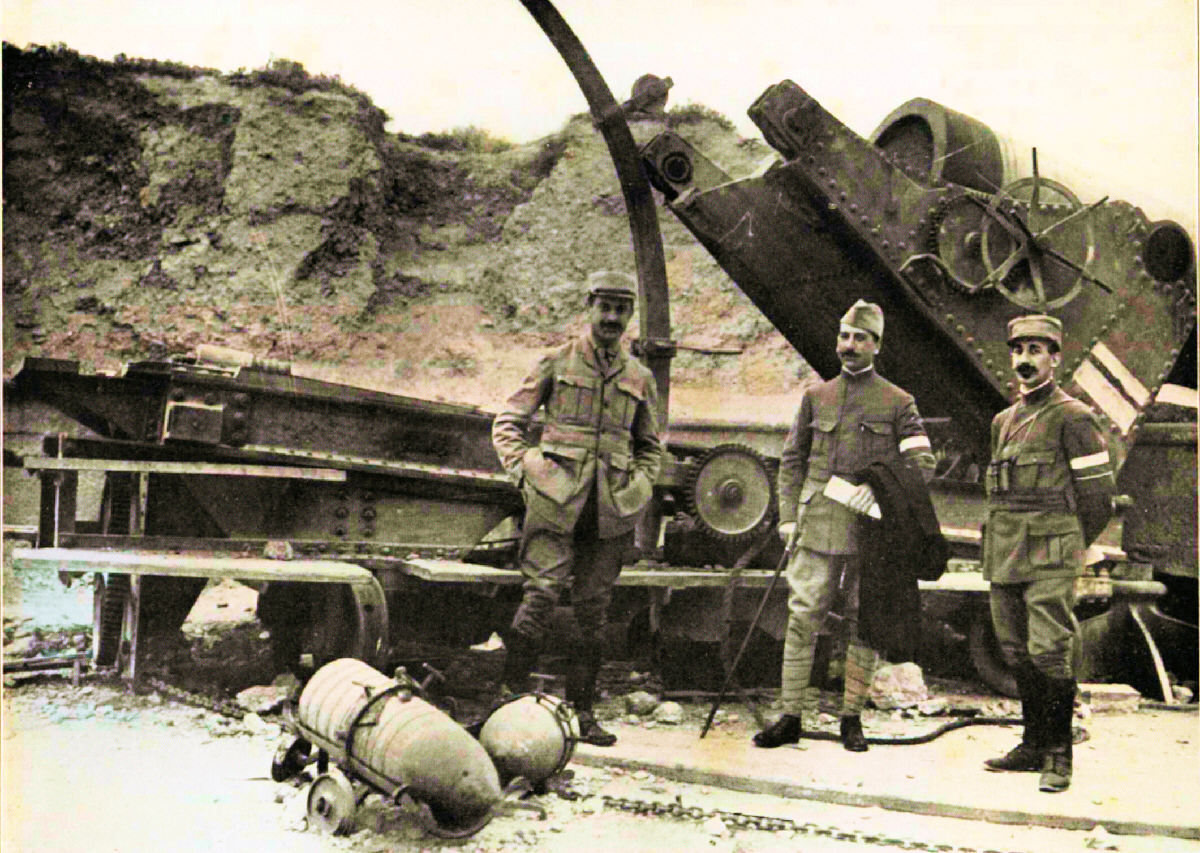
Monte Pasubio, a stupendous series of peaks and high plateaus southeast of Rovereto and north of Vicenza was a strategic position from 1916 through the end of the war on the Italian Front. Hemingway, Dos Passos, and Pope John XXIII (Angelo Roncalli) saw service there. It played a role on the Italian Front similar to Mte. Grappa farther North. Capturing it would have given the Austrian high command access to the Venetian Plain and the ability to capture much of the Italian Army from the rear. At the start of the war Pasubio had been in Austrian territory but was quickly occupied by the Italians, who built a new trench line further north just south of Rovereto and the Asiago high plains.

In May 1916, Austro-Hungarian forces launched their Strafexpedtion [a.k.a The Battle of Asiago] and quickly captured the Vallarsa and Val Posina valleys, Mt. Col Santo, Val d'Astico, and part of the Asiago Plateau. At Mte. Pasubio, the Liguria Brigade, under the command of General Achille Papa, was able to stop the Austrian army after being quickly transferred from the Isonzo Front. They were able to secure one of two peaks in the Cima Palon section of the massif. Papa's troops occupied the more southerly peak, Dente Italian [the Italian tooth], the Austrians the other [Dente Austrico] — the two positions separated by a saddle. This allowed the Italian defenders to stabilize the front on the line from Mte. Pasubio to Mt. Ortigara on the Asiago Plateau by 3 June.

Italian Officers Outside One of the Galleries

The front held along the saddle between the two peaks for another two years. The plateau became a land of bloody and hard battles involving the best alpine troops of the two sides, an epic battle for the Kaiserjager as well as the Italian Alpini. Italy would award 30 Gold Medals for valor for the fighting on Mte. Pasubio.

Today Monte Pasubio seems to have been torn by giant plows. Trails dynamited into the rocks along deep vertical walls and dozens of tunnels with small cross sections make hiking this trail an exceptional experience. The mountain massif is crisscrossed by strategic trails and roads built around 1917 by Italy during the sad war with Austria. The Road of Heroes leads from Passo Fuggaze at 1162 meters altitude past Refugio Papa (named in honor of the Liguria Brigade's commander) to the eastern edge of the trail backing the Italian position at 1925 meters. Thousands of miners assigned to the 5th Engineering Regiment built the next core section of the trail, called "Strada delle Gallerie" (road of tunnels) under enormous time pressure in only 11 months. This section includes 52 tunnels providing cover or leading to the north face of the Italian position. The Strada drops downward in this zone of galleries to about 1200 meters. The 52 galleries in the aggregate total 2280 meters in length.

The Road of Heroes, Two of the 52 Galleries Shown

Austria-Hungary desperately needed to break through at Monte Pasubio. The British official history of the Italian campaign notes that "...at 3 a.m. 13 March 1918, using 110,000 lbs of ecrasite, the Austrians blew a salient of the Italian front position into the air." Pasubio never fell, however. Its 52 galleries made it an unbreakable citadel.

Wednesday, May 7, 2014

The Centennial at the Grass Roots Series: Announcing the New Doughboy Center Website

Worldwar1.com will be supporting the Centennial with our own projects each year.  Our 2014 project is a recasting of our award-winning 14-year-old Doughboy Center Website.  I like to refer to it as a "rejuvenation." While keeping all of our popular features, we will also become more of a portal to other sites that focus on the American experience during the war.  I asked our talented young designer Shannon Niel to come up with a fresh design that both captures the spirit of the times and will also be appealing to younger persons in whom we are trying to stir interest and appreciation for their nation's history and heritage. I have just approved Shannon's final design, and we will be implementing it over the summer without any break in our operations. Here is the new look, but please check in regularly to see our progress at:


Our New Home Page


The Battles and Operations of the AEF.   The Air Service, Navy and all Activities of the U.S. Marines Included.

Stories, Photos and Biographies of Notable Members, Heroes and Many of the 2 Million Doughboys, Who Went "Over There"; and Genealogical Help for Families Researching Their Members that Served.


The Lost Battalion, Belleau Wood, Armistice Day and Veterans Day, Why Were They Called "Doughboys"?   Art, Music, and Literature of the AEF. Learn About It Here.

Information for the Hard Core Enthusiast; World War I Reenactor Community; the Logistical Arm of the AEF, including the Important Medical Services.


Tuesday, May 6, 2014

The Great War: A Combat History of the First World War — Reviewed by David F. Beer


The Great War: A Combat History of the First World War
by Peter Hart
Oxford University Press, 2013

There comes a time when war ceases to be an adventure and the young regard it cynically, disillusioned and disenchanted. I do not suppose any generation ever marched to war with the stars in their eyes as my generation did, but after the Somme and the even worse slaughter at Third Ypres there were no more stars.
Lt. Richard Dixon, RFA, quoted by the author, p.410

As the Centennial gets under way specialized books about World War One seem to be proliferating. Yet there's still a need for general introductions to the war, especially since the Centennial may well attract the attention of curious people who have little or no real knowledge of the conflict. Thus Peter Hart's The Great War: A Combat History of the First World War is a new and most welcome book for beginners, taking its place among other notable surveys such as those by John Keegan, Hew Strachan, G. J. Meyer, Jeremy Black, and others.


Order Now
The author's conviction that "no one human can master the Great War in its totality," stated in his Acknowledgements section, is a sentiment most of us will readily accept. Nevertheless, this 500-page history goes a long way toward giving the reader the feeling that, at least from a British angle, a pretty thorough description of the war has been presented. As Hart admits, he doesn't look at some of the more obscure campaigns of the war but focuses primarily on the Western Front, where, he feels, the most crucial action took place. Fighting on the Eastern Front and at Gallipoli, Salonika, Mesopotamia, and Palestine all have chapters devoted to them, however, as do important naval actions. Not having a very clear idea of the importance of Salonika and the Sinai and Palestinian campaigns, I was grateful for the lucid and insightful views of them that the author provided.

The book is organized into 19 chapters providing a clear chronological journey through the war. Both the Western and Eastern Fronts are given their own chapters for each year, as is the sea war. According to when they took place, the other campaigns mentioned above are also discussed. Hart's approach to the war is by no means that of the old "lions led by donkeys" or "butchers and bunglers" perspective. He does not demonize Douglas Haig or other leaders, but rather sees them as men who found themselves in new and demanding situations that forced them to make massive and costly decisions. They were also willing to learn — indeed forced to learn — from their mistakes or from altered circumstances. Hart frequently analyzes how the learning curve produced new combat methods and tactics on the Western Front and how each innovation inevitably produced a corresponding improvement in the actions of the enemy.

Although it's a lengthy read, The Great War: A Combat History of the First World War never becomes dull or stodgy. This is to a large extent because of the author's fluid narrative style and lively tone; at times I almost felt I was reading a rather fast-moving novel, whether on trench tactics, tanks, convoys, gas, or American "rawness." However, the book comes alive primarily due to the numerous quotes the author cites from the people who were involved. Nearly every page provides a relevant direct quote from a general, admiral, or even more frequently and movingly from diaries and letters of the men — British, French, Australian, American, German — who did the fighting. Some of the horrified descriptions of death in the mud at Passchendaele, for example, still vividly remain in my mind.

The Forgotten, but Important, Salonika Front

Peter Hart is Oral Historian at the Imperial War Museum in London and so has access to large archives of original testimonies from those who fought in the Great War. He puts the material to good use not only in this book but also in his other publications such as The Somme and Gallipoli. A couple of slight caveats: while reading The Great War I found myself wishing the eight maps provided at the beginning of the book had been placed in their appropriate chapters, and I did trip over a number of typos which should have been caught by proofreaders. A significant plus is the number of telling photographs, many of which I had never seen, included in two different sections and which are, like the quotes, extremely effective in making the war come alive.

All in all, Hart has produced a clear, vital and sweeping history of World War One. His book will serve solidly as an introduction and reference for those wishing to become more familiar with this cataclysm. David F. Beer

Monday, May 5, 2014

Victors of the Marne Poster

This French poster commemorates both Battles of the Marne ~


It reminds me of this stained glass window at the 26th Division Church, Belleau Village


Sunday, May 4, 2014

The British Army Children Archive


The Army Children Archive (TACA) collects, preserves, and shares online information about the history of British Army children and the challenges and peculiarities of growing up as the child of a regular soldier in the British Army, from the 17th century to today. Because the wartime experiences of the children of volunteer and conscript soldiers essentially mirrored those of the children of regular soldiers from 1914 to 1918, TACA is in a unique position to provide a deeper understanding of what they went through. 

The Great War was a time when many British youngsters became "temporary" Army children upon their normally civilian fathers becoming soldiers, some having joined the British Army because they volunteered, and others (from 1916) because they were conscripted into it.

Here a few postcards from the Archive's WWI Nostalgia collection.


Saturday, May 3, 2014

Who First Conceived the Tank?


Covered war carts were used by the Scots against the English in the mid-15th century, and Leonardo da Vinci sketched his famous "tank" design in the 1480s. Later centuries saw attempts to create wind-powered "land ships" and various steam-powered contraptions. — BBC Website


Model of Leonardo's Original Concept

Sirs, the victory in this war will belong to which of the two belligerents which will be the first to place a gun of 75[mm] on a vehicle able to be driven on all terrain. 
— Lt. Col. Jean-Baptiste Eugène Estienne, 23 August 1914
Col. Estienne
It was Mr. Churchill who, as First Lord of the Admiralty, gave the first order for eighteen tanks, or "land ships" as they were then called, on 26 March 1915. He did not inform either the War Office or the Treasury — an almost unprecedented and certainly unconstitutional reticence, dictated by fear that conventional minds might stifle a great idea. 
— Sir Winston S. Churchill, quoted in Colin Coote, ed., Maxims and Reflections, 1949

"Little Willie," First Completed Tank Prototype

Friday, May 2, 2014

Report from the Western Front

For the past week, I have been leading a group of American World War I enthusiasts around the battlefields of the opening of the Great War on the Western Front. Here are a few photos of our group. I've tried to include some of their favorite sites so far.  I'll post another group when we return home.
MH

Memorial to the Entombed Soldiers of Fort Loncin


First VCs of the War, Awarded for this Action at Nimy Railroad Bridge

Maubeuge, Site of the Great War's Longest Siege

Dinant on the River Meuse

View from Dinant Citadel, Looking South Down the Meuse


Memorial to First USAS Medal of Honor Recipient, Frank Luke


Description of Action in Which Luke Lost His Life

Denis Hebrard, Our Guide to the Tunnels of Butte de Vauquois


Wednesday, April 30, 2014

Are You a Victim of Optimism?


Selections from the Wipers Times


Source:  The BBC History Website

Tuesday, April 29, 2014

Harry's War: The Great War Diary of Harry Drinkwater — Reviewed by Jane Mattisson Ekstam


Harry's War: The Great War Diary of Harry Drinkwater
Jon Cooksey and David Griffiths (eds.)
London, Ebury Press, 2013

Harry Drinkwater's diary is a testament to one man's attempt to maintain his humanity throughout the war, both in battle and while waiting patiently in the trenches. Covering the full period of the war, Drinkwater's diary provides rare insights into conditions at the front, the conduct of major battles, and the hopes and fears of the ordinary soldier. As the war progressed, Drinkwater's tone developed and became stronger and more passionate. As Jon Cooksey (ed.) writes in his introduction, the diaries contain "vivid personal descriptions of the brutal vagaries of war written in real time on the battlefields, charting, with a fresh candour and honesty, the mixed fortunes which befell Harry and the men with whom he lived and served."

Drinkwater's diary entries transport one to the very heart of the action, recording details of mud, cold, fear, smells, and the scent of spilled blood. They also describe the transformation of a private soldier to a commissioned officer, showing how Harry moved from being a private soldier taking orders to an officer giving orders, yet he reveals time and time again that he has not forgotten what it was like to be on the receiving end of orders.

Order Now
Harry's War is a series of scenes which, unlike many World War One diaries, does not end abruptly with the writer's death. In contrast to many survivors of the war, Drinkwater did not bury his feelings and refuse to talk about his experiences; instead, he revised his diary and recorded his feelings in detail. Cooksey argues that Drinkwater's diary is "one of the most potent of all those that have yet emerged from the First World War. It will carry far into the next 100 years." As the reader progresses through Harry's War, the truth of this assertion becomes increasingly convincing.

The nine chapters — dealing with enlistment, the Somme, Arras, return to the Somme, French Flanders, promotion, Passchendaele, Italy, and Lys respectively — are introduced by a short historical context enabling the reader to better understand Drinkwater's observations. Many of the diary entries are unusually lengthy, some being up to five pages long. A case in point is the entry for Tuesday 5 September 1916, which is four pages long, and in which Drinkwater describes in graphic detail his situation at the Somme:

My position was secure as long as I lay in the bottom of the shell-hole but I was exposed to fire on my right. To attempt to go forward under the circumstances would have been absurd. I was carrying part of the Lewis gun and had no idea where the team was. To make for our line was risky; I had been watching some of our fellows try to do so and they were lying about over the ground, shot through the back, so I lay down beside the German. I found myself covered in maggots, and as best as I was able I covered him with dirt but I could not keep the smell down. So I lit my pipe and blew the smoke into my haversack.


Harry Drinkwater, Soldier of the King

Harry Drinkwater died in 1978. His death and his contributions to our understanding of World War One were noted by many British newspapers, including the Mail Online, whose article on Drinkwater contains a number of extracts from his diary as well as some photographs 
(http://www.dailymail.co.uk/news/article-2491760/Harry-Drinkwaters-lost-diary-Great-War.html).

Edited by a leading military historian (Jon Cooksey) and by an author, former soldier, and collector of militaria (David Griffiths, who is also the owner of Drinkwater's diary), Harry's War: The Great War Diary of Harry Drinkwater is a unique account that tells a personal story that has been "silent" for a hundred years. Interspersed with black and white photographs, it brings the horrors as well as the rare pleasures of war to life in intricate detail. It also tells the story of an extraordinary man who should , in fact, never have enlisted (he was half an inch too short) but who was ultimately to be awarded the Military Cross.  

Dubbed by Roderick Suddaby, former keeper of the Department of Documents at the Imperial War Museum as "one of the best diaries of the First World War," Drinkwater's diary is to be published fittingly on the eve of the centenary of the outbreak of World War One. "Harry's war" is a war shared by many, but few have been able to describe it in such detail, with such sincerity and over the entire length of the war.

Jane Mattisson Ekstam

Monday, April 28, 2014

29 April 1916: British Imperial Forces Surrender at Kut


Contributed by Matt Church

Anglo-Indian forces surrendered at Kut in modern-day Iraq on 29 April 1916, bringing to an end a calamitous campaign to take Baghdad. British forces landed in Basra in 1914 as a military demonstration. Protecting British commerce, securing Persian Gulf oil, and projecting British influence were the original goals of this demonstration, but the situation changed drastically in the coming months (Church, 2005). In April 1915, Sir John Nixon took command of British forces in Iraq and received orders to draw up plans for an advance on Baghdad. Nixon interpreted this as an order to advance on Baghdad and ordered forces under Major General Townshend to advance. Anglo-Indian forces seized Amara, Nasiriya, and Kut by 29 September 1915. With Persian Gulf oil supplies secure and a foothold in Mesopotamia established, the opportunity to capture Baghdad still loomed large. Mesopotamia was the third focus of British Middle Eastern Operations behind the Suez Canal and Gallipoli. With stalemates at the latter two, it is presumable that British leaders were searching for a morale-boosting victory in the region. The Home Government, Indian Government, and military authorities wrangled over whether or not Baghdad should be taken, and ultimately Austen Chamberlain, Secretary of State for India, approved an advance on Baghdad. Officials decided Baghdad could be taken if it could be held, and this decision doomed British forces in Mesopotamia.

Turkish Trenches Cutting Off Kut


Upon receiving approval, Nixon ordered Townshend's forces to advance on Baghdad. British military intelligence believed the nearest Ottoman forces to be between 350 and 400 miles away. The Ottomans managed to pull together enough reinforcements to send troops to confront the British advance. British forces met the Ottoman advance guard at Ctesiphon in November of 1915. The resulting battle inflicted enough damage upon British forces to convince Townshend to order a retreat. Townshend believed his forces to be overextended and ordered a retreat to Kut, where they entrenched themselves near the Tigris River to await reinforcements. British forces had two months of supplies but were confronted by Ottoman forces that were masters of siege warfare. Ottoman forces encircled the British positions with earthworks and laid siege to Townshend's forces. Between January and March 1916, four attempts to break Ottoman lines by Townshend's forces and a relief force were repelled. The last attempt known as the battle of the Dujaila Redoubt left a thousands combatants dead. After this setback, annual floods stemming from melted snow from Zagros Mountains swelled the rivers, The resulting floods cut Kut off completely from reinforcements. Surrounded by floodwaters and Ottoman forces, Townshend's forces surrendered. Townshend and 10,000 survivors went into captivity. Captivity was harsh, and 4,000 soldiers died in enemy hands. Kut was retaken in late 1916 when a British force of 200,000 overran 10,000 Ottomans.

General Townshend in Custody After His Surrender


Historian Briton Cooper Busch summarized the campaign by stating "a demonstration had become an invasion, a successful advance had become a humiliating setback." Like Salonika, a British campaign against a seemingly inferior force resulted in a stalemate and drained resources. Worse yet, the British forces were humiliated and humbled by an enemy that was supposed to be no closer than 350 miles. British prisoners endured brutal treatment in captivity and only 6,000 of 10,000 survived. All of this was due to indecision over whether or not to take Baghdad and the lack of satisfaction with the initial objectives. The capture of Baghdad would do nothing to turn the tide in the Middle East — that would happen in Palestine and Greater Syria. Baghdad served only to bring about significant loss. 


Sunday, April 27, 2014

Vicious War Cartoons from the French Daily Excelsior

The French daily, Excelsior, created in 1910, was the first French periodical devoted to photography. Between 1914 and 1918, Pierre Lafite, its founder, sent reporters to photograph France at war. Issues included cartoons mostly directed against the enemy.  Here are four especially vicious examples from the collection of Tony Langley. The editors drew on Punch and Russian sources.


Friday, April 25, 2014

Western Front Virtual Tour —
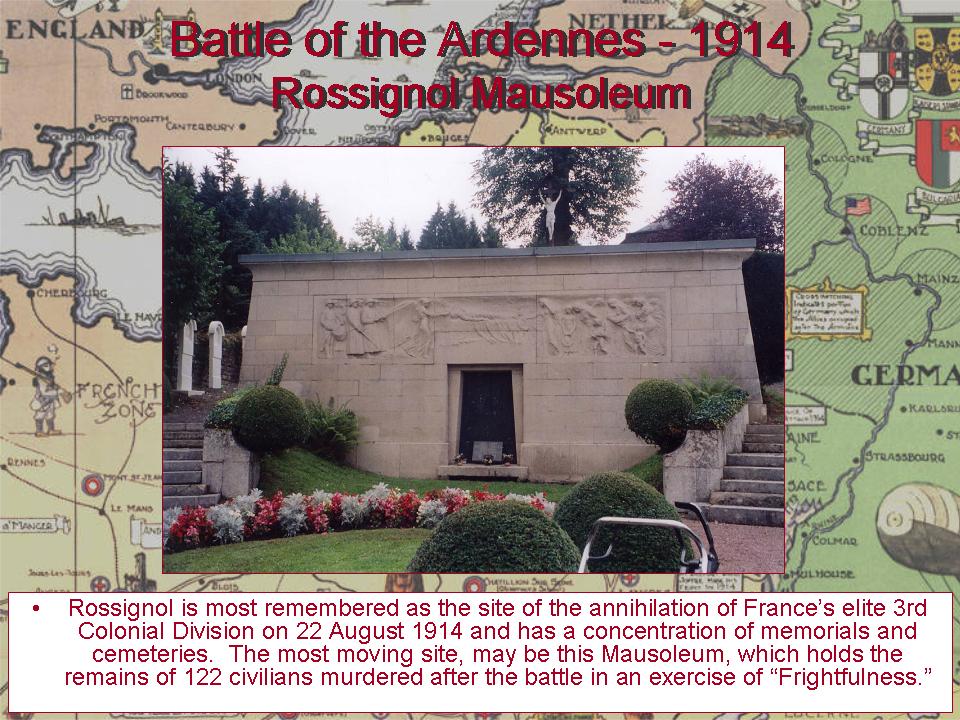
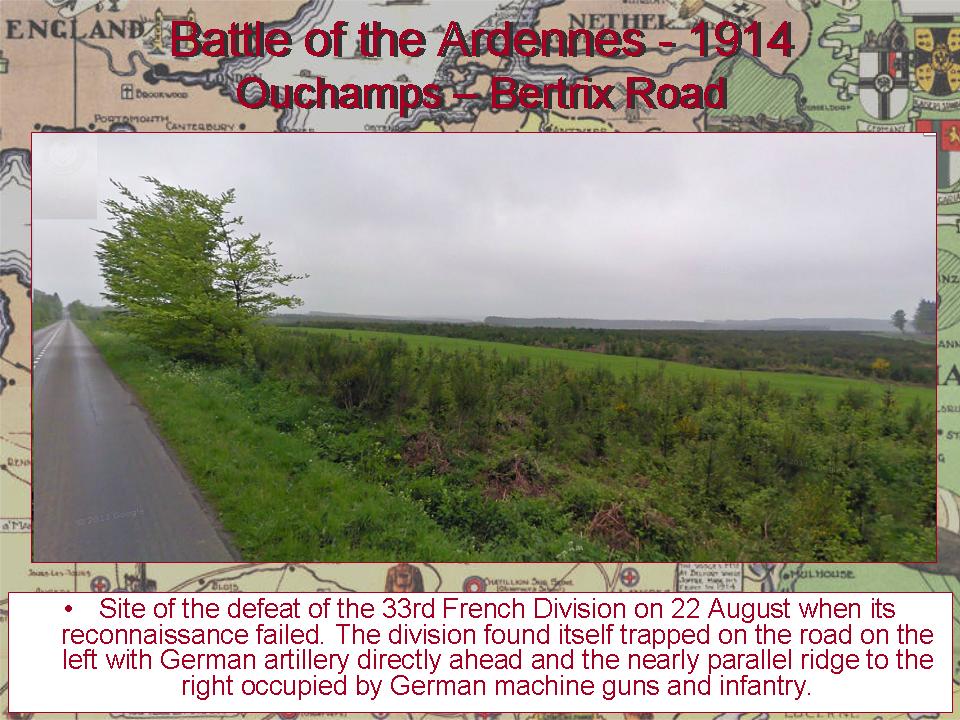
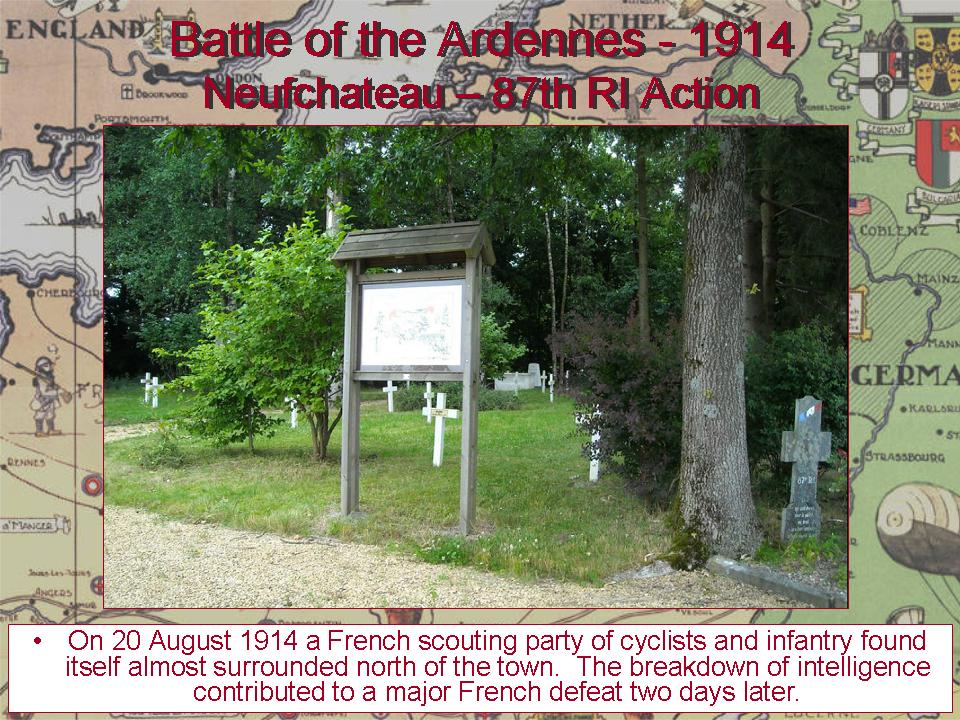
Stop 17: The Battle of the Ardennes — 1914


The operations in Belgium's Ardennes Forest in 1914 culminated the disastrous opening of the war for France. The defeated forces of General Joffre, whose Plan XVII was an utter failure, would begin their march to the Marne.

Click on Image to Expand


Click on Image to Expand


Click on Image to Expand


Click on Image to Expand


Next Week: We will be taking a break from our Virtual Tour. Look for a report from our first Centennial Battlefield Tour, which I'll be leading, to the 1914 opening battlefields we have been covering in our recent postings to the Western Front Virtual Tour.


Thursday, April 24, 2014

25 April, ANZAC Day: The Forgotten French Contribution

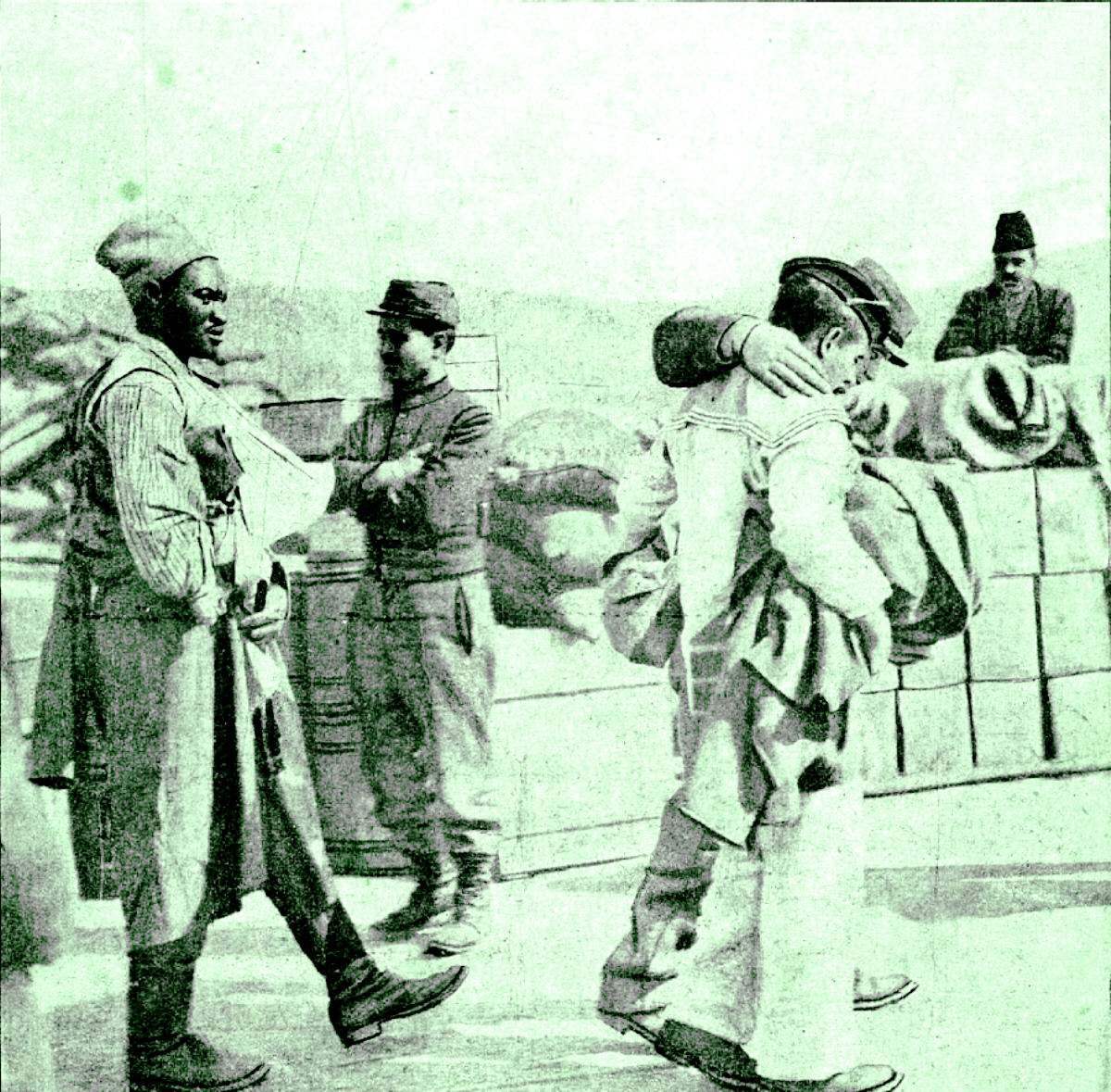
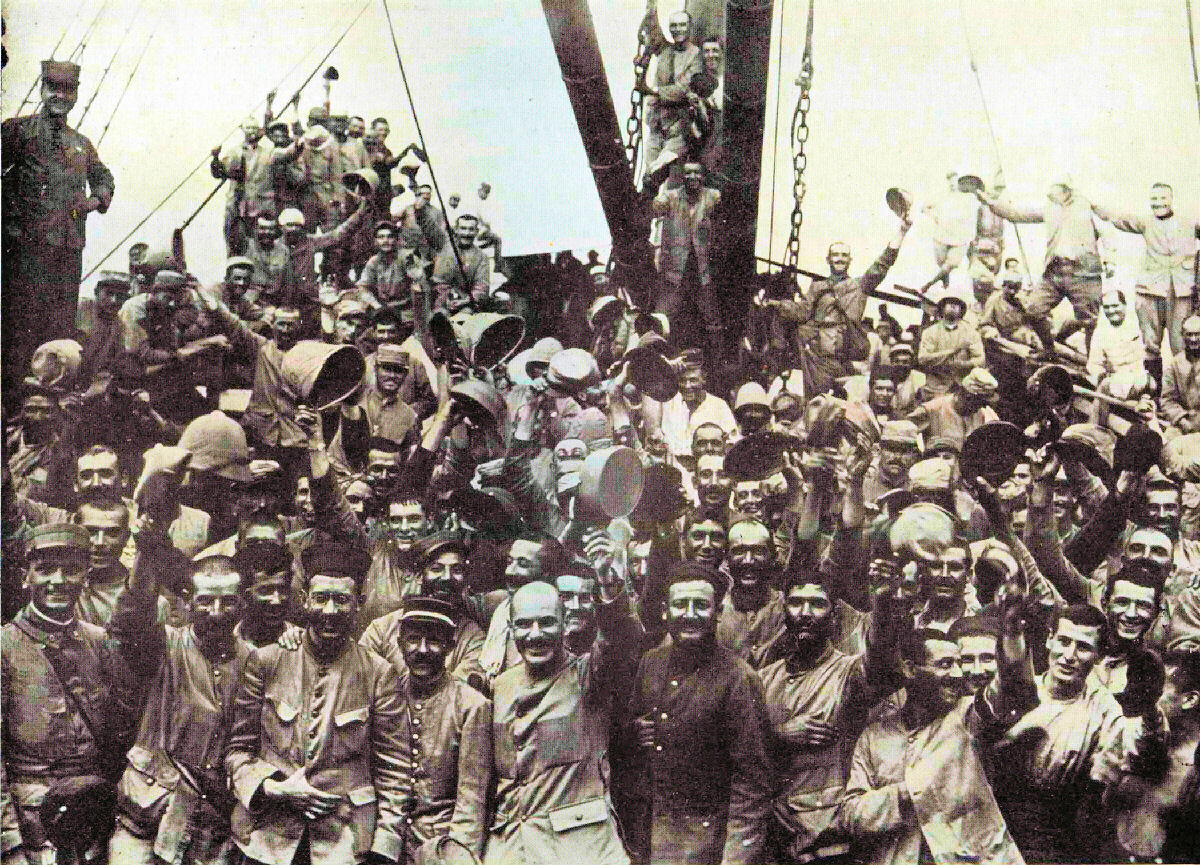
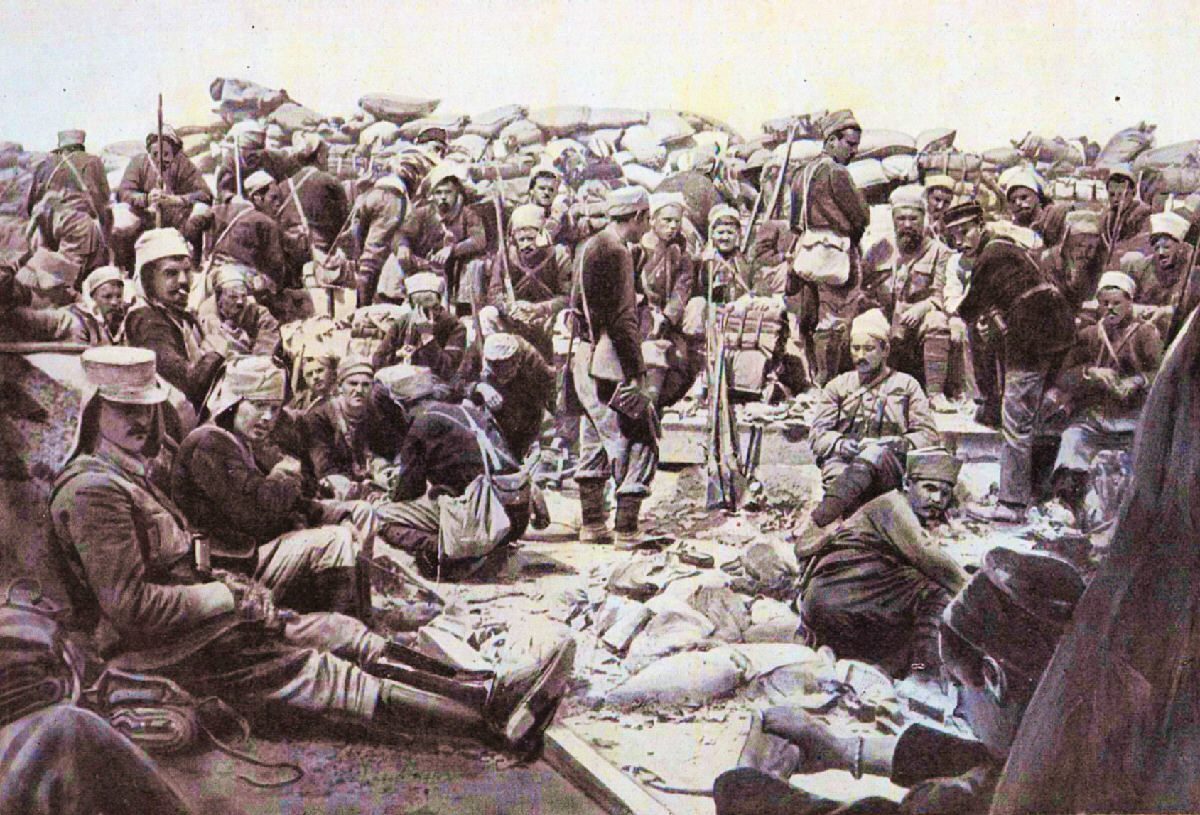
Here is a series of photos of the French forces sent to the Dardanelles from Tony Langley's collection:


French Troops En Route to the Dardanelles


Colonial Troops Shortly After Arrival


It is often forgotten that the French made a major contribution at Gallipoli. On the first day of the landings their forces sent to capture Kumkale on the Asian side were the only troops to accomplish their objective on 25 April 1915. When moved across the straits they held down a good part of the Allied right flank at Helles (approximately one-fourth of the Helles line) through the fall of 1915. They were, however, considered something of a weak link until placed under the command of General Henri Gouraud, a future "Western Front star," who arrived in May. It was Gouraud who organized the limited, but impressive, advance by French units on 21 June.


Artillery Position at Helles


Wounded Men Moving to the Rear


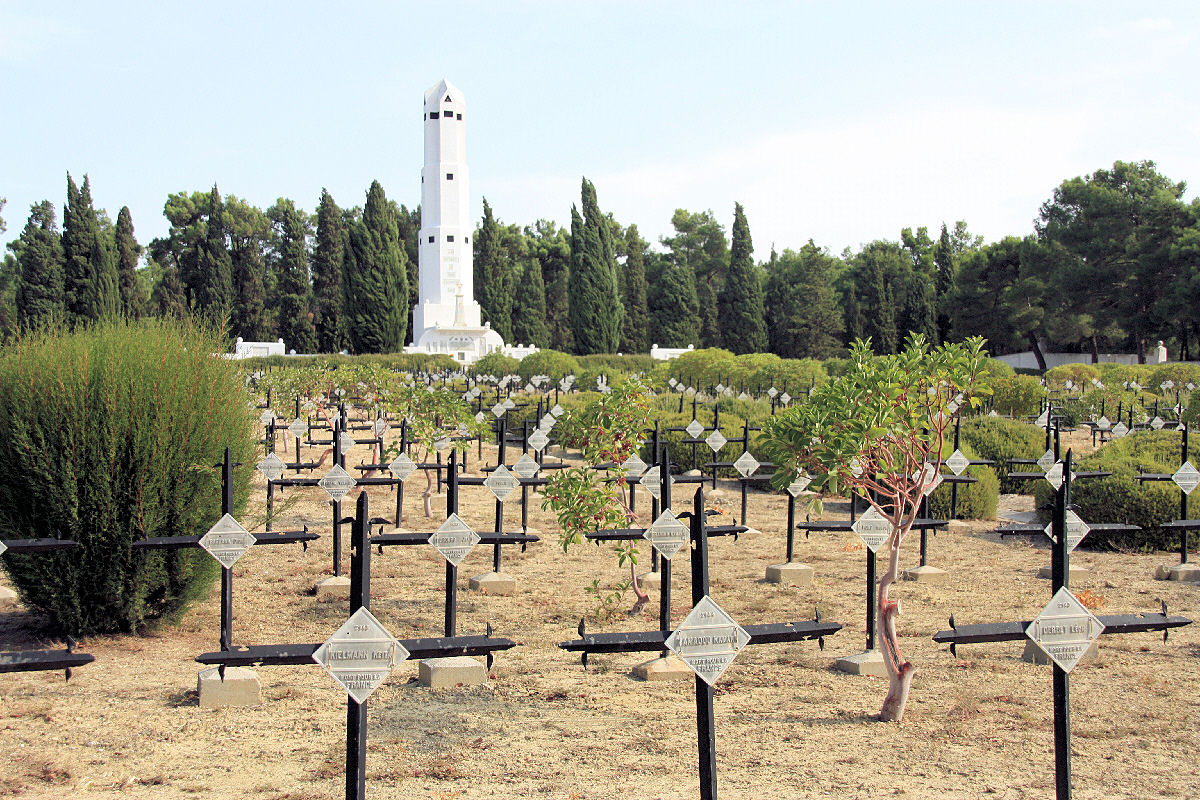
The sacrifice of the 42,000 metropolitan and colonial French soldiers who served at Gallipoli is honored at a cemetery and memorial above S Beach where there are over 2,000 graves and four ossuaries, each with the skeletal remains of 3,000 men.

French Memorial and Cemetery Above S Beach, Helles


Wednesday, April 23, 2014

The Centennial at the Grass Roots Series: Mustering the Doughboy Reenactors


Since I've been operating The Doughboy Center Website I have seen that one component of the World War I community has labored tirelessly to keep interest in America's participation in the Great War active and living. It is the loose-knit collection of Doughboy Reenactors, who are scattered around the country and even in Europe. During the Centennial these groups are going to come to the forefront. They make themselves available for ceremonies, they help with education of young people, and they can always be counted on to encourage appreciation of history anyway they can.  In case you are  not familiar with any of these groups, here is the homepage of one of my favorites, the 318th Infantry Regiment. Their Newsletter Articles have terrific information on the Doughboys' uniforms, gear, and food. (Have you ever wondered how to wrap puttees on your feet so they don't get tangled up?)


As part of my plans to retool the Doughboy Center for the Centennial, I am adding a full roster of the all the Doughboy reeanctors I can locate, so people learn about them and contact them for Centennial events.  If you would like your group included, whether Army, Marines, Navy, or Air Service,  just email me with your contact information: greatwar@earthlink.net.

Mike Hanlon