Now all roads lead to France and heavy is the tread
Of the living; but the dead returning lightly dance.
Edward Thomas, Roads

Sunday, October 20, 2013

Visualizing Gallipoli

Visualizing Gallipoli: You Can Do It If You Have Ever Visited Marin County 


After my first visit to Gallipoli in 2009, I was invited by the San Francisco Bay Area Chapter of the old Great War Society to make a presentation about what I had discovered. I knew that my conclusions were going to surprise the members. After my visit, I had reversed my view that it was the great "missed opportunity" of the war. Instead, I became convinced that the Dardanelles Campaign was doomed from its inception – that the naval assault had been a much tougher nut to crack than I had previously believed and that the subsequent land campaign, initiated after the failure of the battleships, never had a chance.


Click on Image to Expand
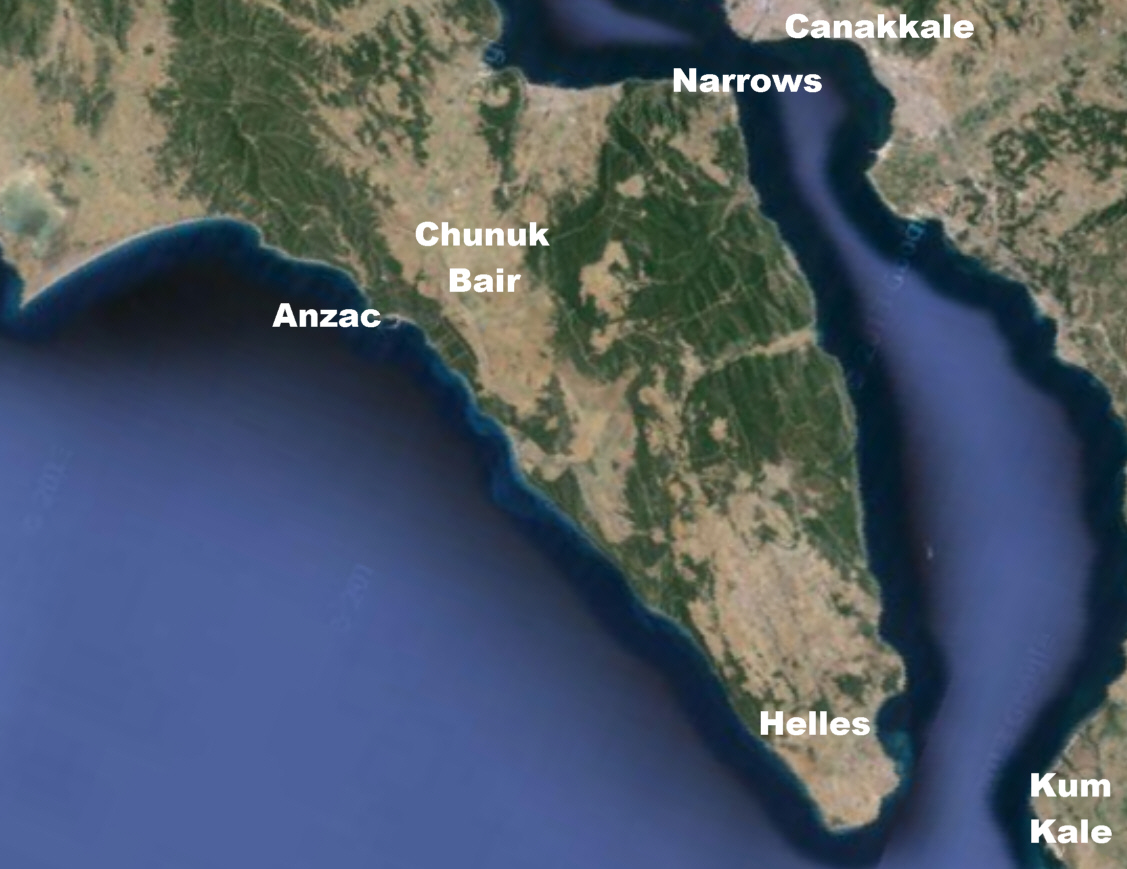
This is a Google map of Gallipoli and the Straits with some of the better known landmarks identified. It has been rotated almost 90 degrees counterclockwise for this discussion.


Marin County, California, to the Rescue

To support my argument almost all of which was based on geography I felt I needed something concrete so I could share my sense of shock at how different the terrain was from what I had visualized after my readings about the campaign and viewing many of the famous photos all of those present at the meeting had seen. I found my solution just by looking around San Francisco Bay.

Click on Image to Expand
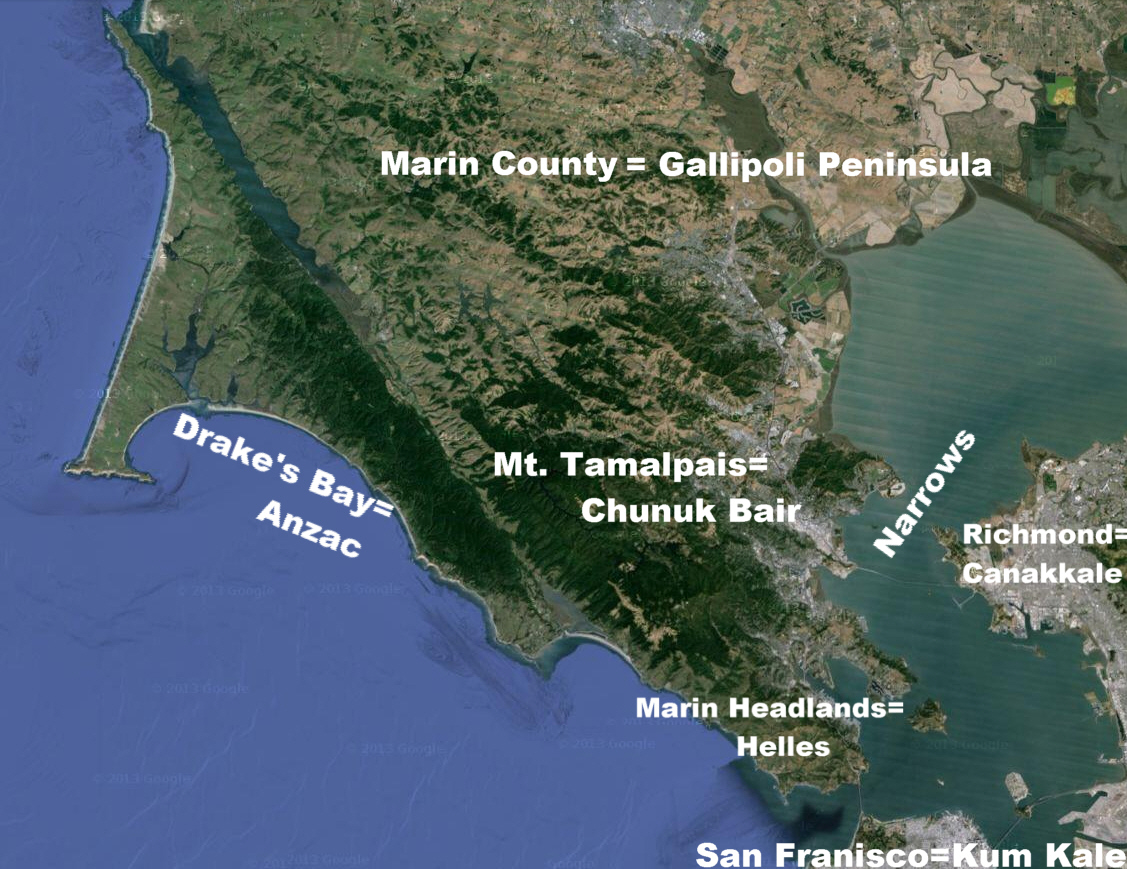
The southern part of Marin County, on the other side of the Golden Gate, is close in scale and shape to the Gallipoli Peninsula, sharing many of its features: bays, beaches, cliffs, highlands, plus its own mountain peaks, the most famous and tallest being Mt. Tamalpais. A number of these features are shown on the Google map of the Bay Area above with their Gallipoli equivalents.


Superimposing the Two Locales

Next, I found a nice user-friendly tourism map and created a slide, overlaying the Gallipoli sites as close to scale as I could place them. Some tugging and stretching was required, but overall, there seemed to be a good fit. The biggest shortcoming of the slide is that the mountains of Marin are not in the same alignment with the beaches as those on Gallipoli, although not so far out of kilter as to undercut the main points I wanted to make.


Click on Image to Expand
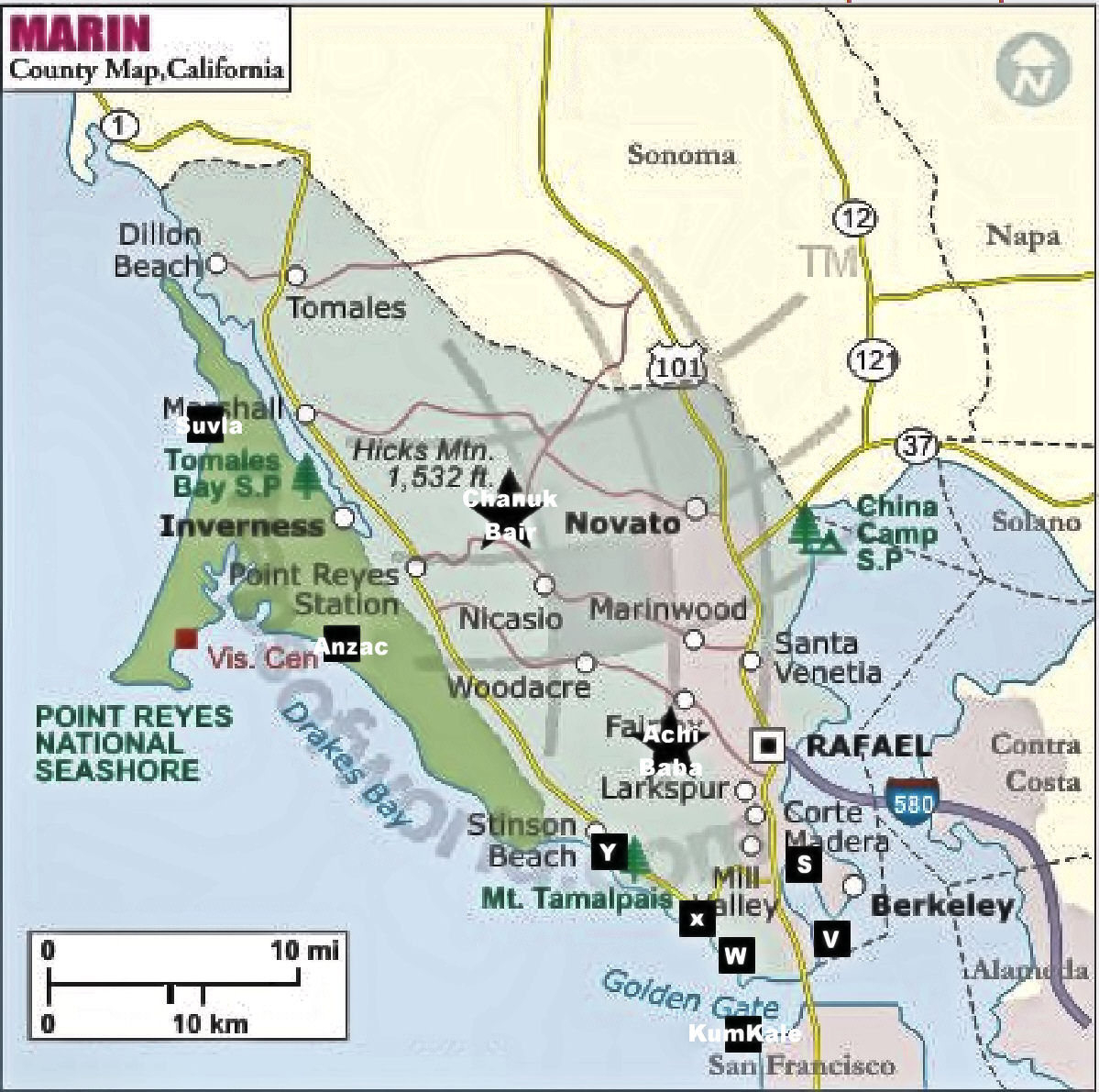

The most important aspect of this image is the mileage scale. Note that the landing beaches at Helles seem closely clustered but are actually miles apart, and the considerable distance of the Anzac landing site from the Helles beaches.


My Conclusions as Supported by the Composite

1. Given the terrain and distance apart, the two initial sectors, Cape Helles and Anzac, were never able to support one another. This violated the "concentration of forces" rule of warfare. 

2. Initially, the five landing beaches on Cape Helles presented a similar situation with forces unable to mutually support one another. This led to a delay in any organized effort to break out from the beaches, giving the Turkish defenders a chance to reinforce their defenses. Thus, the defenders very early were able to  block any advance by the invading forces, and for the remainder of the fighting as well. The operation at Helles was ill conceived and a failure from its first day. 


3. The initial French landing at Kum Kale was simply a wasted effort. 


4. The initial plan at Anzac was also unfeasible, requiring forces to land, reconnoiter, climb up steep hills, the highest nearly a thousand feet tall, and hold them with sufficient forces to resist any counterattacks. U.S. Marines at Iwo Jima, for example, required four days to secure Mt. Suribachi in 1945.  At Anzac, a comparable achievement would have been needed on the first day. Additionally, in terms of manpower, the Anzac landings were on a shoestring. Had the first troops taken the high ground on Day One of the invasion, the local commander, Mustafa Kemal, could (and did) bring more men, more quickly to the critical point. 

5. Summarizing points 1-4: the initial assault of 25 April 1915 was doomed to failure. But what about the August 1915 assault at Suvla? Most histories indicate this effort was well planned but was a failure because the sector commander, Lieutenant-General Sir Frederick Stopford, was incompetent, failing to move with alacrity to seize the surrounding high ground. The composite map does not make a contrary case alone, but a drive around Marin County does. Just like at Marin, the hills nearest the sea (the Aegean) at Gallipoli lead to a succession of higher hills, culminating in the Sari Bair massif. The attacking forces out of Suvlahad it succeeded to capture the lower surrounding hills still had a tremendous series of well-defended near-mountains to ascend. Turkish reinforcements arriving on the scene would have been deployed on those and halted any advance as the local commander, Mustafa Kemal–once again–could (and did).

6. From the above, I concluded (and still do) that the objectives of the Dardanelles Campaign were never achievable and the lives and resources committed to achieve them were wasted. Responses welcome.
Saturday, October 19, 2013

While Europe Fought: America Deploys on the Mexican Border


Contributed by John Cervone, U.S. Army, Retired


Click on Image to Expand


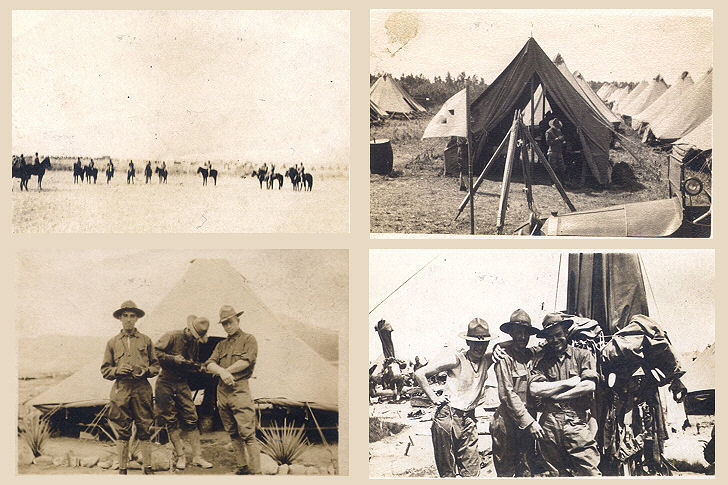
Battery A, Ready for Movement


On 15 May 2006, President George W. Bush announced the initiation of “Operation Jump Start,” a plan to use National Guard troops to assist the Border Patrol in restoring order to the region.   When Operation Jump Start concluded in July 2008, over 30,000 Army and Air Guard personnel in all 54 states and territories had served on the border. The National Guard  had also been deployed to the Mexican border 90 years earlier,  and many units repeated the experiences of their predecessors. Here is the story of one of those units.

In 1916, as the United States watched World War I unfold in Europe, General John J. Pershing led an expeditionary force against Pancho Villa. Light Battery A, Rhode Island Field Artillery, was called into federal service 19 June 1916 for duty with General Pershing during the Mexican border conflict. Members of the same unit would repeat history in August of 2006, when they were again deployed to the Mexican border, as part of "Operation Jump Start." In 1918 the Rhode Islanders also saw action during WWI with the American Expeditionary Force re-designated as the 1st Battalion, 103rd Field Artillery, an element of the 26th "Yankee" Division.


History records that only one regiment of the National Guard, the 2nd Massachusetts Infantry, actually entered Mexico with Pershing's Expedition. The Rhode Islanders along with the bulk of the National Guard troops would not cross the border into Mexico but were used mainly as a show of force. But be that as it may, as you have previously read, activities on the border were far from dull. The troops were on constant alert as border raids were still an occasional nuisance. As it later proved, the expedition was an excellent training environment for the officers and men of the National Guard, who were recalled to federal service later on in 1917 for duty in World War I. Many National Guard leaders in both World Wars traced their first federal service to the Mexican Expedition.

Military deployments are not always as simple as they are presented by Hollywood and those who have never been deployed. A deployment is hard work with little appreciation. A deployment to the desert can be both dangerous and strenuous. Only someone who has faced this type of danger truly understands the meaning of the word “deployment.” Remaining in the rear with the gear does not qualify even one iota. The troopers of the 103rd Field Artillery experienced this type of danger in 1916 and later on in 2006. Here are some of the situations they endured while in Mexico. Not everyone is wounded or killed in battle. Sometimes the daily rigors of life in the desert can also take their toll on soldiers.


Click on Image to Expand


Battery A, on the Mexican Border


The unit left Quonset Point on 9 June 2016 and had a very rapid trip to the border. The trip took only four days in all. While deploying to the border, they experienced firsthand how unprepared the nation was for transporting troops to their designated positions.  They were among the many units heading to the border, by train, who did not receive proper berthing accommodations until reaching Kansas City.  The railroads seemed to lack even the proper number of trains necessary to move thousands of troops from one section of the country to the other.  They even encountered delays upon arriving in El Paso. They had to wait hours before vehicles arrived to shuttle them to Fort Bliss.

The 103rd arrived at Fort Bliss after midnight and did not unload their gear until the following day. They were assigned to an area known as “Morningside Heights” and were greeted by fifty-seven varieties of cactus, snakes, lizards, scorpions, tarantulas, and hot burning sand. A large ravine ran right through the middle of the camp which was later to be found out became a raging river whenever it rained hard for more than fifteen minutes. As it rained about four or five times a day needless to say the area was not suited to an artillery unit. 

So they set up camp in this wasteland and with temperatures of over 120 degrees went to work with shovels, picks, and axes to set up a suitable camp. It took them over ten days to actually become acclimated to the heat and drinking water was always in high demand. After much hard work the camp was finished only to be told by a camp inspector that they had been assigned to this area incorrectly and were ordered to move to another location. They were moved twice more after clearing land and making it habitable for living.

All of this sounds very familiar to anyone who has been involved in a military deployment. Hurry up and wait or hurry up and move. I imagine that in many ways this keeps a soldier on his toes and never gives them any time to become complacent or bored.

One of the biggest problems facing the troops in El Paso was receiving the supplies they needed. Many of the outfits stationed there were poorly equipped when they arrived and were in the same state of disrepair when they left three months later.  Much of the equipment that was furnished was old and antiquated. The 103rd had to wait six weeks for cots for the men to sleep on. Before that many of them slept on the ground. As the 103rd was equipped with their own cooks, their meals were not as bad as some other units, but still lacked in quantity and taste.


Click on Image to Expand


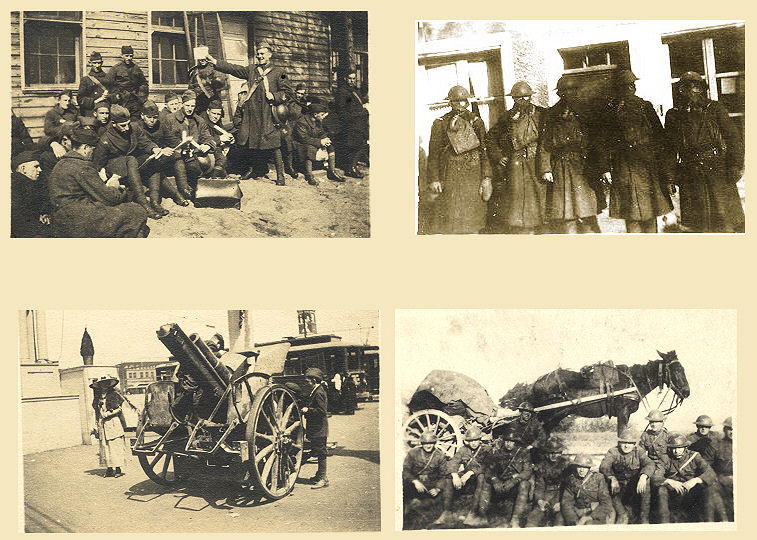
Battery A, in France, 1918


One of the daily missions for the troops was breaking in “green” mules. The key to surviving this type of training was to avoid their hooves. Many a trooper discovered to their chagrin that a mule kicks with his front and rear hooves. The unit had over 68 mules attached to it so everyone was given a chance to prove their prowess and stamina with these four-legged troopers.

Another hazard to the troops was sandstorms, some of which could be compared to miniature cyclones. These weather events would come whirling through the camp taking up to whatever came in their way from clothes to tents. Hats would disappear never to be found again. These miniature cyclones were coming at such a constant rate that the men began setting up betting pools on when they would strike.

The general health of the men was good and on the whole most came back in better health than they arrived with. There were serious — and one fatal — accident from kicks by mules and falls from bucking horses. The days were spent waking to reveille, then mess call, cleaning out the stables and then feeding and watering the horses and cleaning equipment. They drilled with their horses, practicing leg signals and various riding movements including hurdling obstacles.


Click on Image to Expand


Battery A, North of Château-Thierry


By November of 1916, the Rhode Island unit returned home, but not for long. They were called back into federal service on 25 July 1917. The unit was then drafted into the U.S. Army on 5 August 1917.  The unit was stationed at Camp Curtis Guild, Boxford, Massachusetts, where it was assigned to the new 103rd Field Artillery, 26th Division, AEF.  They were deployed to France, where they served with distinction during the Second Battle of the Marne and the St. Mihiel and Meuse-Argonne Offensives.  The unit was demobilized at Camp Devens, Massachusetts, 29 April 1919.


Friday, October 18, 2013

Bearers Up! How the Great War's Stretcher Bearers Changed Military Medicine


Editor's Introduction:

This month's contributor, Dr. Emily Mayhew of Imperial College, London, is an expert on the medical treatment that the British Army soldiers of the Great War received. Her newest work on the subject, Wounded: From Battlefield to Blighty, 1914-1918, is being released this month by Bodley Head. 

I am proud to be presenting her article on stretcher bearers for two reasons. First, those brave and dedicated individuals began—out of necessity — a revolution in military medicine. The results: today's combat medics with modern facilities, are shown in the slide image below from one Dr. Mayhew's presentations. As "first responders" the World War I stretcher bearer had to initiate the care of men who had often been terribly mutilated by the new weapons of the industrial age, while under fire themselves. Then, still exposed, they had to evacuate their wounded from moonscape-like battlefields. 

It is this last point that makes me feel additionally proud to be presenting Dr. Mayhew's article. I am a graduate of the U.S. Air Force stretcher carrier's training course. Passing the obstacle course as a member of a stretcher team was the most physically demanding thing I did in my service time. Carrying that stretcher with a man aboard over a rope bridge above a creek, under and over barbed wire and many other obstacles, up and down the hills of Texas — all while the sergeants were gleefully throwing practice grenades at our feet and shaking that rope bridge – was the closest I ever came to the trench warfare experience. I did not realize that until I read Emily Mayhew's article.

To Read the Full Article:

Over the Top is our subscription magazine.  It is the one item we charge for. Together with the small revenues we receive from our Amazon.com commissions, these are the only revenues we have to support all our services, most of which are offered for free to encourage interest in the Great War of 1914-1918.  For information on ordering the current year's issues and CDs with our back issues, just download our PDF flyer at:


Each issue of Over the Top includes a main article, full-color images and photos, plus extra features in our "In Parenthesis" section.  For our October issue we have included a poem by Robert Service ("Shooting of Dan McGrew"), who made his way to the Western Front as a Red Cross ambulance driver. During his service he continued to write poems, which were gathered in the volume, titled Rhymes of a Red Cross Man from which this work, "The Stretcher-Bearer," was selected. He dedicated the collection to his brother, Lt. Albert Service, who was killed in Flanders in August 1916.


Thursday, October 17, 2013

Ninety-nine Years Ago: Quotes from October 1914

It is my Royal and Imperial Command that you exterminate first the treacherous English, and walk over General French's contemptible little Army. 
Kaiser Wilhelm II, 1 October

It is not true that Germany is guilty in having brought about the war. . .
It is not true that we wantonly violated Belgian neutrality. . .
It is not true that the life or property of a single Belgian citizen has been infringed by our soldiers, except where such an attack was dictated by the bitter necessity of self defense. . .
It is not true that our soldiers have brutally devastated Louvain. . .
Ninety-three German Intellectuals, in "An Appeal to World Culture," October 1914


Louvain Afterwards
Not Truly Brutally Devastated?


The great Sloven day approaches
A Russian and a Serb are bringing it
We shall be the masters here
Woe upon you German dogs!
Long live Serbia
Protest Song of Slovenes in Austro-Hungarian Service

Winston [Churchill] like every genius (and he really is a genius!) will not brook criticism and idolizes power and so has surrounded himself with 3rd class sycophants—I have told him this to his face!
Admiral Jacky Fisher, 10 October

It is the women of Europe who pay the price while war rages, and it will be the women who will pay again when war has run its bloody course and Europe sinks down into the slough of poverty like a harried beast too spent to wage the fight. It will be the son-less mothers who will bend their shoulders to the plough and wield in age-palsied hands the reap hook.
Kate Richards O'Hare
Magazine article, October 1914

The logic of the world is prior to all truth and falsehood.
Soon to be Austrian Artillery Officer and Prisoner of War Ludwig Wittgenstein 
Notebook entry for 18 October 


Our life is running at full speed.  Everyone is occupied by the war, with care for wounded and the arrangements for future Polish refugees.  The mood is wonderful, with a total belief in success and in victory.
Artist Konstantin Kandaurov in Moscow, October 1914

We are going on a 4 days train journey, probably to Belgium. I am tremendously excited.
Adolf Hitler, List Regiment, 21 October

29 October  Turkey Joins the Central Powers
Swimming in a sea of military defeats, the Ottoman leadership, it seems, should have opted for less war, not more, in 1914. The generation at the helm of the  state, however, welcomed the July Crisis not as a reprieve but as an opportunity to end the empire’s international isolation.
The Limits of Diplomacy: The Ottoman Empire and the First World War
Mustafa Aksakal

Field Marshal Sir John French


First Battle of Ypres, October/November 1914
I have no more reserves. The only men I have left are the sentries at my gates. I will take them where the line is broken, and the last of the English will die fighting. 
Sir John Denton French, Commander in Chief, BEF


Wednesday, October 16, 2013

A Forgotten Battlefield: Le Linge

The Fighting at Le Linge 


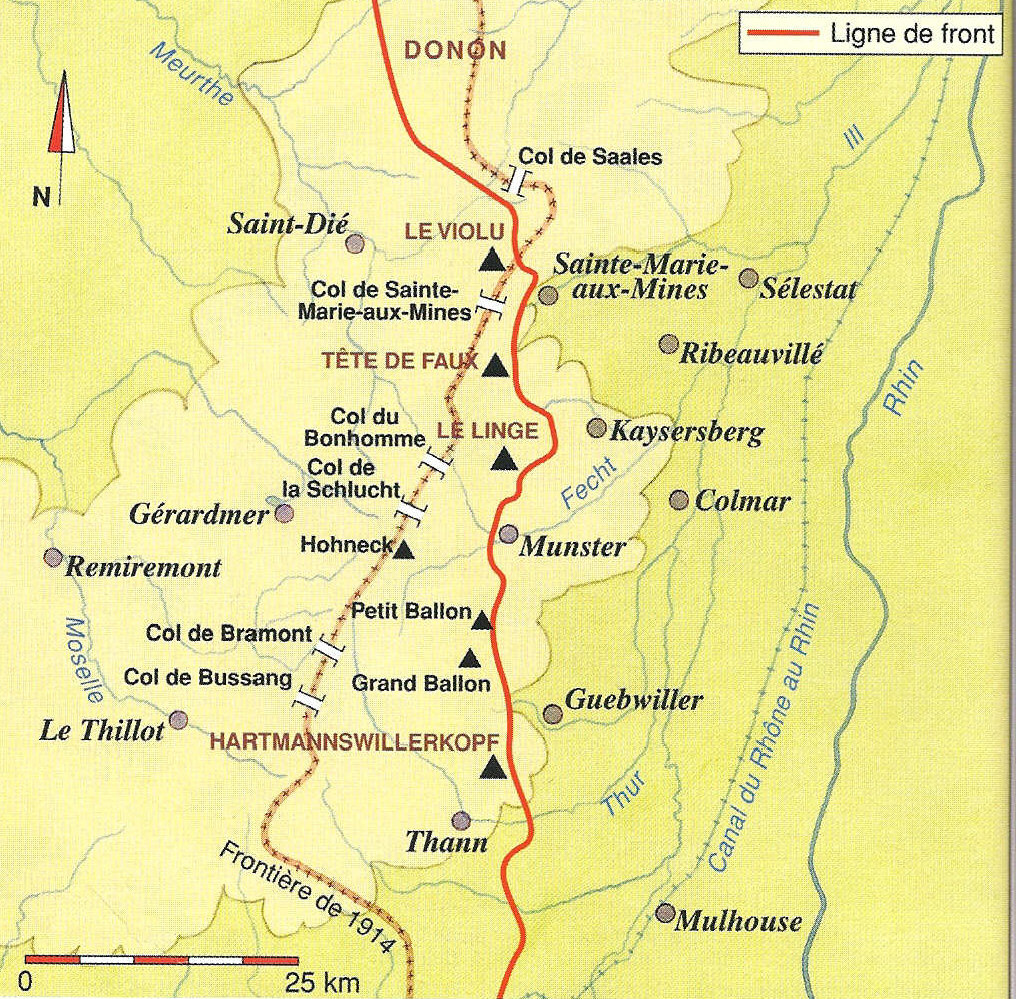
The struggle for Le Linge, a hilltop located fourteen miles west of Colmar in the Vosges Mountains, was one of the bloodiest battles of the First World War, but is mostly forgotten today. Between 20 July and 15 October 1915, the Germans organised their defense here in order to prevent French troops advancing on Colmar. In 1915 this area was part of the Alsace, which Germany considered its own. The fighting was extremely violent, with 17,000 killed counting both the French and German losses. Gas and flamethrowers were used here. Subsequently, as both sides came to realize that a major breakthrough in the Vosges was unfeasible, the hill was the site of some of the closest, most intense trench fighting of the Great War.


Click on Image to Expand

The area shown here between the 1914 border and the line of 1915-1918 was the only German territory occupied by the French Army before the Armistice.

Le Linge Today


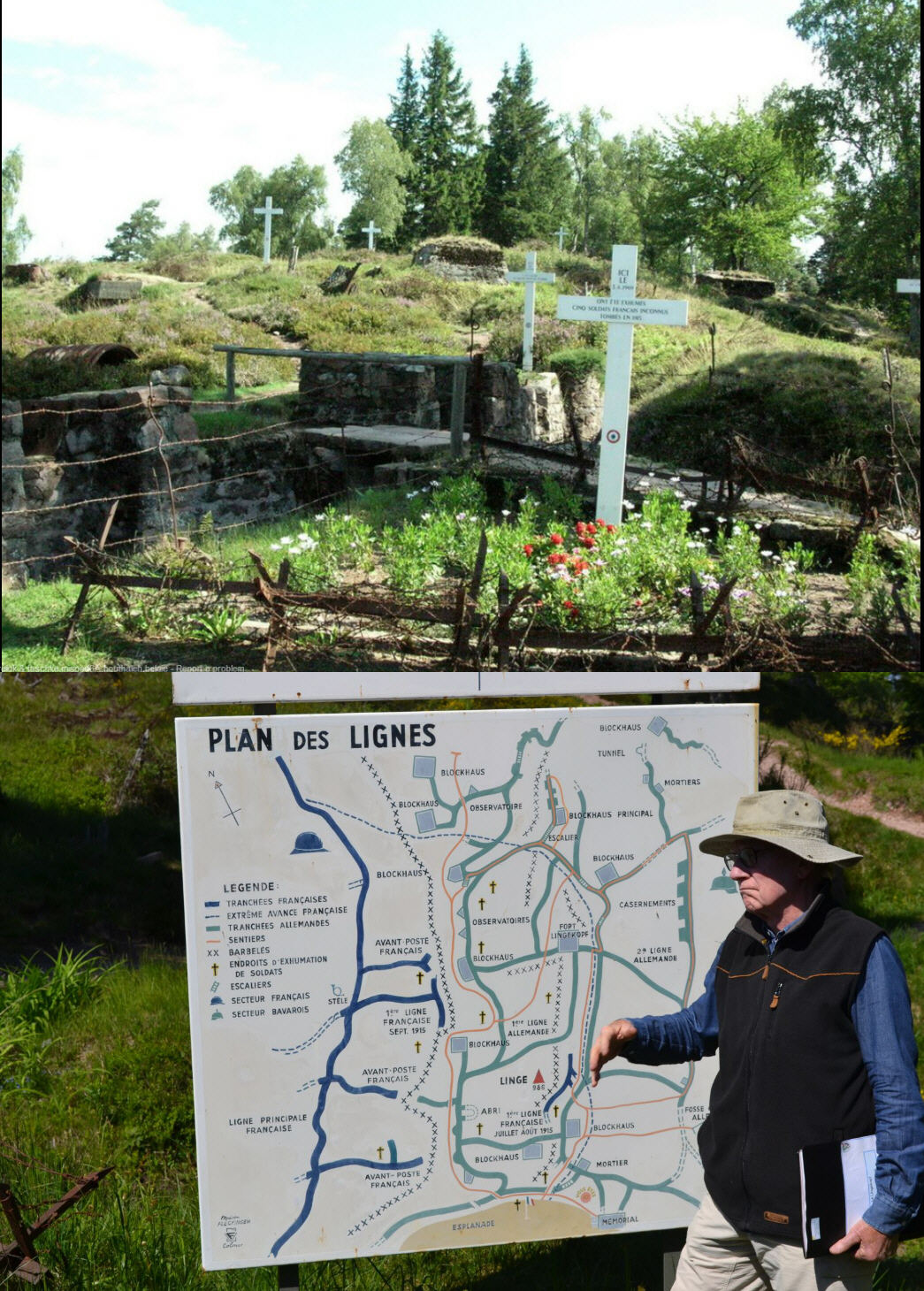
The battlefield is situated at the top of a rocky hillock, dotted with a few trees and lined with trenches dug out of the sandstone. The bunkers and barbed wire which crisscrossed the area have been retained. A very moving memorial site, the battlefield contains numerous black-and-white crosses marking the final resting place of French and German troops. A museum includes numerous items found on the site: weapons, personal belongings, munitions, and other relics. Models of the battlefield, video clips, and photos further add to the experience

Click on Image to Expand

The view from the southern entrance to the site; below – a guide shows the trench network.


Click on Image to Expand

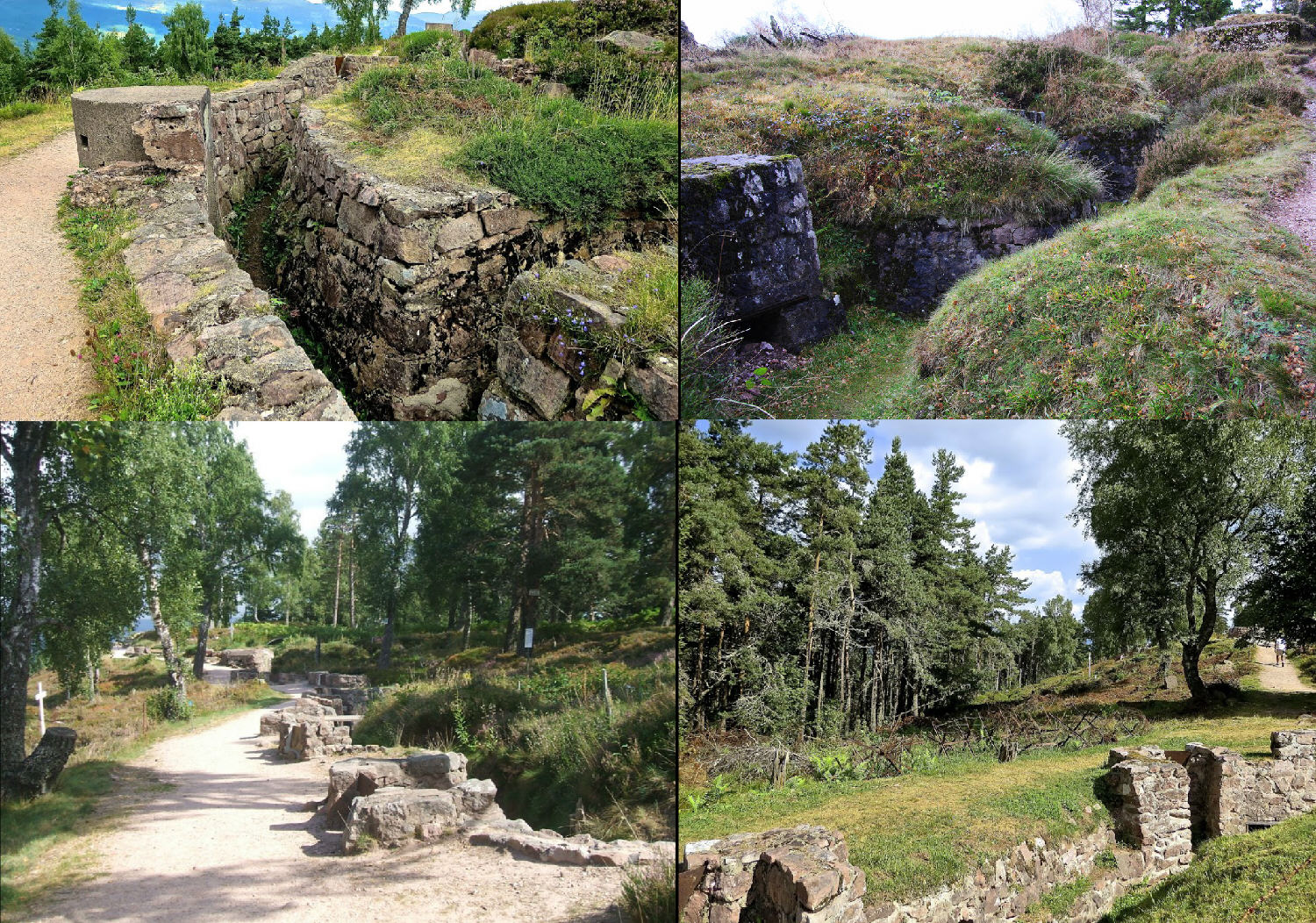
Four views of the various trench lines


Click on Image to Expand

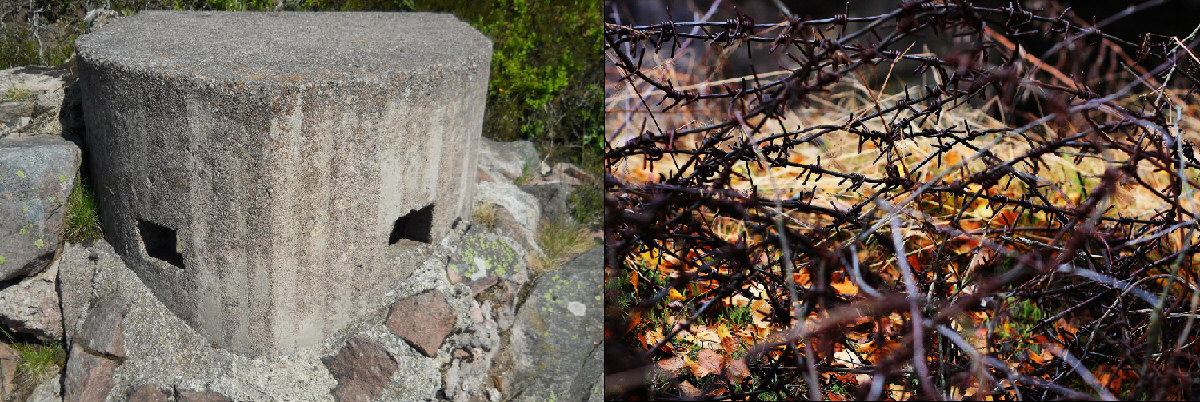
Two distinguishing aspect of the Le Linge site: the extensive use of concrete by both sides and the well-preserved barbed wire barricades throughout.


Click on Image to Expand

My 2012 tour group at the northernmost outpost at Le Linge; right – a Chasseur Alpins ski-trooper on display in the excellent museum at the site.


Tuesday, October 15, 2013

The Great War and Modernism Series
Rites of Spring. The Great War and the Birth of the Modern Age
Reviewed by Jane Mattisson Ekstam


Rites of Spring. The Great War and the Birth of the Modern Age

By Modris Eksteins
Published by Boston and New York, Houghton Mifflin
(First Marine Books edition), 2000

Rites of Spring is about death and destruction, rupture, disorder, and crisis — some of the most important features of the modernist period. Eksteins argues that it was the Great War that was the psychological turning point for modernism; after 1918, he claims, "The urge to create and the urge to destroy had changed places." Eksteins focuses on the emergence of our modern consciousness in the first half of the twentieth century — and more specifically, on our obsession with social, artistic, and sexual emancipation.

Click on Image to Expand

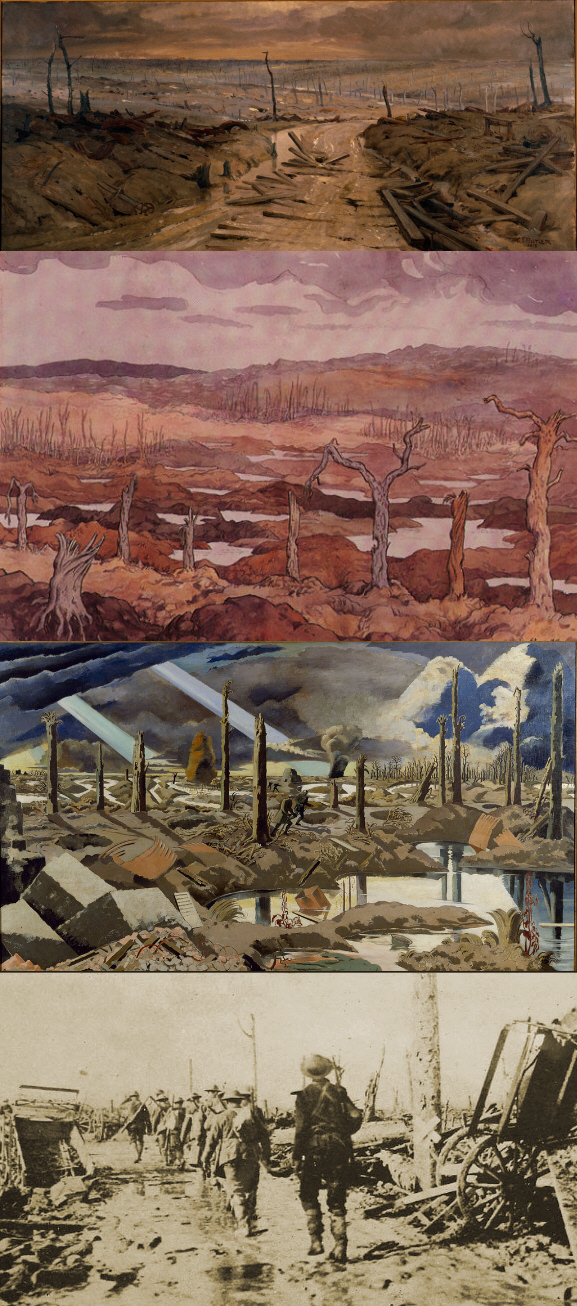
Modernism Marching Down the Menin Road


From top (All are titled "Menin Road"): A conventional landscape by George Edmund Butler; expressionistic (?) interpretation by Ian Strang; semi-abstract semi-cubist (?) painting by Paul Nash; Menin Road (actual)


The title of Eksteins's study comes from Stravinsky's ballet, a landmark of modernism. The main motif of the ballet is movement. By movement, Eksteins means the dance of death as a result of our acquisition of the power of ultimate destruction. In our pursuit of life and emancipation, he argues, we have killed off millions of our best human beings. Rites of Spring is a cultural history that incorporates not only music, ballet, and other arts but also manners and morals, customs, and values. In this respect, it is similar to Samuel Hynes's A War Imagined: The First World War and English Culture (1991); unlike Hynes, however, Eksteins focuses on the avant-garde and modernism, claiming that the latter is "the principal urge of our time".

For Eksteins, the state of human consciousness after the war is best traced in the lives and words of ordinary people. These demonstrate a profound spiritual crisis, which affects rural laborers, large landowners, industrialists, factory workers, shop clerks, and urban intellectuals alike. Economic and social insecurity underlined and intensified a crisis of values brought about by the war and its aftermath, particularly the peace that failed to meet the expectations promised by leaders during the war. Eksteins quotes Paul Valéry in a lecture in Zurich in 1922: "and still we are restless, uneasy, as if the storm were about to break. Almost all the affairs of men remain in a terrible uncertainty." Valéry was alluding to all that had been injured by the war: economic relations, international affairs, and individual lives. Above all, it was the human mind, he argued, that had been most severely wounded. Eksteins supports this claim.


Order Now
While some historians such as Professors Robert Wohl and Jay Winter have criticized Eksteins for making "outrageous statements" (Jay Winter (ed.), The Legacy of the Great War Ninety Years On, 2009), the same historians have also described Rites of Spring as "exciting, very exhilarating to read, and very provocative." Rites of Spring is indeed a daring project, which brings together the avant-garde, modernism, and the social, political, and artistic agents of revolt in the aftermath of the war. Eksteins promises (and delivers) an "historical account [that] proceeds in the form of a drama, with acts and scenes, in the full and diverse sense of these words. In the beginning was the event. Only later came consequence."

Rites of Spring is original, witty, and perceptive. Written in clear and easy-to-read prose, it is also a solid scholarly work, copiously annotated, and packed with references, artistic, political, and social. There is indeed something for everyone who is interested in how the war changed forever our view of life and history as well as how it radically altered the psychology of Europe. Rites of Spring is a book that should not be missed!

Jane Mattisson

Monday, October 14, 2013

The 1918 Road to Damascus: Over the Golan Heights

Photos Contributed by Steve Miller

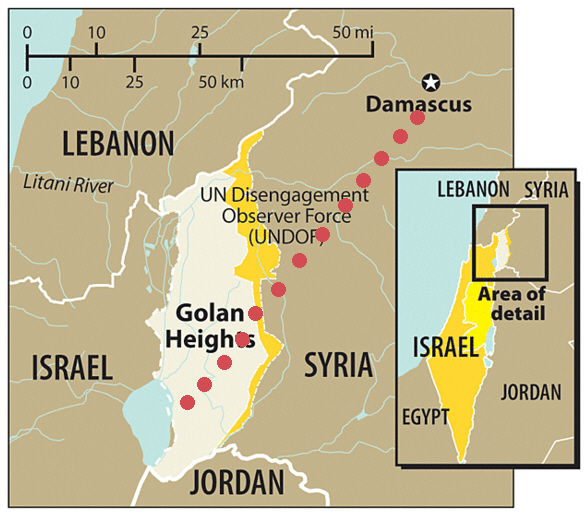
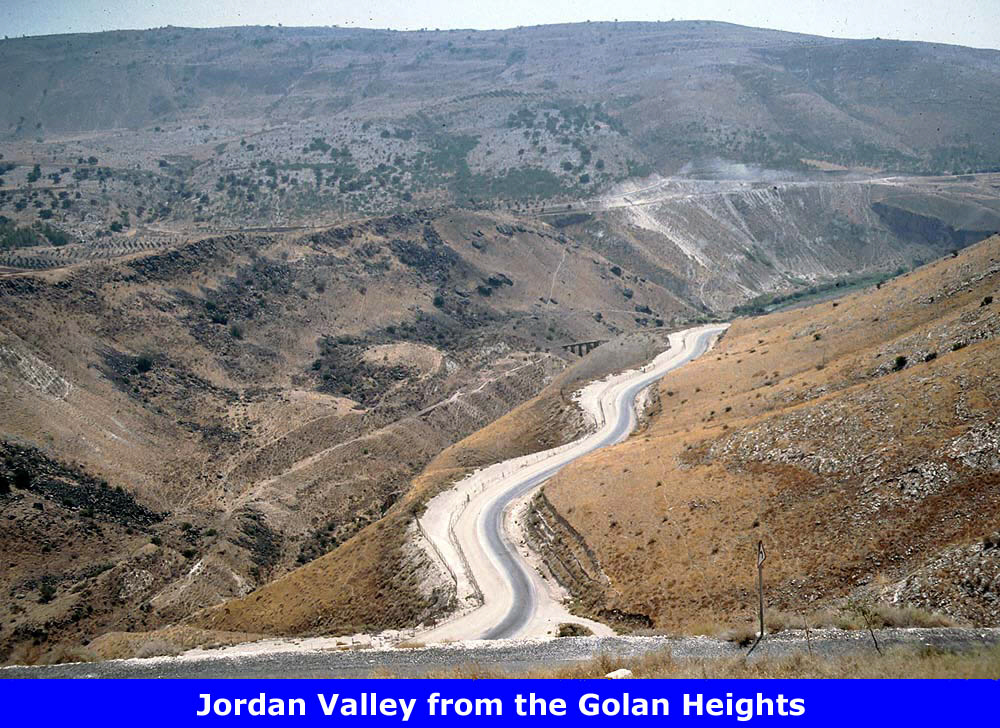
After his decisive victory in the Battle of Megiddo in September 1918, General Sir Edmund Allenby's forces pursued retreating Turkish troops toward Damascus. One column, composed of his 5th Indian Mounted and Australian Cavalry Divisions, advanced directly over the Golan Heights. Interestingly, this movement followed the historic path of St. Paul, who was converted to Christianity on the road from Jerusalem to Damascus. The Allied soldiers most certainly passed through the traditional site of the conversion, the village Kokab, just northeast of Quneitra, which is shown below.  The majority of the Heights were captured by the Israeli Army in the Six-Day War of 1967 and were a major battleground in the Yom Kippur War of 1973. These photos are from regular contributor Steve Miller, who visited the Heights in 1991. Sadly, we were unable to find any photos of the 1918 fighting, nor of St. Paul's earlier trip on Google images


Click on Image to Expand

Approximation of the cavalry advance, begun 27 September 1918. (Map from the Christian Science Monitor.)


Click on Image to Expand

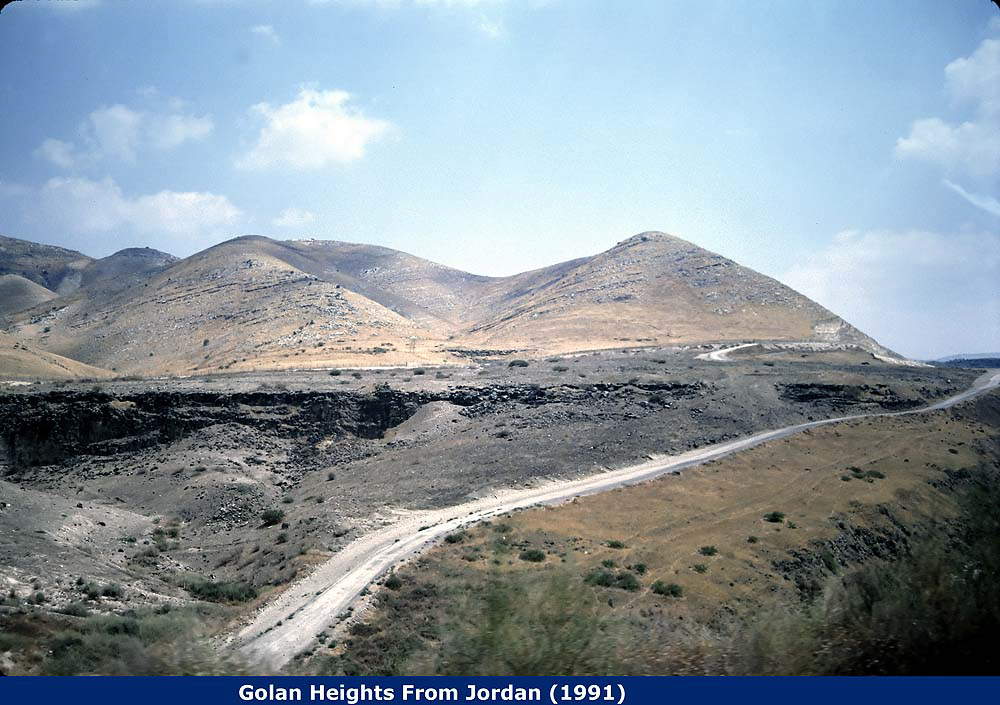
The Golan Heights are highland of more than 600 square miles created by volcanic activity, averaging a height of 300 meters in the south and 1100 meters in the north. The characteristic steep slopes on the west and south sides of the Heights are shown in this photo.


Click on Image to Expand

The pursuing cavalry departed the region of the Sea of Galilee and moved immediately on to the heights on 27 September 1918.


Click on Image to Expand

Looking south from the Heights


Click on Image to Expand

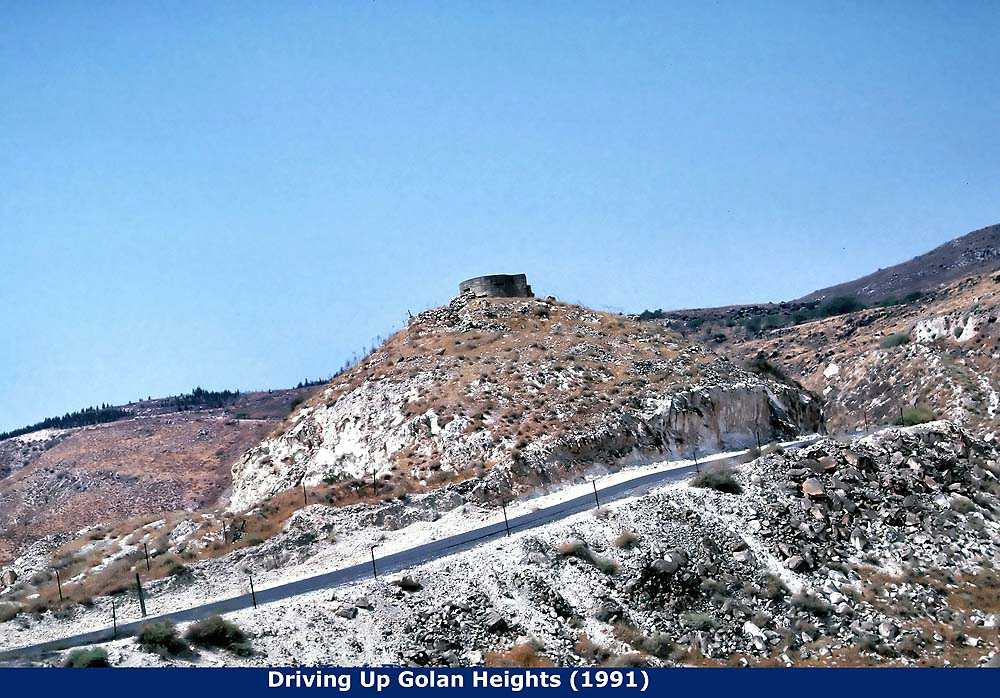
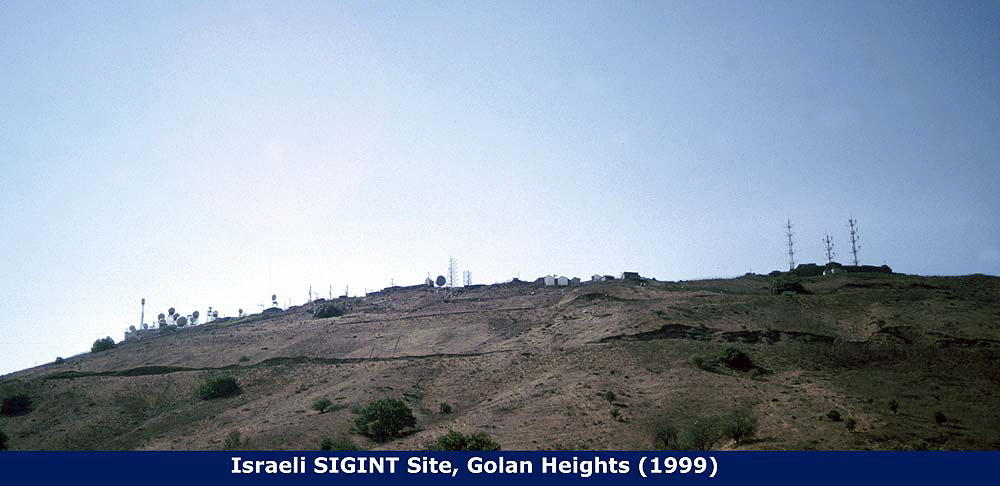
An Israeli observation post positioned to dominate the Golan Heights


Click on Image to Expand

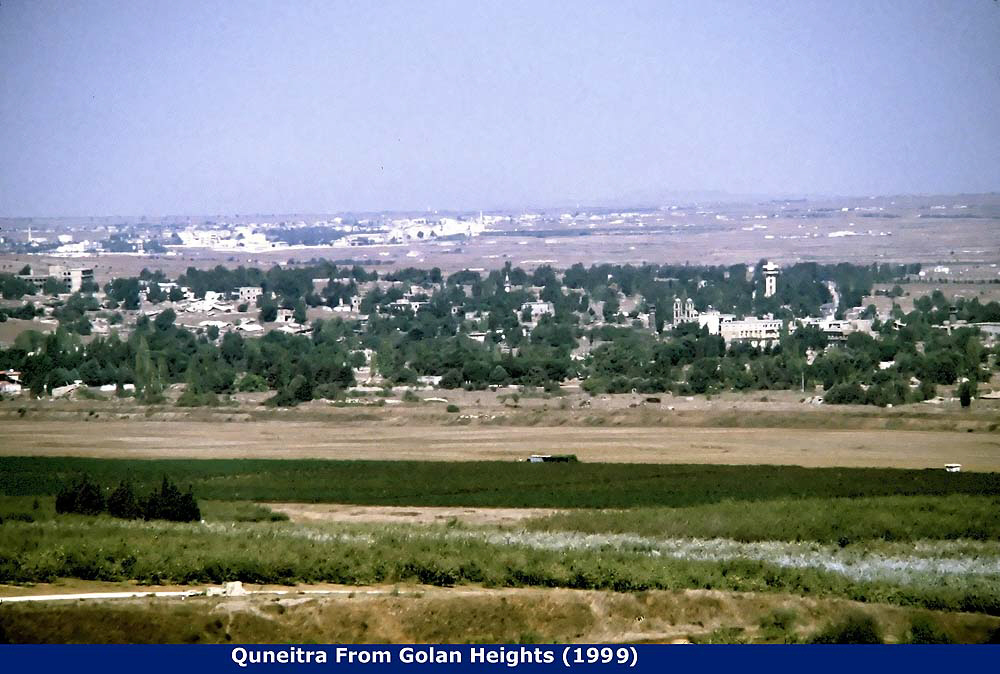
On 29 September 1918 Allied cavalry routed the Turkish rear guard at the village of Quneitra.  This left the road to Damascus open and the city fell on 1 October. Almost two thousand years earlier, St. Paul (then known as Saul of Taurus) received his spiritual enlightenment nearby.


Click on Image to Expand

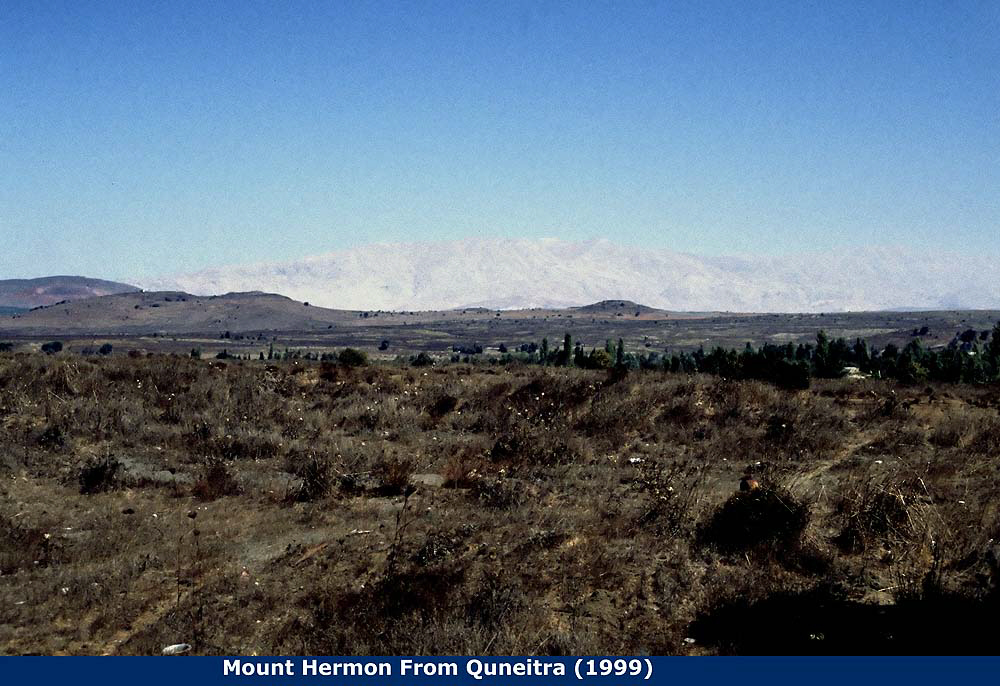
Mount Hermon on the northern edge of the Heights, most of which is claimed by Israel today, has the nation's highest point at 2,224 meters.


Sunday, October 13, 2013

Panoramic Images from the American Memory Collection of the Library of Congress

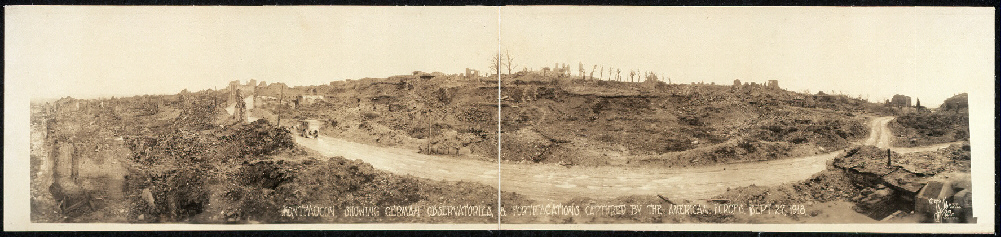
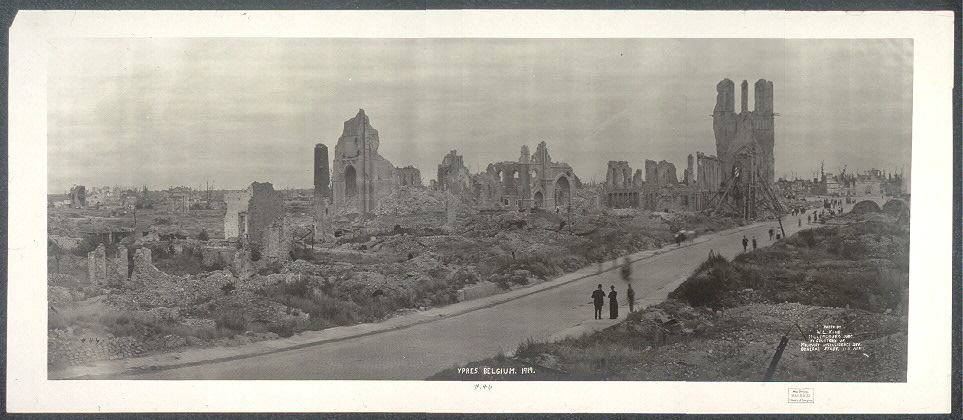
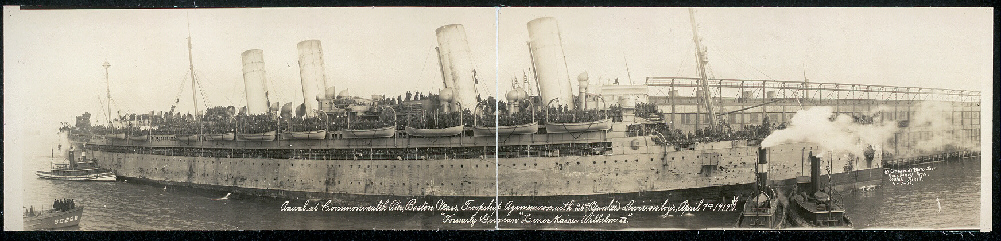
A tremendous online resource exists on the American Memory Website of the Library of Congress. They provide thousands of downloadable high-resolution images of the nation at war. The truly unique aspect of the collection is their set of panoramic images. Generally, these are not combat images (you will need to explore the Army Signal Corps collections for those). The wide-format photographs tend to focus on the preparations at home and "after the battle" images of the European battlefields and the troops of the AEF returning home. Below are some outstanding examples from the collection. To search for additional images visit the search page at: http://memory.loc.gov/ammem/collections/panoramic_photo/


Click on Image to Expand


1919 Image of Montfaucon, Captured 27 September 1918 During the Meuse-Argonne Offensive


Click on Image to Expand


1919 Image of Ypres, Belgium — Ruins of Cloth Hall and St. Martin's Cathedral


Click on Image to Expand


April 1919, the 363rd Infantry, 91st "Wild West" Division at San Francisco's Palace of Fine Arts, Prior to Discharge at the Presidio


Click on Image to Expand


April 1919, USS Agamemnon Arrives at Boston Harbor with Troops of the 26th "Yankee" Division


Saturday, October 12, 2013

HMS Dreadnought at War

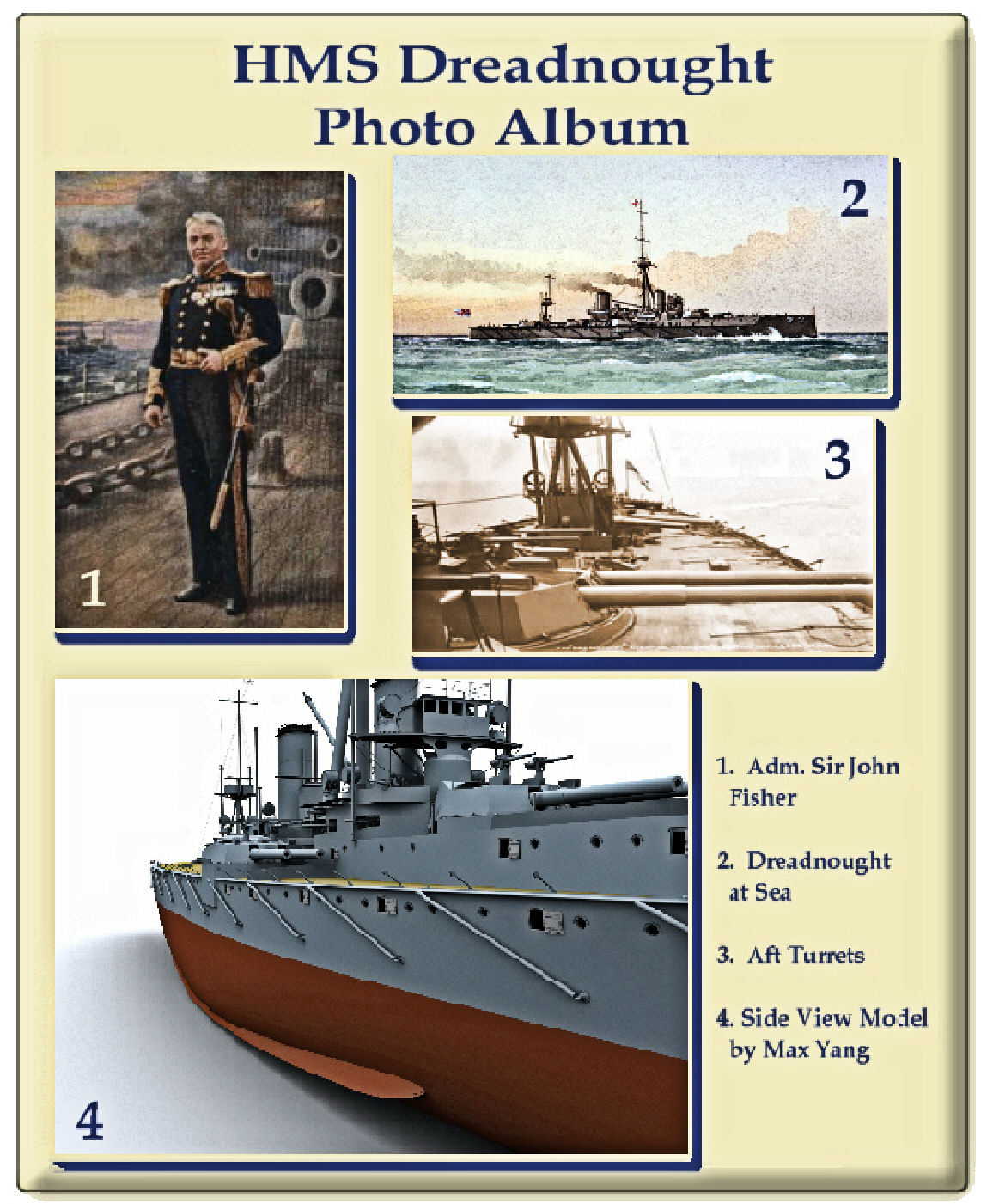
HMS Dreadnought, brainchild of Admiral Sir John Fisher, was launched in 1906. The one thing that set Dreadnought apart was her battery of ten 12-inch guns, of which eight could be fired on either broadside. Soon all the major naval powers – and some minor ones, too – were building or buying dreadnoughts, and the dreadnought race between Britain and Germany contributed to the growing tensions between these two nations.


Click on Image to Expand


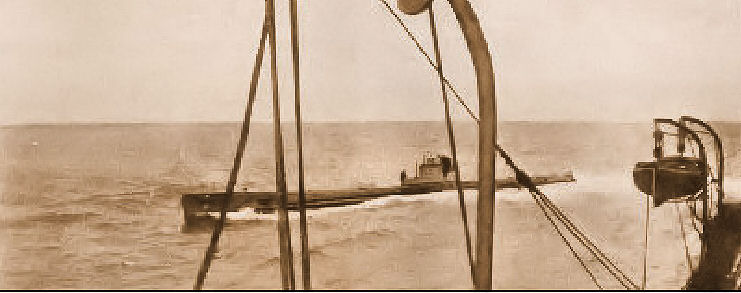
When the great struggle finally came, though, Dreadnought was a bit "long in the tooth." By May 1916 she had been transferred out of the Grand Fleet to a squadron of pre-dreadnoughts based in the Thames Estuary. Earlier, however, she accomplished a singular feat. On 18 March 1915 she rammed and sank U-29 [below] in the North Sea. HMS Dreadnought holds the distinction of being the only battleship to sink a submarine in combat.


Click on Image to Expand

Friday, October 11, 2013

Hollywood and the Great War

Click on Image to Expand


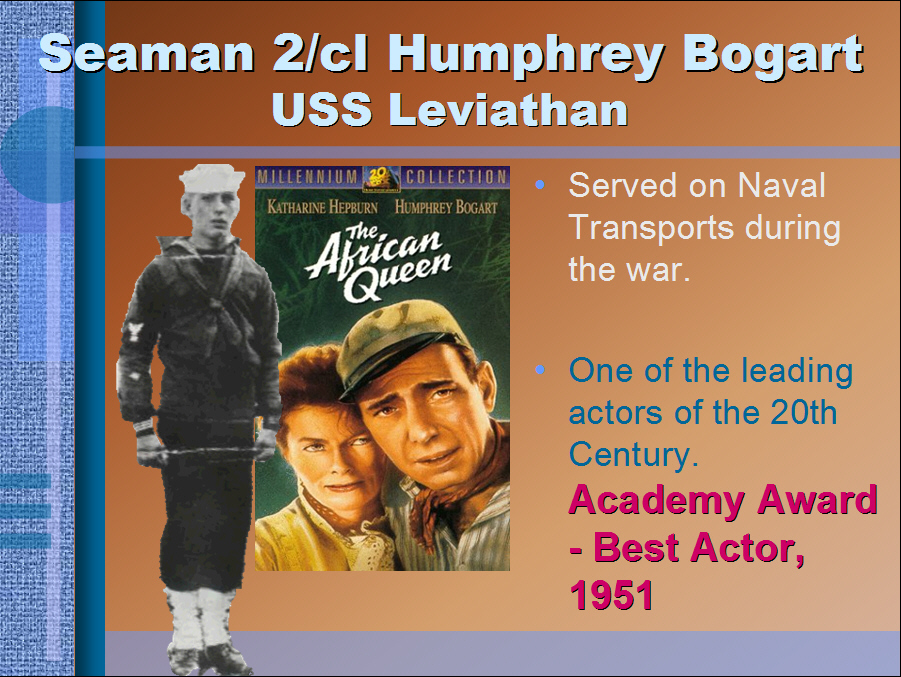
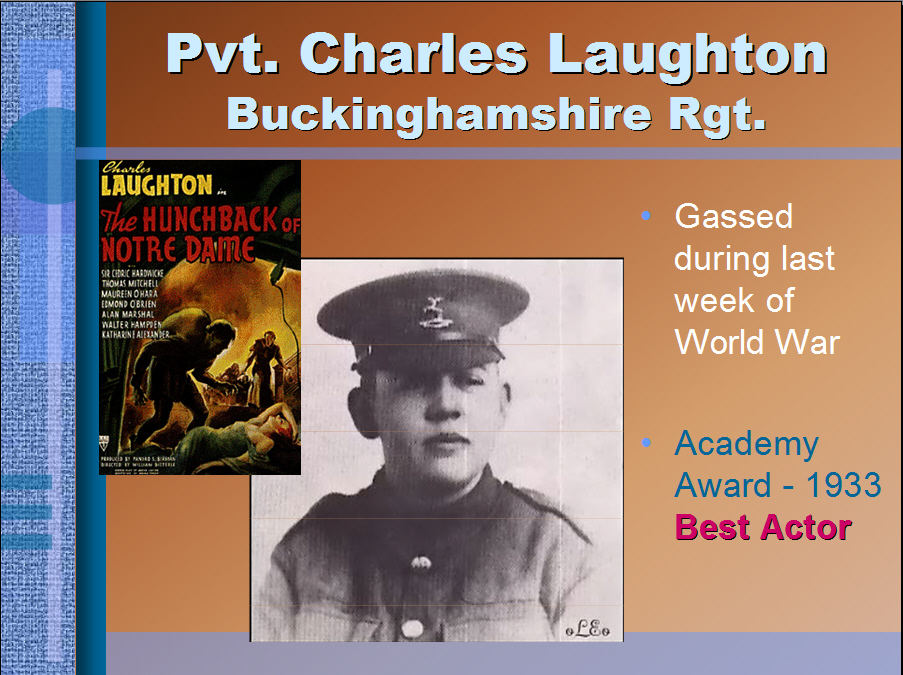
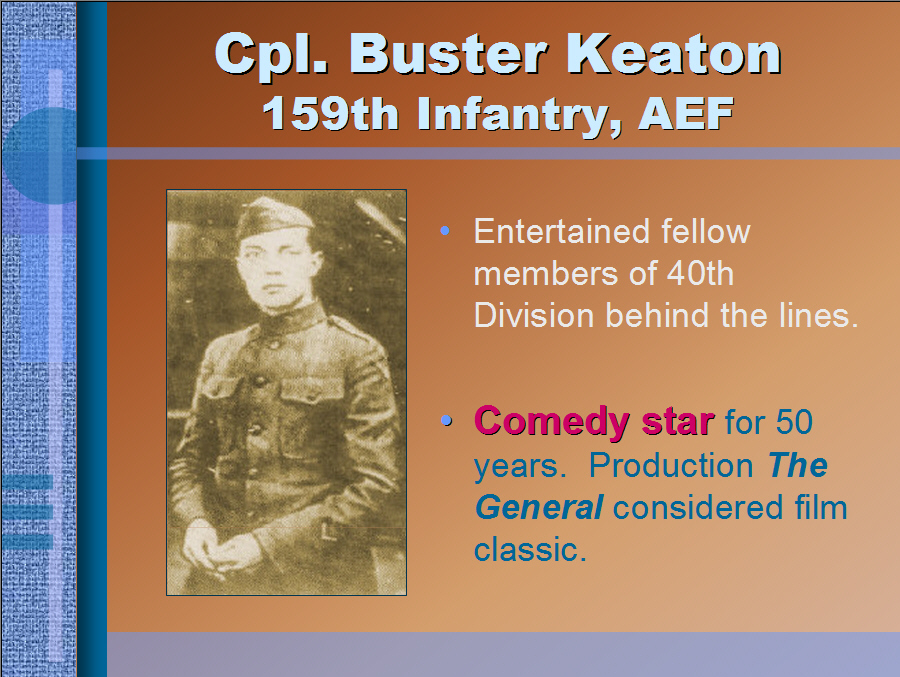
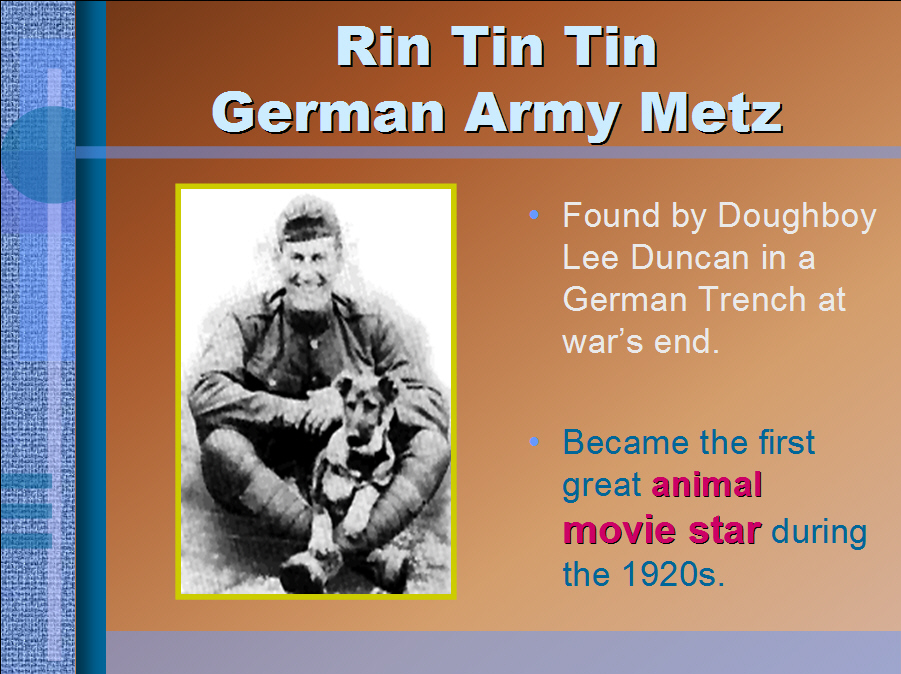
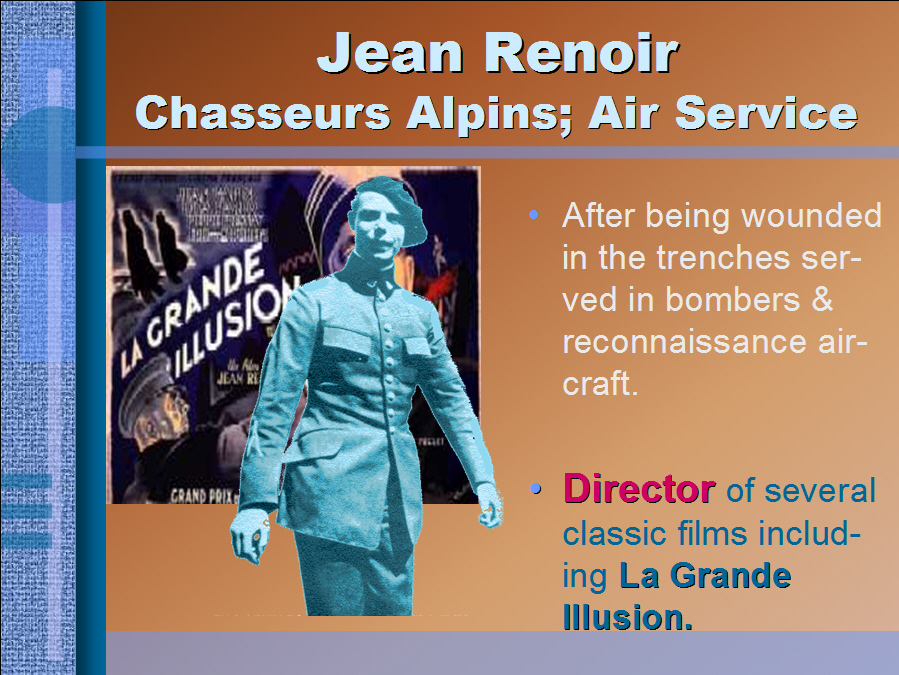
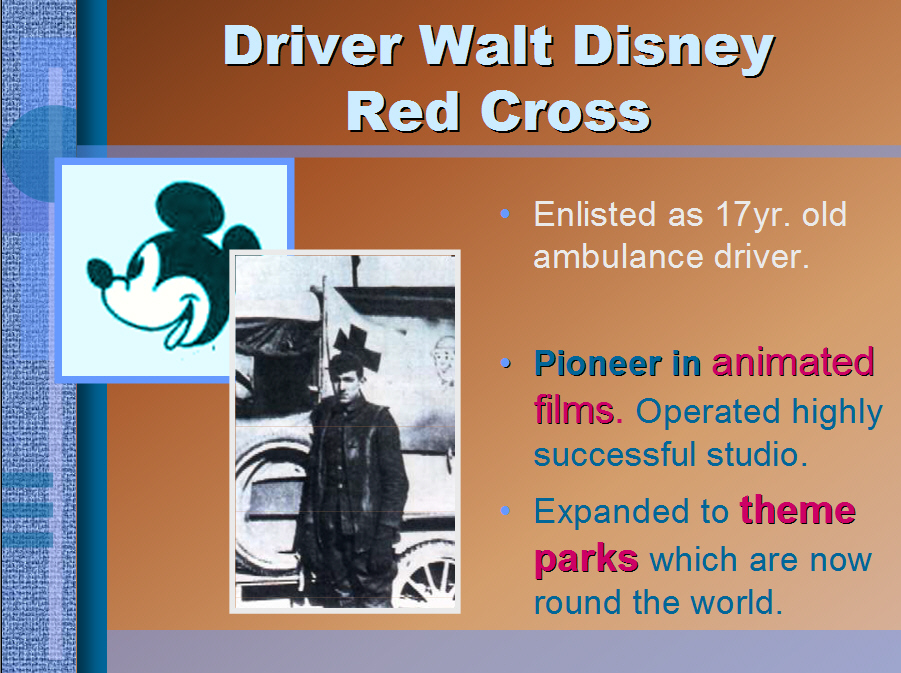
The "Golden Age" of Hollywood drew on a great number of World War I veterans. Presented here is a small sampling of some of the most influential. Especially important was the expatriate community of former members of the British Army that included such well-known stars as Basil Rathbone, Cedric Hardwicke, and Victor McLaughlin. One of my favorite former Doughboys was a mule skinner in the 26th "Yankee" Division, who was invited to the studio because he could bray like a donkey and that sound effect was needed for a film. That's how Walter Brennan started his acting career.


Click on Image to Expand


Click on Image to Expand


Click on Image to Expand


Click on Image to Expand


Click on Image to Expand


Click on Image to Expand


Thursday, October 10, 2013

Rudyard Kipling's Views on War Propaganda

Some interesting 1918 notes on propaganda for newspaper magnate Lord Beaverbrook prepared by Rudyard Kipling:

Beaverbrook and Kipling

PROPAGANDA FOR MUNITIONS FACTORIES


As far as I can make out it is more important just now to feed munition-works with steadying propaganda than any other class; because they seem to be the most isolated.

What they need, among other things, is news and description of the actual work done by the material they produce . . . Oratory of some sort or another is the workman’s intellectual excitement – he has a great respect for the gift of the gab – and his education for the past seven or eight years has made him peculiarly accessible to both oratory and the cinema. The two together are the strongest combination.

NEWS FOR AEROPLANE FACTORIES

Take first the case of Aeroplanes. When once a machine is despatched, no word of its performances in the field comes back to the factory. This is as stupid as preventing trainers and ostlers in a racing stable from being told what their horses are doing on the turf. I suggest . . . that arrangements could be made with the Air Service whereby the make and types of the machines employed in any special success should be communicated to the factory that produced them. 

This in conjunction with cinema work of aerodrome and air stunts. It is not generally realized that a large number of aeroplane workers in factories have the very sketchiest ideas of what an aeroplane does or can do. I should go so far as to say that a lecturer on the development of the aeroplane would find his most interested audience in an aeroplane factory.


The Sort of Factory That Needed Propagandizing


GUN FACTORIES

The same idea holds good with guns – specially big guns. The results of big “shoots” appear to be tabulated at the front, and are given from time to time in the press. It would be amply worth while where guns from certain makers (there are not many of them) are worked together to give the workers in the factories concerned the results, as far as ascertained, of our counter-battery work, expenditure of munition etc, together with any details of guns which had noticeably exceeded or fallen below the average of a gun’s life. The whole to be posted from time to time in the dining rooms as in the case of aeroplanes, and to be followed up by cinemas of guns in action, dumps, explosion of dumps, and the general life of the battery. . . . 


As I have said above the operatives have astonishingly small knowledge either of how one factory uses the goods turned out by another, or what is done with the material. The old hands are naturally ignorant of war; the young fellows taken on at fifteen or sixteen who are now eighteen or nineteen are, by the very necessities of their work almost equally ignorant of what has taken place during the war; the women look at life from a different angle to the men, and the discharged soldiers who have come back to the factories do not – quite rightly – talk much about war.

Source: Excerpted from National Archives Documents by the Times Literary Supplement Website; Photos from the National Portrait Gallery and Tony Langley Collection

Wednesday, October 9, 2013

The Centennial at the Grass Roots Series: Frank Buckles – Pershing's Last Patriot

As you know, I've dedicated all of my publications to support America's World War I Centennial Commemoration.  One of the grassroots efforts to honor the nation's sacrifice in the war is David Dejonge's  biographical documentary exploring the dramatic life of  the Last Doughboy – Frank Buckles, who was an absolutely wonderful representative of his generation.  This is a project close to my heart because I served as master of ceremonies for the dedication of the paving stone honoring Mr. Buckles at the Liberty Memorial & National WWI Museum in Kansas City.

David needs your help – $14,000 of pledges – to turn his rough-cut into a professional-level theatrical film.  He is using a site called Kickstarter for gathering contributions and telling the story of his project. Please visit the site.  I've already contributed, and I hope you will too.

Mike Hanlon


Remembering a Veteran:
Sgt. Stubby

Sergeant Stubby, 26th "Yankee" Division, AEF


I probably get at least one request each month for a story on the legedary AEF canine veteran Sgt. Stubby. I recently found that there is a definitive article on the good sergeant at "The Price of Freedom: Americans at War" section of the Smithsonian National Museum of American History website. A taxidermied Sergeant Stubby is on display at the museum.  Their website has a lot of other features on the First World War and all of America's wars, and can be visited here:
amhistory.si.edu/militaryhistory/exhibition/flash.html


Tuesday, October 8, 2013

The Circling Song
Reviewed by David F. Beer


The Circling Song

By Russel Cruse

Published by Amazon Kindle and Lulu.com

This is a most unusual book. At first I was reluctant to read it because its format didn't appeal to me ,but I'm glad I overcame that block. In fact I ended up reading it twice — the second time to make sure I was catching everything, or at least not missing anything significant. The effort was well rewarded.

The author states that this book, one of three he has written, is a novella. One might quibble with this designation since the book is 161 pages long. Other novels based on WWI such as Rebecca West's The Return of the Soldier, Marc Dugain's The Officers' Ward, and J. L. Carr's A Month in the Country all consist of fewer pages and claim to be novels. These books, however, are not accompanied by as much white space since they are written in the usual narrative style of a novel. Cruse's book however is one of those fairly rare books that might be designated as an epistolary novel, one where the narrative consists of a series of letters and other documents. In this case letters, fragments of journals and diaries, memoranda, communiques, a casualty form, and finally three poems all combine to portray the character of Private (later Corporal) Henry Lawrence and his experiences from First Ypres through the Battles of Loos, the Somme and Passchendaele.


Order Now
Lawrence's external experiences, harrowing as they are, are less the focus of the story than his internal ones, which are, to say the least, unique. He survives a bullet wound in the head, but the results of the wound have far-reaching consequences that mystify most around him. An army doctor in England, where Lawrence is sent to recuperate, becomes intrigued by the change that is taking place in Lawrence. To put it briefly, due to his head injury Lawrence has become a savant whose head injury has caused him to experience a neurological condition known as synesthesia. As the doctor explains in a letter to a mathematician friend,

. . . it refers to the capacity demonstrated by some individuals to sense the same stimulus in more than one way. Thus, a person would experience a sound and the sensory response might be a combination of the mundane (i.e. audible) and the less so, for example, a sight or even a scent. Imagine a musical note whose effect one could smell or see as well as hear!

This is not all however, as both the doctor and his mathematician friend (who later becomes his wife) are to discover. Lawrence's condition allows him to actually see patterns in the movement of air and sound and to gradually work out the mathematical equations that govern them. The work of Einstein, Planck, Kirchoff, Shrödinger, and Heisenberg, and the idea that the entire universe could be described in a series of mathematical equations, have all filtered into Lawrence's mind as a result of his savantism. How he finally uses his new knowledge — perhaps not as grandiosely as we might expect, but nevertheless very effectively — brings his story to an end.

Although most of us aren't used to the epistolary novel format it's surprising how the various documents that make up the chapters in The Circling Song — some quite brief — give us a sense of immediacy and also allow the tale to flow smoothly and quickly. There are a few minor subplots and brief glances at some of the familiar motifs of the war such as a terrible trench scene, the confusion of troops in battle, attitudes to shell shock, and the need for protective helmets (which were not issued to all the troops until mid-1916). The quote from George Meredith's poem "The Lark Ascending" at the front of the book reveals where the author got his title and ties in nicely with the uncanny and mystical transformation that Henry Lawrence undergoes when his head wound thrusts him into the world of synesthesia and arcane mathematics.

David F. Beer 


Monday, October 7, 2013

Worms and Voracious Rats: Rickword's Vision of War

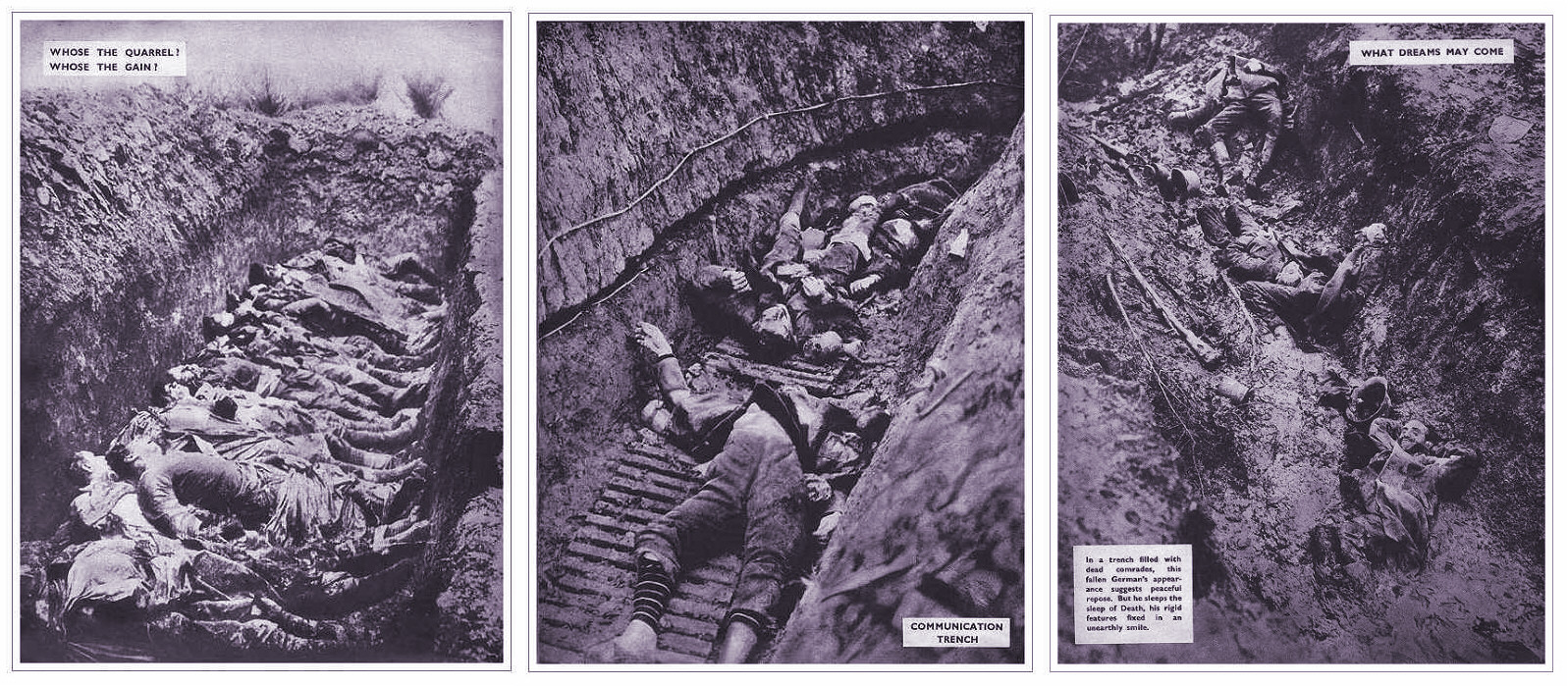
I find re-reading this poem a nice antidote whenever I find myself losing touch with the essential character of the war.


Click on Image to Expand

German Dead on the Western Front


John Edgell Rickword (1898-1982) served on the Western Front and wrote a number of war poems. His war poetry was published in 1921 in a volume entitled Behind the Eyes. After the war he went on to a long career in publishing, editing, and writing.


Trench Poets

I knew a man, he was my chum,
but he grew blacker every day,
and would not brush the flies away,
nor blanch however fierce the hum
of passing shells; I used to read,
to rouse him, random things from Donne–
like "Get with child a mandrake-root."
But you can tell he was far gone,
for he lay gaping, mackerel-eyed,
and stiff, and senseless as a post
even when that old poet cried
"I long to talk with some old lover's ghost."

I tried the Elegies one day,
but he, because he heard me say:
"What needst thou have more covering than a man?"
grinned nastily, and so I knew
the worms had got his brains at last.
There was one thing that I might do
to starve the worms; I racked my head
for healthy things and quoted Maud.
His grin got worse and I could see
he sneered at passion's purity.
He stank so badly, though we were great chums
I had to leave him; then rats ate his thumbs.

Sunday, October 6, 2013

Weapons of War: Monster Artillery


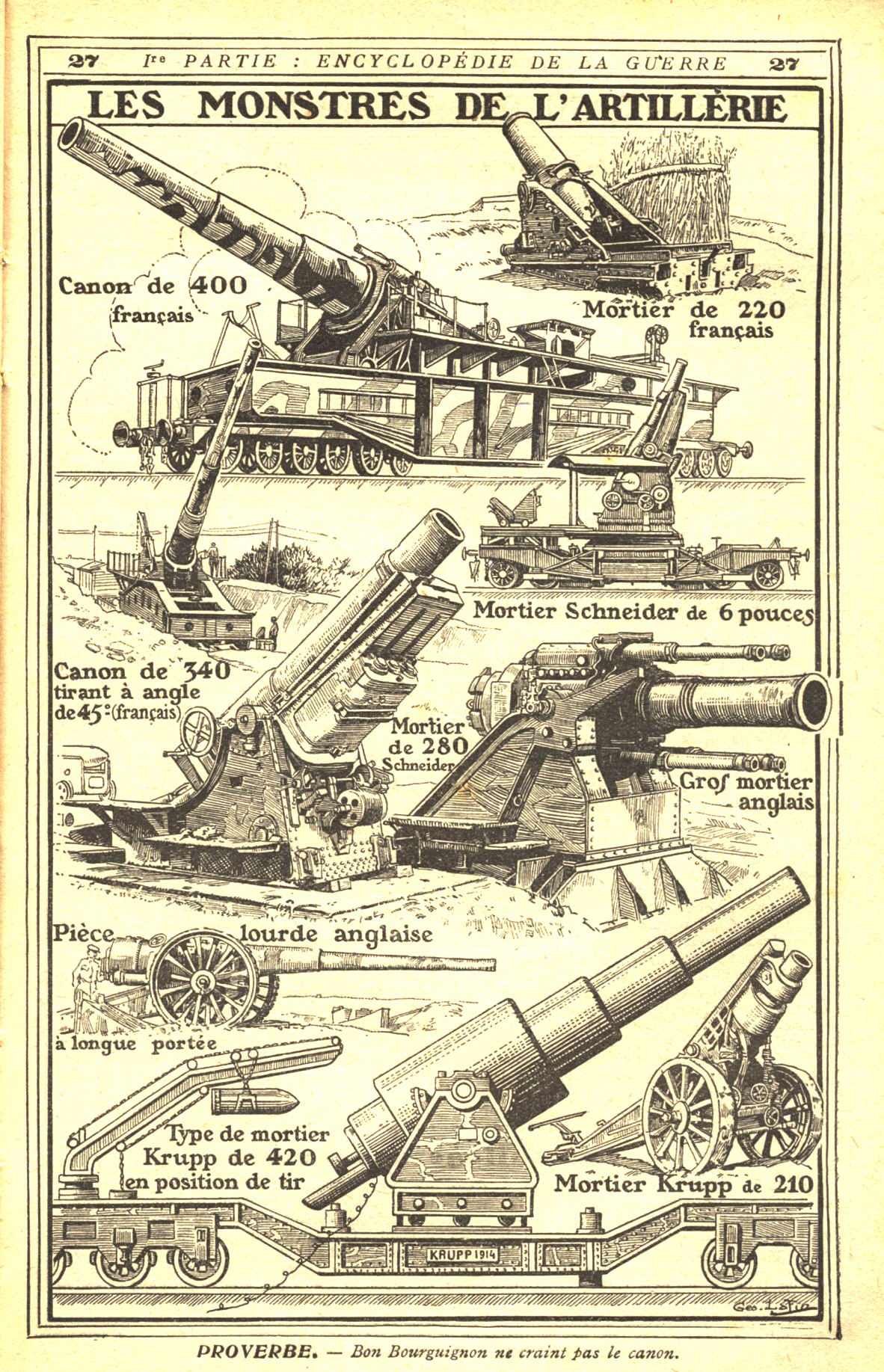
As a follow-up to our early article "Not Big Bertha," we present this French wartime depiction of the large artillery pieces of the combatants that were known by 1918. One especially notable piece is the 400mm French railroad gun that played a key role in the recapture of the Verdun forts, and the Paris Gun is not shown. It was unveiled in March 1918 during the first Ludendorff Offensive and was probably either not experienced yet or fully understood when this was presented in the Almanach Hachette of 1918. Incidentally, the proverb is roughly translated: "The Good Burgundian does not fear the cannon."

Click on Image to Expand


The two best books on super-sized weapons in the war.

Order Now

Order Now

Saturday, October 5, 2013

Stereoscopic Views of the Battlefield Come to Life


You may have seen collections of the stereoscopic (3-D) images of the First World War. Many of these images are great, but they require handheld or large box-shaped viewers to examine. And even with this equipment, though, the images are small and never quite come to life. Well, things are changing. Carlos Traspaderne of the Casa de la Imagen Cultural Center in Spain has decided to apply new technology to viewing these images and the results have been terrific. He says he uses mirrors to improve the clarity and enlarge the images. He has developed a four-minute sampler film of what he can do with the originals, which come on cards with two slightly offset versions of the same image.

1. Click on Image to Access Page
2. Click Full Screen for Best Viewing

WWI Battlefields in High-Quality 3-D Images


Carlos is interested in producing books and films using stereoscopic images. If you have a set of these, he would like to hear from you. Also, let him know what you think of his project and whether you might be interested in purchasing some of his products. He can be contaced at: info@casadelaimagen.com

Friday, October 4, 2013

The T.E. Lawrence – Robert Graves Connection

On Tuesday, 1 October 2013, we published a review of Robert Graves classic, Good-bye to All That. It reminded me that we had published an article in another of our publications on a lesser-known aspect of Graves's career. Here it is:

Lawrence & Robert Graves

By Assistant Editor Kimball Worcester


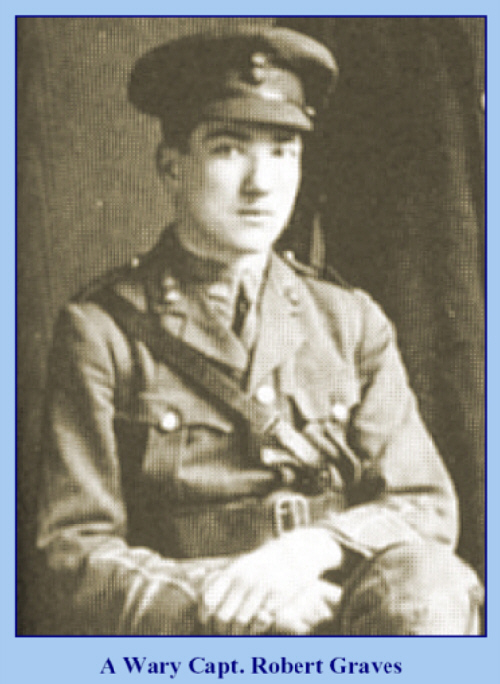
The Great War fronts of combat experienced by T.E. Lawrence and Robert Graves could not have been more different. Graves served in the trenches and woods of France and Flanders that epitomize the stagnation of the Great War. Lawrence's war was one of movement across the Arabian desert and into the Levant. They both, however, carried the war with them for the rest of their lives and found in each other mutual understanding and appreciation.

Graves and Lawrence first met in 1919 at an Oxford dinner. Before that, Lawrence had worked with Graves's older brother in Cairo. He knew of Graves also as a poet, whose work he admired. Graves had married in 1918 and was already embarked on what was to become a family of four children in rapid succession. His wife was Nancy Nicholson, a talented artist and daughter of Sir William Nicholson. Their life was fraught, impoverished, and haunted by Robert's harrowing experiences in the war, which included his near-fatal wounds at the Battle of the Somme in 1916.

By 1927 Lawrence was an international celebrity, having published Seven Pillars of Wisdom in 1922 and been crowned as "Lawrence of Arabia" by press and populace alike. His publishers pushed for him to follow up Seven Pillars with an autobiography. Lawrence himself was hesitant, for he was not comfortable with the fame and accolades. He did see, however, the opportunity to help his friend Robert Graves — Lawrence agreed to the biography being published but only if Graves wrote it and that this stipulation be kept secret from Graves to spare him embarrassment. The publishers agreed, approached Graves and received his acceptance only on the condition that Lawrence's approval be sought!

Upon publication in 1927, Graves's book was an instant success and ensured solvency and even comfort for Graves and his family for some time to come. Lawrence's generosity came at a time of very low spirits for Graves and went a long way toward bolstering the morale of a poet and writer who Lawrence knew to be capable of significant contributions to twentieth-century literature. Graves more than sustained Lawrence's faith in him.

T.E. Lawrence died in 1935 of injuries from a motorcycle accident. Robert Graves lived until 1985 and is remembered as a significant poet, novelist, and mythologist. For a thoughtful, thorough, and adept biography of Robert Graves in three volumes see Robert Graves: The Assault Heroic 1895-1926 (1987); Robert Graves: The Years with Laura, 1926-1940 (1990); Robert Graves and the White Goddess, 1940-1985 (1995), all by Graves's kinsman Richard Perceval Graves.

Thursday, October 3, 2013

General George Marshall Tells Us About His Old Boss — General John J. Pershing

The biographer of General George C. Marshall, Forrest Pogue, published the preliminary interviews he made with his subject in 1957.  In Tapes 6 and 7, which cover Marshall's time with the AEF during which he played critical roles as the chief of operations of the 1st Division and then the First Army, Pogue asked a number of questions about General John J. Pershing with whom General Marshall had a long relationship during and after the war. (Pershing lived until 1948.)  Here is a selection of Marshall's memories of his old chief. I've regrouped comments that deal with similar themes and indicated the interviewer's question when necessary.


General Pershing and Colonel Marshall After the War

The Pershing Style of Leadership

FP Question:  How did Pershing operate as top American commander? What is your estimate of him as a leader?

General Pershing as a leader always dominated any gathering where he was. He was a tremendous driver, if necessary; a very kindly, likable man on off-duty status, but very stern on a duty basis.

General Pershing, as top commander, operated very largely through his operational staff — that was General Fox Conner, who was the head of the G-3 organization — so far as fighting was concerned. He would make a temporary headquarters at the front. And, of course, for quite a long time he commanded the First Army before it was split up into two armies, and then he commanded the group of armies. But he would either live on his train or otherwise get disposed up on the battle front in order to be near the fighting and continue to command. Every now and then he would have to go off to Paris when some momentous meeting would occur.

I have never seen a man who could listen to as much criticism, as long as it was constructive criticism and wasn't just being irritable or something of that sort. You could talk to him like he was discussing somebody in the next county and yet you were talking about him personally. It might be about a social thing, certainly about an official thing. You could say what you pleased as long as it was straight, constructive criticism. He did not hold it against you for an instant. I never saw another commander that I could do that with. Their sensitivity clouded them up so it just wouldn't work. I've seen some that I could be very frank with, but I never could be frank to the degree that I could with General Pershing.

FP Question:  I have read statements that you absorbed from General Pershing his insistence on "spit and polish" and strong discipline. Is this true?

I don't think I learned from him the spit and polish part. I knew how to do that long before I ever saw him. It has a decided place and is pretty much evidence of the general state of discipline of the command. The point is when it's overdone, of course, it's harmful as anything is, as a rule, that is harmful and that would be particularly harmful if it took away a lot of time from the other training.

I might accentuate the fact that [General Pershing] was very delightful, very delightful to go along with when we weren't working. He was almost boyish in his reactions and we would have a very pleasant time. The minute we came to work, he then was the very serious-minded, you might say almost implacable executive.

Pershing the Strategist

FP Question:  I understand that General Pershing wanted to go on to Berlin. What was your own view?

At the time of General Pershing's problem of maybe going on to Berlin, one of the great troubles was there wasn't the transport. The horses were all gone, largely. When they started the [occupation] march into Germany, I had to unhorse brigade after brigade of artillery and leave them on foot near the railheads and take their horses for the units that were going into Germany. We were very hard put in those respects, and if the battle had been carried on into Berlin...

President Pershing?

I think early in General Pershing's period of return from France, some of his friends deluded him into this presidential aspect. I know one group came up from Tennessee and I sent them back home. He was away at the time and he was furious with me. I didn't even consult him. I knew pretty well what the general reactions were, and I thought it was a shame that he might in some way cut down his prestige by being involved in that sort of a thing unless it was almost by acclamation.

Pershing's Heritage

FP Question:  What was the impact of General Pershing on the U.S. Army? Did he raise the soldierly standards of the army by his insistence on discipline? 

I think he did raise the standards of the army by his insistence on [his] type of discipline. Very naturally, he would. He was a very imposing and impressive man.

Wednesday, October 2, 2013

St. George's Memorial Church, Ypres

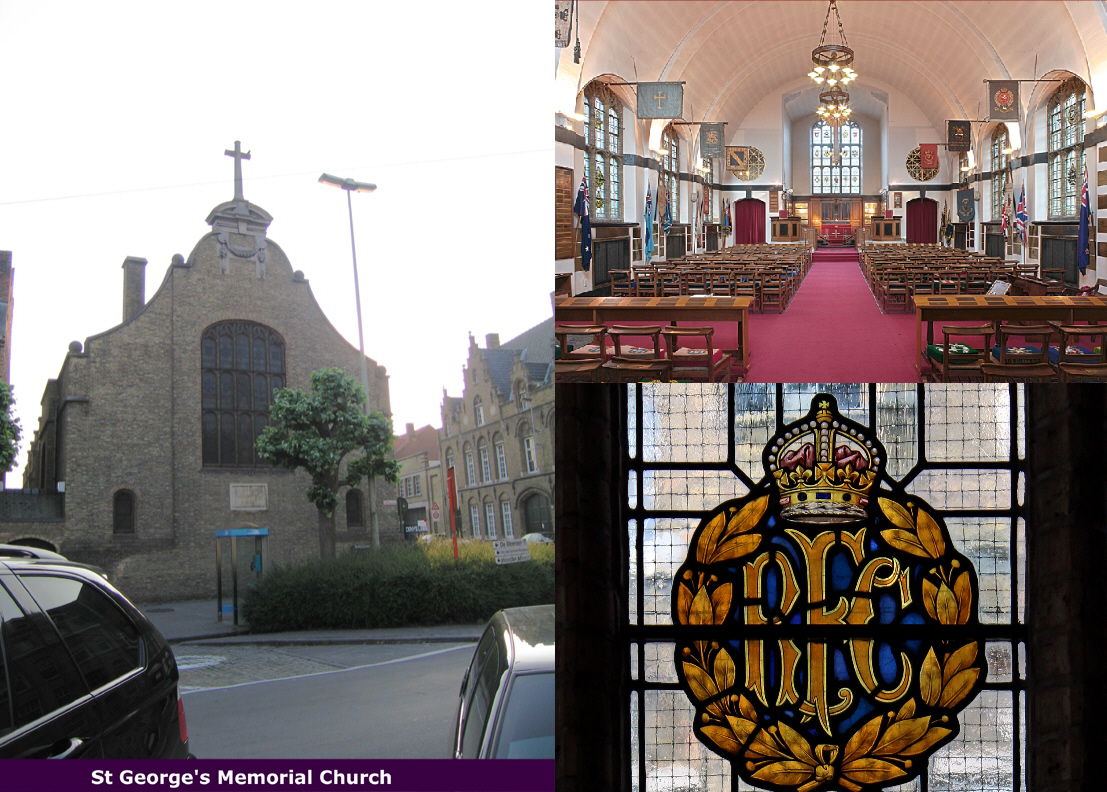
St George’s is an Anglican church within the Church of England’s Diocese in Europe. It is one of the must-see stops on a visit to the Ypres Salient.


Click on Image to Expand

Exterior of the Church, Located Across the Street from St. Martin's Cathedral; Interior; Detail, RFC Insignia on Stained Glass Windows


History

St George’s is a pilgrimage church for the many thousands of people who visit the World War One sites of the Ypres Salient battlefields.  There is a small resident congregation who live in Ypres and surrounding area of Belgium and Lille(northern France).

The first mention of the building of an Anglican church in Ypres was in August 1919. A few months later an article was published in the Times that an Anglican church was to be built in Ypres to serve both as permanent memorial to the dead but also as a meeting place for the visiting relatives. Opinion on this was however, divided as illustrated by a letter sent to the editor of the Times indicating that an Anglican church would not be appropriate both because many of the soldiers who were killed were not members of the Church of England and also because Belgium was a predominantly Roman Catholic country.

The movement to build such a church only really got underway with the foundation of the Ypres League in 1920. The president was a Canadian, Lieutenant-Colonel Henry Beckles Willson, who had acted as town major of Ieper in 1919 and was also instrumental in the creation of the Imperial War Museum. through the help of the Imperial War Graves Commission a suitable plot of land was found on the corner of the A. Vandenpeereboomplein. The idea to build a school attached to the church had been discussed. The school would be paid for by donations made by Old Etonians and would serve as a memorial to the approximately three hundred and forty pupils who had given their lives in the Ypres Salient.

In the spring of 1927, Blomfield's plans were complete. He had designed a simple space that would be able to accommodate two hundred people. The interior furnishings were to be provided by families of the fallen. Almost every item in the church serves as a permanent memorial to a soldier who gave his life in France and Flanders. There are also memorials to people who died in the Second World War. The school too was simply designed, comprising one classroom and a staff room. The Bishop of Fulham opened the church and the school on 24 March 1929, Palm Sunday. 


Field Marshal Sir John French


Click on Image to Expand

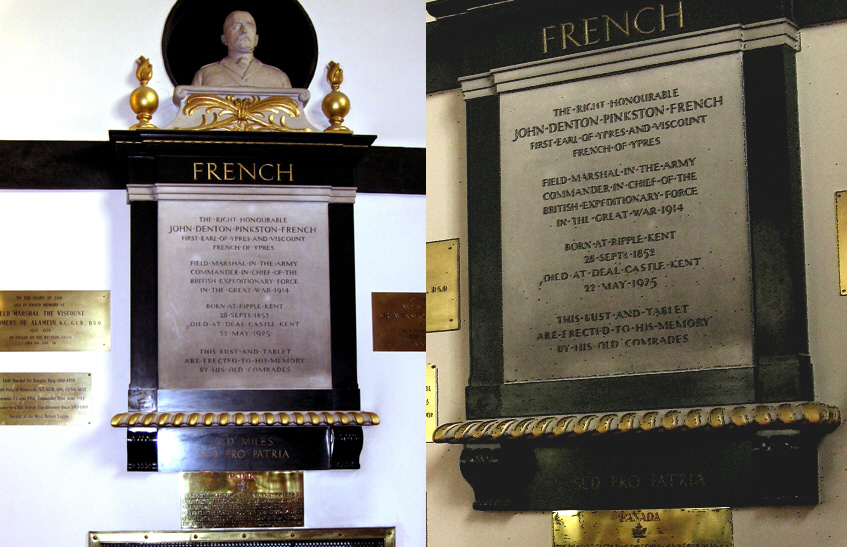
Field Marshal French Commemorative Section; Detail –  Dedication Plaque

A striking feature of the church is the emphasis and visibility placed on honoring Sir John French, who was the British commander-in-chief during the first two years of the war, a period covering the first two Battles of Ypres. This, compared to the relative downplaying of the later commander Field Marshal Douglas Haig.

Sources: The St. George's Website; photos by Steve Miller and Tony Langley

Tuesday, October 1, 2013

Good-Bye to All That
Reviewed by Michael Kihntopf


Good-Bye to All That

An Autobiography of Robert Graves

Published by  Anchor Books (Doubleday), 1957 and 1985 

Written while Graves was convalescing from wounds, Good-Bye to All That was first published in 1929. The author revised it in 1957, as he wrote in his new prologue, to correct errors and fill out areas earlier left vague because of wartime censors, because he didn't wish to hurt still living friends, and because he didn't originally know all the facts surrounding the incident he was writing about.

Good-Bye to All That is definitely an autobiography, and because it is self-written, some of it should be scrutinized using other sources as references. The first chapters delve deeply into the author's family, recounting numerous ancestors, relatives, acquaintances, and various other people who came into contact with the aforementioned people. The list of the people who crossed Graves's life before the Great War is quite dizzying and reads as a who's who of the British, German (his mother's contribution), and Irish literary and political world. But those chapters do more than name-drop. They paint a socio-scape of life before the Great War à la Downton Abbey and provide a very detailed exposé of the British public school life from the student's stand point. It is almost as if the author laments the passing of that world.


Order Now
The meat of the work is in Graves's description of his service with the Royal Welch Fusiliers from 1914 through 1919. The reader is provided with minute details about one of the most honored and oldest regiments in the British Army, details which include uniform accoutrements and how junior officers were to deport themselves at mess or when interacting with officers who had been with Kitchener in the Sudan and South Africa. Although Graves found the atmosphere stifling, he apparently highly respected it and used it as a benchmark when dealing with those who replaced the Old Guard when they became casualties.

He makes that quite clear when he assesses replacement officers he trains in 1917: Though the quality of the officers had deteriorated from the regimental point of view, their greater efficiency in action amply compensated for their deficiency in manners. Once again, there is a regret that things have changed. Graves's detailed accounts of the Battle of Loos in which he participated and trench life are masterpieces but bear the marks of an after-the-fact summation. Nevertheless, he provides both a strategic and tactical picture that clearly defines how ill prepared the pre-1914 army was for conducting war against a similarly armed and led European army.

A reader must be aware of just who Robert Graves was as he scans through these pages. The author was a poet of great renown whose work brought him acclaim during and after the war. His popularity was rewarded by being one of the sixteen Great War poets who are commemorated in the Poets' Corner of Westminster Abbey. Counted among his peers are Wilfred Owen and Siegfried Sassoon. He was also the author of I, Claudius and Claudius the God. With his literary accomplishment in mind, the reader can be more appreciative of what is written in Good-Bye to All That. One can also assess just what the title was meant to convey: the Great War changed the world so much that those who lived before it would long lament the ways and people that made that world. This book has never gone out of print and for good reason.

Michael Kihntopf 


Monday, September 30, 2013

The October 2013 ST. MIHIEL TRIP-WIRE Now Available Online

The October issue of our sister publication, the St. Mihiel Trip-Wire is now online at:

www.worldwar1.com/tripwire/smtw.htm

If you haven't visited the Trip-Wire before, imagine a full month's entries of Roads to the Great War in a single, easy-to-read issue. Pictured here are some of the sites, battles, and personalities featured in the latest issue, including: British tank models, George M. Cohan and "Over There," the MacArthur Memorial's centennial preparations, first and last ships sunk in the war, the Albanian crisis of 1913, the 10th Battle of the Isonzo–precursor to Caporetto — and much more!

Click on Image to Expand