Now all roads lead to France and heavy is the tread
Of the living; but the dead returning lightly dance.
Edward Thomas, Roads

Sunday, December 22, 2013

Alfred Bastien's Panorama de l'Yser


With this article we begin presenting a new series on World War I murals from around the world.

Alfred Bastien's Panorama de l'Yser

Contributed by Tony Langley

Alfred Bastien was a well known and successful Belgian artist prior to the Great War. He helped complete the successful Panorama du Congo, exhibited at the 1913 Ghent World Fair, which was a prequel of sorts to his grand postwar Panorama de l'Yser, undoubtedly his most famous and acclaimed work, if not the most artistically accomplished.

Click on Image to Expand



After serving in the Garde Civique like many other Belgians, Bastien fled to Great Britain after the fall of Antwerp in October 1914 and despite his age (43) volunteered for the Belgian Army. He was eventually transferred to the Section Artistique in Nieuwpoort along with many of his prewar artist friends and acquaintances. From 1915 onward, he made many drawings and sketches of the situation on and behind the Belgian lines on the Yser river. The British wartime magazine Illustrated War News, among others, regularly published his work, quite often in distinctive and semi-panoramic, multi-color two-page spreads, of which several are shown above. In 1917, on personal request by Lord Beaverbrook, who owned several of Bastien's prewar paintings, he was seconded to the Canadian Army until September 1918, during which time he produced many works of art specifically related to the Canadian war experience.

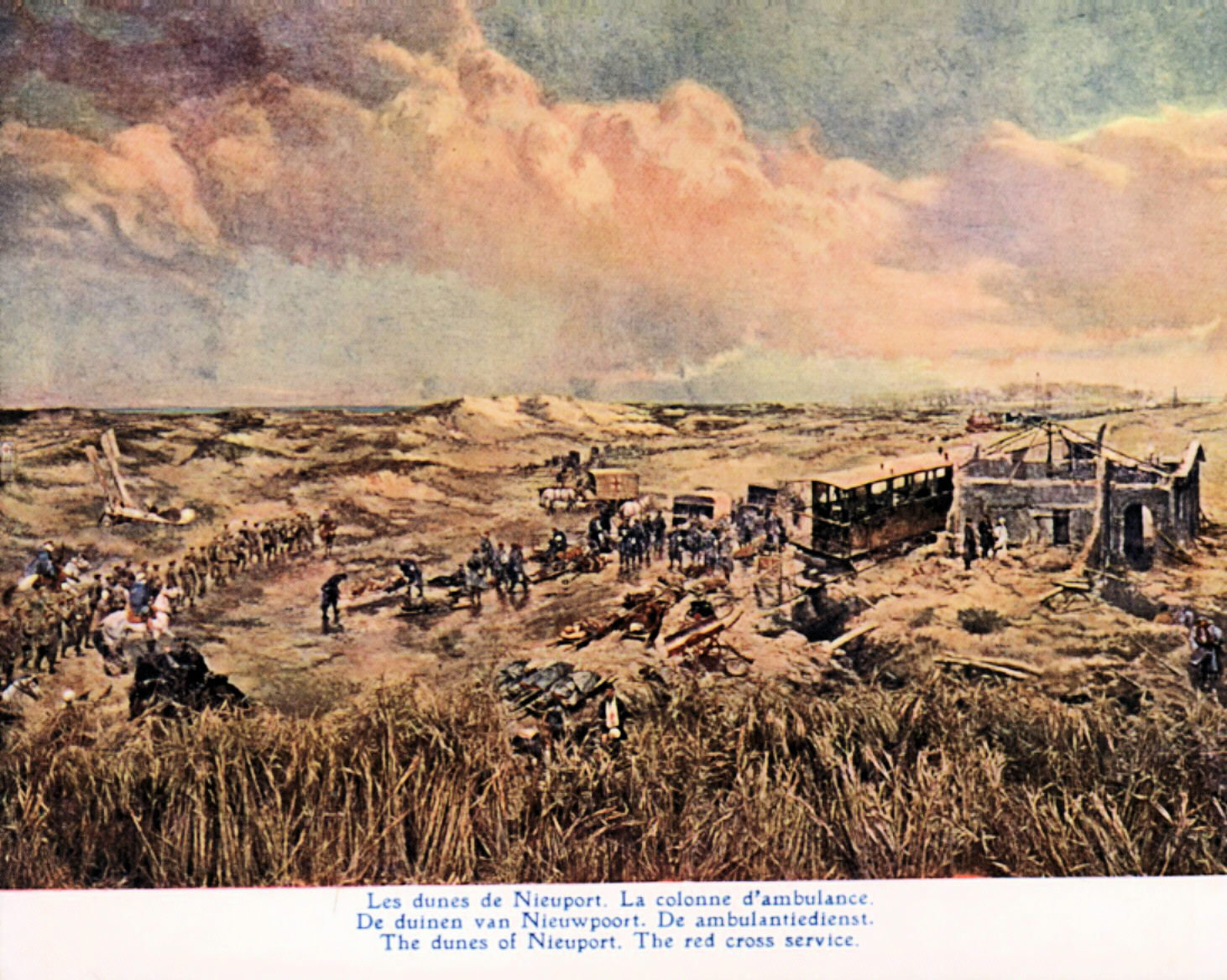
After the war, Alfred Bastien painted a grand panorama of the Yser Front in 19th-century tradition, a project he had been planning since 1914 and which, according to his own telling, had been suggested to him by King Albert in 1914. During his wartime service in the Belgian Army Bastien made many sketches, drawings, and photos that were later either incorporated into the Panorama itself or were useful studies in technique and effects. Several of such drawings are shown above. The Panorama de l'Yser painting itself measured 115 meters in length and 14 meters in height and was initially exhibited in Brussels. In the mid 1920s, a permanent building was constructed in Ostend to house the Panorama along with a multitude of props and decor. The intention of moving the Panorama to Ostend was to capture a share of British "war-tourism," since most British coming to visit relatives' war graves arrived by steamer in Ostend before proceeding to the area of the Ypres Salient. The Panorama opened at Ostend in 1926. Here are four details from the mural.


Click on Image to Expand
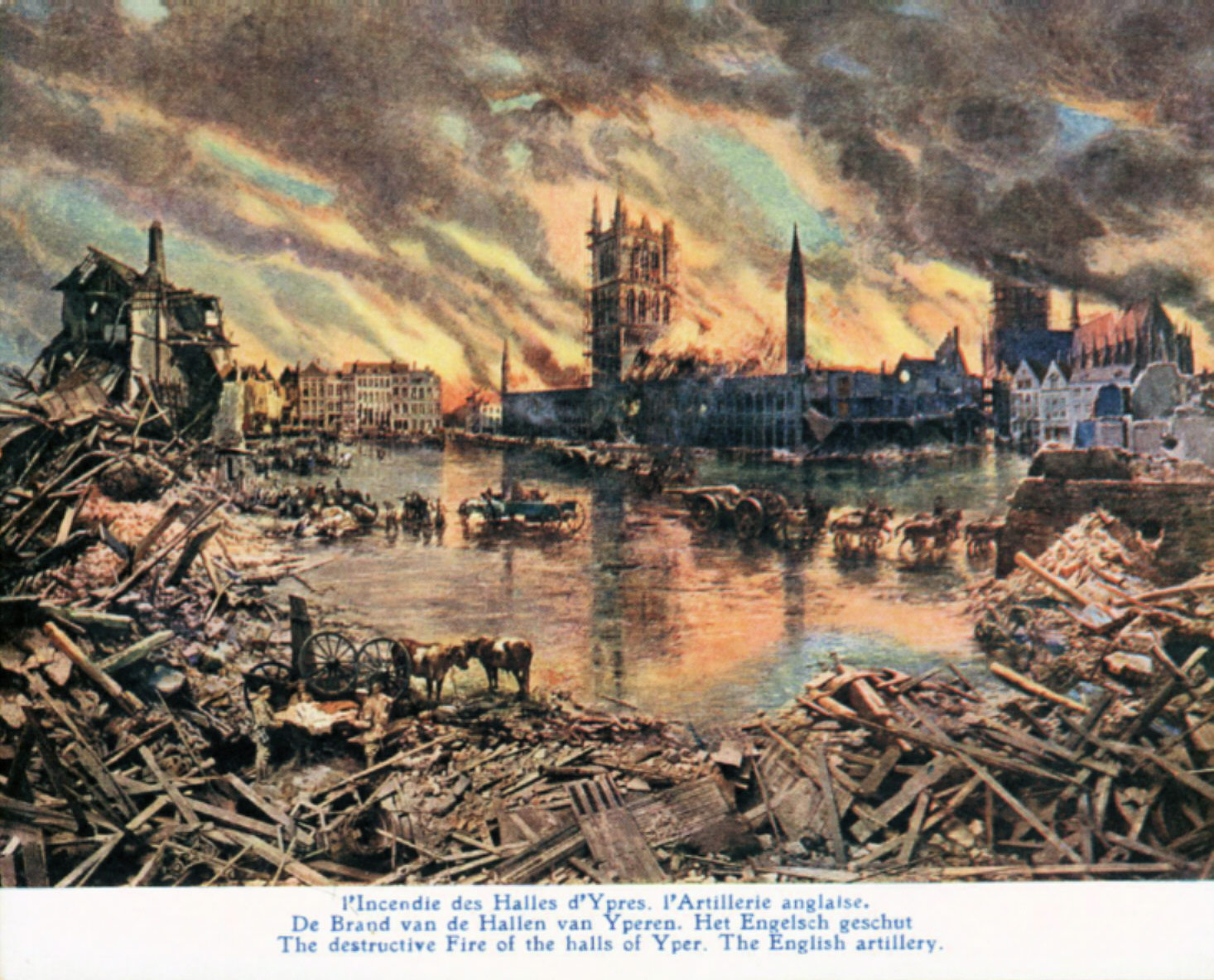
Detail 1


While the intent was to provide spectators with a sense of "being there" on the Yser Front in person, the depiction of the landscape, while extremely realistic in terms of style and detail, was not an actual view that could have been seen at any time during the war. The Panorama not only depicted various battles and incidents from the Yser Front in Belgium in 1914 and 1915, but the central viewpoint from which spectators viewed the battlefield was also an imaginary place. For nowhere in all of Belgium could all the landscapes and towns and villages and rivers have been seen in real life. Just as cyber artists nowadays create "virtual realities" that appear to be highly realistic, back in 1920 Belgian artist Alfred Bastien created a virtual reality scene in which he tried to portray all the drama and heroism of the Yser Front in Belgium.

Click on Image to Expand
Detail 2


Financially the Panorama was great success, for Bastien, who received a tremendous fee for the painting; for the consortium of businessmen and banks that provided funds and capital; and for the city of Ostend, which provided real estate and a newly constructed building to house the Panorama. The initial investment was repaid many times over, from entrance fees and from (by modern standards) modest merchandising of postcards and prints. To give a relative idea of the finances involved, the actual cost of the painting materials (oil paint, linen, brushes etc.) was estimated at around 40,000 BF, the cost to construct the new building at Ostend was 550,000 BF, and Bastien's fee itself was set at 350,000 BF. Entrance fees for customers was 3 BF. While on exhibition in Brussels until 1925 it is estimated that more than 800,000 customers visited the Panorama, amongst them many of the crowned heads of Europe, presidents and foreign emperors alike, all to great acclaim by the news media.

Click on Image to Expand
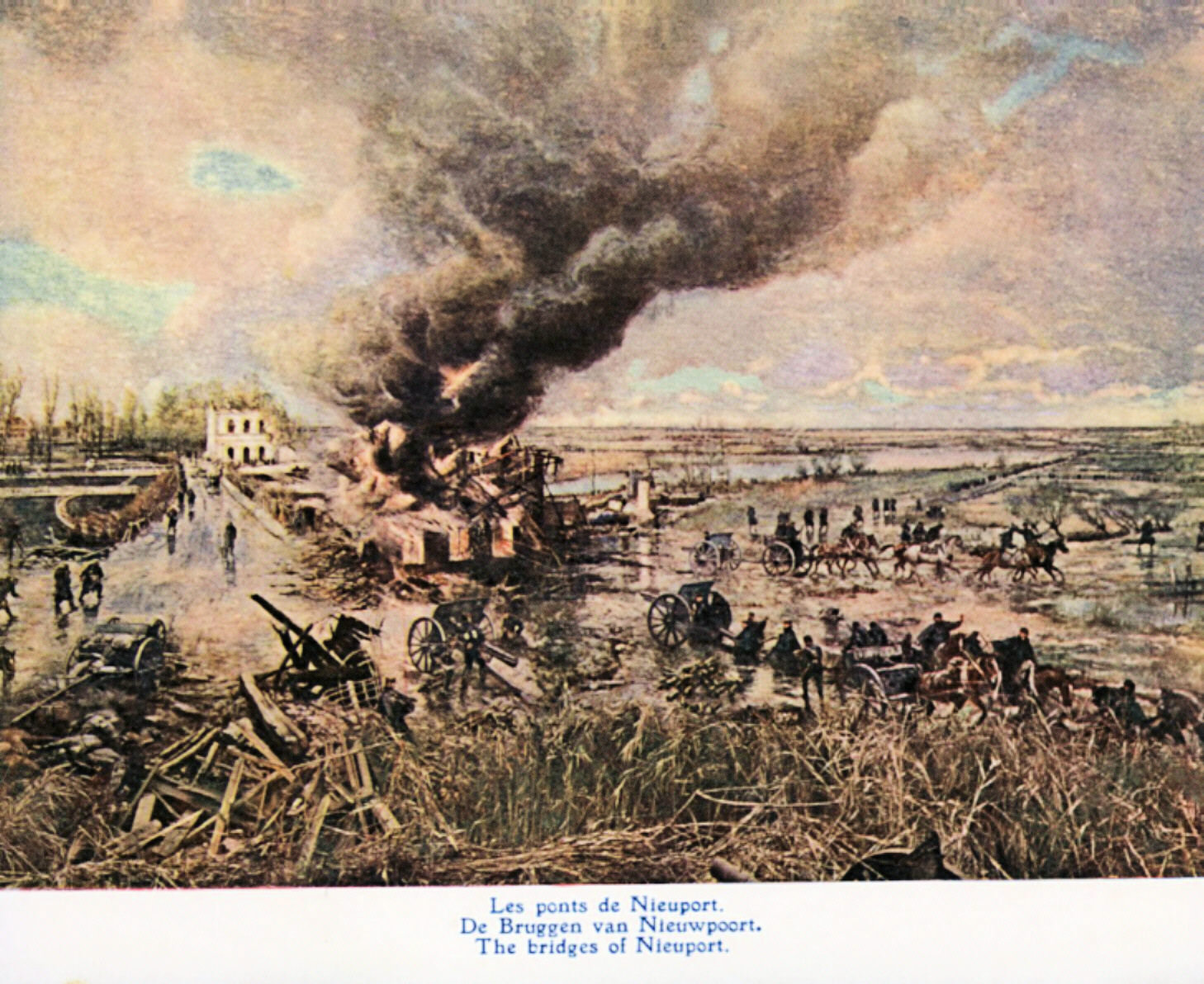
Detail 3


Of course in completing a work of such dimensions it is obvious that Bastien could not do all the painting himself. Several of his wartime friends and fellow artists from the Section Artistique participated in this grand project. The initial sketching in of the broad outline in charcoal of the Panorama took about a week's time to complete, while the actual painting and varnishing took one year's time. The Panorama was set up in a circle, with paying spectators having a viewing place in the center. Careful attention was given to the lighting effects and the placement of objects in the foreground, in order to create a more believable optical illusion. Many postcards and quality prints in all sizes and colors were made of this early 20th-century artistic extravaganza. The scans in this section are from a series of large-sized color postcards.

Aside from his, famous Panorama de l'Yser, exhibited in Brussels, Bastien also created a smaller sized Panorama de la Bataille de la Meuse in 1937 which showed an amalgam of scenes from the fighting in Namur and the Citadel of Dinant during August 1914. Part of this panorama, which depicted the massacre of Belgian civilians in Dinant in August 1914, was deliberately destroyed by German authorities during the 1940–44 occupation.

Click on Image to Expand
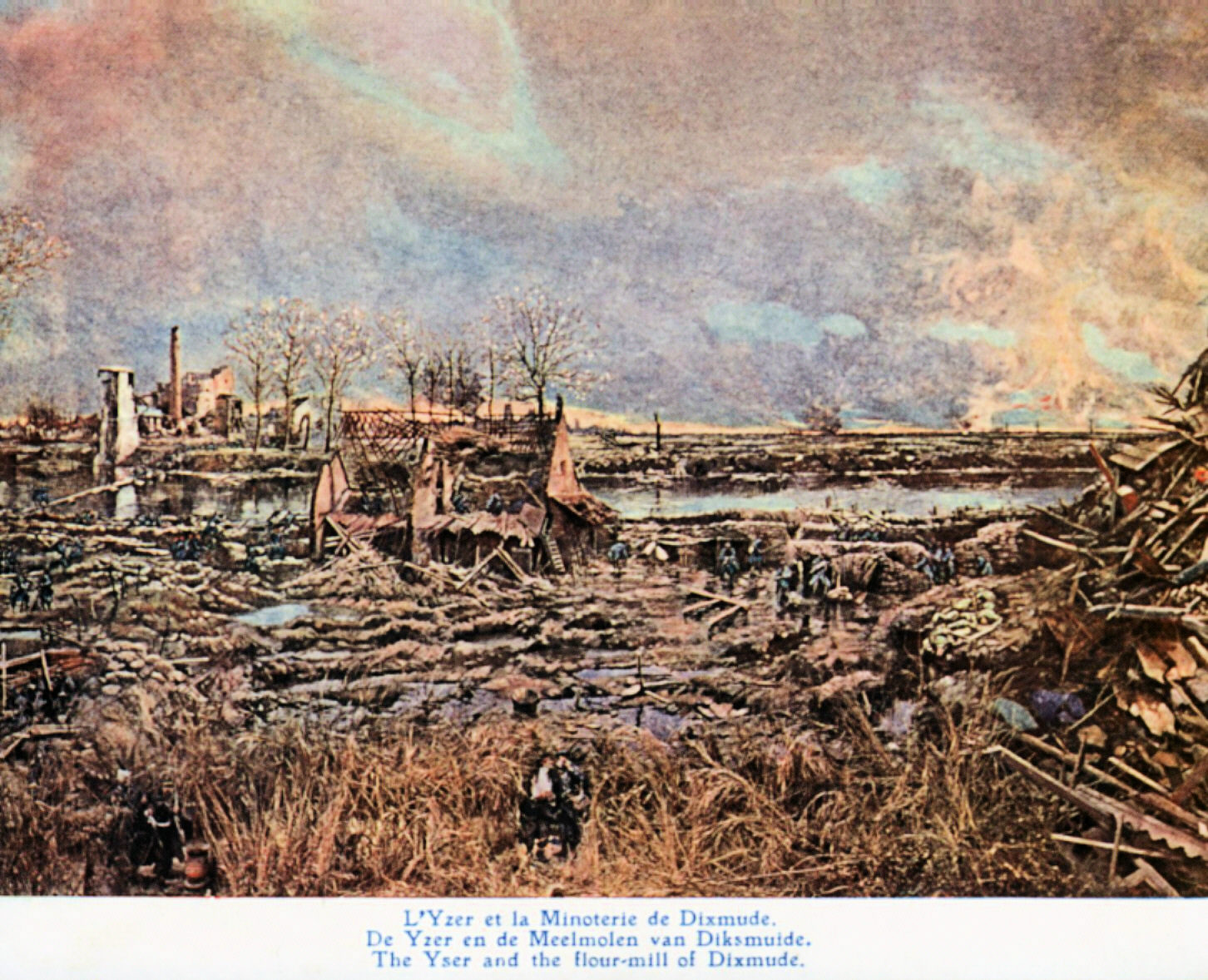
Detail 4


The Panorama de l'Yser was heavily damaged in 1940 during a bombing raid by British aircraft. The museum was closed during the war years and the painting was exposed to all manner of adverse weather conditions. In 1951 the work was moved into the Royal Army Museum in Brussels where a preliminary restoration was undertaken. Afterward it was exhibited in the Army Museum until 1980. Subsequently the painting has remained in storage, awaiting further restoration and a definitive destination. It is hoped that a careful restoration and a permanent place of exhibition for the sole remaining Great War Panorama will be a fitting part of centennial celebrations in 2014.

Saturday, December 21, 2013

A Heritage of the Great War: Daylight Saving Time

During World War I, in an effort to conserve fuel needed to produce electric power, Germany and Austria took time by the forelock and began saving daylight at 11 p.m. on 30 April 1916, by advancing the hands of the clock one hour until the following October. This 1916 action was immediately followed by other countries in Europe, Belgium, Denmark, France, Italy, Luxembourg, Netherlands, Norway, Portugal, Sweden, and Turkey, as were Tasmania, Nova Scotia, and Manitoba. Britian began three weeks later, on 21 May 1916. In 1917, Australia, Newfoundland, and Nova Scotia initiated it. The plan was not formally adopted in the United States until 1918. "An Act to preserve daylight and provide standard time for the United States" was enacted on 19 March 1918.

Senate Sergeant at Arms Charles P. Higgins turns forward the Ohio Clock for the first Daylight Saving Time, while Senators William M. Calder (NY), Willard Saulsbury, Jr. (DE), and Joseph T. Robinson (AR) look on, 1918.


Daylight Saving Time was observed for seven months in 1918 and 1919. After the war ended, the law proved so unpopular (mostly because people rose earlier and went to bed earlier than people do today) that it was repealed in 1919 with a Congressional override of President Wilson's veto. Some citizens had protested the law, using the slogan, “Give us back our stolen hour.” Daylight Saving Time became a local option and was continued in a few states, such as Massachusetts and Rhode Island, and in some cities, such as New York, Philadelphia, and Chicago.

But the allure of Daylight Saving Time would prove irresistible. During World War II, President Franklin Roosevelt instituted year-round Daylight Saving Time, called "War Time," from 9 February 1942 to 30 September 1945. [See law] From 1945 to 1966, there was no federal law regarding Daylight Saving Time, so states and localities were free to choose whether or not to observe Daylight Saving Time and could choose when it began and ended. This understandably caused confusion, especially for the broadcasting industry, as well as for railways, airlines, and bus companies. Because of the different local customs and laws, radio and TV stations and the transportation companies had to publish new schedules every time a state or town began or ended Daylight Saving Time.

By 1966, some 100 million Americans were observing Daylight Saving Time based on their local laws and customs. Congress decided to step in and end the confusion, and to establish one pattern across the country. The Uniform Time Act of 1966, signed into Public Law 89-387 on 12 April 1966, by President Lyndon Johnson, created Daylight Saving Time to begin on the last Sunday of April and to end on the last Sunday of October. Any state that wanted to be exempt from Daylight Saving Time could do so by passing a state law. Lately, Daylight Savings Time has been further adjusted to  start on the second Sunday in March and end the first Sunday in November

Sources:  www.webexhibits.org/ and Wikipedia (photo)

Friday, December 20, 2013

Andrew Wyeth's "The Patriot"


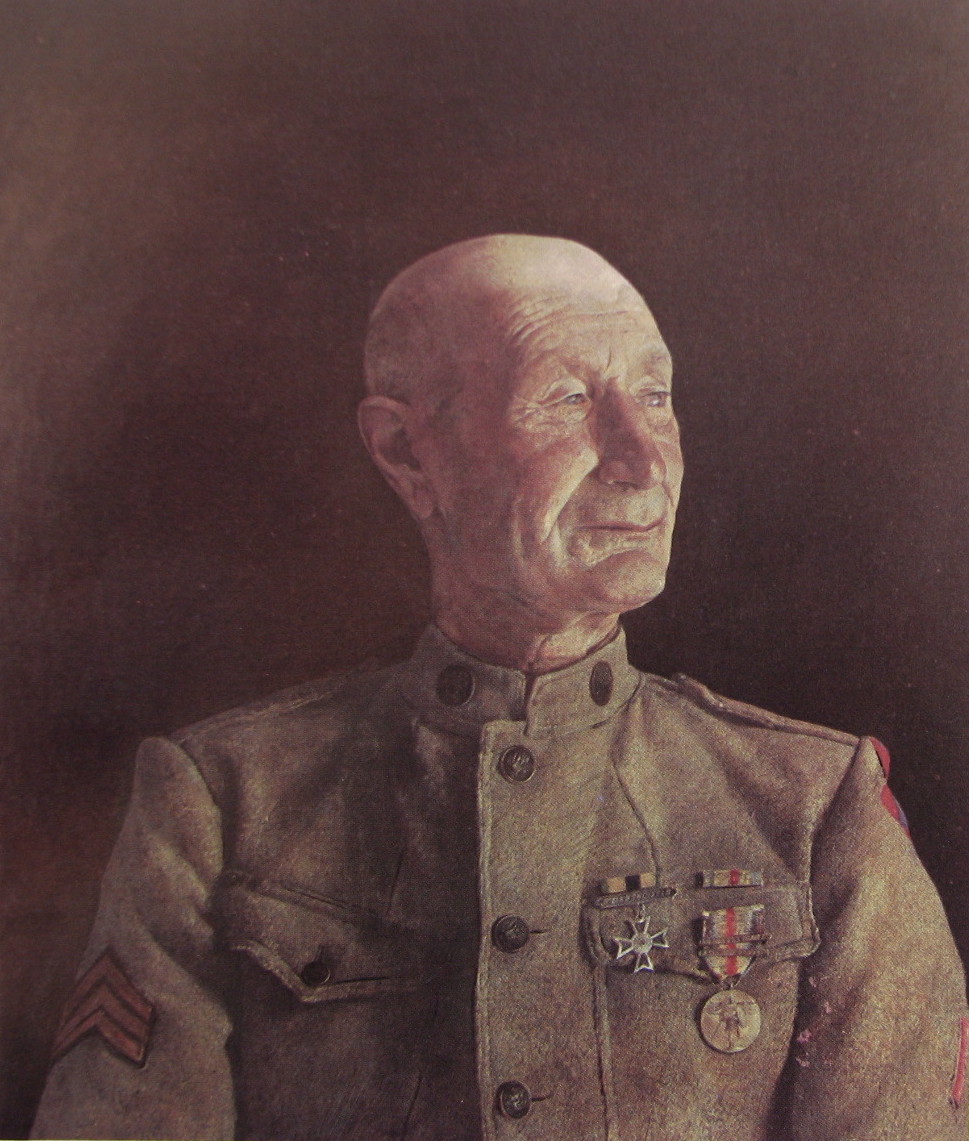
Andrew Wyeth saw first saw World War I veteran Ralph Cline in a Veterans Day parade and realized that the old soldier was the epitome of a proud and patriotic American. Wyeth described his Maine neighbor as, "Absolutely the patriot. The American flag means everything to him. Kind of man that fought at Concord Bridge." In 1964 Cline sat for this portrait that came to be titled the Patriot. The portrait was featured in Life magazine, on television, and was hung for a time at West Point. It's in a private collection today, but prints of the painting can be found online.


Click on Image to Expand


Doughboy Veteran Ralph Cline

The subject, Ralph Cline (1895-1976), enlisted in April 1917 and served in the 64th Infantry, 7th Division of the AEF, which was in action the last days of the war in the St. Mihiel sector. After the war, he returned to Maine for the rest of his life working first as a lobsterman and then settling on operating a sawmill. He married Miriam Crockett in 1927; they had three children together and remained married for fifty years. During World War II, Cline served in the Maine State Guard Reserves, a militia unit formed to replace the state's National Guard troops, who had been called to federal service. Later, both his son Ralph, Jr., and grandson, Ralph III, followed the family tradition of military service.

Note:  We have an interesting photo of the 64th Infantry celebrating at the hour of the Armistice, which could — for all I know — include Ralph Cline at the December St. Mihiel Trip Wire: http://www.worldwar1.com/tripwire/smtw1213.htm

Thursday, December 19, 2013

99 Years Ago: Quotes from December 1914

And the bombs explode with a sickening crash.
You give them lead, and you give them steel,
Till at last they waver, and turn, and reel.
You've done your job - there was never a blench
You've given them hell, and you've saved your trench;
By God, you've stuck to your trench!
The daylight breaks on the rain-soaked plain
(For some it will never break again),
And you thank your God, as you're 'standing to',
You'd your bayonet clean, and your bolt" worked true.
For your comrade's rifle had jammed and stuck,
And he's lying there, with his brains in the muck.
So love your gun - as you haven't a wench -
And she'll save your life in the blooming trench -
Yes, save your life in the trench.
Captain Charles W. Blackall, Royal Welch Fusiliers, "Song of the Trench," December 1914

In living through this "great epoch," it is difficult to reconcile oneself to the fact that one belongs to that mad, degenerate species that boasts of its free will. How I wish that somewhere there existed an island for those who are wise and of good will! In such a place even I should be an ardent patriot!
Albert Einstein, Letter, Early December 1914

Ever since [being appointed a dispatch runner], I have, so to speak, been risking my life every day, looking death straight in the eye. . . It is a sheer miracle that I am hale and hearty.
Adolf Hitler, Letter, December 1914


Hitler at War


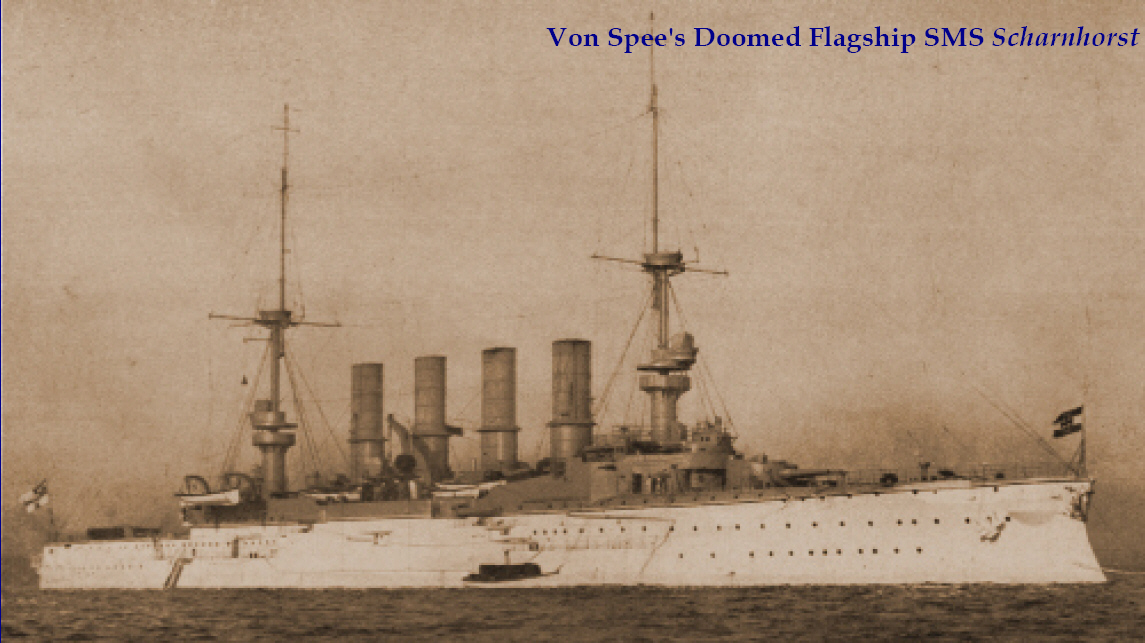
At 4:40 p.m. the Scharnhorst, whose flag remained flying to the last, suddenly listed heavily to port, and within a minute it became clear that she was a doomed ship ; for the list increased very rapidly until she lay on her beam ends, and at 4:17 p.m. she disappeared. . .

At 4:40 p.m. the Scharnhorst, whose flag remained flying to the last, suddenly listed heavily to port, and within a minute it became clear that she was a doomed ship ; for the list increased very rapidly until she lay on her beam ends, and at 4:17 p.m. she disappeared.

Vice-Admiral Sir F.C. Doveton Sturdee, K.C.B., C.V.O., C.M.G,
After Action Report, Battle of the Falklands of 8 December 1914

Blood alone moves the wheels of history
Benito Mussolini, Speech 13 December 1914


Mussolini at War


Scots and Huns were fraternizing in the most genuine' possible manner. Every sort of souvenir was exchanged, addresses given and received, photos of families shown, etc. One of our fellows offered a German a cigarette; the German said, 'Virginian?' Our fellow said, 'Aye, straight-cut:' the German said, 'No thanks, I only smoke Turkish!' ... It gave us all a good laugh. A German NCO with the Iron Cross – gained, he told me, for conspicuous skill in sniping – started his fellows off on some marching tune. When they had done I set the note for The Boys of Bonnie Scotland where the heather and the blue bells grow, and so we went on, singing everything from Good King Wenceslaus down to the ordinary Tommies' song, and ended up with Auld Lang Syne, which we all, English, Scots, Irish, Prussians, Wurttembergers, etc, joined in.
Captain Sir Edward Hulse,  Scots Guards, Observer of the Christmas Truce, KIA 15 March 1915


That we had lost our self-possession, that we had been thrown off our balance by a war with which we have nothing to do, whose causes can not touch us, whose very existence affords us opportunities of friendship and disinterested service which should make us ashamed of any though of hostility or fearful preparation for trouble.
Woodrow Wilson, Annual Message to Congress, December 1914

Wednesday, December 18, 2013

18 December 1916: The Battle of Verdun Ends


German Attack on Mort Homme

Today is the 97th anniversary of the conclusion one of the signature battles of the Great War, the 1916 struggle for Verdun. We have covered this famous battle – the war's longest – in earlier entries on Roads and will do so in the future, but to commemorate this anniversary I thought some information  on its heritage,  the casualties, and some images of the combatants might be in order.

The battle of Verdun is the battle of France.  It's a place of the identity of France, of France-ness, I would say. There was no battle before, and no battle after, which was so important in the French memory. So, you can't understand France without understanding Verdun.

I think that in the total war, the battle of Verdun was a total battle.  I think that French soldiers were perfectly aware of the meaning of the battle. In their eyes, the battle was a defense of their women, their wives, the children, the French religion, the French soil. It looks very strange to us now, but for the French soldiers of 1916, it was very clear to them. The battle had real meaning.
Stephane Audoin-Rouzeau, French Historian

It's good to recall, as one commentator put it, Verdun was conceived as a battle of attrition, and it is history's most memorable monument to the pointlessness of that strategy.


Exhausted Poilus of 87th Regiment


Casualties:  (Estimates vary greatly)

German:

333,000 – 420,000 (Including 143,000 – 175,000 dead or missing)

French:

378,000 – 600,000 (Including 162,000 – 240,000 dead or missing)


The Battlefield in the Following Year


A Few Details About Verdun:

1.  The battlefield was only about 50 sq. miles (30 sq. miles on the right (west) bank, 20 sq. miles on the left.

2.  By one estimate 40 million artillery shells were fired in this area over about 300 days.

3.  Pétain's policy was to rotate in troops, so about two-thirds of all French divisions served at Verdun. The German Fifth Army facing them, however, left units in place; consequently, a smaller percentage of German soldiers shared the "Verdun Experience" than did France's soldiery.

4.  This intense "Verdun Experience" for France led to the ascendancy of General Pétain (long term and ultimately catastrophic) and General Nivelle (short term and soon disastrous); the ill discipline of 1917 after the April offensive along the Aisne; and the Maginot Line strategy that would result in the 1940 defeat.


The Victims of the Battle Can Be Viewed Today at the Ossuary, Which Contains the Unidentified Remains of Over 130,000 Who Fell at Verdun


Photos from Steve Miller and Tony Langley's collections

Tuesday, December 17, 2013

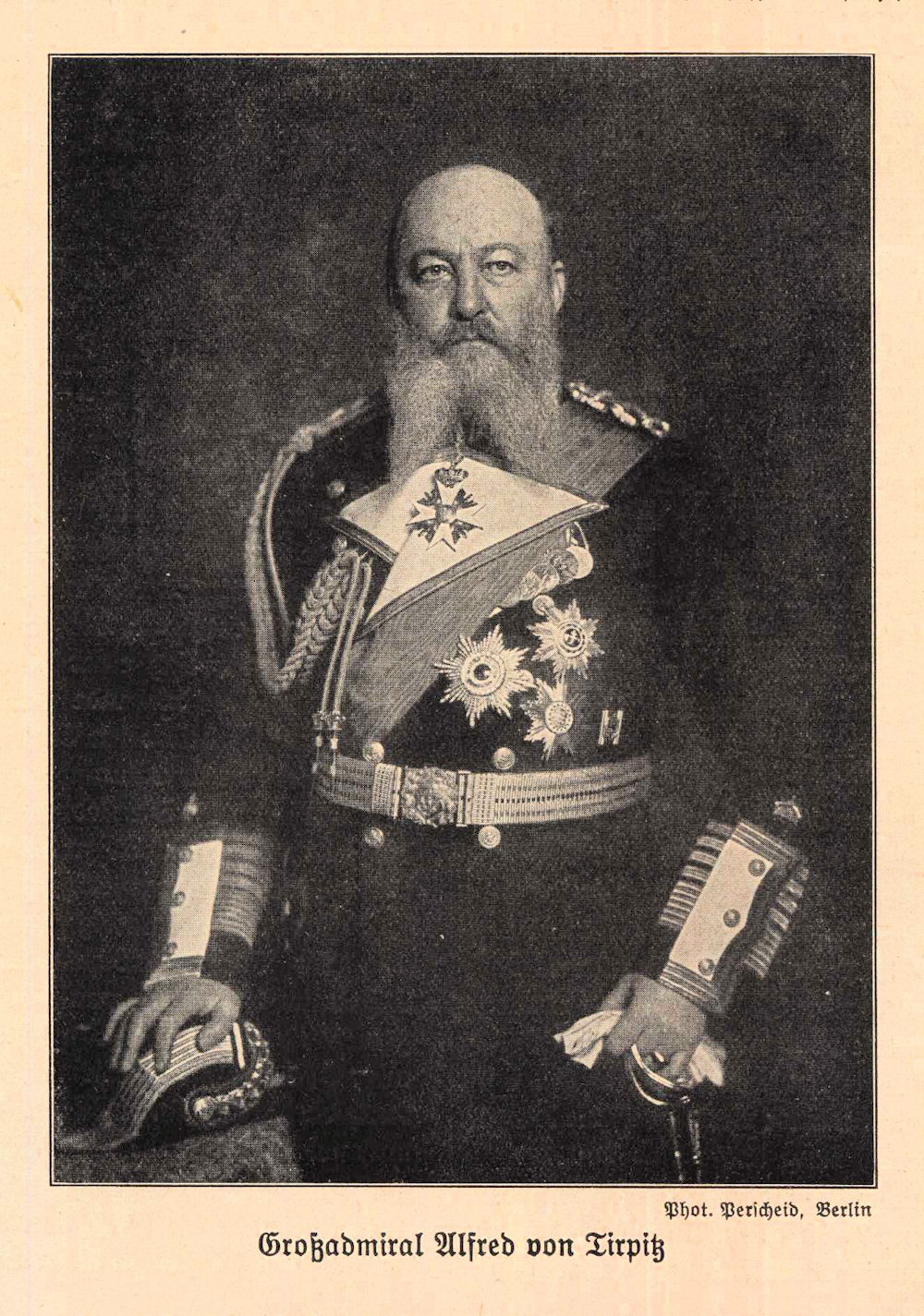
Tirpitz and the Imperial German Navy
Reviewed by Ron Drees


Tirpitz and the Imperial German Navy

By Patrick J. Kelly
Published by Indiana University Press, 2011

Tirpitz and the Imperial German Navy is another book to read to understand factors contributing to the ignition of WWI. The author, Patrick Kelly, has researched this book with impressive detail and written it with piercing analysis. The book has four major sections: the youth and maturing of Alfred Tirpitz (1849-1930) as a naval officer, including an undistinguished performance in Asia; his service as state secretary of the Imperial Navy Office; WWI with its frustrations and his declining influence; and a post-war political career. Basically, Tirpitz was a mediocre commander who sought power and jealously protected it while deprecating new ideas and promoting his own.

Click on Image to Expand


Tirpitz was chiefly responsible for the development of the torpedo as a significant weapon, working for twelve years in the Torpedo Arm Section of the German Navy, 1877-1889. A highlight of the book is an 1879 photograph of a square-rigger, the SMS Zieten, with two torpedo tubes above water on the starboard side.

In 1896 Admiral Tirpitz was sent to East Asia to identify a site suitable for a navy base. The challenge of this assignment was compounded by his lack of objectivity and by internal navy politics. Eventually he seized his favorite site, regardless of Chinese concerns. His performance was unimpressive.

Upon his 1897 return to Germany, he sought and served as state secretary until 1916. This is somewhat like a uniformed officer being the secretary of the navy. He had much to say about navy expenditures, primarily for building capital ships, which gave him the power he sought.

His chief responsibility was to build the fleet, which he did successfully by frequently threatening the Emperor with his resignation, schmoozing with Germany's four political parties, linking expanded international commerce to a more powerful navy, and building a base of navy loyalists. The result was a fierce and expensive buildup of the German Navy into a force that was still outgunned by the British, who had several times as many ships with far greater cruising ranges. Hatred of that power was used to justify the expansion of the navy, although plans for its use were never developed, nor was it used much in WWI. In the meantime, the gradually developing submarine force was ignored.

This period of service was when Tirpitz performed best but also when his worst features came to light: a craving for bureaucratic power, a poorly designed fleet with only a North Sea mission, no coherent plan because it would challenge Tirpitz's power, and overall a man with self-interest, not the interest of the Navy.


Order Now
When the war ended naval construction, the Admiral's influence was reduced to very little. He had not commanded anything since 1897, his ideas were ridiculed, and he was basically sidelined. After the war, Tirpitz participated in civilian politics, winning a seat as a deputy in the Reichstag. He was interested in establishing a dictatorship to combat the unrest of that period, but nothing came of it. When investigated for war crimes in 1920 he was found innocent because he had had no authority. Later the Nazis built a fitting memorial to the admiral: a battleship named for him. The British responded appropriately, bombing it to the bottom of a Norwegian inlet.

Kelly is to be commended for keeping all of the lengthy and complicated legislative activity straight in this book, but for the reader it is a tough slog. Kelly's last chapter is titled "Conclusion," when actually it is primarily a summary. The reader should review this before taking the time to read the entire book, which perhaps might be considered too detailed for some.

Ron Drees

The Image of Admiral Tirpitz is from Tony Langley's collection.

Monday, December 16, 2013

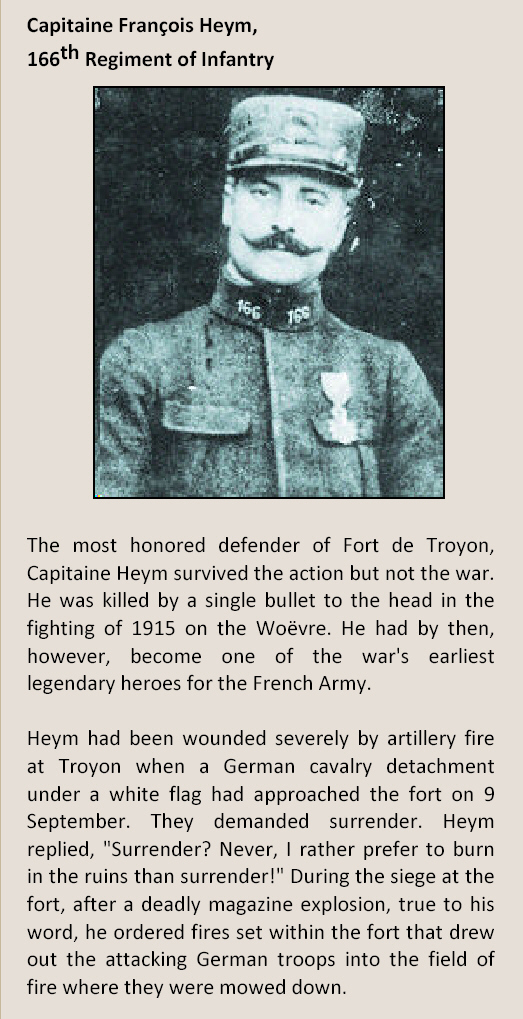
Remembering a Veteran: Capitaine François Heym, 166th Regiment of Infantry


If you are not familiar with the story of the importance of Fort de Troyon's valiant defense — the action simply saved the Battle of the Marne for France. We told the full story in the February 2008 issue of Over the Top, which — as with any of our 84 back issues — is available for $4.50 as a download.  Email us for further information and a list of our other issues.


Sunday, December 15, 2013

The Lie About the War: A 1930 Critique of War Literature


The Lie About the War
A 1930 Critique of War Literature, by Douglas Jerrold
Conservative historian and publisher Douglas Jerrold, a man once described as "an uncompromising controversialist," in 1930 found himself quite dissatisfied with the literature – both fictional and memoirs in the form of novels – taking the war as its subject. He published a scathing pamphlet titled The Lie About the War that grouped together such recent "best sellers," which are now rated the war's "classics," as All Quiet on the Western FrontGood-bye to All ThatUnder FireThe Secret BattleStorm of SteelThe Enormous Room and theSpanish Farm Trilogy, and described what he saw as their common and central flaw. I believe the excerpt below captures the heart of Jerrold's argument. Incidentally, in the 1950s Jerrold became better known for publishing an equally powerful rejection of the works of mega-historian Arnold Toynbee.

These books all reflect (intentionally or otherwise), the illusion that the war was avoidable and futile, and most of them reflect the illusion that it was recognized as futile by those who fought it. It is this obsession of futility, not any special depth of sympathy or humanitarianism which accounts for the piling up of the individual agony to so many poignant climaxes remote from the necessities or even from the normal incidental happenings of war. The suffering, the horror and the desolation is presented always and brutally as without a meaning so far as the declared purposes of the struggle are conceived, because these declared purposes are, to the writers and critics of the moment, either so many impudent and deadly frauds or so many irrelevancies, to the achievement of which the blunders and crimes of the military were only so many obstacles.

Now these writers are too gifted not to know that if the sufferings of the war were really futile and superfluous or its incidents irrelevant, the sufferings would in themselves be utterly without significance. These writers know as well as I do that the only possible tragedy of the war, considered as war, lay in its inevitability, that to deny the element of fatality must be to deny that it was a tragedy at all. Yet to accept the element of fatality would be to invest the war with a grandeur which these novelists are determined to deny it. Hence the frantic attempt to get the dramatic quality out of every kind of struggle except the struggle of one army against another and so to get a significant novel without having to admit that it was a significant war.

The struggle of the coward against fear, of the artist's sensibility and refinement against progressive brutalization, of the brave man against exhaustion, of the 'line' against the Staff, of the amateur against the professional soldier, of the individual against authority, all lead up to and are subservient to the ultimate and wholly mendacious struggle of the man of peace against war [in Remarque's words:] "the fighting, the terror, the mastery, the power and the tenacity of the vital forces of the individual man faced with death and annihilation." To put it another way, perhaps gaining in vividness at the expense of exact analysis, the real tragedy of the war is being falsely reported as the death of so many men whose duty it was to live, whereas the real tragedy was that duty offered no alternative but death. And it was for this reason that death was accepted, not in fear, not in sullen indifference or in open or suppressed revolt, but deliberately and in the face of countless opportunities of evasion.

This is where the crime against mere veracity begins to show. To establish the dramatic quality of the secondary and sometimes wholly imaginary struggles which make up the tale of these unmilitary epics, every essential fact is falsified, either objectively or by an illegitimate technique.

A French critic [Jean Norton] has accumulated a catalogue of objective errors in some of the more popular works. I hesitate to follow in his footsteps because it is impossible to establish a negative. What is happening today is precisely what happened in 1914 in the matter of the German "atrocities" in England and in 1919 of French "atrocities" in Germany. A grotesque legend is being built up on a slender basis of hearsay.
. . 

Saturday, December 14, 2013

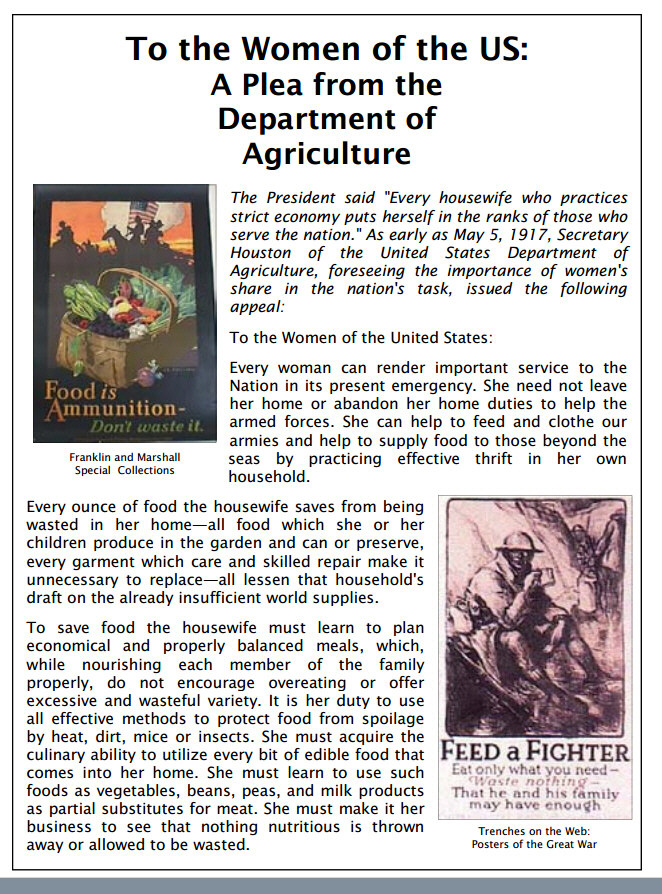
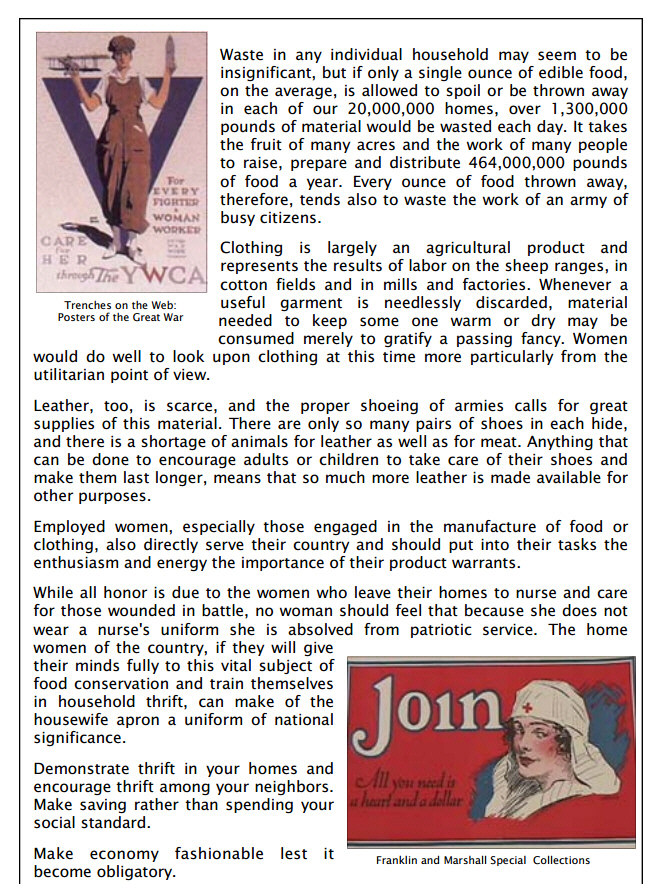
Housewives Called to War!

Over the years, authors, publishers of history and text books, and other websites have drawn heavily (sometimes without asking permission) on the multiple productions from WWW.WORLDWAR1.COM. Here is an article from the PBS History of the U.S. website designed to help history teachers in their classrooms.  Our site founder Mike Iavarone and I provided images and text for a number of their articles that are still in use today.  MH


Friday, December 13, 2013

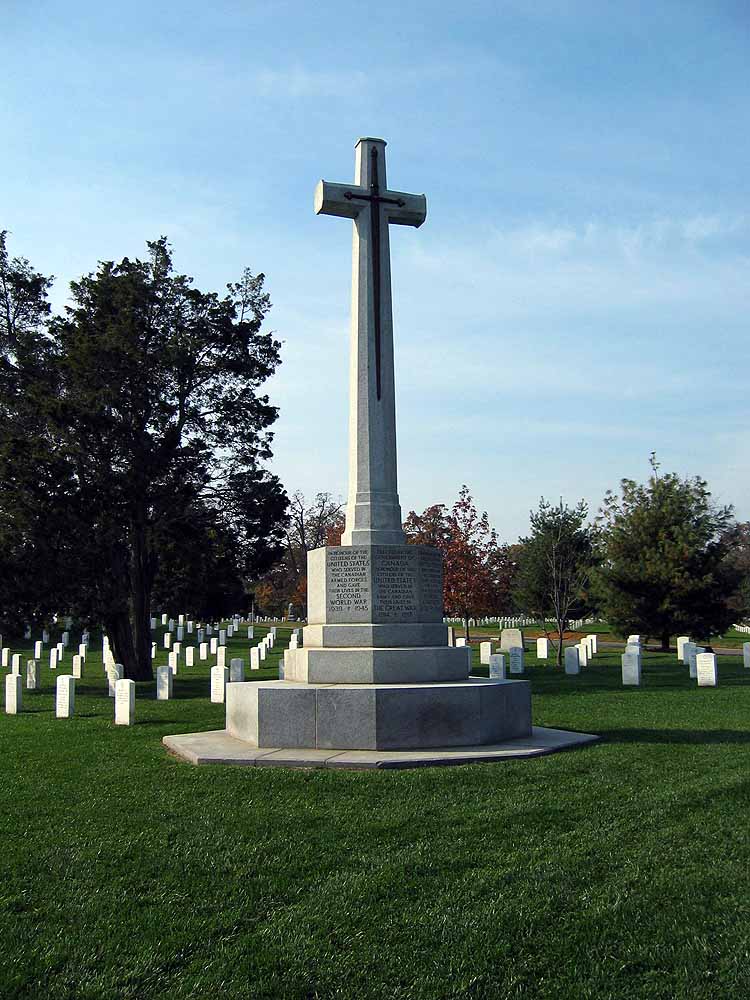
A Canadian Memorial at Arlington Cemetery


Cross of Sacrifice
From the Collection of Steve Miller

Click on Image to Expand


Few countries enjoy the bonds of goodwill and friendship that the United States and Canada share. Our common border remains the longest unguarded frontier on earth, and our nations have shared triumphs and tragedies throughout history. It was in this spirit of friendship that in 1925 Canadian Prime Minister MacKenzie King first proposed a memorial to the large number of United States citizens who enlisted in the Canadian Armed Forces and lost their lives during World War I. Because the Canadians entered the war long before the United States, many Americans enlisted in Canada to join the fighting in Europe.

On 12 June 1925, President Calvin Coolidge approved the request, and on Armistice Day 1927 the monument near the Memorial Amphitheater was dedicated. Designed by British architect Sir Reginald Blomfield, the monument consists of a bronze sword adorning a 24-foot gray granite cross.

The inscription on the cross reaffirms the sentiment expressed by Prime Minister King regarding Americans who served in the Canadian Armed Forces. Following World War II and the Korean War, similar inscriptions on other faces of the monument were dedicated to the Americans who served in those conflicts.

Quoted from: Peters, James Edward. Arlington National Cemetery: Shrine to America's Heroes.  2000.


Click on Image to Expand


Thursday, December 12, 2013

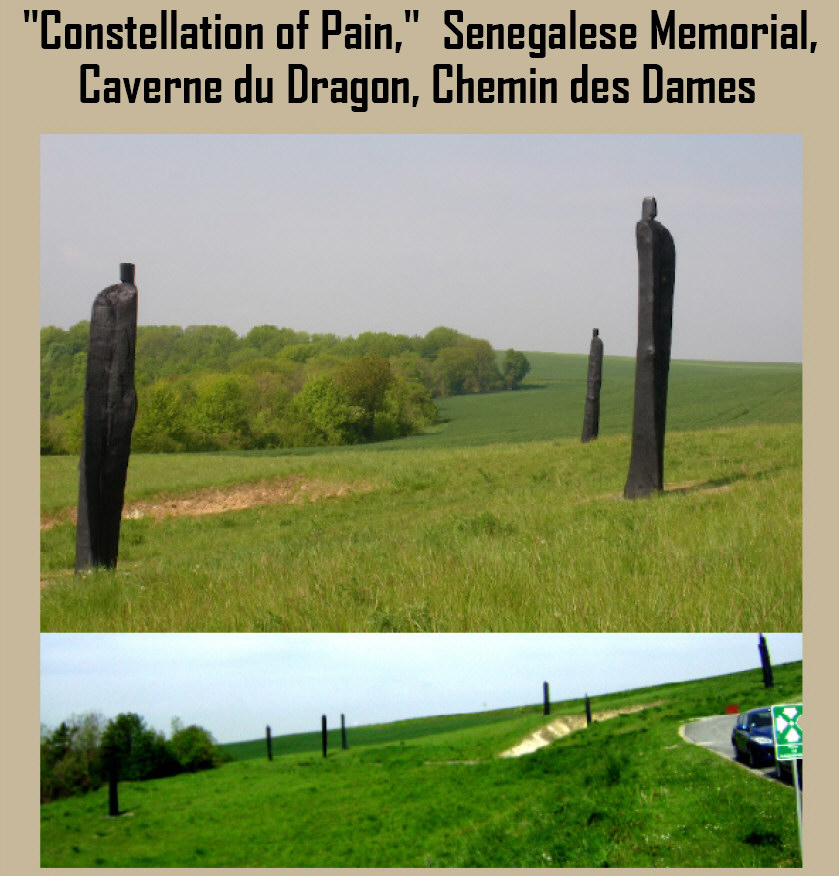
Remembering the Tirailleurs Sénégalais

Above the famed Caverne du Dragon situated on the Chemin des Dames are nine tall black abstract figures made of calcified wood that seem to be rising from the ground. These thick columns with tiny heads atop are artist Christian Lapie's acknowledgement of the tragedy that befell the colonial Senegalese troops of the French Army at this site. On the morning of 16 April 1917 more than 15,000 of the Senegalese infantry attacked here. Over 1,400 of them died that day. The artwork was dedicated on the 90th anniversary of the tragedy in 2007.

Click on Image to Expand

Wednesday, December 11, 2013

What It's All About:
From the U.S. National Archives


As readers of Roads to the Great War have probably figured out, I simply find the Great War endlessly interesting. Words, however, sometimes escape when I try to explain my interest to others. I found this on the website of the U.S. National Archives and I think this says much of what interests me.

World War I is the cradle of modern civilization. More than any other event, it shaped the 20th century, toppling kings, ushering in the Soviet Union, transforming relations between and within nations. The first truly mechanized war, it was fought with poison gas and bombs dropped from the air, with tanks and machine guns and in trenches stretching for 600 miles. Offsetting the lethal ingenuity of modern mass warfare, the Great War also inspired unforgettable songs, poetry, and literature. Words like liaison, Tommy, and doughboy enriched the popular vocabulary. On the homefront, Americans saw their government swell to a cost and scope never before imagined. Self-denying patriotism spawned Meatless Mondays and Wheatless Wednesdays, and sugarless gum was invented as a caloric test of Allied solidarity.


Click on Image to Expand

There's a Long, Long Trail A-Winding
Nights are growing very lonely,
Days are very long


As you might expect, there are a whole slew of treasures to be found at the National Archives. If you want to explore them, just go to their "Wiki" page and enter First World War in the search box.

Tuesday, December 10, 2013

THE WAR THAT ENDED PEACE: The Road to 1914
Reviewed by James M. Gallen


THE WAR THAT ENDED PEACE: The Road to 1914

By Margaret MacMillan
Published by Random House, 2013

World War I is often depicted as a tragic accident in which the assassination of an Austrian Archduke by Serbian nationalists sets in motion a string of falling dominos that brings the old European civilization crashing down. The War That Ended Peace shows that there was much more to it than that.

The road to 1914 did not begin in Sarajevo. It wound back through the centuries of dynastic accretions, nationalistic risings, family ties, and political intrigue. Author Margaret MacMillan leads the reader down that road with all its hills and valleys, twists and turns, peaceful solutions and ultimate disaster


Order Now
This book lays out the backdrop against which the actors played their roles. The Europe of 1900 displayed its splendors to the world at the Paris Universal Exposition as nations united by the ties of royal consanguinity and locked in colonial and economic competition outdid each other in presenting their civilization's march of progress that could never retreat. This civilization that was the master of the world lived in the shadow of the Franco-Prussian War and the challenge of a rising United States.

MacMillan then examines the circumstances of the major countries that would guide Europe through the days that lay ahead. Britain, where the reign of Victoria, whose grandchildren would send armies to their deaths, was giving way to that of Edward VII, still ruled the waves but had a military largely committed to the preservation of its empire. Germany was a new country whose childish Kaiser Wilhelm II, grandson of Victoria, imposed his own will of taking his place in the sun by expanding Germany's army, the development of a navy to challenge Britain's, and his own brand of international intrigue. France was a still proud power licking the wounds inflicted by Prussia even while its leaders privately recognized the need to move on. There were also the sick nations of Europe: Russia, a backward power developing with French loans and rebuilding from its defeat by Japan in 1904-05; Austria-Hungary an empire assembled by royal marriages but divided among Austrians, Hungarians, and minority nationalities as well as between the conservative and aging Emperor Franz-Joseph and his more liberal heir presumptive, Franz Ferdinand; finally, the sickest of all, the Ottoman Empire whose anticipated demise threatened to set the powers scrambling to pick up its pieces.

Click on Image to Expand


The Results of the Decisions of 1914


In each of these nations monarchs, soldiers and statesmen assessed their alliances, the balance of power, both now and in the future, and decided when to fight and when to make peace. Just as Fort Sumter was not necessarily where the Civil War would begin, the assassination of Franz Ferdinand was not the heaven-ordained powder keg that would set Europe ablaze — Bismarck's prediction that "One day the great European War will come out of some damned foolish thing in the Balkans" notwithstanding. There were other potential sparks but the Concert of Europe, which had kept the peace since the Napoleonic Wars, was able to contain colonial ambitions, the Franco-German rivalry in Morocco, and a series of wars in the Balkans. By 1914 something had changed. Austria-Hungary felt that it must punish the Serbians in order to remain a great power. Germany, surrounded by France and a rising Russia, saw its relative position declining in the future so, if war was to come, the sooner the better. Russian and other leaders fearing socialist and other radical revolution found in war a foreign threat against which its people could rally. France foresaw its population imbalance with Germany worsening. To too many this was the time for a war that would, due to economic necessity, be short and relatively painless. Despite these forces peace attempts were made by some, including the Kaiser. Mobilizations were debated but ultimately were ordered. By the end of the book the lamps were going out all over Europe.

The actual story of the war is for other works and, perhaps, other authors. The War That Ended Peace is the story of the misjudgments, the false assumptions, the called bluffs, the unalterable plans, and the flawed characters that combined to extinguish the Lamps for a generation and cast a shadow over Western civilization to this day. The story is momentous. The writing is superb. Margaret MacMillan has crafted a book that never taxes the reader's interest nor lets the mind wander. She asks questions such as whether the German naval buildup, which had little effect once war started, deprived the army of the resources that might have made victory over France possible? One technique that she uses to great advantage is to draw parallels between the events and conditions of a century ago and those of current and recent times. We are left wondering "Was this war necessary?"; "Why could the Concert of Europe not keep the peace one more time?"; and, most frightening, "Could WE do it again?"

James M. Gallen

Monday, December 9, 2013

Le Pèlerin, A French Catholic Magazine Covers the War


Contributed by Tony Langley

Le Pèlerin was a French weekly journal founded 1873 by the Roman Catholic Assumptionist order of priests. Naturally, during the Great War it covered its events extensively. Most of the work covered the troops and the fighting, but they also wanted to show the Church's support of the war and published a number of images and articles about priests (who were not exempted from serving and fighting) participating in the war.


Le Pèlerin was published by the Catholic press and as such was chronically underfunded. That meant a lot of amateur contributions, volunteer work, and underpaid professionals to do work the less technically adept could not perform. And it also meant pushing parishioners and Catholic schools to buy the magazine. Publications like Le Pèlerin were printed in the cheapest manner possible using a cheap off-set procedure with large rasters, almost like in newspaper printing. They used photographs as covers and then hand-colored them to give a semblance of quality. The quality of this colorizing varied greatly.


In France, and to a large degree in Belgium, priests were not given religious deferments in order to avoid military service. They were called up in the same manner (in peacetime) as other civilians and had no special status as such. If they were a student at a university or other institution recognized by the state, they would be given student deferments (before the war), but afterward were drafted all the same. They received no special deferments or treatments as such. Nor were there military chaplains before the war.


In fact, when priests or candidate priests were called to service, they had a high chance of being the recipient of many a degrading task and were more than likely to be made fun of, have their noses rubbed in the crude and coarse way that soldiers lived in barracks or amused themselves when at liberty. Their comrades would be sure to teach them all the crude facts of life and pleasure when in some remote and dreary garrison town. This was often to a degree somewhat beyond the usual hazing inductees have to go through, as many French were vehemently secular and anti-religious in their outlook. 


During the war, however, due to the general feelings of national solidarity in adversity and the unity displayed by the Union Sacrée, the wartime coalition government of secularists and Catholics, less animosity was displayed by army authorities to priests in service. They were often given duties as stretcher bearers for instance and would act as unofficial chaplains of sorts. And the higher church authorities also cultivated their patriotic image. 


This worked fairly well, as the French could portray themselves as a Catholic nation, compared to the overwhelmingly Protestant make-up of Germany. Bavarians, though, were mainly Catholics, which is why there was often less animosity between the two in general.

Sunday, December 8, 2013

8 December 1914: The Battlecruisers Have Their Finest Hour at the Falklands

A naval historian once said to me that as soon as the first battlecruiser, HMS Invincible, was launched it was destined to be put to purposes unsuitable to its design. Admiral Jackie Fisher's concept was for an improved form of the armored cruiser class, but even speedier and with larger guns, to perform missions like scouting, patrolling sea-lanes, and raiding. The trade-off that made this possible was sacrificing the amount of armor aboard. My friend pointed out that they were never intended to serve in the line of battle, or to take on a fully armored battleship as the Hood did with the Bismarck in the Second World War. He argued further that the battlecruiser disaster of the Royal Navy at Jutland showed that battlecruisers should never have taken on another battlecruiser — one lucky shot in, and you are sunk.


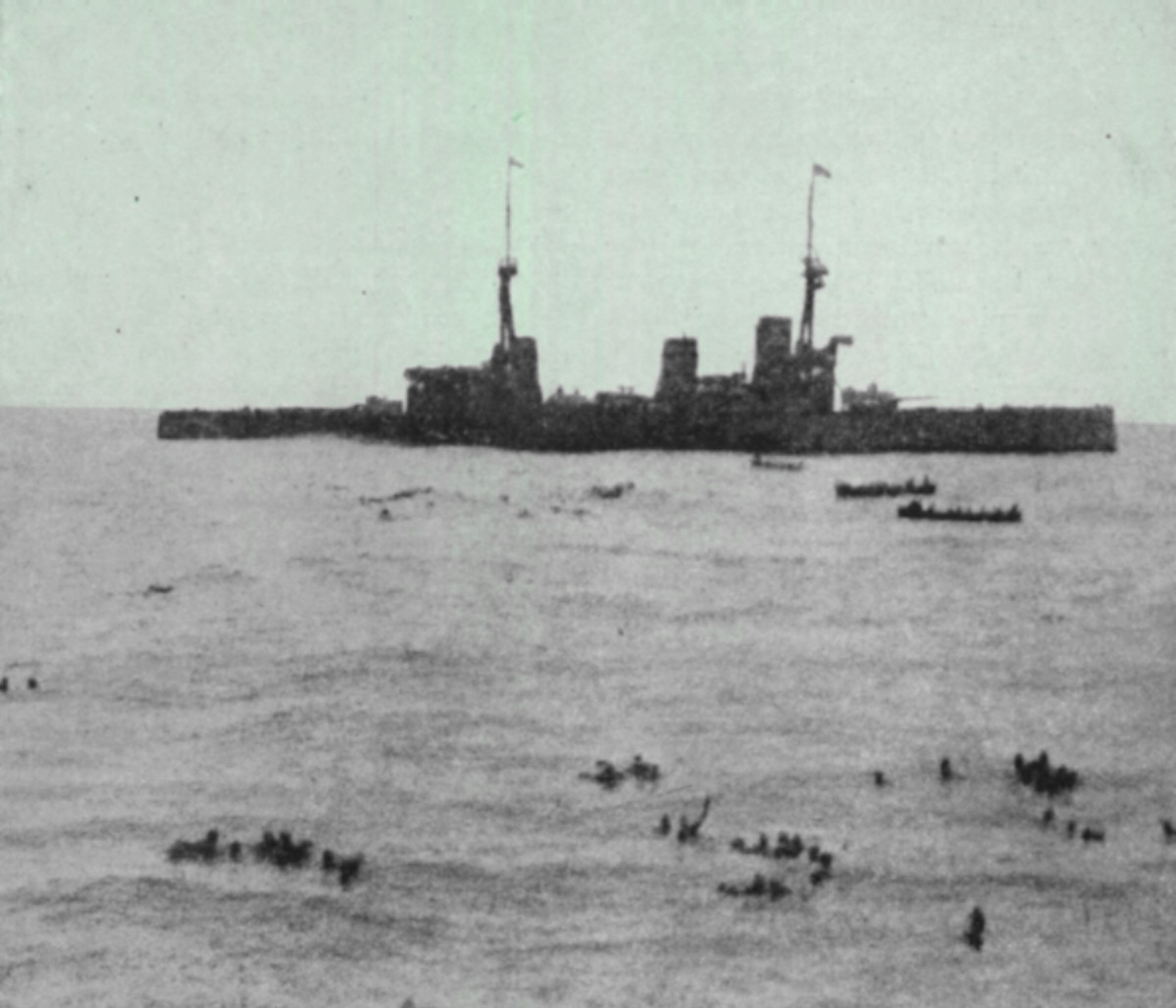
HMS Inflexible Picking Up German Survivors of the Battle


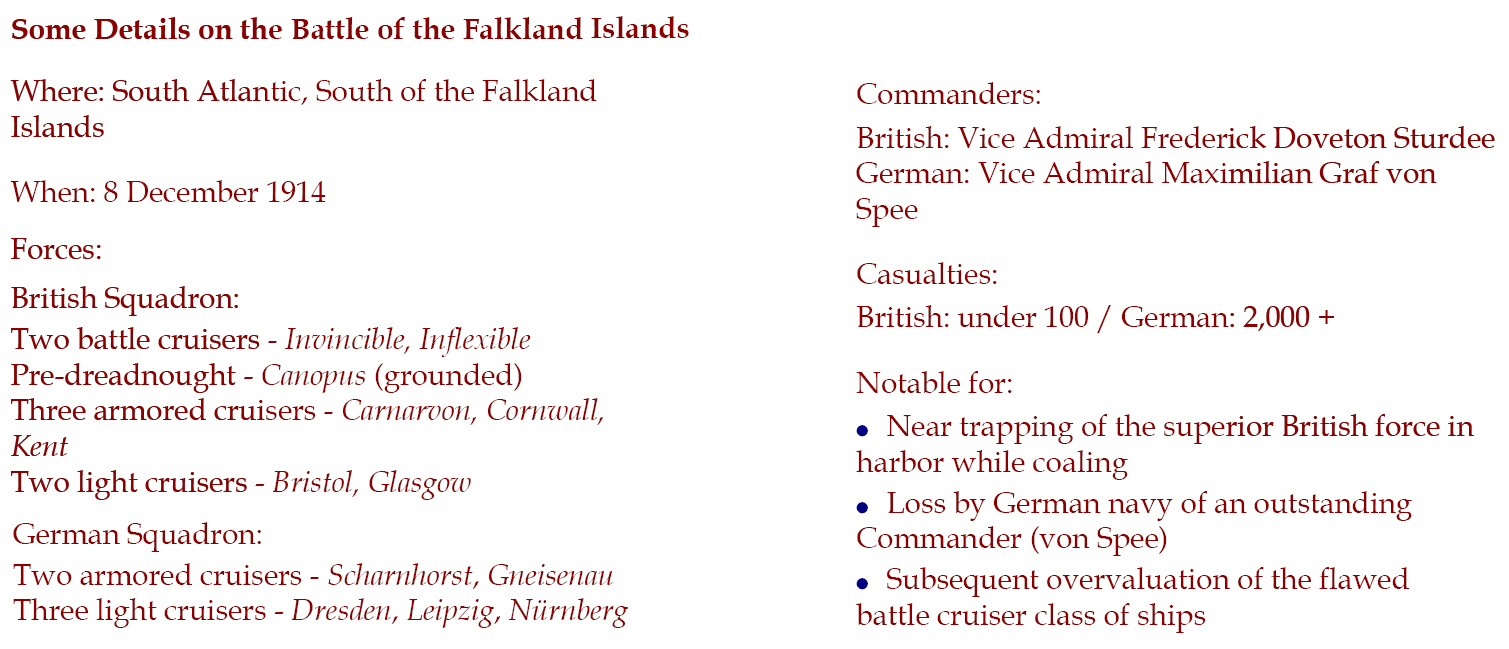
Today is the 99th anniversary of an action that helped admirals and naval planners get pointed in this wrong direction. At the 8 December 1914 Battle of the Falklands, two British battlecruisers, HMS Invincible (the first-ever battlecruiser) and HMS Inflexible devastated the squadron of German admiral Maximilian Graf von Spee, previously victorious against a less formidable Royal Navy flotilla at the Battle of Coronel.


Click on Image to Expand


Von Spee brought his ships across the Pacific and after his victory off the Chilean coast was preparing for his dash home to Germany across the Atlantic. However, he tarried excessively and the Royal Navy had sent the two battlecruisers to the South Pacific. Most unfortunately for von Spee, those ships were re-fueling at his next destination. The German ships almost trapped the British ships in harbor. But recognizing the danger, von Spee ordered his ships to run. Only one of his ships escaped that day, however. It was the British battlecruiser's finest hour, but it contributed to their over-valuation in fleet actions. Post-action reports emphasized how many hits the two battlecruisers had absorbed during the battle without any effect. But these were from the smaller guns of smaller ships.


Click on Image to Expand


Invincible was later blown in half and sunk immediately in the action at Jutland by fire from two German battlecruisers. Inflexible, was luckier; it was disabled by land fire and a mine at Gallipoli in 1915 but survived to fight at Jutland the next year, avoiding major damage. After surviving the war, it was sold for scrap – to a German firm.

Saturday, December 7, 2013

Armistice Glade at Compiègne


The Compiègne Armistice Glade

A must stop for visitors to the Western Front is the Armistice Glade at Compiègne north of Paris where both the Armistice of 11 November 1918 and the French surrender of 1940 were signed. There are several notable monuments on the site and the museum is quite good, with an outstanding collection of stereoscopic viewers for three-dimensional war images.


The site for the November 1918 Armistice negotiations in the forest of Rethondes on the outskirts of Compiègne was an artillery railway emplacement. It was hidden and out of the way but accessible for both delegations. Marshal Foch's train is shown on the left, the German delegation's to the right.


The central area today from approximately the same perspective (slightly shifted right). The enclosure holding a replica of Foch's car and the museum is in the distance. The large block in the left foreground bears the inscription (in French): "Here on 11 November 1918 the criminal pride of the German Empire was brought low, vanquished by the free peoples whom it had sought to enslave."

Entrance to the rail car and museum

Foch's Carriage. The original at the orders of Hitler was moved back to the 11 November  1918 location and used as the venue for executing the French surrender. The car was then moved back to Germany and destroyed at the end of World War II. The present car is considered a very accurate replica of the original.

Two of the notable statues at the Glade: the Foch statue was unveiled in 1937 with the good Marshal in attendance; the slain German eagle is the principal feature to the monument commemorating the return of Alsace and Lorraine that was built by public subscription after the war.

Friday, December 6, 2013

World War I Treasure Trove at the National Museum of the U.S. Air Force Website

The recent announcement that the National Museum of the U.S. Air Force was proceeding with a $35 million expansion reminded me that in addition to their incredible collection of aircraft, inclusive of the Great War period, they have an equally impressive collection of articles on aviation history, flyers, operations, and aircraft. Their "Early Years" section contains over 100 articles on every aspect of military aviation and can be found here:


The site is organized topically using a fact sheet format.  The web pages allow downloading of high- resolution images of the subject matter and offer a printer-friendly version if you want hard copies of the pages.  Here are two examples:


Thursday, December 5, 2013

A Christmas Gift Suggestion:
A Bear Named Winnie


A Christmas Gift Suggestion
A Bear Named Winnie
Reviewed and Recommended by Andrew Melomet 

Directed by John Kent Harrison and originally produced for the Canadian Broadcast Corporation, A Bear Named Winnie tells the story of the World War I Canadian regimental mascot (2nd Canadian Infantry Brigade) that inspired the A.A. Milne character Winnie the Pooh. The story begins in 1914 with a young veterinarian, Lt. Harry Colebourn (Michael Fassbender) of the Fort Garry Horse leaving Winnipeg en route to the army camp in Quebec. At a rest stop in White River, Ontario, he buys an orphaned bear cub for $20 (the equivalent of about $350.00 in today's Canadian currency) and names her Winnie after his home base of Winnipeg. After training in Valcartier, Quebec, the Canadian Expeditionary Force sails for England. Unwilling to part with Winnie, Harry smuggles her aboard ship and into the camp at Salisbury Plain. When the regiment is ordered to France, Harry realizes he must part with Winnie and arranges for her to be temporarily housed in the London Zoo. He plans to take Winnie back to Canada after the war. But, while she's been at the zoo she's become a star attraction due to her gentle friendliness. When Harry returns, he's faced with either bringing Winnie back to Canada or letting her stay at the zoo. Once he realizes what a hit she is with the children he donates her to the London Zoo permanently. Harry Colebourn would return to Winnipeg alone.


(Yes, this is the wrong kind of bear, but please don't judge this DVD by its cover.)

Winnie was extremely tame. Parents could even place their children on her back for rides. A favorite activity was to give Winnie a drink of condensed milk mixed with corn syrup. Winnie lived at the zoo until 1934. In the last two years of her life she had cataracts and arthritis and suffered a stroke that partly paralyzed her. She was euthanized on 12 May 1934.

A.A. Milne and his son Christopher Robin were frequent visitors to the London Zoo. Christopher Robin loved Winnie and renamed Edward Bear, his stuffed teddy bear, Winnie the Pooh. (Pooh also happened to be the name for the family swan.) The first story with Winnie appeared in the London Evening News in December 1925, and over the years, A.A. Milne wrote a series of stories based on the adventures of his son's stuffed animals. In 1966 Walt Disney released the first animated short starring Winnie, Winnie the Pooh and the Honey Tree.

Early Photo of the Friends

This is a delightful family film with only a brief battlefield sequence. It's well acted, both by the humans and the bears. You feel there's a true warmth and friendship between Winnie (played by two cubs and a full-grown bear) and Harry. Gil Bellows plays Col. John Barret, the stern Chief Veterinary Officer who is won over by Winnie's warmth. David Suchet is General Hallholland, the often drunk commanding officer of the Canadian Expeditionary Force. Stephen Fry plays Mr. Protheroe, the cranky keeper at the London Zoo who likes animals more than children and reluctantly accepts the young Winnie as a temporary guest. Currently, in Winnipeg's Assiniboine Park there are two tributes to Winnie: a bronze statue of Captain Colebourn and Winnie, and an original oil portrait of Winnie the Pooh by the illustrator Ernest H. Shepard.


   Friendship Remembered: Captain Colebourn and Winnie – Statue at Assiniboine Park and 1996 Canadian Stamp

A Bear Named Winnie makes a perfect heartwarming Great War-themed gift for the holiday season.

Wednesday, December 4, 2013

Weapons of War: A Variety of Tanks


Here is a little photographic feature that shows the variety of tanks that were appearing on the battlefields after the Fall of 1916. This is not a comprehensive summary, but several of the most important types are shown and it also shows German efforts in design and in the use of captured tanks.


Source: Mike Iavarone's Trenches on the Web

Tuesday, December 3, 2013

Alfred & Emily
Reviewed by David F. Beer


Alfred & Emily

By Doris Lessing
Published by Harper Collins, 2008

That war, the Great War, the war that would end all war, squatted over my childhood. The trenches were as present to me as anything I actually saw around me. And here I still am, trying to get out from that monstrous legacy, trying to get free. [Alfred & Emily, viii]

Doris Lessing died this year on 16 November, the same day I finished reading her curious part-novel, part-memoir Alfred & Emily. She was 94 and died at her home in London. During her long life she wrote a score of novels (including science fiction), half a dozen volumes of short stories, two operas, several poems, nine works of non-fiction, and two autobiographies. Some of her work was considered a handbook for her times, openly dealing as it did with such subjects as emotional breakdown, sex, marriage, race, politics, psychoanalysis, mysticism, and the child-parent relationship.

Much of her younger life was spent growing up on a farm in the old British colony of Southern Rhodesia, now Zimbabwe. She wrote her first novel, The Grass Is Singing, which focused on settlers in Rhodesia, in 1950 just after moving to England. During her career she won several literary honors culminating in the Nobel Prize in Literature in 2007. One of her best-known novels, The Golden Notebook (1962), has been described as "one of the most important works of fiction in modern literature." [Paul Schlueter, Encyclopedia of World Literature in the 20th Century, 1983]

Alfred & Emily is overshadowed by the First World War, although it was written long after the catastrophe. It's in two parts, the first being fiction and the second autobiographical. If Lessing's parents were haunted by the war, she herself struggled mightily with both of them as she grew up in Africa, especially her highly talented mother. Part Two of the book details much of this psychological conflict with her mother, who, like Lessing's father, might have been and done so much more if there had been no war. It is this loss that Lessing attempts to atone for in the first part of the book, where she imagines the kind of idyllic life both parents might have had in a peaceful world.


Order Now
The difference between the ideal and reality is tragic, of course. In the fictional first part, both Alfred and Emily grow up in bucolic conditions and have pleasant enough lives. Significantly, they do not marry each other, and both have successful careers. Of these fictional lives Lessing writes in her introduction: If I could meet Alfred Tayler and Emily McVeagh now, as I have written them, as they might have been had the Great War not happened, I hope they would approve the lives I have given them. [p. viii]

But neither was happy in the lives reality gave them. As Lessing observes, The First World War did them both in. Shrapnel shattered my father's leg, and thereafter he had to wear a wooden one. He never recovered from the trenches. He died at sixty-two, an old man. On the death certificate should have been written, as cause of death, the Great War. [p. vii]

The life of a soldier who lost a leg in WWI was usually one of ongoing pain and discomfort, the false leg — far from the advanced prosthetics we now have — actually being made of wood with a bucket-like receptacle into which the stump was strapped, with knitted stump socks only partially cushioning the friction and getting uncomfortably itchy in warm weather. For Albert the result was both diabetes and depression, the latter being seen much later in the century by the author as untreated post-traumatic stress disorder.

Just as Albert could not escape his wooden leg, he was also captive to his memories of the war, and the whole family, especially his wife, suffered with him. She moreover had her own experiences as a nurse in a hospital for the badly wounded to weigh on her:

. . . there was this load of suffering deep inside my mother, as there was inside my father, and please don't tell me that this kind of pain, borne for years, doesn't take its dreadful toll. It took me years – and years – and years to see it: my mother had no visible scars, no wounds, but she was as much a victim of the war as my poor father. [p. 172]


Click on Image to Expand


Mutilated British Soldiers Playing Croquet


At the end of his life Lessing's father returned more and more to the causes of his lifelong anguish, and although by then the Second World War was in full furor with constant bulletins coming over the family radio, his thoughts could not escape his own war:

'If you had only known them,' he said, holding my hand hard. 'Such good men. I keep thinking of them.' And my father, crying an old man's tears, his eyes wide and childlike-an old man's eyes (but he not yet sixty)-and he was murmuring the names of those fine chaps, his men, who died in the mud at Passchendaele. . . [ p. 258]

Near the end of the book, which contains some touching family photographs, Doris Lessing states what could well be the theme of her work and which succinctly reveals her reasons for having written Alfred & Emily, making it the fascinating historical and psychologically insightful book that it is:

I think my father's rage at the Trenches took me over, when I was very young, and has never left me. Do children feel their parents' emotions? Yes, we do, and it is a legacy I could have done without. What is the use of it? It is as if that old war is in my own memory, my own consciousness. [pp. 257-258]

This book stands as a testament to the aftermath of the Great War and more widely to the suffering, both seen and unseen, that inevitably results from any war. Lessing treats her topic without subtlety and leaves us with no doubt about her message. She also embellishes her central theme with insights about colonial Africa, the life of expatriate farmers, and war in general. One comment she makes is most telling, pointing out as it does a sad fact that the history of war does not let us deny:

When pacifists, or people trying to limit war, decide to forget that some men thoroughly enjoy war, they are making a bad mistake. p. 252]

David F. Beer

Monday, December 2, 2013

Theodore Roosevelt's Family at War


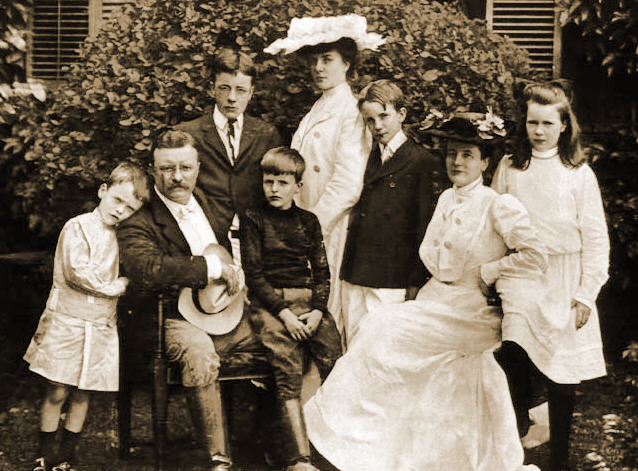
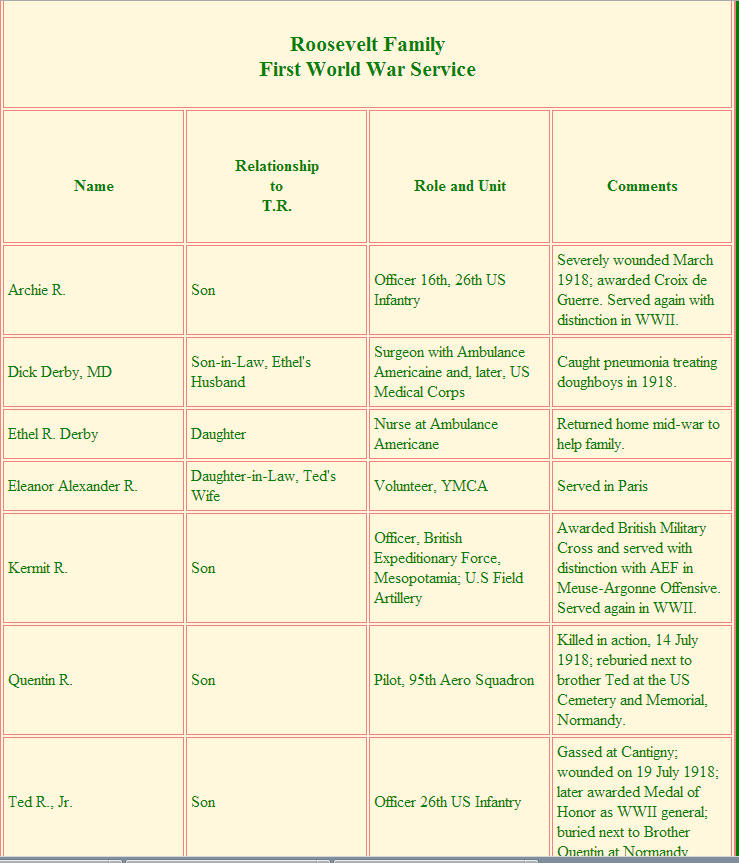
The photo we ran on 22 November of Kaiser Wilhelm marching with his sons, reminded me that during the war the martial contributions of his family were contrasted in the American press with those of former President Theodore Roosevelt's.  As you can see in the table below, four of T.R.'s sons saw frontline action, including his youngest, Quentin, who may have been the most famous U.S. soldier to die in action. Furthermore, his daughter Ethel served as a nurse in France alongside her husband Dick Derby, and T.R.'s daughter-in-law served as a YMCA volunteer.  The only Roosevelt offspring who did not make it to the war zone was TR's oldest daughter, the fabled Alice Roosevelt Longworth, who was the wife of Congressman and future Speaker Nicholas Longworth by the time the war came along.

Click on Image to Expand

The Roosevelt Family, 1903


Quentin, T.R., Theodore Jr., Archibald, Alice, Kermit, Mrs. Roosevelt, Ethel


Theodore Roosevelt's children grew up in the glow of Roosevelt's crowded hour.  All of the boys in their time tromped the grounds of Sagamore Hill and the White House, re-enacting the battle at San Juan Ridge.  They all either absorbed or inherited his reckless, all-or-nothing approach to hazards and most certainly caught both their father's attraction to warfare and his egalitarian ethic. Here is a summary of the service of the family members in the Great War. Their father, of course, had wanted to command a division in the Expeditionary Force, but was been turned down by President Wilson.


Click on Image to Expand


The death of his youngest son, Quentin, affected Theodore Roosevelt powerfully.  The day after being notified of his son's passing, he spoke to a Republican group in Saratoga, NY. Without revealing the death of his boy, he told the crowd:

"The finest, the bravest, the best of our young men have sprung eagerly forward to face death for the sake of a high ideal. . ." he said. "When these gallant boys, on the golden crest of life, gladly face death. . . shall we who stay behind, who have not been found worthy of the great adventure. . . try to shape our lives so as to make this country a better place to live in. . . for the women who sent these men to battle and for the children who are to come after them?" 


In the succeeding weeks, Roosevelt started to vaguely resemble himself again, even though he would never again be as he had been before the loss of Quentin. Despite his affable good humor and energetic need to continue to contribute to public life, his old exuberance had left him, never to return. No one was more attuned to this fact than Edith. "Quentin's death shook him greatly," she wrote Kermit. "I can see how constantly he thinks of him and not the merry happy silly recollections which I have but sad thoughts of what Quentin would have counted for in the future." 

After his son's death, Theodore Roosevelt's health declined rapidly. He died within six months on 6 January 1919. 


Source: Theodore Roosevelt's Family in the Great War by Edward J. Renehan, Jr. 

Sunday, December 1, 2013

The Hospital Tent:
A Forgotten War Painting of John S. Sargent


Click on Image to Expand

The Hospital Tent


Late in September 1918, while gathering material for his iconic World War I painting "Gassed" near Peronne, American war artist John S. Sargent was struck down with influenza and taken to a field hospital near Roisel. Here he spent a week in a hospital bed next to the war-wounded, which inspired this work, now in the collection of the Imperial War Museum. It shows the interior of a hospital tent with campbeds lining the side. Many of the beds are occupied and covered with brown or red blankets. One soldier lies propped up on pillows reading, another sleeps turned on his side, the light from the open tent flap falling on his bed.

Saturday, November 30, 2013

The Ghosts of the Great War
2014 Calendar


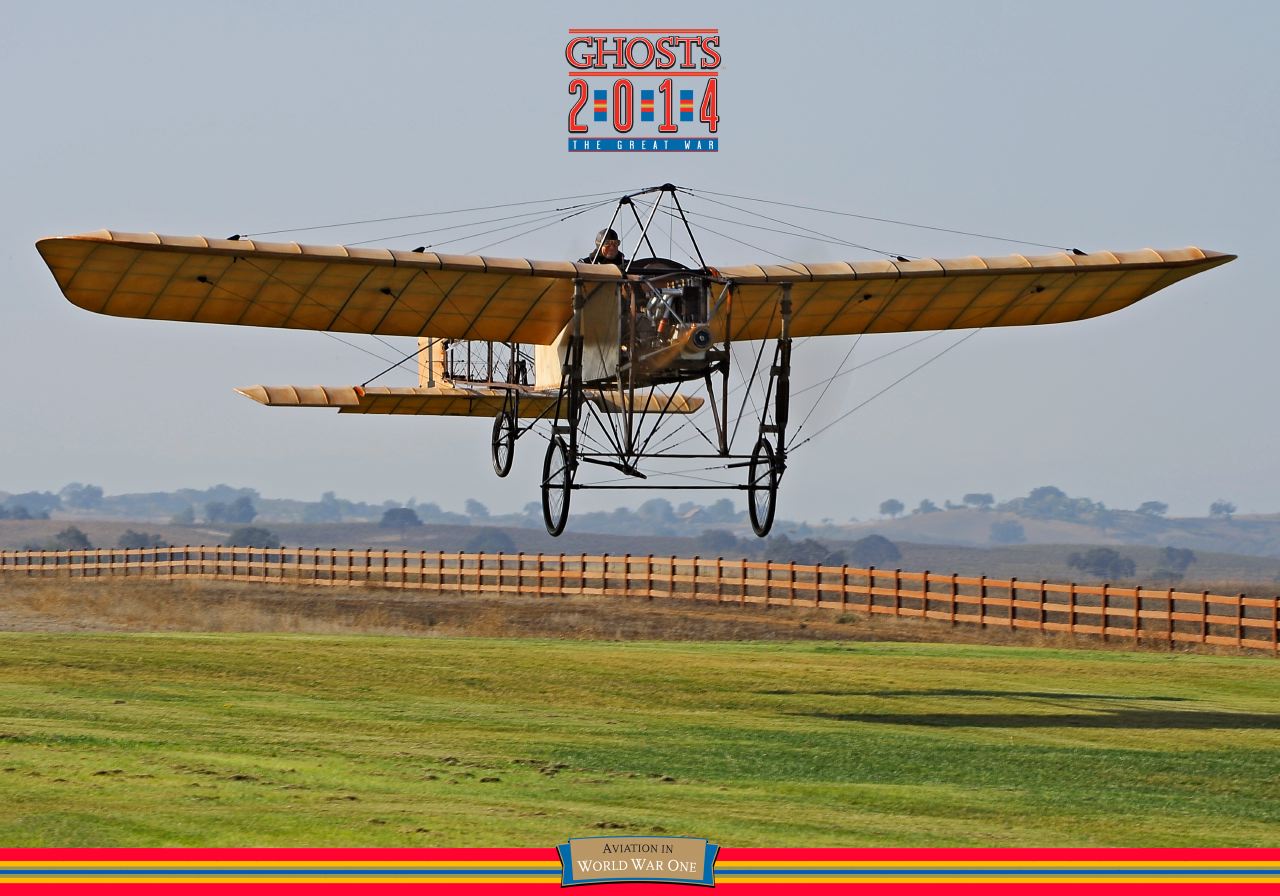
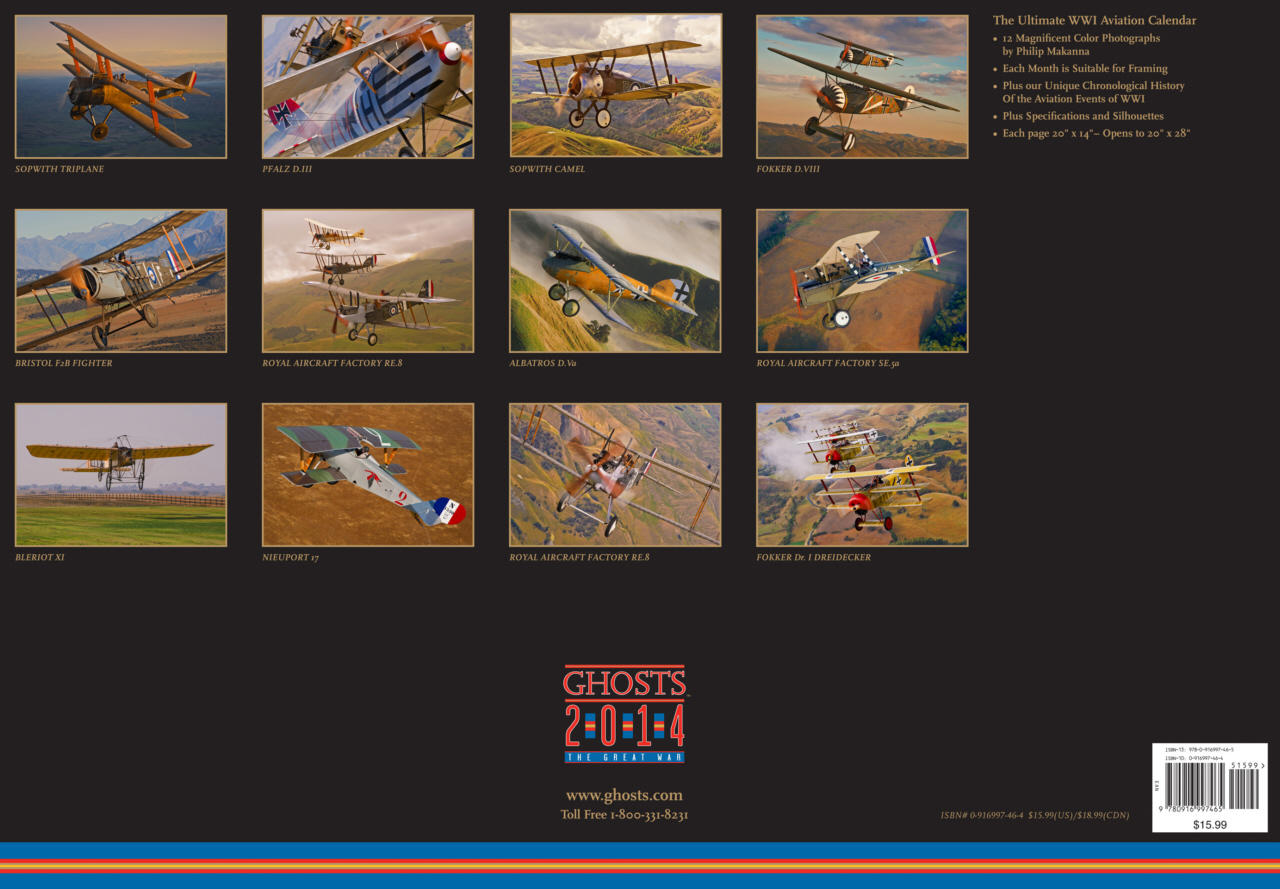
Phil Makanna is one of the world's greatest aviation photographers. He has been photographing historic aircraft since 1974. His work has been featured in numerous magazines such as Air and Space, Warbirds, Air Classics, and many others. He has also authored five GHOSTS books on historic military aircraft. Phil received the International Society of Aviation Photographers Lifetime Achievement Award in 2011. Each year Phil publishes calendars featuring his best work. Below is the cover of the 2014 GHOSTS calendar featuring classic World War I aircraft, followed by ordering information, and thumbnail images of each month's featured “GHOST." By the way, on many of the daily entries, Phil includes notable anniversaries, birthdays, and details about the air war of 1914–1918.

Click on Image to Expand


Ghosts
2014
The Great War

$14.99 + s/h

For Ordering Online Go To:

http://www.ghosts.com/calendar14i.html

For Full Information on Phil's books, museum-grade prints, and many other products,
go to his HOME PAGE at:

http://www.ghosts.com

Click on Image to Expand