Now all roads lead to France and heavy is the tread
Of the living; but the dead returning lightly dance.
Edward Thomas, Roads

Wednesday, November 20, 2013

WWI Collectibles—A Case Study:
The Photographs of Dr. Giulio Andreini, Italian Army


The Photographic Archive of Dr. Giulio Andreini
and How I Came to Own It

By Doug Frank

Click on Image to Expand
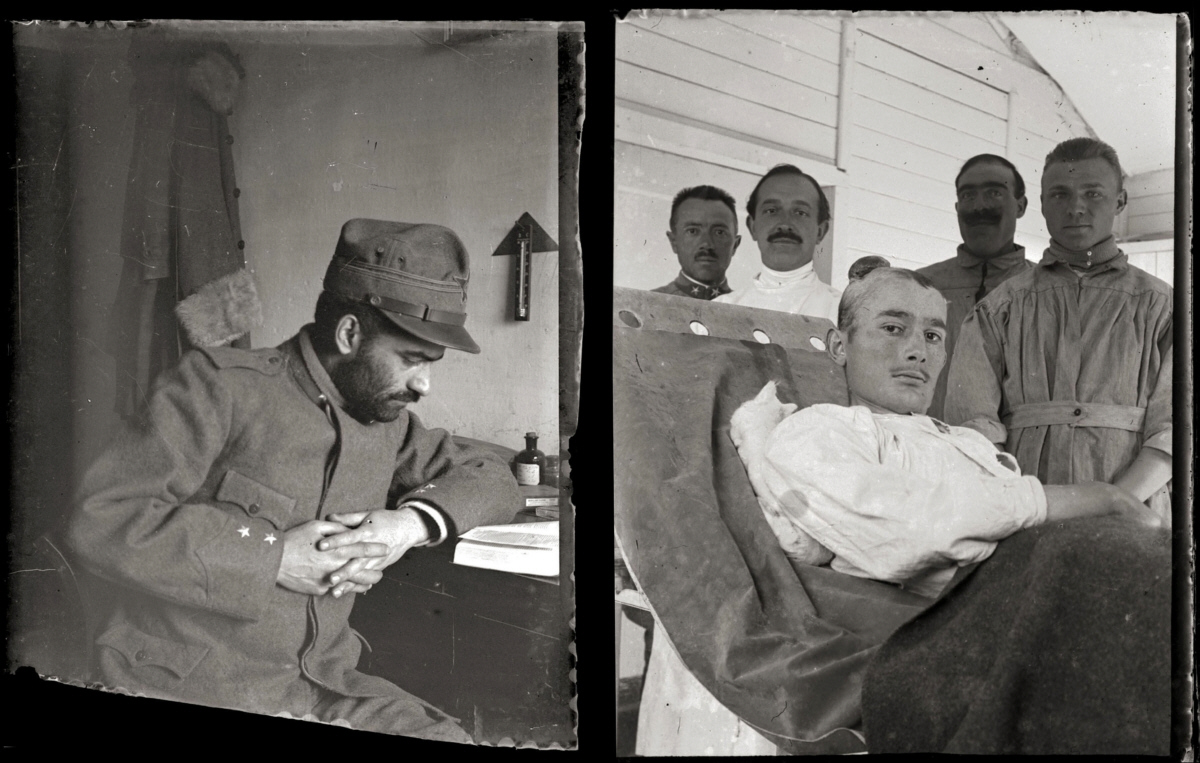
Dr. Andreini, Left, and a Recovering Patient


[Editor's note:   Collectors are a big part of the World War I community. They help keep interest in the war alive and preserve its heritage.  On 26 July we presented some of the photos of the Italian Front from Dr. Andreini's collection. The response from our readers was very positive and I thought some more photos from the collection, and Doug Frank's story of how he came into possession of it would make a fine article. So here it is.  MH]

Photographic negatives made on glass plates always have been a fascination of mine. The often uneven edges of a glass plate seem to give me the sense that the image actually is emerging from the blackness of time past — a true artifact. I began collecting a varied group of such plates many years ago. eBay has been my primary source, although wherever I come across one of these I look at it very carefully. The majority of my glass plate collection was made by anonymous photographers. The human subjects, too, are mostly anonymous and long dead.

I am a career photographer and am quite familiar with the use of high-end scanners as well as various types of image editing software. Film has always been my number one medium, although digital cameras have become a necessity to me in recent years. In 2004, I came upon an auction on eBay for several vintage glass negatives of a medical nature. There were two that caught my eye. One was a 9cm x 12cm portrait of a nurse, and the other was a 13cm x 18cm negative of a medical procedure involving a woman and four doctors. I came to own both of these photographs after winning the two auctions.


Click on Image to Expand
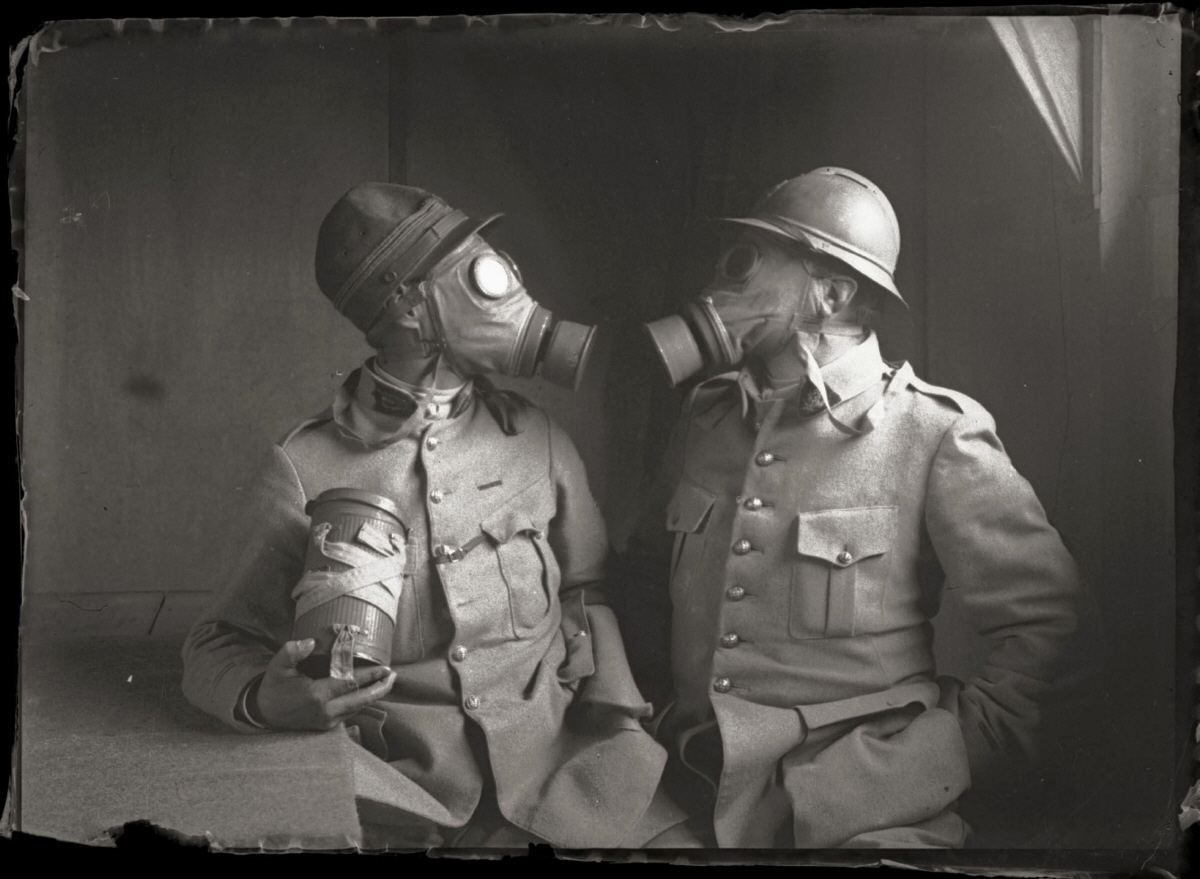
Classic World War I Pose


A few weeks after this sale, I received an e-mail from the dealer who had sold me these plates. He was located in Los Angeles. He explained that he had come upon the archive of an Italian physician named Giulio Andreini, who lived his adult life during the first third of the twentieth century. The dealer had found this archive in Lucca, Italy, and purchased the entire collection from an antiquarian there. However, he went on to say that he had only been interested in negatives of a medical nature, although he was obliged by the antiquarian to purchase the entire archive in order to obtain the images that he wanted. In fact, he still owned about 1,400 glass plates made by this physician but had sold the ones he wanted to sell and had no further interest in the remaining archive, so he asked me if I would like to purchase all 1,400 for $500.

From his description, there were about 250 small glass plates of WWI. The rest appeared to be family photographs, portraits, and others made in hospitals. I went ahead with the purchase. The sizes of the plates range from 4.5cm x 6cm to 18cm x 24cm. The majority measured 4.5cm x 6cm, and virtually all of the war photographs were made in this format. There is one interesting aspect about the WWI plates. Many have very jagged edges. My guess is that 9cm x 12cm plates were the most readily available, but Dr. Andreini’s camera used 4.5cm x 6cm plates, so he probably broke the 9 x 12 plates into quarters somehow, thus giving him the ability to use them in his small camera. This camera was a Contessa Nettel Duchessa, produced in Germany from 1913 to 1925. It was about the size of a modern 35mm camera and could be used either handheld or on a stand.


Click on Image to Expand
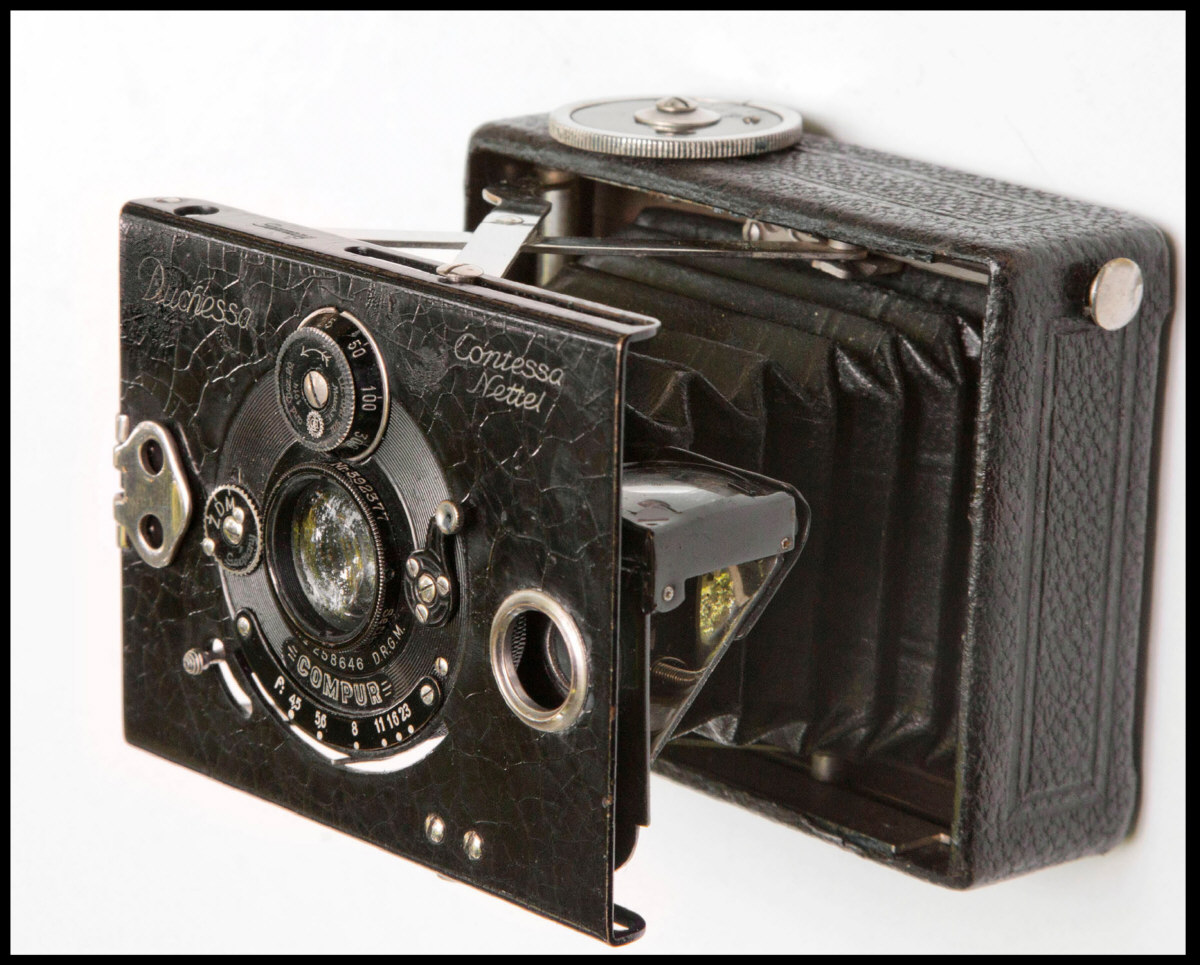
The Contessa Nettel Duchessa Camera


After receiving Dr. Andreini’s archive from Los Angeles, I did a quick survey of it, looking at every negative. My first conclusion was that this man was a superb amateur photographer. My second conclusion was that his WWI plates deserved to be seen by people other than just me.

I then attempted to find information on Dr. Andreini and if he had any relatives living. So I Googled “Giulio Andreini.” The first hit was the website of a “Giulio Andreini, Photojournalist, Siena, Italy.” When I opened the site there appeared a photograph of this Giulio, aged 44. I knew that I was on the right track. Dr. Andreini had made many self-portraits, and this man looked just like him! So I e-mailed the young Giulio and asked if he had a relative who had been a physician in Florence, Italy, in the early twentieth century as well as an amateur photographer. The e-mail I received back confirmed my suspicions.

Yes, he said, his grandfather was named Giulio Andreini, and, yes, he had been a physician as well as a photographer, but all of his work had been lost in 1937. This was the family lore as he knew it. In fact, the Andreini family possessed just a single photograph of the doctor! The young Giulio wondered, however, as to how in the world I could possibly be in the possession of any his grandfather’s photographic material. After all, I lived in Oregon, half a world away from where the photographs had last been seen, in Florence, in the doctor’s medical office there sixty years before. So I suggested to Giulio that I send him one of the self-portraits from the archive, and he then could confirm or not whether the man was, indeed, his grandfather. I sent the photograph and he responded with a resounding “YES!”

Please refer now to Roads to the Great War and a post from Friday, 26 July 2013.


It contains a biography written about Dr. Andreini by his son, Giorgio. The last sentence of the biography refers to an episode described in my next paragraph. Giorgio has since passed away. Dr. Giulio Andreini passed away in 1937 from acute leukemia rather suddenly at the age of 49 years. After his death, his widow, Georgette, went to the hospital where he had worked, taking her thirteen-year-old son, Giorgio, along with her. She asked the nuns who ran the hospital if she could please collect all of her husband’s personal items, such as his photographic material as well as several books of poetry that he had written.


Click on Image to Expand
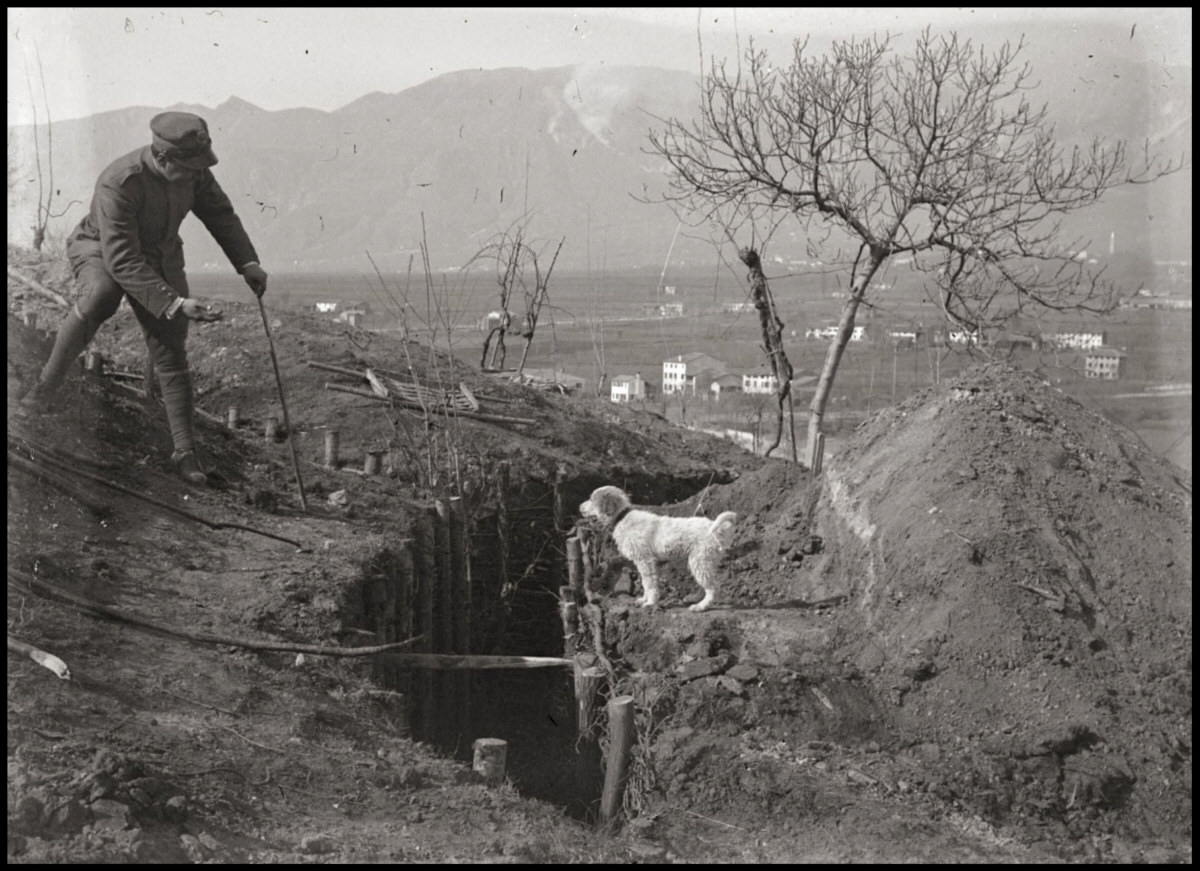
Helping a Dog Cross a Trench on the Asiago Plateau


One of the nuns informed Georgette that the hospital had destroyed everything of a personal nature that had belonged to him, presumably, and in her words “for the good of the family.” The ensuing conversation became quite intense according to Giorgio, but the nuns held firm. The photographs were gone. “For the good of the family” could have had any number of meanings, but I like to think that the nuns were trying to protect the Andreini family from possible repercussions from the dictatorial government in Italy during that time. This was, after all, 1937, and the fascists under Mussolini were running Italy. It is known that many of Dr. Andreini’s poems were satirical and critical of the government as well as the Catholic Church. This material, if seen by government officials, possibly could have presented the family with big problems.

I culled about 350 glass plates from the archive, mainly family pictures, and sent these as scans to the young Giulio. He went on to make prints of these images for all of his relatives and was able, with the help of his father, to reconstruct the history of the Andreini family. He has since even found a previously unknown branch of relatives in the Milan area and has made contact with them.


Click on Image to Expand
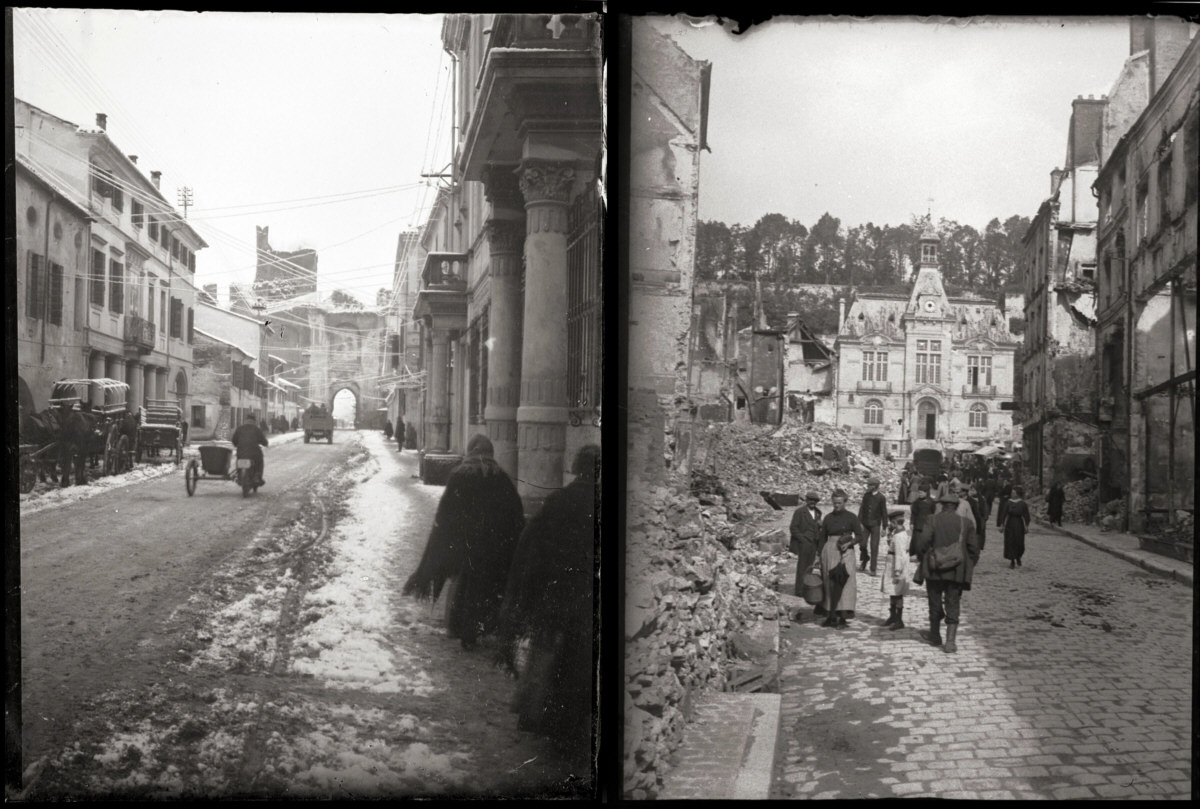
Two Towns:  Unidentified Town on Italian Front, Left; Château-Thierry, Western Front


So the archive of Dr. Giulio Andreini had never been destroyed after all. It probably was sold or given away by the nuns to someone who kept it in a safe place, where it remained undisturbed for the next sixty years. It then resurfaced intact and fell into the hands of the antiquarian from Lucca, who sold it to a dealer in Los Angeles. Then I purchased it and still am holding all 1,400 of the glass plates. Although I own the publishing rights to this work, I am in the process of finding a permanent home for the archive. If possible, I would like this home to be in Italy. His poetry, however, remains lost. As a final note, the young Giulio and I have become good friends over the years. My wife and I visited him in Siena in 2006 and reconnected with him again this past June while we both were traveling in France.

Presented here  is a second group of images for the readers of Roads to the Great War  from his series on WWI, which he photographed while working at a field hospital on the Italian Front between 1915 and 1917. He had been transferred to the French Front when the war ended.

Doug Frank
Portland, Oregon
August 2013


Tuesday, November 19, 2013
The Great War and Modernism Series
The Great War and the Language of Modernism
Reviewed by Jane Mattisson Ekstam


The Great War and the Language of Modernism

By Vincent Sherry
Published by Oxford and New York,
Oxford University Press, 2003

War and language belong together. When the language of the prevailing ideology cannot express major changes in society and culture, a new language must be invented. By reading modernist literature in the context of its historical period, Vincent Sherry demonstrates that the liberalism of prewar Britain was in the process of disintegration. Modernists such as T.S. Eliot, Ezra Pound, and Virginia Woolf imitated, exaggerated, and parodied this disintegration by pushing language to its limits as they experimented with new turns in syntax, grammar, and diction. Imaginative language is the hallmark of the great modernist writers, whose primary purpose was to give expression to the apprehension of the exceptional times before, during, and after the war. The impact of modernism on writing during and after the war, claims Sherry, has been ignored by two of the most important writers of our time — Paul Fussell (The Great War and Modern Memory, 1975) and Jay Winter (Sites of Memory, Sites of Mourning: The Great War in European Cultural History, 1995).


Order Now
The shaping occasion of modernist literature was wartime London. Eliot, Pound, and Woolf took it upon themselves to, as Sherry claims, "develop a register to echo and inflect the prodigal logic of Liberal war policy." Modernism was the first massive reversal that history inflicted on liberal rationalism. Its language can only be understood by relating it to the historical moment in which it was born.

The modernists needed to maintain a special critical edge to the forces of liberalism prevailing before and during the war. The Americans Pound and Eliot, with their alien status, enjoyed a privileged position in this regard. British Woolf, like other feminist writers, managed to exercise a well-practiced skepticism on the language of nationalist politics — politics from which women were still disenfranchised in early 1918.

As Sherry so eloquently demonstrates, liberalism was discredited by World War One. Its decline and death were as inevitable as they were agonizing. The agony propelled a revolution against liberal rationalism, thereby creating a space and a reason for experimentation in language. The literature which came out of this space was imaginative, daring, and highly experimental. Among its chief creators were T.S. Eliot, Ezra Pound, and Virginia Woolf. Sherry's analysis of Woolf's contributions to the modernism movement is particularly persuasive. In his discussion of To the Lighthouse (1927), for example, he argues that there is a calculated mismatch of language and reality, which reiterates and amplifies "the subtle but truest motif in the ordeal that recent history has featured." Sherry concludes that Woolf both recognizes and represents "the failing grasp of an older rational language," demonstrating that history cannot be reduced to the order and schemes of reasoned speech, i.e. language. The foundation for this realization was the upheaval of World War One. Woolf's imaginative awareness is not unique, it is shared by the other modernists, but is, argues Sherry, particularly powerful.


Bruegel's Triumph of Death


Click on Image to Expand


Bruegel's 1562 Premonition of the Western Front or Eliot's Waste Land, or Both?


Scholarly in language and approach, Sherry's examination of modernism is also highly readable and refreshingly daring. Copiously annotated and illustrated, The Great War and the Language of Modernism is essential reading for those who wish to understand not only the thinking prevailing in the second decade of the nineteenth century, and particularly immediately before and during World War One, but also the language which evolved out of this thinking — a language which has produced some of the finest works of literature: Eliot's The Waste Land (1922) and Prufrock and Other Observations (1920), Woolf's To the Lighthouse (1927) and Mrs. Dalloway (1925), and Pound's The Cantos (1915–1962) and Homage to Sextus Propertius (1917).

Jane Mattisson

Monday, November 18, 2013
On the Home Front: The Butte Montana Copper Mines

Contributed by Jim Patton


Miners Going Under at Butte


When war came in 1914 one of the most strategic materials was copper. The world was already in a copper boom due to the need for electrical wire. The supply was tight and new production slow to come on line due to the high capital costs of new mines. In 1914 the U.S. mines contributed 77 percent of the world’s copper, and 31percent of U.S. production was from Butte, Montana, which sat atop an ore body that was 50 to 80 percent copper, the richest in the world, and also containing important amounts of zinc, lead, manganese, and molybdenum.

Needless to say, the price of copper skyrocketed, going from 15.22 cents per pound in 1913 to a high of 27.2 cents per pound in 1916. After the U.S. entered the war the price was fixed at 23.5 cents per pound. With production costs under 10 cents per pound the profits could truly be called extraordinary. The Butte mines were already running at capacity, but the operators ramped up output by going deeper and putting on bigger work crews. Some shafts were lowered a thousand feet, about 20 percent more miners were sent down, and of course the shafts ran 24 hours a day. Maintenance and expansion had to be done while running at high output.

This led to accidents. During the war at least 437 miners died underground in Butte. On 8 June 1917 a fire caused by maintenance work in the Speculator Shaft killed at least 164 miners (some records say 169) in that shaft and the adjacent Granite Mountain Shaft, as they were connected at several levels. This accident was the worst ever in a non-coal mine in the U.S. and the fourth-worst in any kind of mine. Although there had been other accidents in Butte (for example, on 9 October 1915 sixteen miners had died in the same Granite Mountain Shaft), the huge death toll stunned the community and even the nation.

Both shafts were badly damaged and several others had to be shut down due to carbon monoxide build-up. The mine owners encouraged speculation that the fire was sabotage to limit production. The person suspected of starting the fire was a German immigrant named Ernst Sullau, but no evidence of a German plot was ever found. Organized labor never bought into this theory at all, feeling that the cause was disregard for safety and a strike was called that further crippled production until the end of the year.


The Speculator Shaft After the Disaster


Due to minor disturbances, including anti-war protests by Irish and Hungarian miners, the state militia had already been called out in April to guard property and maintain order. Among them was my great-great uncle, Sgt. T. J. Coberly, a 45-year-old who had served in the Philippines during 1898–99.

But it was decided that spies and strikes were way beyond the capabilities of men like Tom Coberly and regular soldiers were needed. Units of the 14th Infantry Regiment, fresh from service on the Mexican border, were rushed to Montana. In addition to responsibility for guarding mine properties, the regular army units were tasked with "enforcing patriotism."

As the strike continued, a leader of the Industrial Workers of the World named Frank Little came to town.  After a bombastic speech Little was murdered by persons unknown. Soldiers were among the suspects, but no one was ever charged with the crime.

The federal occupation of Butte lasted until 1921. A Justice Department report later stated that "troops in Butte changed from a fair, restrained body of men to an unrestrained, vicious and violent body of men carrying on a veritable reign of terror."  Other consequences of these events were also far-reaching. Sedition Acts were passed to prevent speeches like those delivered by Little and many labor leaders and socialists were arrested, including Eugene V. Debs. 

Production of copper in Butte never again reached the 1916 levels. A serious national shortage was averted by the rapid expansion of the Bingham Canyon pit in Utah, the beginning of the large-scale strip mining that many consider to be the greatest environmental disaster of the twentieth century.

Did I mention that from January until September 1918 the troops in Butte were commanded by Capt. Omar N. Bradley?

Omar Bradley During the War


Sunday, November 17, 2013
99 Years Ago: Quotes from November 1914

In the distance the battle thunders grimly on,
Day and night, groaning and grumbling non-stop,
And to the dying men patiently waiting for their graves.  
It sounds for all the world like the words of God.
Wilhelm Klem, November 1914

Should Palestine fall within the British sphere of influence, and should Britain encourage a Jewish settlement there, as a British dependency, we could have in twenty or thirty years a million Jews out there, perhaps more, they would develop the country, bring back civilization to it and form a very effective guard for the Suez Canal.
Chaim Weizmann letter to the Manchester Guardian, November 1914


At the start of August, I was flayed by the apparition of War, of the War God. . .now the war has become invisible to me.  A visiting spectre. . . all that is left now is for the soul to endure it, agony and catastrophe are perhaps no more common than before, only more real, more active, more visible.
Rainer Maria Rilke, letter, November 1914

I have no complaints whatever to make about the response to my appeals for men.  But I shall want more men and still more, until the enemy is crushed.
Lord Kitchener, 9 November 1914

To the German soldiers:
It is not true that we French are shooting or mishandling German prisoners.  On the contrary, our prisoners are treated well and have enough t eat and drink.  Those of you who are weary of your wretched existence can safely report yourselves unarmed to French advance posts.  You will be well received.  After the war every one will be allowed to return home.
French pamphlet, dropped by aircraft, November 1914

The trenches my regiment was holding were rushed by the Cossacks on the night of 6 September.  It was about 11:30 when they attacked us.  I can remember being hit by one horse and knocked down.  While I lay I saw a second Cossack reach down to finish me.  He got me in the hip, but as he struck me I fired my revolver. I remember  seeing him fall and the riderless horse gallop on. Then I became unconscious.
Fritz Kreisler, 29 November 1914 Interview


Reason died in 1914, November 1914. . . after that everybody began to rave.
Louis-Ferdinand Céline, North (1960 novel)

Saturday, November 16, 2013

In the Path of War: Destruction of Belgian Villages

By Irvin S. Cobb, War Correspondent

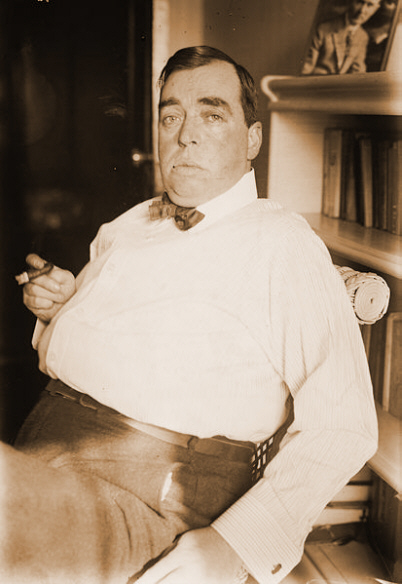
American war correspondent Irvin Cobb covered World War I for the Saturday Evening Post, and wrote a book in 1915 about his experiences called Paths of Glory, from which this is excerpted.  The villages described, which Cobb visited in the fall of 1914, are about 10 miles east of Liège. They found themselves in the path of the German First Army the first week of the war.


Irvin Cobb, War Correspondent

We went on. At first there was nothing to show we had entered Belgium except that the Prussian flag did not hang from a pole in front of every farmhouse, but only in front of every fourth house, say, or every fifth one. Then came stretches of drenched fields, vacant except for big black ravens and nimble piebald magpies, which bickered among themselves in the neglected and matted grain; and then we swung round a curve in the rutted roadway and were in the town of Battice.

No; we were not in the town of Battice. We were where the town of Battice had been, where it stood six weeks ago. It was famous then for its fat, rich cheeses and its green damson plums. Now, and no doubt for years to come, it will be chiefly notable as having been the town where, it is said, Belgian civilians first fired on the German troops from roofs and windows, and where the Germans first inaugurated their ruthless system of reprisal on houses and people alike.

Literally this town no longer existed. It was a scrap-heap, if you like, but not a town. Here had been a great trampling out of the grapes of wrath, and most sorrowful was the vintage that remained.


Click on Image to Expand


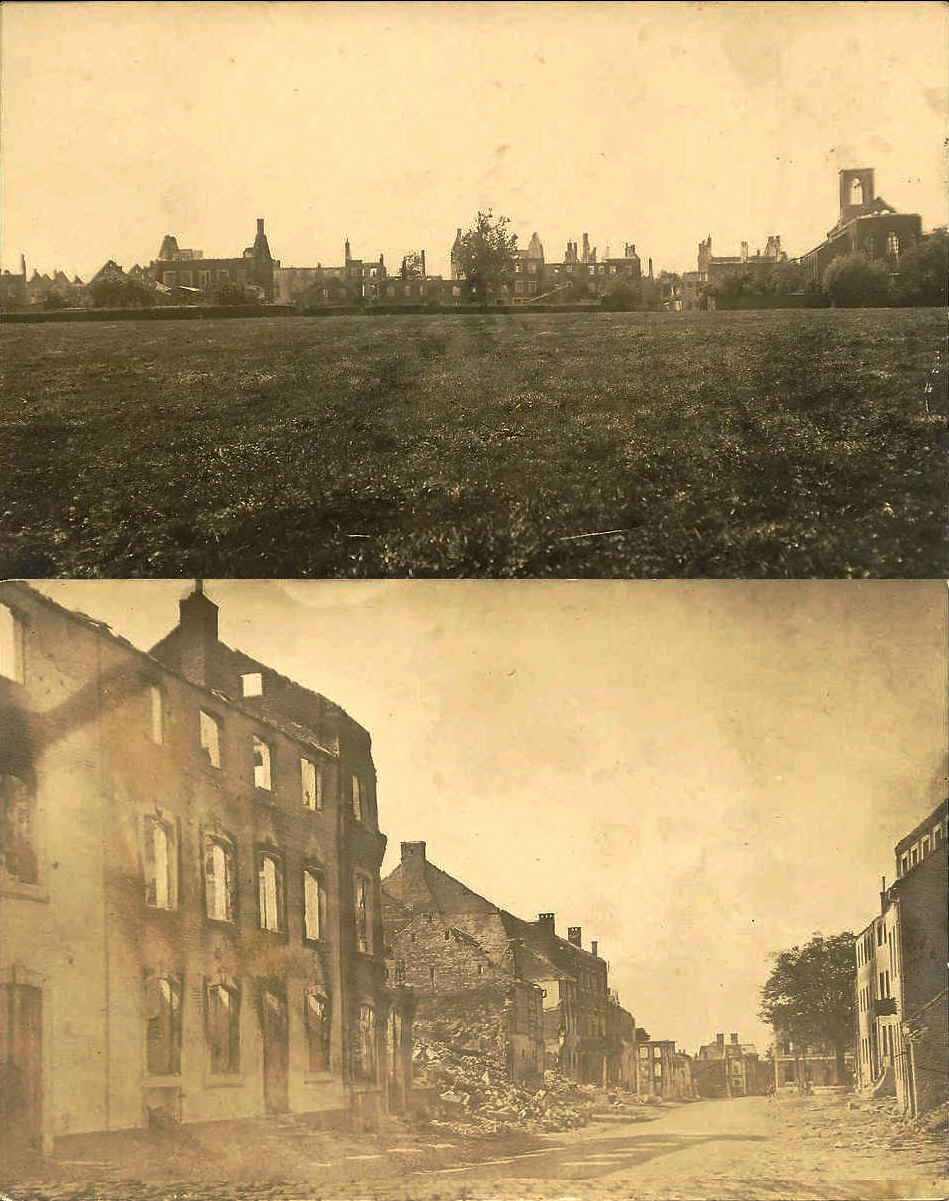
Battice from a Distance and Down the Main Street


It was a hard thing to level these Belgian houses absolutely, for they were mainly built of stone or of thick brick coated over with a hard cement. So, generally, the walls stood, even in Battice; but always the roofs were gone, and the window openings were smudged cavities, through which you looked and saw square patches of the sky if your eyes inclined upward, or else blackened masses of ruination if you gazed straight in at the interiors. Once in a while one had been thrown flat. Probably big guns operated here. In such a case there was an avalanche of broken masonry cascading out into the roadway.

Midway of the mile-long avenue of utter waste which we now traversed we came on a sort of small square. Here was the yellow village church. It lacked a spire and a cross, and the front door was gone, so we could see the wrecked altar and the splintered pews within. Flanking the church there had been a communal hall, which was now shapeless, irredeemable wreckage. A public well had stood in the open space between church and hall, with a design of stone pillars about it. The open mouth of the well we could see was choked with foul debris; but a shell had struck squarely among the pillars and they fell inward like wigwam poles, forming a crazy apex. I remember distinctly two other things: a picture of an elderly man with whiskers one of those smudged atrocities that are called in the States crayon portraits hanging undamaged on the naked wall of what had been an upper bedroom; and a wayside shrine of the sort so common in the Catholic countries of Europe. A shell had hit it a glancing blow, so that the little china figure of the Blessed Virgin lay in bits behind the small barred opening of the shrine.

Of living creatures there was none. Heretofore, in all the blasted towns I had visited, there was some human life stirring. One could count on seeing one of the old women who are so numerous in these Belgian hamlets more numerous, I think, than anywhere else on earth. In my mind I had learned to associate such a sight with at least one old woman an incredibly old woman, with a back bent like a measuring worm's, and a cap on her scanty hair, and a face crosshatched with a million wrinkles who would be pottering about at the back of some half-ruined house or maybe squatting in a desolated doorway staring at us with her rheumy, puckered eyes. Or else there would be a hunchback crooked spines being almost as common in parts of Belgium as goiters are in parts of Switzerland. But Battice had become an empty tomb, and was as lonely and as silent as a tomb. Its people, those who survived, had fled from it as from an abomination.

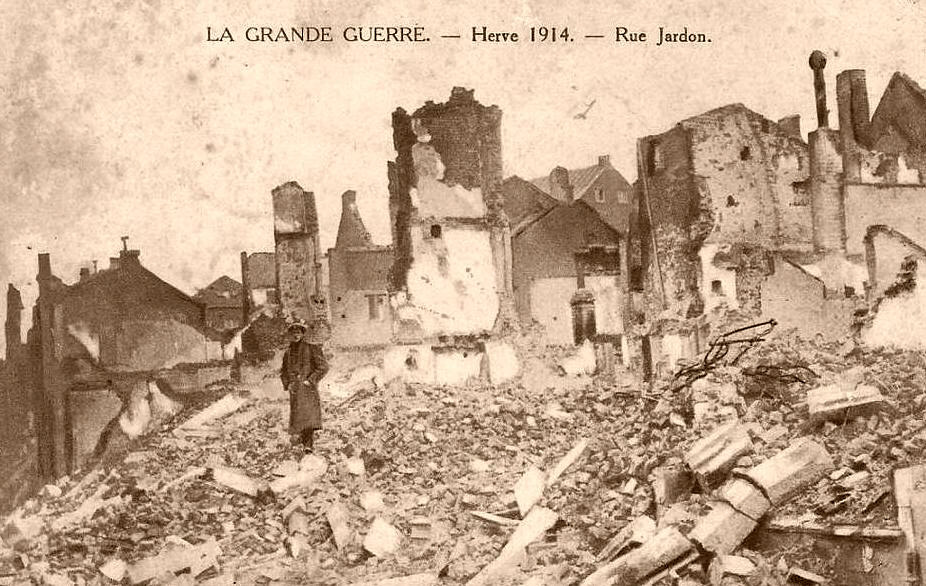
Beyond Battice stood another village, called Herve; and Herve was Battice all over again, with variations. At this place, during the first few hours of actual hostilities between the little country and the big one, the Belgians had tried to stem the inpouring German flood, as was proved by wrecks of barricades in the high street. One barricade had been built of wagon bodies and the big iron hods of road-scrapers; the wrecks of these were still piled at the road's edge. Yet there remained tangible proof of the German claim that they did not harry and burn indiscriminately, except in cases where the attack on them was by general concert.

Here and there, on the principal street, in a row of ruins, stood a single house that was intact and undamaged. It was plain enough to be seen that pains had been taken to spare it from the common fate of its neighbors. Also, I glimpsed one short side street that had come out of the fiery visitation whole and unscathed, proving, if it proved anything, that even in their red heat the Germans had picked and chosen the fruit for the wine press of their vengeance.

After Herve we encountered no more destruction by wholesale, but only destruction by piecemeal, until, nearing Liege, we passed what remained of the most northerly of the ring of fortresses that formed the city's defenses. The conquerors had dismantled it and thrown down the guns, so that of the fort proper there was nothing except a low earthen wall, almost like a natural ridge in the earth.


Click on Image to Expand


Herve


All about it was an entanglement of barbed wire; the strands were woven and interwoven, tangled and twined together, until they suggested nothing so much as a great patch of blackberry briers after the leaves have dropped from the vines in the fall of the year. To take the works the Germans had to cut through these trochas. It seemed impossible to believe human beings could penetrate them, especially when one was told that the Belgians charged some of the wires with high electricity, so that those of the advancing party who touched them were frightfully burned and fell, with their garments blazing, into the jagged wire brambles, and were held there until they died.

Before the charge and the final hand-to-hand fight, however, there was shelling. There was much shelling. Shells from the German guns that fell short or overshot the mark descended in the fields, and for a mile round these fields were plowed as though hundreds of plowshares had sheared the sod this way and that, until hardly a blade of grass was left to grow in its ordained place. Where shells had burst after they struck were holes in the earth five or six feet across and five or six feet deep. Shells from the German guns and from the Belgian guns had made a most hideous hash of a cluster of small cottages flanking a small smelting plant which stood directly in the line of fire. Some of these houses workmen's homes, I suppose they had been were of frame, sheathed over with squares of tin put on in a diamond pattern; and you could see places where a shell, striking such a wall a glancing blow, had scaled it as a fish is scaled with a knife, leaving the bare wooden ribs showing below. The next house, and the next, had been hit squarely and plumply amidships, and they were gutted as fishes are gutted. One house in twenty, perhaps, would be quite whole, except for broken windows and fissures in the roof as though the whizzing shells had spared it deliberately.

Friday, November 15, 2013

Air War Cigarette Cards

Contributed by Cyril Mazansky

Cigarette cards were intended to help sell cigarettes, naturally. It soon became apparent that the public found the air war and aircraft fascinating. Our regular contributor Cyril Mazansky has shared a number of the aviation examples from his collection.


Click on Image to Expand


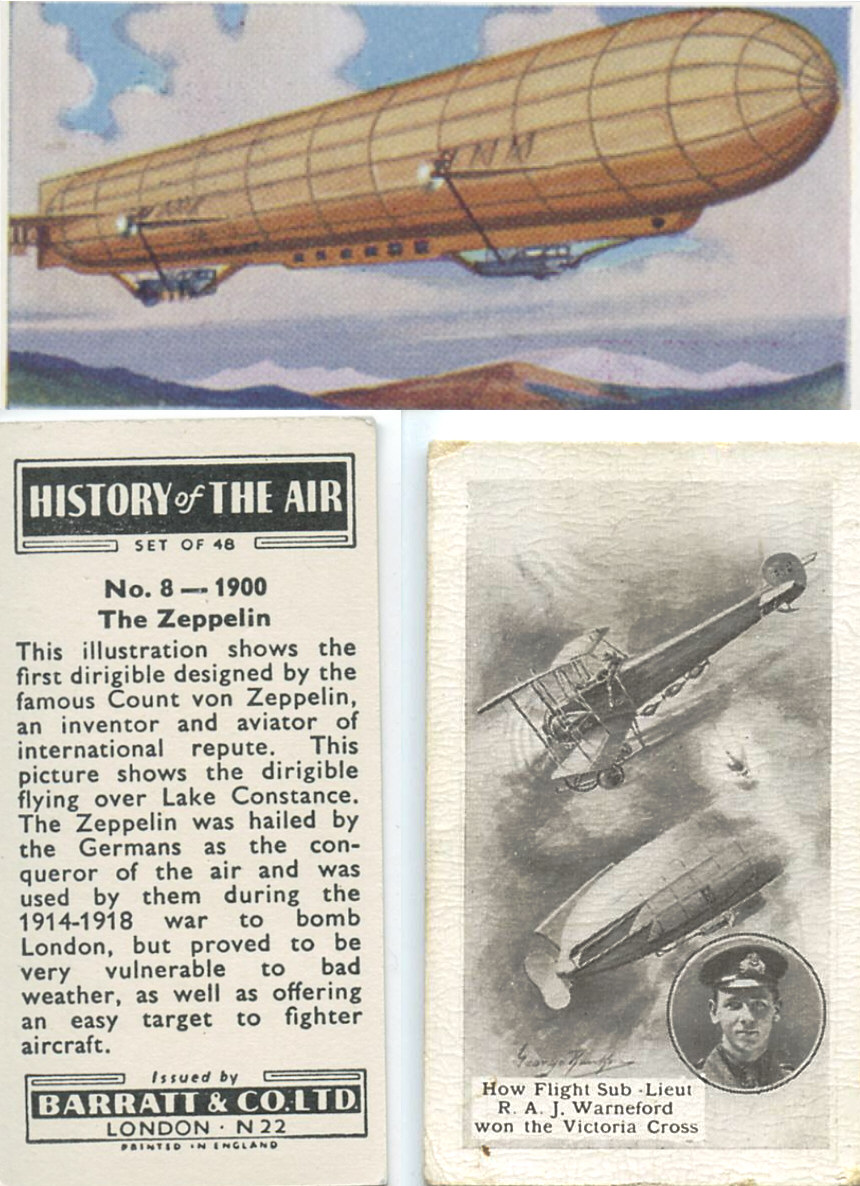
Since the British public found themselves being bombed by zeppelins they had an immediate interest in them and the effort to defeat them. Here we have the front and back of a card telling the history of Ferdinand von Zeppelin's original design. The third image shows naval Lt. Warneford destroying zeppelin LZ-37 over Belgium in June 1915. He was soon rewarded with the Victoria Cross, but died in a crash 10 days later.


Click on Image to Expand


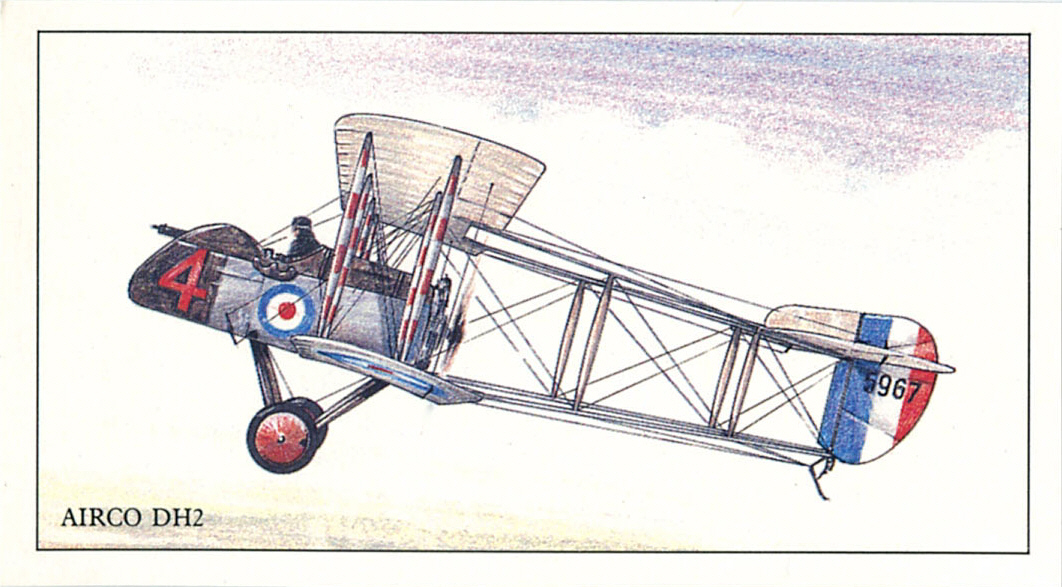
British cigarette sellers, of course, emphasized British aircraft with their cards. The Airco DH2 saw service in early 1916 and temporarily gave the British air superiority. The pusher design, however, was dated and by late 1916 were at a distinct disadvantage against such new German fighters as the Albatross and Halberstadts coming into action.


Click on Image to Expand


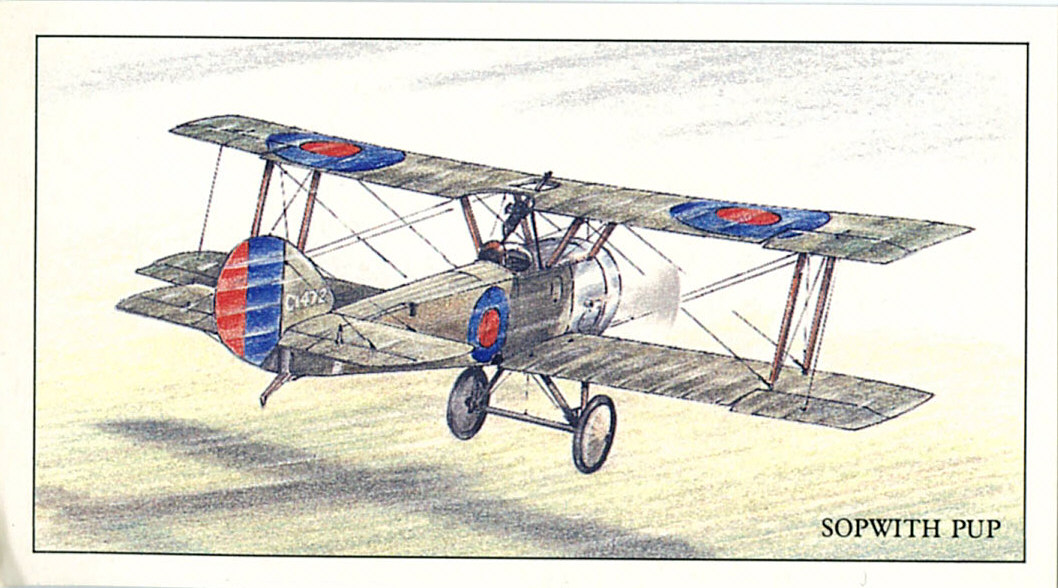
The Sopwith Pup was considered, for its time, "the perfect flying machine."  It was able to maintain altitude better than the opposing aircraft such as the Albatrosses on the Western Front in late 1916.  Because of its smaller size it was used by the Royal Navy to test shipboard take-offs.


Click on Image to Expand


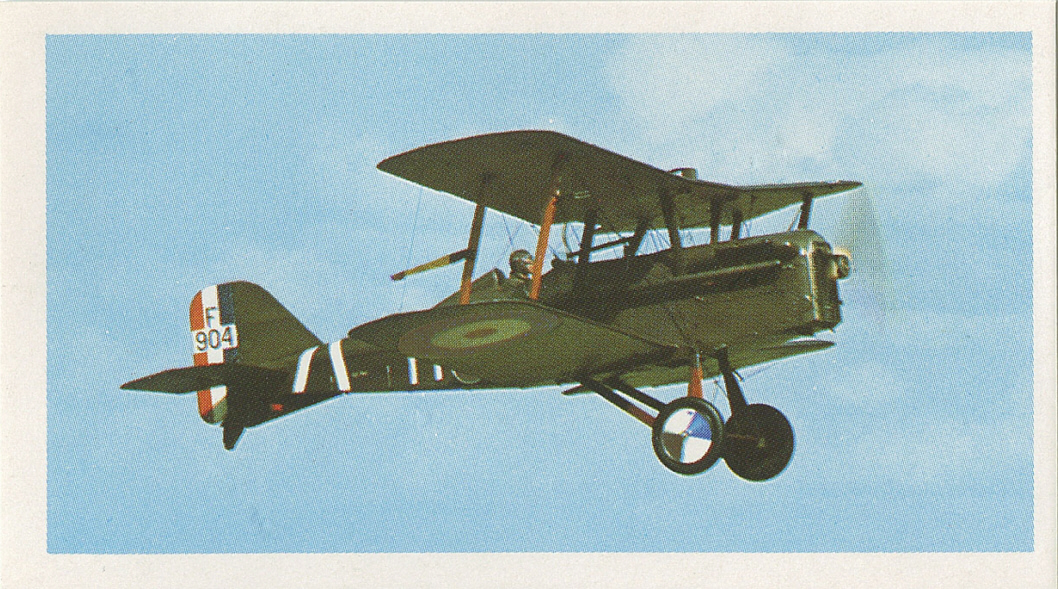
Royal Aircraft Factory SE5a


Considered by many commentators to be the finest British fighter of the war.  It's early version had development issues and was under-powered, so it did not make its presence known on the Western Front until early 1918.  Several of the most notable aces of the British Air Service won their biggest successes with the SE5a, including Mannock, Bishop, and McCudden.

Thursday, November 14, 2013

Luxembourg and the Great War: A Neglected Story

Which country was the first invaded and the last liberated in World War I?


It was the Grand Duchy of Luxembourg. My friend David Heal, a fellow battlefield guide and one-time president of the Western Front Association's chapter in Luxembourg has taken on the mission of telling this forgotten but important aspect of the war's history. He has produced two volumes on this subject. In David's 2010 volume Victims Nonetheless: The Invasion of Luxembourg, 1914, he explains why – for the integrity of the Schlieffen Plan – peaceful Luxembourg needed to be invaded. (It was about railroads.) Now he has produced a second volume, Luxembourgers in the First World War, that covers the personal experiences of the citizens and expatriates of the small nation during the war.

David Heal's Chronicle of Luxembourg at War

Order Now

Order Now


The Shock of Invasion
The war started on 2 August with the invasion of Luxembourg, a neutral country at that time, whose neutrality was guaranteed by all the Powers, including Germany. Obviously, the news astonished Luxembourgers around the world, and in France, no one knew what to do.

Some Were Able to Fight
Almost all the Luxembourgers who fought in the Allied armies were expatriates, despite the allegations made by the Germans, and they were often born outside Luxembourg of Luxembourgian parents, which is completely understandable, especially when the trench lines rendered movement between Luxembourg and France impossible except via Switzerland or Holland, which of itself was not an easy journey. The journey via Switzerland was equally dangerous, and when the Germans installed an electric fence along the Belgium-Holland border it became even more difficult and dangerous.


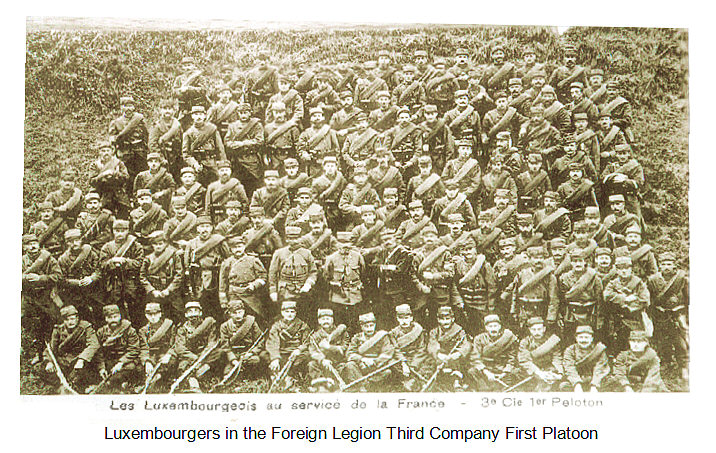
Luxembourgers fought in most of the Allied armies including the American Expeditionary force, but the largest contingent enlisted in France. Most of the Luxembourgers, who rushed to join the French army, entered the Foreign Legion. (However, German families in Luxembourg also sent sons to the German Army and they also addressed in the volume.) The heart of the book consists of the dozens of personal profiles of Luxembourgers who served with distinction in the war. These include such personalities as the six sons and brothers of Theodore Decker of Vannes, former Tour de France champion François Faber, who was killed in action in 1915, and Jacob Bierchem, who served in General Pershing's forces.

David Heal also challenges the official position that "no Luxembourger was shot by the German army during the war" with documented cases to the contrary.

Wednesday, November 13, 2013

Little-Known Monuments to the American Expeditionary Forces in Europe


Readers may be familiar with the American Battle Monuments grand monuments at Chateau-Thierry, Montfaucon, and Mont Sec near St. Mihiel, but the AEF fought in every area of the Western Front and operated numerous bases far behind the lines. Also, other groups contributed their own memorials to commemorate the  service by U.S. forces. Here is a group of six that are a bit forgotten.


Click on Image to Expand


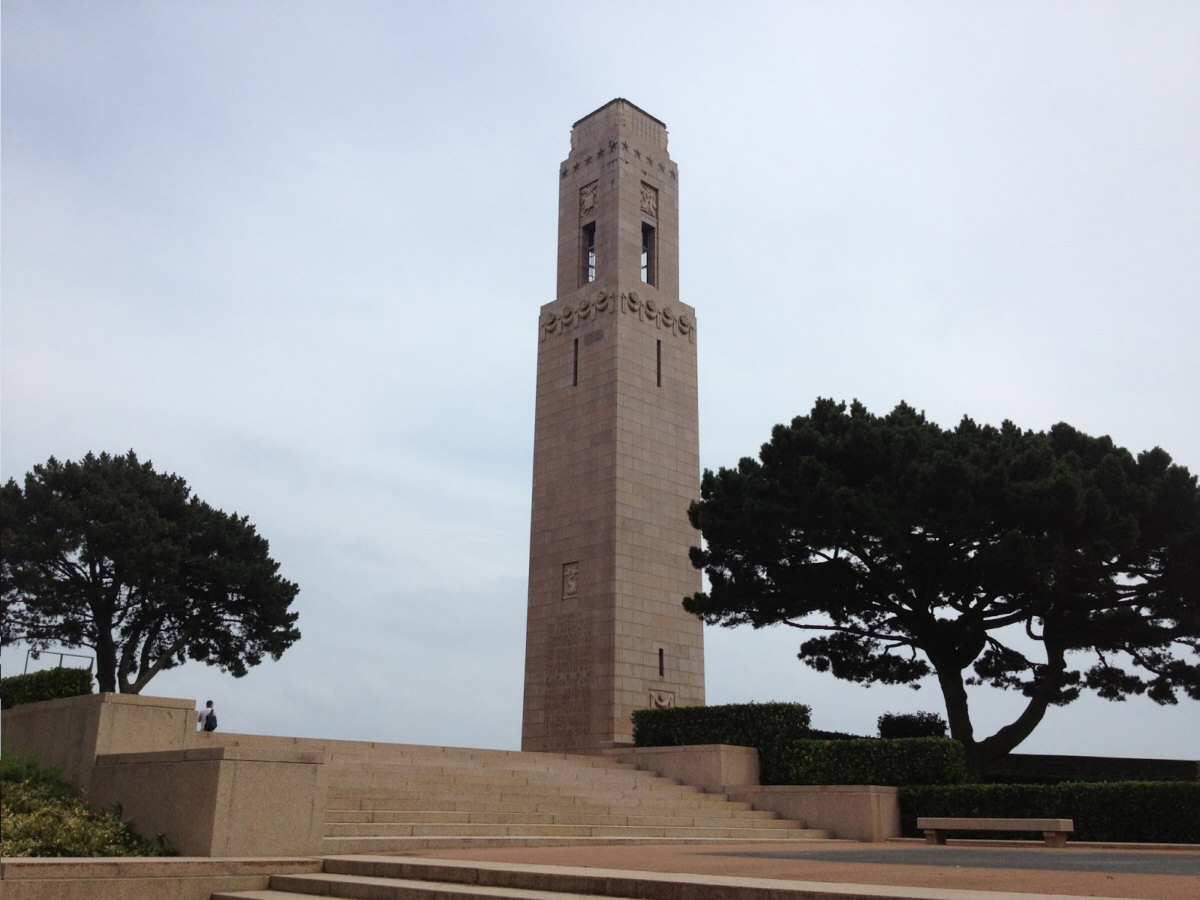
The ABMC's World War I Naval Monument at Brest, France, stands on the ramparts of the city overlooking the harbor that was a major base of operations for American naval vessels during the war. The original monument built on this site to commemorate the achievements of the U.S. Navy during World War I was destroyed by the Germans on 4 July 1941, prior to the United States entry into World War II. The present structure is a replica of the original and was completed in 1958. The monument is a rectangular rose-colored granite shaft rising 145 feet above the lower terrace and 100 feet above the Cours d'Ajot. It sits upon a German bunker complex at the approximate site of the original monument. All four sides of the monument are decorated with sculptures of naval interest. The surrounding area has been developed as a park.


Click on Image to Expand


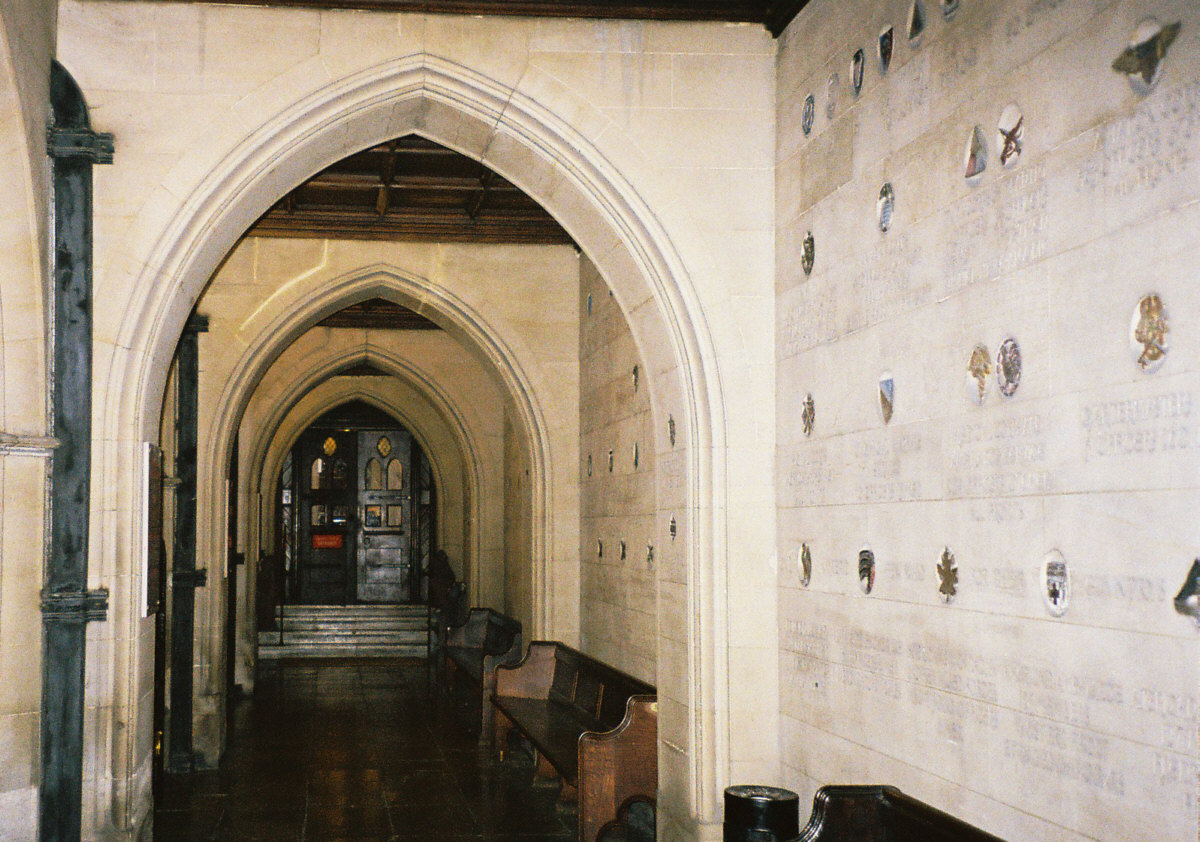
The American Cathedral Avenue George V in the 8th Arrondissement of Paris is the site of a little-known memorial to the American Expeditionary Forces.  Its cloister is lined with a system of panels each dedicated to a unit or branch of the American military and volunteer organizations that supported them. The panels identify the unit by name and insignia and lists their number of casualties. The memorial cloister was dedicated on 30 May 1923 by Marshal Ferdinand Foch and the American ambassador, Myron T. Herrick, in the presence of President Raymond Poincaré.


Click on Image to Expand


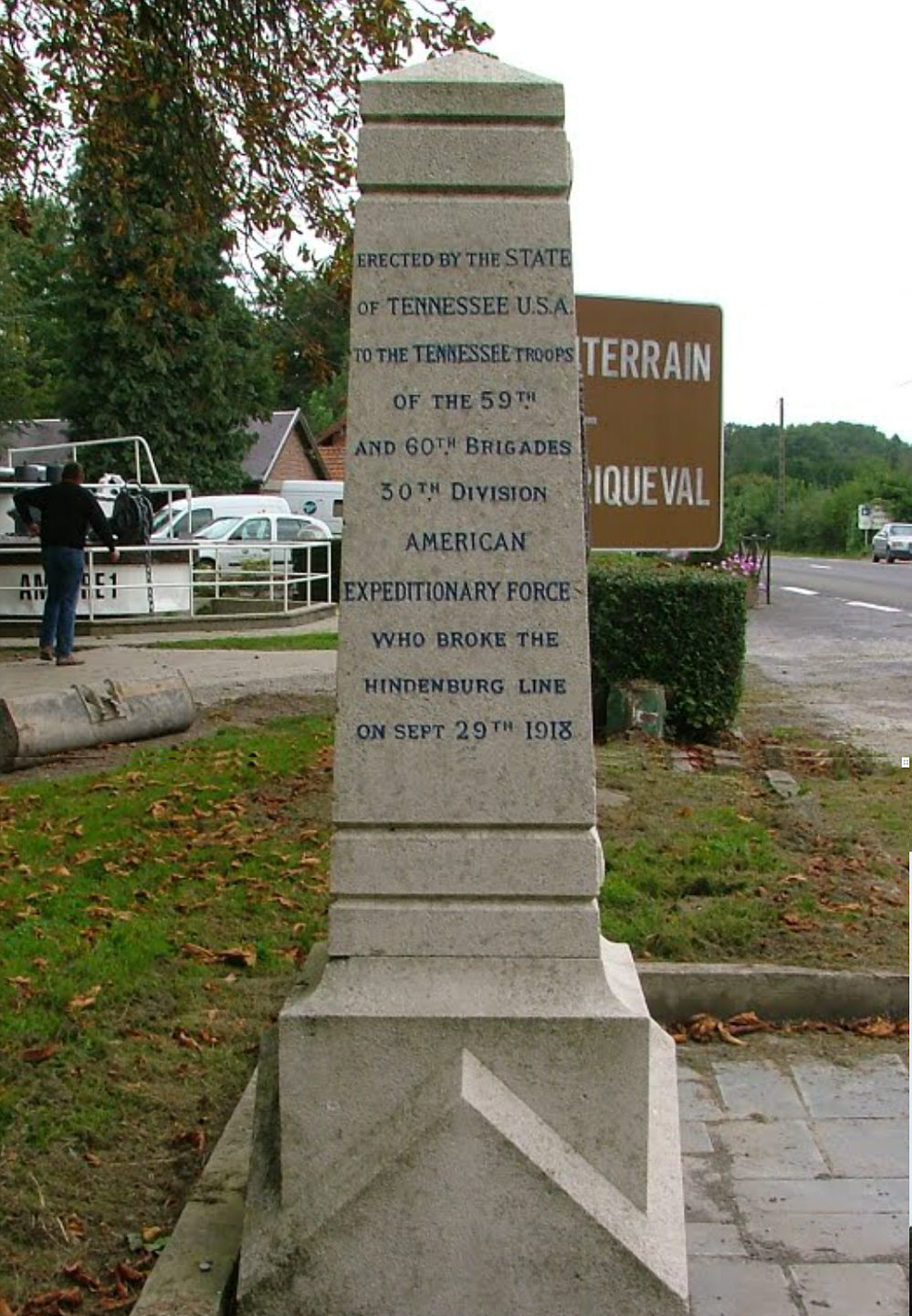
The State of Tennessee contributed this monument honoring the achievements of its sons in capturing the St. Quentin Canal, thus breaking the Hindenburg Line in September 1918. It is located at the village of Riqueval and the opening of the canal tunnel. It mentions two brigades of the U.S. 30th Division, a formation that was composed mainly of National Guardsmen from Tennessee and the Carolinas.


Click on Image to Expand


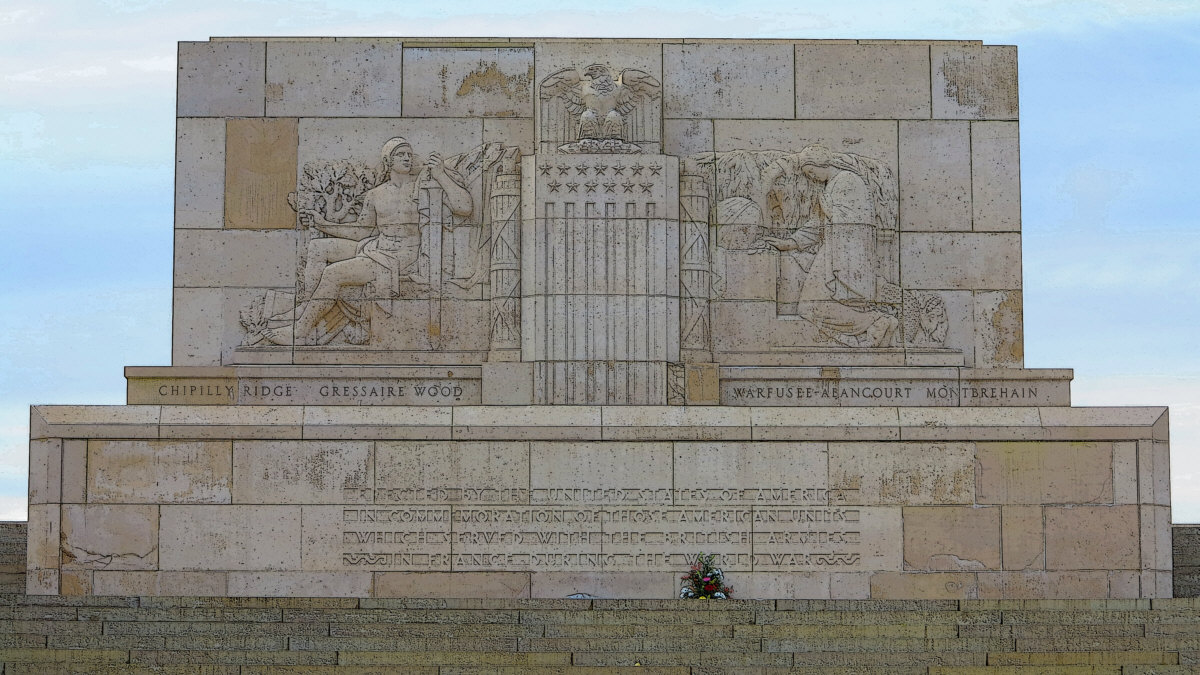
The ABMC's Bellicourt American Monument is nine miles north of St. Quentin (Aisne), France on the highway to Cambrai and one mile north of the village of Bellicourt. It is 97 miles north of Paris and three miles from the Somme American Cemetery. Erected above a canal tunnel built by Napoleon I, the monument commemorates the achievements and sacrifices of the 90,000 American troops who served in battle with the British armies in France during 1917 and 1918.


Click on Image to Expand


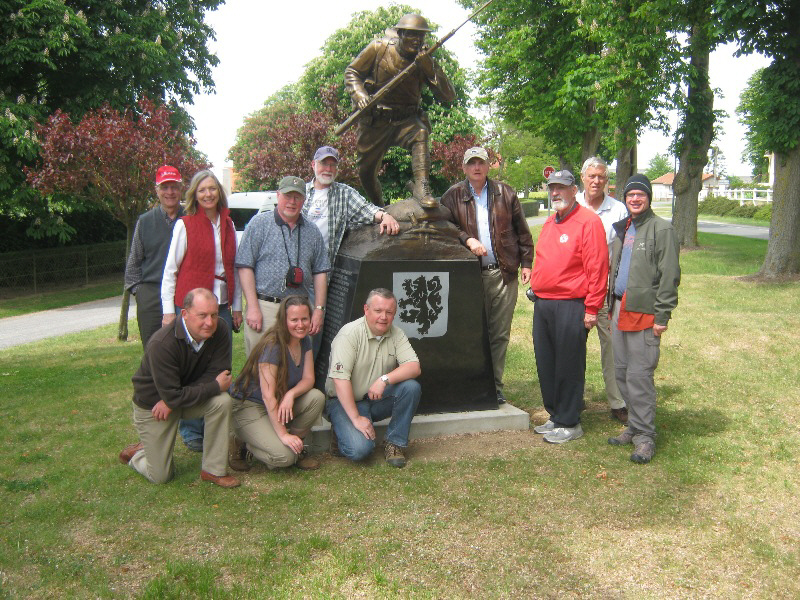
This new Doughboy statue located at the village of Cantigny is a recent contribution sponsored by the First Division Foundation. Cantigny was captured by the First Division on 28 May 1918 in the first American offensive operation of the war. Your editor, just to the right of the statue, is shown here with his 2011 battlefield tour group.


Click on Image to Expand


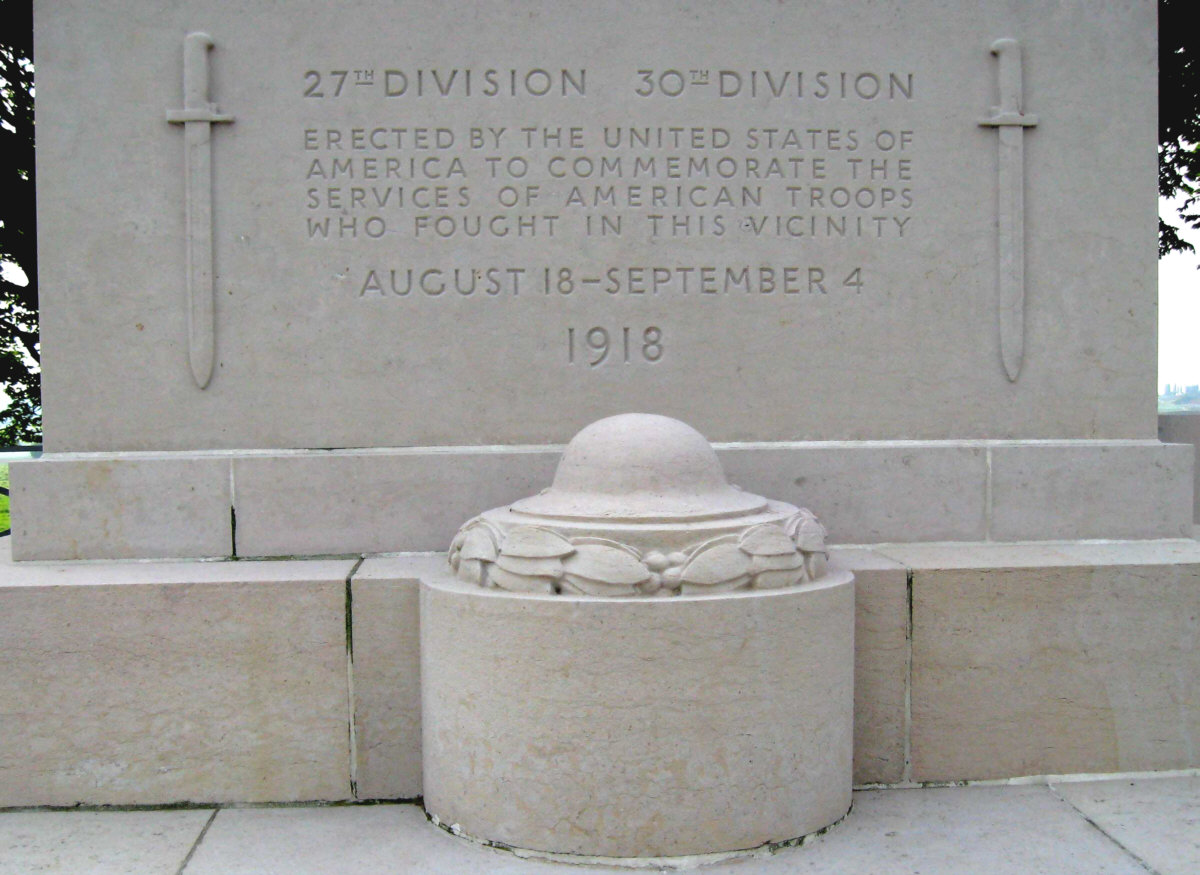
The ABMC's World War I Kemmel American Monument is six miles south of Ieper (Ypres), Belgium, near Vierstraat, on the Kemmelberg (Mont Kemmel) Road overlooking the bitterly contested Ypres battlefield. This small monument on a low platform consists of a rectangular white stone block in front of which is carved a soldier's helmet upon a wreath. It commemorates the services and sacrifices of the American troops who, in the late summer of 1918, fought nearby in units attached to the British Army. Some are buried in Flanders Field American Cemetery at Waregem, Belgium, ten miles to the west.


Sources: The ABMC and American Cathedral websites.

Tuesday, November 12, 2013

Your World War I Poetry Library


Your World War I Poetry Library
Recommended by Professor David Beer, PhD

To enhance one's remembrance experience, there is nothing like reading some of the great verse created by those who served in the war or who were trying to understand it better.  Regular Roads contributor, David Beer, PhD, has made a lifetime study of the Great War's poetry.  For the September issue of our sister publication, Over the Top magazine, he contributed a full issue on some of the forgotten poets of the war, which also included his recommendations for experiencing the full range of  the poetry of the war.  Here is the full list, which he presents in a recommended reading sequence.


Sunday, November 10, 2013

The Red Poppy: Symbol of the Great War


Why the Red Poppy?


Click on Image to Expand


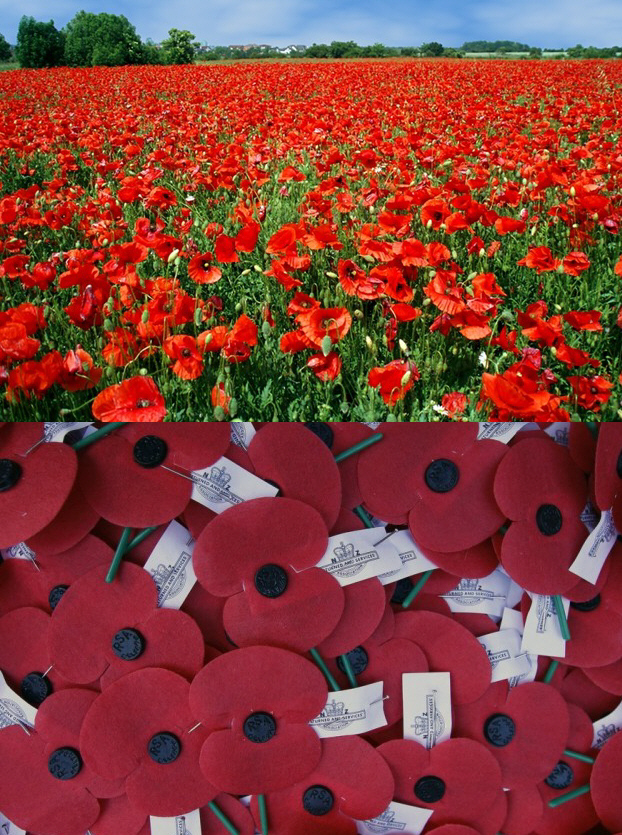
Long before the Great War, the red poppy had become a symbol of death, renewal, and life. The seeds of the flower can remain dormant in the earth for years but will blossom spectacularly when the soil is churned. Beginning in late 1914, the fields of northern France and Flanders became the scene of stupendous disturbances. Red poppies soon appeared.

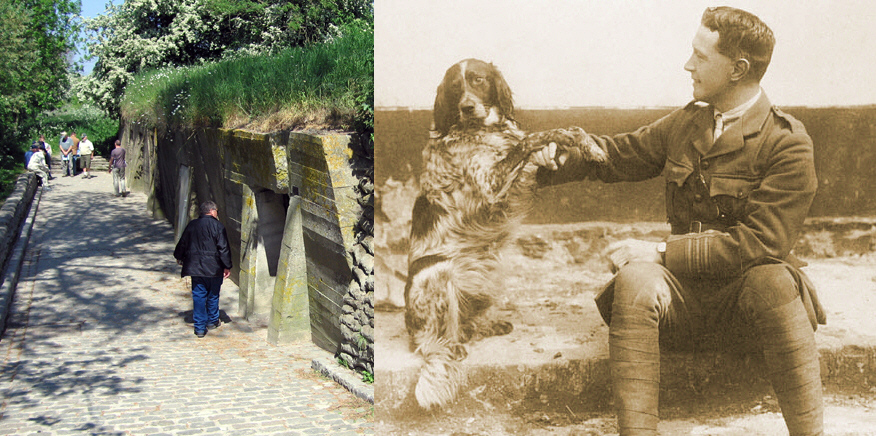
In 1915, at a Canadian dressing station north of Ypres on the Essex Farm, an exhausted physician named Lt. Col. John McCrae would take in the view of the poppy-strewn Salient and experience a moment of poetic inspiration. The veteran of the South African War was able to distill in a single vision the vitality of the red poppy symbol, his respect for the sacrifice made by his patients and dead comrades, and his intense feeling of obligation to them. McCrae would capture all of this in the most famous single poem of the First World War, "In Flanders Fields."

The doctor's work achieved immediate universal popularity, which was subsequently reinforced by his own death in 1918 from pneumonia and meningitis. He was buried in a military cemetery near Calais on the English Channel, thus becoming one with those of whom he wrote in his famous poem. Probably by the time of his interment, John McCrae's verse had forever bound the image of the red poppy to the memory of the Great War. The poppy was eventually adopted by the British and Canadian Legions as the symbol of remembrance of World War One and a means of raising funds for disabled veterans. An American war volunteer, Moina Michael, helped establish the symbol in the U.S., where the Veterans of Foreign Wars and the American Legion also embraced the red poppy tradition.


Click on Image to Expand


Essex Farm Dressing Station Today and John McCrae with Bonneau


In Flanders Fields

By John McCrae

In Flanders fields the poppies blow
Between the crosses, row by row,
That mark our place; and in the sky
The larks, still bravely singing, fly
Scarce heard among the guns below. 

We are the dead. Short days ago
We lived, felt dawn, saw sunset glow,
Loved, and were loved, and now we lie
                    In Flanders fields.

Take up our quarrel with the foe;
To you from failing hands we throw
The torch; be yours to hold it high.
If ye break faith with us who die
We shall not sleep, though poppies grow
                    In Flanders fields.

Saturday, November 9, 2013

Origins of No Man's Land


Click on Image to Expand


No Man's Land, Ypres Salient, 1919

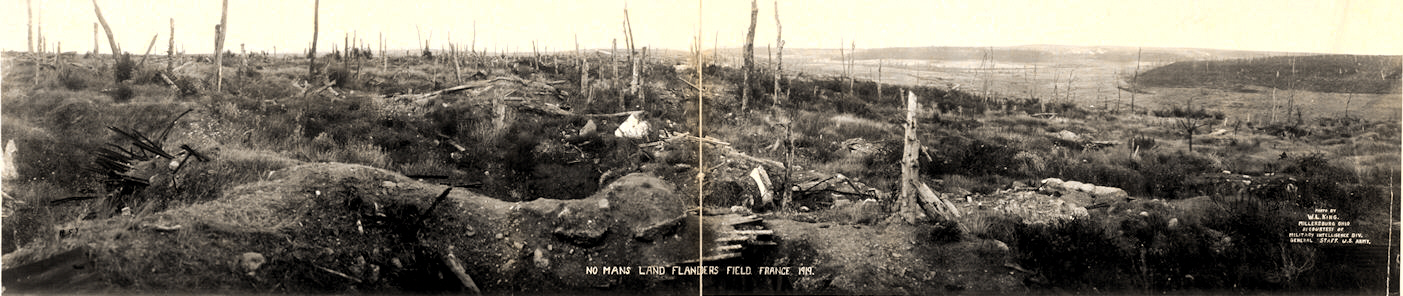
The term "no man’s land" came into general use in English during the First World War, referring to uninhabitable areas that saw the fiercest of the fighting between the two sides of the conflict; the use of the term, many centuries earlier referring to an isolated patch of land outside the City of London, is indicative of a pattern of language-change produced by the war – by 1920 "Niemandsland" was a widely used term in German. 

 Text from the British Museum Website, photo from the Library of Congress


Friday, November 8, 2013

Germany and Total War


Click on Image to Expand


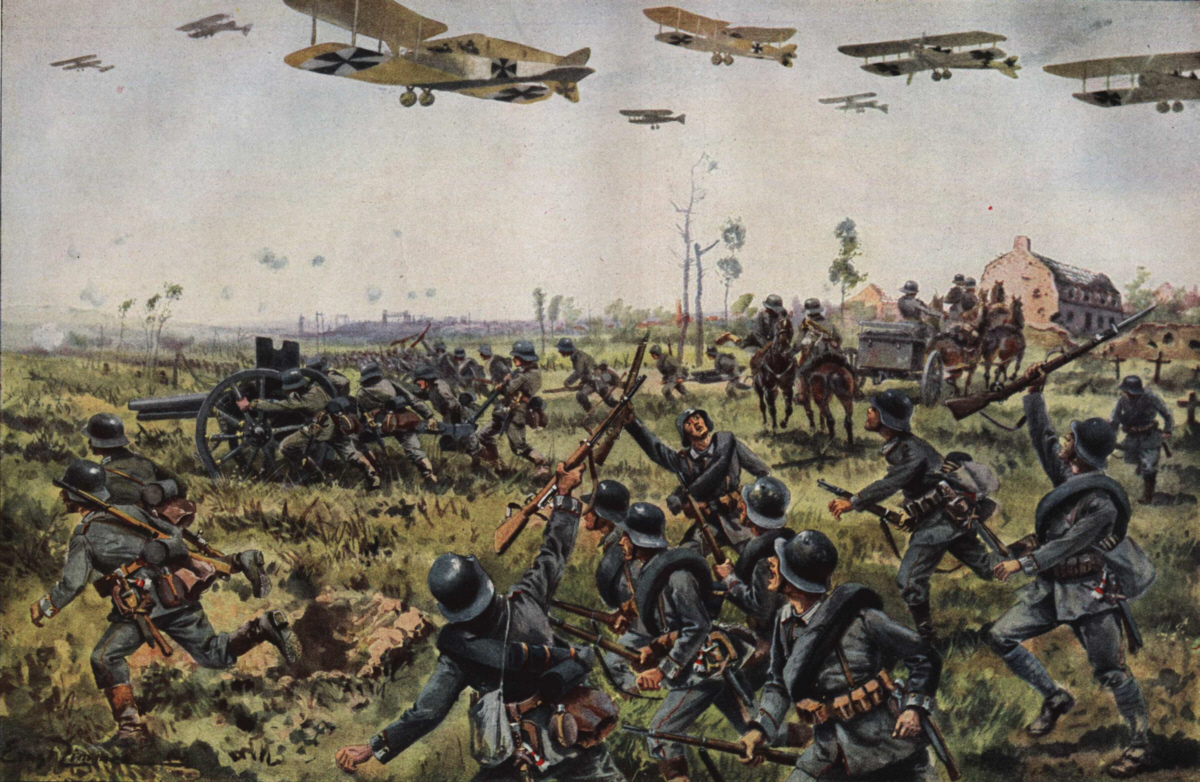
A 1917 magazine illustration for home front consumption portrays a German Army with irresistible battlefield power.


Regardless of the fighting merits of the German military, historian Paul Kennedy sheds light on the bigger story:

Germany actually mobilized more men than Russia; but they had some problems which were not evident until the draining battles of 1916, Verdun and the Somme.  These led to the Hindenburg program of 1916 expanding munitions and adding controls to the German economy.  This led to greater financing measures, which also led to inflation.  Also, bottlenecks in industry [occurred], which had to be cured by increased infrastructure.  This called for more skilled workmen, who had to be demobilized from the army.  The Hindenburg Program catastrophically neglected agriculture, which brought the country to near starvation in 1918.  The underlying manpower problems affected everything.


The Rise and Fall of the Great Powers (pg. 269)

Image from Tony Langley

Thursday, November 7, 2013

Two Battleship Survivors of Jutland with Notable Service in World War II

Click on Image to Expand

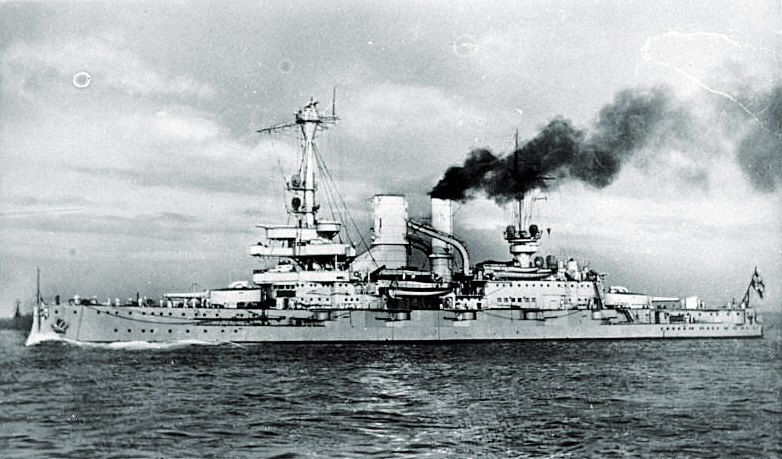
SMS Schleswig-Holstein


The pre-dreadnought German battleship SMS Schleswig-Holstein saw action during the engagement, and was hit by one large-caliber shell. After the battle, Schleswig-Holstein was relegated to guard duties in the mouth of the Elbe River before being decommissioned in late 1917. As one of the few battleships permitted for Germany by the terms of the Treaty of Versailles, Schleswig-Holstein was again pressed into fleet service in the 1920s. In 1935 the old battleship was converted into a training ship for naval cadets.

Another war would bring the ship its greatest historical moment. Schleswig-Holstein fired the first shots of World War II when she fired on the Polish base at Westerplatte in the early morning hours of 1 September 1939. The ship was used as a training vessel for the majority of the war and was sunk by British bombers in December 1944.

Click on Image to Expand


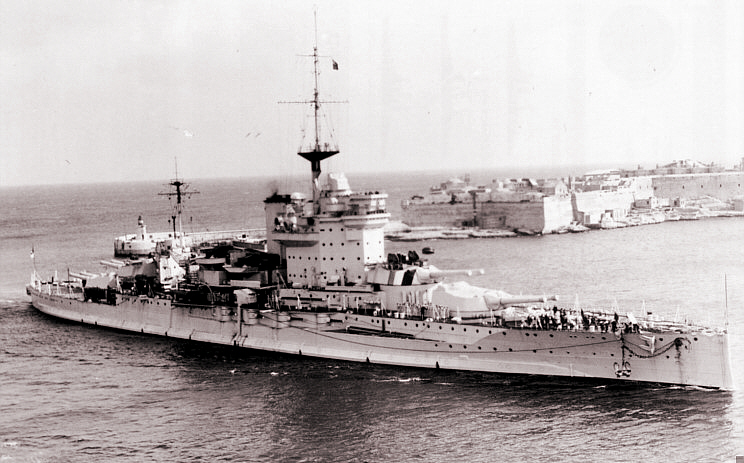
HMS Warspite


HMS Warspite was a Queen Elizabeth-class dreadnought that was part of the battleship contingent assigned to Beatty's group of battlecruisers. In the big battle the ship began its dual reputation as a tough fighter with a lot of bad luck. Warspite suffered a hit on her rudder and spent half an hour circling within easy range and sight of the High Seas Fleet, exposed to their full artillery, but she was still game to continue the battle after her steering was jury-rigged. Despite twenty-nine hits by 11- and 12-inch shells on her, Warspite made it back to base under her own power and lived to fight another day. Later in the war she was damaged again after a nighttime collision with another battleship, suffered from a boiler fire, and was rocked when nearby HMS Vanguard exploded while at anchor. In the interwar period she became the sister ship of USS Arizona and was still in service when the Second World War broke out.


Once again Warspite proved valiant in battle, in actions from Norway to the Indian Ocean. Once again she suffered much damage: a 500-lb bomb damaged her starboard batteries and later an air-launched missile did crippling damage off Salerno. Being the only major ship that was present at the Great War's Battle of Jutland and at the Normandy invasion of World War II was probably Warspite's most memorable distinction.   Sadly, the scrapping of Warspite was beset with misfortune and bungling – a dismal end to the life of a great warship.

Wednesday, November 6, 2013

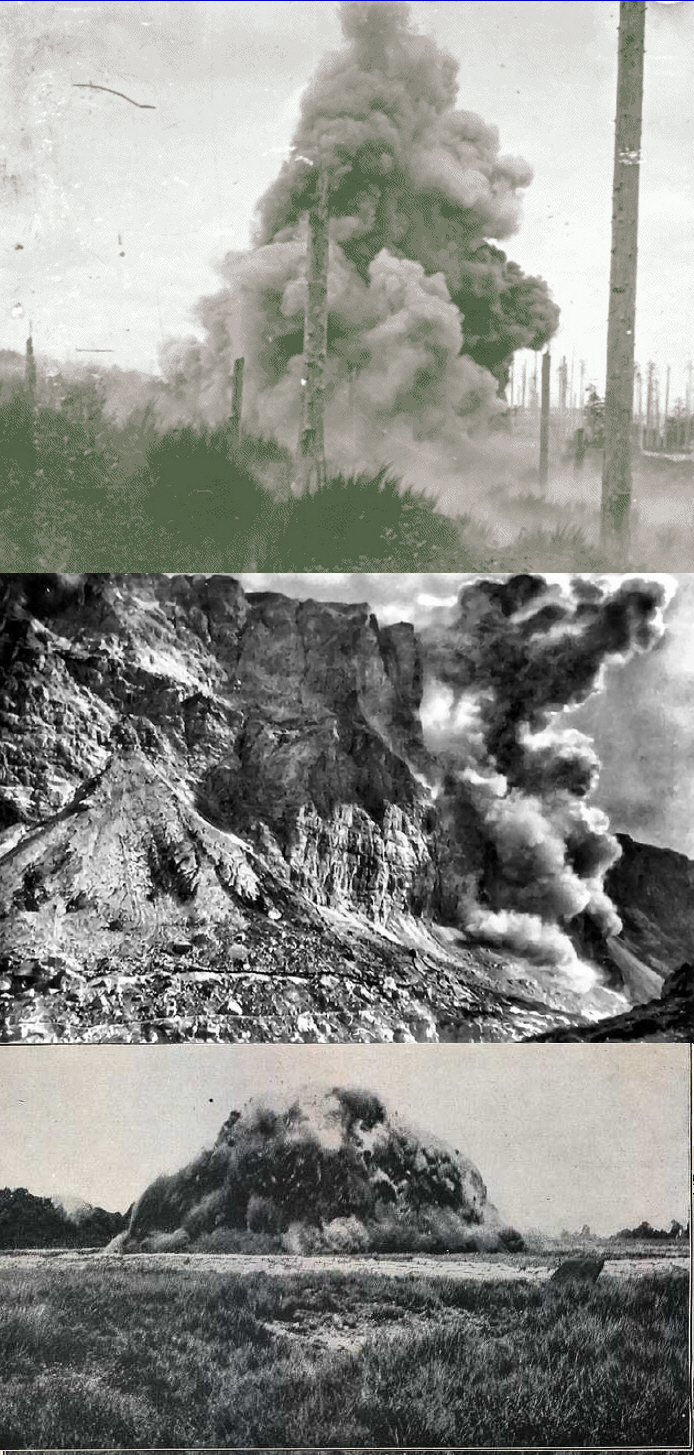
Three Mines Detonating


Other than for the Hawthorne Mine of 1 July 1916, photos at the moment of detonation are rather rare in my experience. Here are three I've come across. They do give a sense of the power of these sub-nuclear but massive explosions.

Click on Image to Expand

From the top: An explosion in the Vosges Mountain Sector; an Austrian mine on Mte Lagazuoi in the Alps, 16 September 1917; a German photograph of a mine detonating on the Somme.


Tuesday, November 5, 2013

Hero: The Life and Legend of Lawrence of Arabia
Reviewed by Tony Langley


Hero: The Life and Legend of Lawrence of Arabia

by Michael Korda
Published by Autumn Press, 2012

It is a remarkable thing to realize that the man who led the original and authentic "sideshow of a sideshow" has become one of the most well known figures in 20th-century history. Indeed, a case can be made that T. E. Lawrence, better known to the general public as "Lawrence of Arabia," is now probably the single most famous individual to have participated in the Great War. While other military figures and statesmen from that momentous conflict are well known to students and historians, to the man in the street Lawrence is a more familiar figure than any Haig, Joffre, or Pershing.

This is, in no small part, largely due to the influence of modern media. From Lowell Thomas — American reporter, showman, and all-round promoter of money-making media events — to David Lean's epic motion picture and more than a hundred major books and other writings, T. E. Lawrence came to be rightly considered one of the 20th-century's most intriguing, heroic, and complex individuals ever to have been involved in military and political events.

Lawrence with Lowell Thomas


In this new, 700-page biography, Michael Korda has written one of the most captivating and largely sympathetic accounts of Lawrence's life yet. The strength of this book lies in how the author manages to weave elements of history and popular media culture and (often distorted) public awareness of this enigmatic and often contradictory-seeming person, into an intriguing and highly detailed story. He starts with the wartime experiences of Lawrence and from there goes back to childhood, touches the Great War again and then gives a detailed account of Lawrence's post-war life and further achievements, many of which were no less admirable and distinguished than the military exploits for which he is widely known.


Order Now
After more than a hundred books on this man, it might be pardonable to think that yet another Lawrence biography would be superfluous and consist of little more than a rehashing of events and explanations already voiced many times over. Korda's book, however, is more than that, for now that we are approaching the hundred-year mark we can see with greater clarity just how far reaching Lawrence was in his appreciation of the future consequences of decisions and miscalculations made during and immediately after the war. He was not only a brilliant military tactician, strategist, and thinker when it came to conducting, combating, and preventing insurgency warfare; Lawrence also knew how to apply his talents to statecraft, diplomacy, and geopolitics, as well as later in life to problems of mechanics and boat design and reforms in the then harsh set of military regulations in the British armed forces. A little-known fact is that after the war, Lawrence campaigned to abolish the death penalty for cowardice, an admirable stance from one to whom bravery in battle apparently came so easily.

Much has been made of the remark that Lawrence seemed to know how to "back into the limelight," a seeming contradiction of motives and ambition. While Michael Korda does not go about expressly addressing this character trait of Lawrence's, he does seem to provide an answer between the lines. Lawrence was a man driven to excellence by the force of his intelligence and learning. Whatever he did, he did to the utmost of his considerable abilities, be it preparing a thesis during his Oxford days, conducting archeological work in pre-war Syria, making maps for various British military commands, fighting and guiding a tribal insurgency and war, having a say (however small) at the greatest peace conference in modern times, or later being instrumental in helping to create three new nation states — two of which are still in existence now. He also wrote one of the great classics on warfare and has inspired military thinkers and leaders ever since.

Yet, for all these accomplishments, Lawrence remained a basically shy, reticent person, drawing back from physical contact.

As Michael Korda writes: "Few people have risen so high so quickly, or have voluntarily given up not only honors but power...without regret or bitterness. Fewer still have been so famous and tried so hard to live obscurely."

That is why the author thinks it more than appropriate to examine Lawrence's life anew and not to treat him as "an interesting neurotic" but more aptly as a visionary and a warrior, someone who "not only wrote an epic, but lived one'."

Tony Langley

Monday, November 4, 2013

Hurrah for the Next Man Who Dies!

Click on Image to Expand


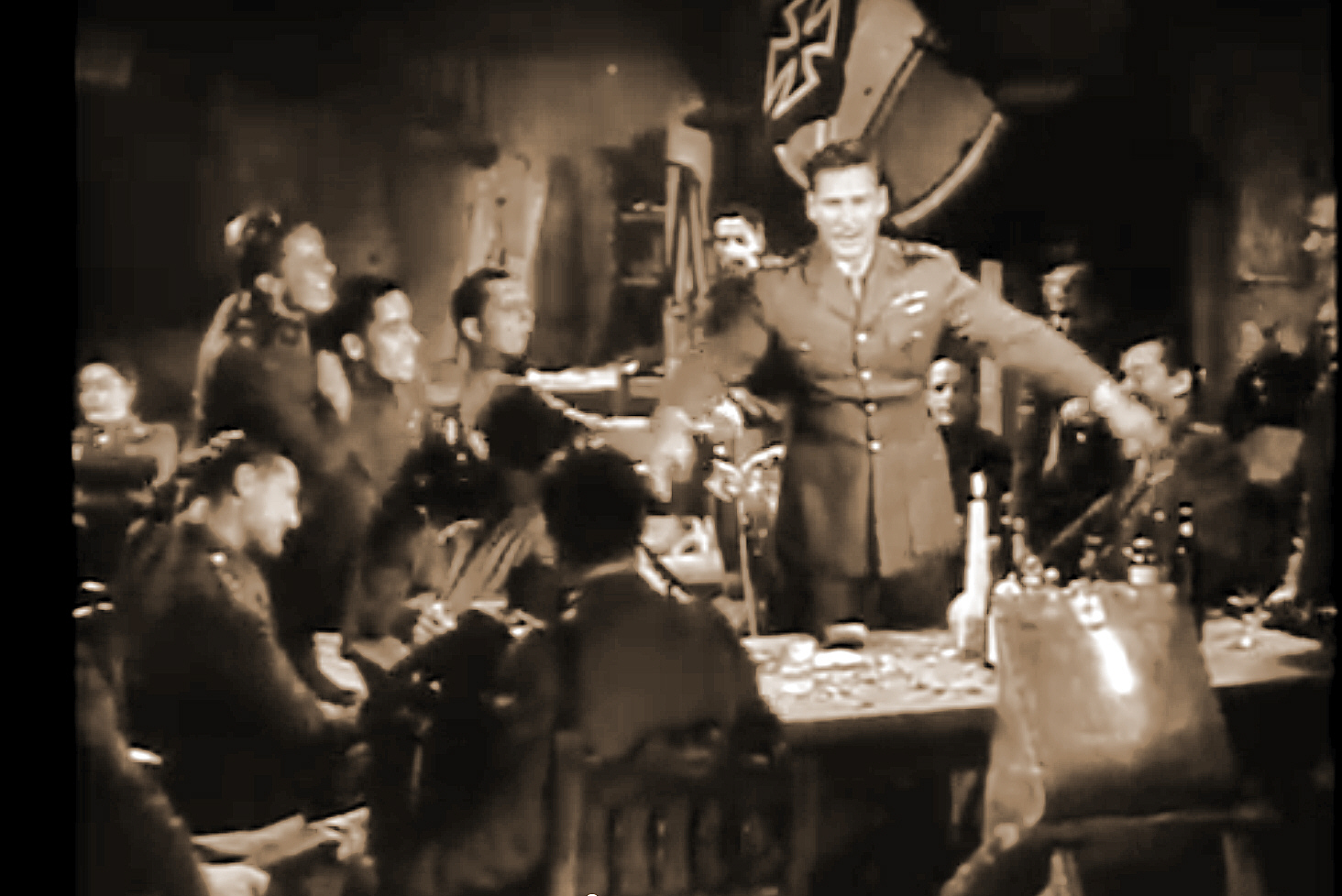
When I was the membership chairman of the old Great War Society, we asked our new enlistees what got them interested in the First World War.  I was surprised at how many mentioned the 1938 film Dawn Patrol with Errol Flynn, Basil Rathbone, and David Niven.

The "show stopper" scene in that movie is not any of the combat sequences, but in the mess when the pilots drink a musical toast to the next man who dies. The lyrics used in the movie are an adaptation of a 19th-century poem out of India titled "The Revel" by Bartholomew Dowling. Here are the pilots singing their song:

Click on Image to Expand

Errol Flynn Leads the Singing


We meet ’neath the sounding rafter,
  And the walls around are bare;
They echo our peals of laughter
  It seems that the dead are there.

So,  stand to your glasses, steady!       
  This world is a world of lies.
Here's a toast to the dead already—
  Hurrah for the next man who dies!

Cut off from the land that bore us,
  Betray’d by the land we find,
The good men have gone before us,
  And only the dull left  most behind.

So,  stand to your glasses, steady!       
  This world is a world of lies.
Then here's a toast to the dead already—
  Hurrah for the next man who dies!

Sunday, November 3, 2013

Zeppelin Facts


Click on Image to Expand


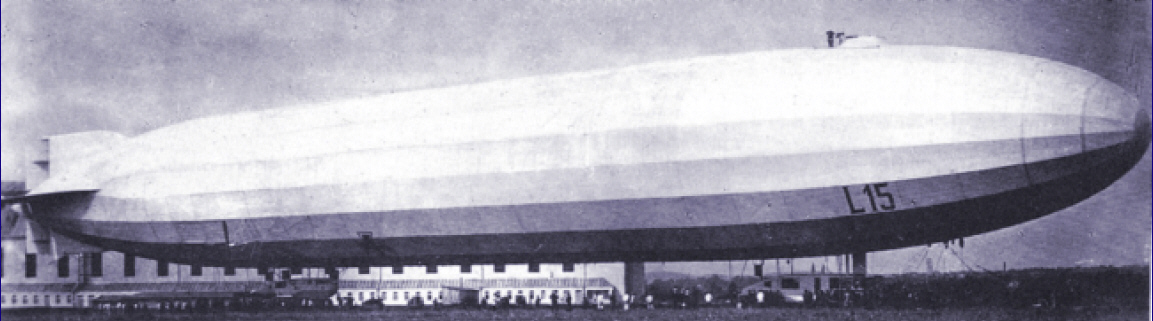
Zeppelin L-15 was a representative example of the combat airship. It was 536 ft long and could carry a two-ton bomb load. After its commissioning in September 1915 it conducted eight scouting missions and three raids. On its last mission it was brought down in the Thames Estuary, 1 April 1916.


Some Interesting Facts About the Zeppelins at War

  • A total of 115 zeppelin-type airships was used by the German military in the First World War. The army and navy lost 53 airships and 379 highly trained officers and men, and 24 airships were so damaged they could not be used again.
  • The German zeppelin fleet was used much more for reconnaissance missions than bombing, with over 1200 sorties flown over the North Sea alone.
  • Parachutes were considered excess weight and, therefore, not carried.
  • In April 1917, zeppelin L-23 intercepted the Norwegian schooner Royal off the Danish coast, determined she was carrying contraband, put a prize crew aboard, and sailed the ship back to Germany.
  • History's Largest Zeppelin Attack: sixteen navy and army airship bombers against London on 2 September 1915 (13 arrived over target).
  • Deadliest Raid: L-13 against London on 15 September 1915 killed 22 people. Over 500 individuals died in Britain from air attacks.
  • A Victoria Cross was awarded to William Leefe Robinson of the Royal Flying Corps for shooting down Schütte Lanz SL-11 over London on the night of 2–3 September 1916, a feat that paved the way for the eventual defeat of the zeppelin as a bomber.
  • Incendiary bullets, which would prove the most lethal anti-zeppelin weapon, were developed in contravention of the Hague Convention. German use of gas in 1915 encouraged overlooking this "technicality."
  • 1915 was the best year for zeppelin crews. Not a single raider was lost to enemy fire.
  • Ferdinand Adolf August Heinrich Graf von Zeppelin's airship career was inspired by a balloon ascent he made in St. Paul, Minnesota, on 19 August 1863. A cavalry officer, he had been sent to the U.S. as an observer with the Union Army. 
  • Many European cities experienced zeppelin attacks, but possibly the most improbable urban target was Naples. It received 20 bombs from Bulgaria-based L-59 on the night of 11–12 March 1918.
  •  The late naval-air expert R.D. Layman considered the Royal Navy's sea-launched assault on the zeppelin sheds at Cuxhaven on Christmas Day, 1914, as the world's first carrier-based air strike.

Saturday, November 2, 2013

Hoover Institution Collection Available Online

Images from the Hoover Institution Archives


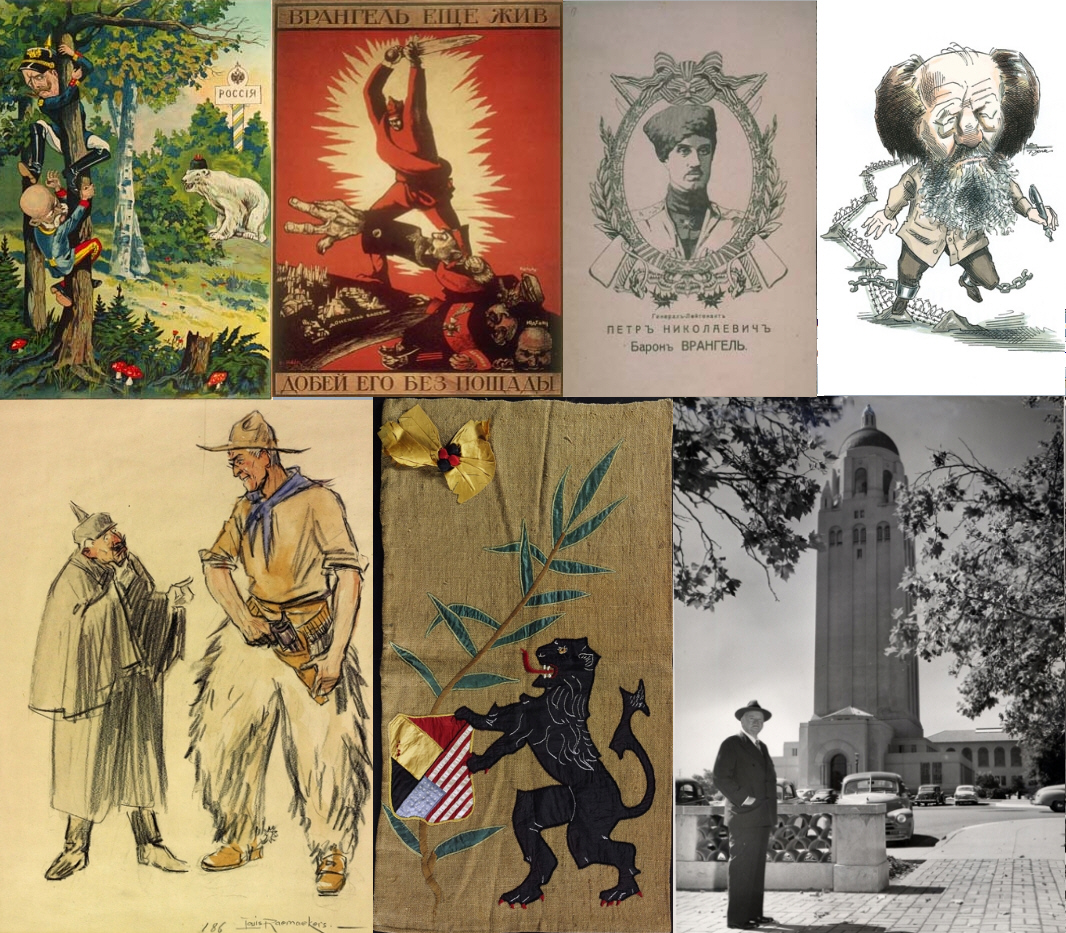
Founded to archive the record of the First World War, the Hoover Institution, located at Stanford University, now makes a lot of its holdings available on line. Many of their images are displayed in slideshows. Below is a montage of some interesting examples I've discovered while browsing their site.

The slideshows can be found here:
http://www.hoover.org/multimedia/slide-shows/28543


Click on Image to Expand


Top Row:  A cartoon showing the Russian bear chasing the Kaiser and Emperor Franz Josef up a tree; Soviet poster showing a Red Army soldier attacking some White Army generals; White Army commander Pyotr Nikolaevich Wrangel; Caricature of  Aleksandr Solzhenitsyn, who researched his works at the Hoover Institution.

Bottom Row:  A cartoon showing President Wilson as a cowboy towering over the Kaiser; a flour sack embroidered by Belgian women in appreciation of American relief to their country; President Hoover by the Hoover Tower in 1951.

Thursday, October 31, 2013

31 October 1914 –
The Western Front's Last Piece:
The Fight at Gheluvelt Chateau

It was the day the war of movement on the Western Front stopped. Afterward there would be no big breakthroughs until 1918, and forty-one months of trench warfare would ensue.  By mid-day on 31 October 1914 there were no more flanks, just one last gap in the entire line from the Swiss border to the English Channel where a breakthrough seemed possible. It was at a place five miles east of Ypres on the grounds of Gheluvelt Chateau, just north of the Menin Road. 

Gheluvelt Chateau Today

Shortly before noon the line of the British 1st Division was broken at Gheluvelt.  If at that moment German reinforcements available close at hand could thrust through the gap and spread out fanwise, they could have rolled up the defenders on either flank in their rear and simply broken the cohesion of the British in Flanders to pieces. The impulse of retreat began to seize the British troops. Already men and guns were streaming back towards Ypres. The Germans quickly assembled thirteen battalions for a final follow-through attack. 

General Charles FitzClarence commanding the British Army 1st Brigade, was nearby and saw the declining situation. At Polygon Wood north of Gheluvelt, he got hold of the 2nd Worcestershires, part of the reserve of the 2nd Division on the north, and ordered them to counterattack immediately. This movement had scarcely begun when a shell burst in Hooge Chateau, where the staff of both divisions had assembled for a conference, and practically destroyed them.

But the Worcestershires — a tiny force of eight officers and 360 men — swept all before them nonetheless. They fell upon their adversaries, who were mostly Bavarians, and drove them back in confusion from the chateau grounds. The line was reestablished.  The Western Front of the Great War was effectively completed. It would not move dramatically until the first Ludendorff Offensive of 1918.  General FitzClarence, sadly, did not have much longer to live. He died on 11 November 1914 in fighting along the Menin Road, where many more would fall in the remaining four years of war.

After the Victory: Gheluvelt, 31 October 1914