Now all roads lead to France and heavy is the tread
Of the living; but the dead returning lightly dance.
Edward Thomas, Roads

Monday, September 16, 2013

A New Series:
The Great War and Modernism

The Great War and Modernism: An Introduction

By Jane Mattisson

You might ask, “What is modernism and what has it got to do with the Great War? Isn’t it primarily a cultural movement that is more to do with art and literature than war?” Unfortunately there are no clear-cut answers to these questions, but as I hope to show over the next few months, the Great War and modernism are much more closely intertwined than has previously been thought.  As a period, modernism refers to the 1910s and 1920s, and as a set of cultural characteristics it includes formal experimentation and innovation, rupture, ambiguity, disorder, crisis, fragmentation, cultural pessimism, and moral relativism.

Modernism continues to be hotly debated by historians and art/literary critics alike. This has given rise to a growing number of publications, some of which will be reviewed on Roads to the Great War over the next few months. As Vincent Sherry (author of The Great War and the Language of Modernism, 2003, to be reviewed in our series later) argues, the mass technological warfare of the Great War put an end to the prewar faith in science and material progress, thereby paving the way for what we refer to today as the modernist movement.

Click on Image to Expand

Four Influential Modernist Art Works
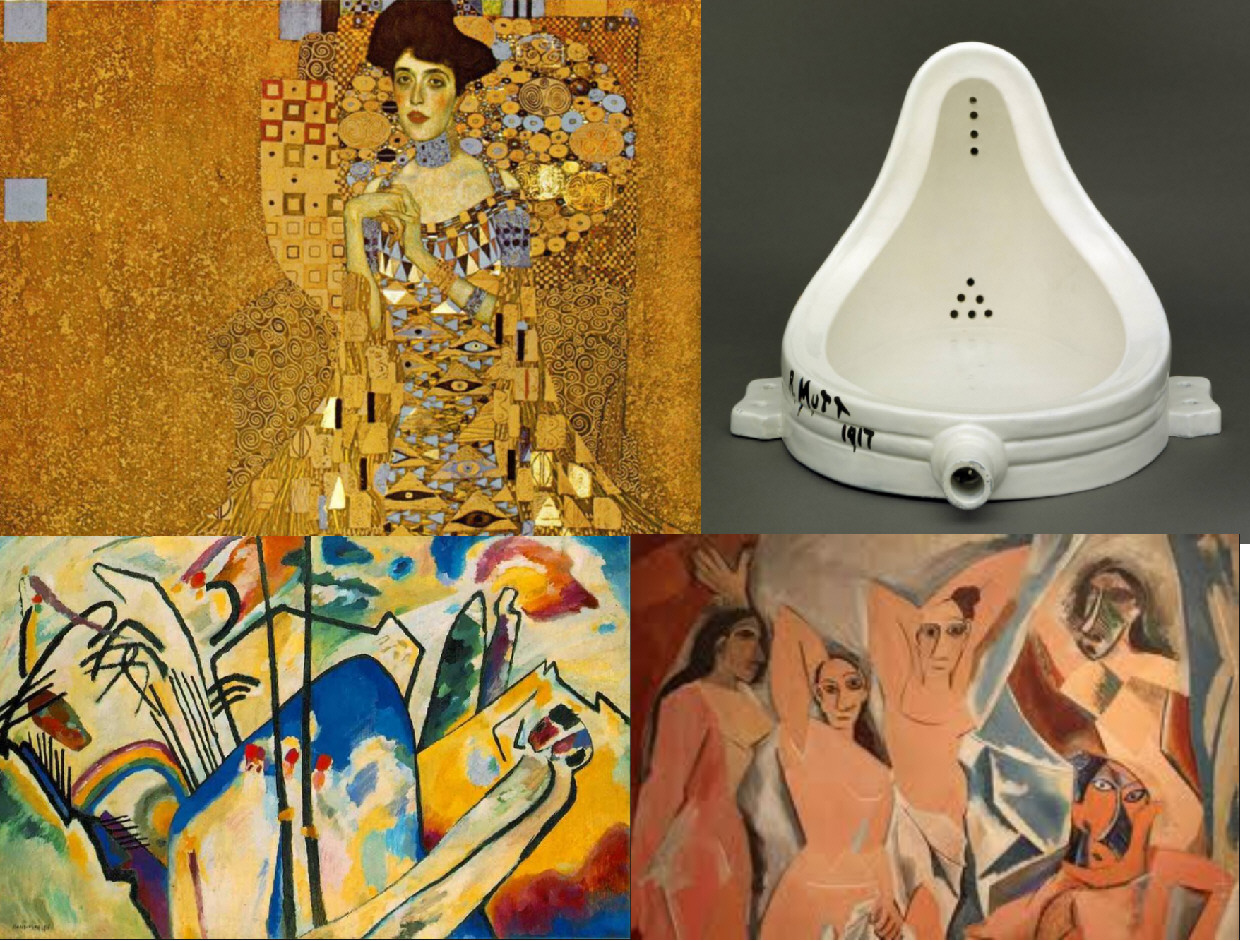

Clockwise from top left: Portrait of Adele Bloch Bauer I, Gustave Klimt, 1907; Fountain, 1917, Marcel Duchamp; Les Demoiselles d'Avignon, 1907, Pablo Picasso; Composition IV, 1911, Wassily Kandinsky.


Traditionally, modernism has incorporated the avant-garde, which strove toward freedom in almost all areas of human endeavor — political, cultural, and intellectual — and included the emancipation of women, homosexuals, the proletariat, youth, and people in general. Modris Eksteins (author of Rites of Spring, 1989, also to be reviewed in our series) claims that it was the Great War that was the psychological turning point for modernism. After the war, he argues, “The urge to create and the urge to destroy had changed places.”

At a forum of world-renowned historians held in Kansas City in 2008, Robert Wohl and Jay Winter discussed the impact of the Great War on European history. Wohl claimed that “the war seemed to support the modernists’ claim [that] there was going to be a cultural break in Europe and that everything was going to be different in the future . . . The war was a spectacular example of that” (Winter, The Legacy of the Great War: Ninety Years On, 2009). This notion of difference, so vital to understanding the modernist movement, is subtly captured by the novelist Virginia Woolf:
Nothing was changed; nothing was different save only — here I listened with all my ears not entirely to what was being said, but to the murmur of current behind it. Yes, that was it — the change was there. Before the war at a luncheon party like this people would have said precisely the same things but they would have sounded different, because in those days they were accompanied by a sort of humming noise, not articulate, but musical, exciting, which changed the value of the words themselves (A Room of One’s Own, 1928; emphasis added).


Click on Image to Expand

Four Influential Modernist Literary Works



Modernism represents a rupture with the past, a break in values and perception that infused all areas of life: social, political, economic, and cultural. The Great War was not “great” merely because of its magnitude but also because of its revolutionary effects. It is these which are so clearly encapsulated in the modernist movement that continue to exercise the minds of historians and literary critics to this day. Our series of reviews on this blog will include some of the most important works on the subject published in the past thirty years, looking at the Great War both as history and as narrative. As a result we will gain a clearer understanding of what modernism is and how we have all in one way or another been influenced by it. In this vein, tomorrow’s post will look at Pearl James’s book The New Death: American Modernism and World War 1.

Sunday, September 15, 2013

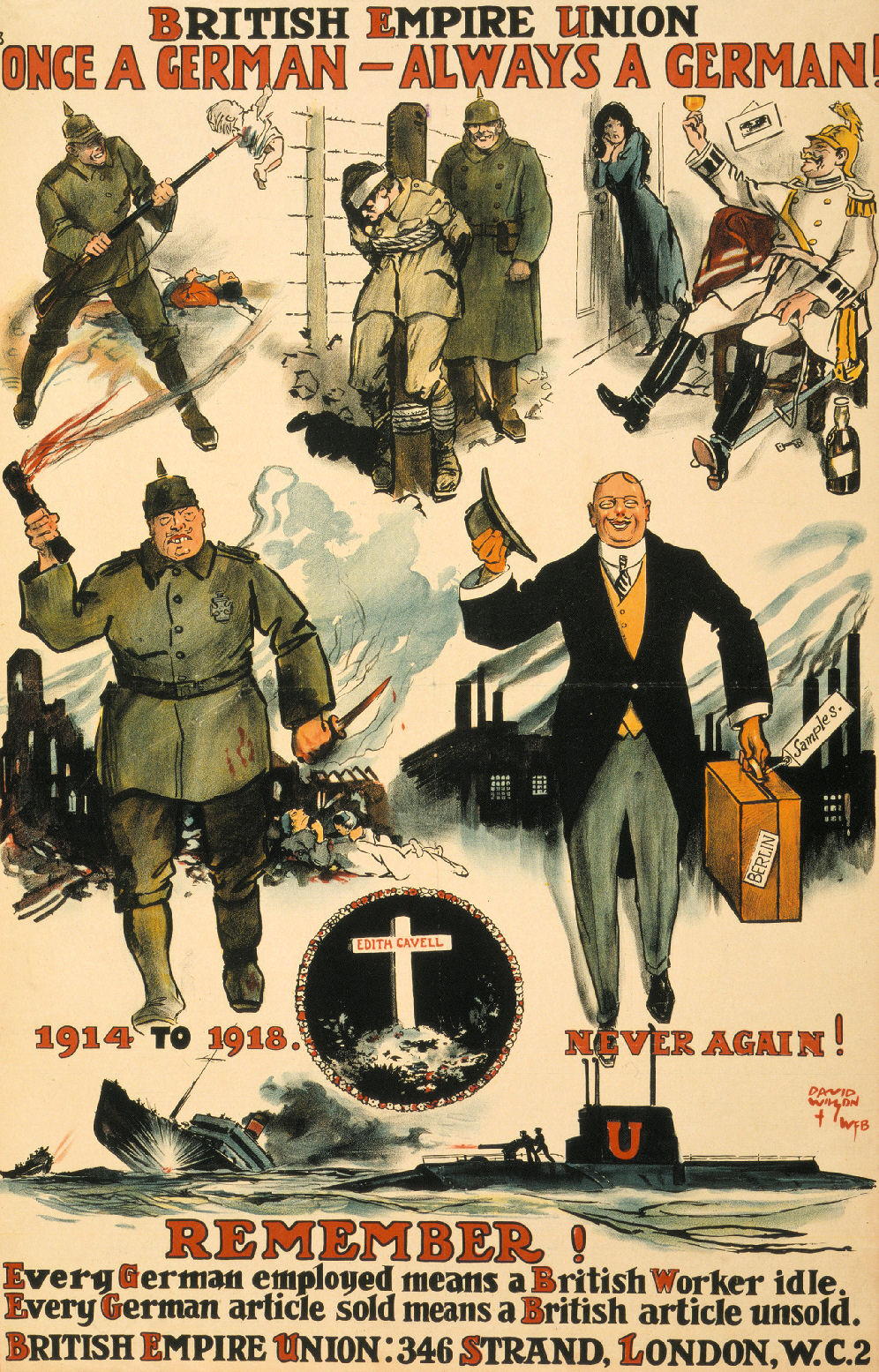
Intense British Anti-German Propaganda Posters

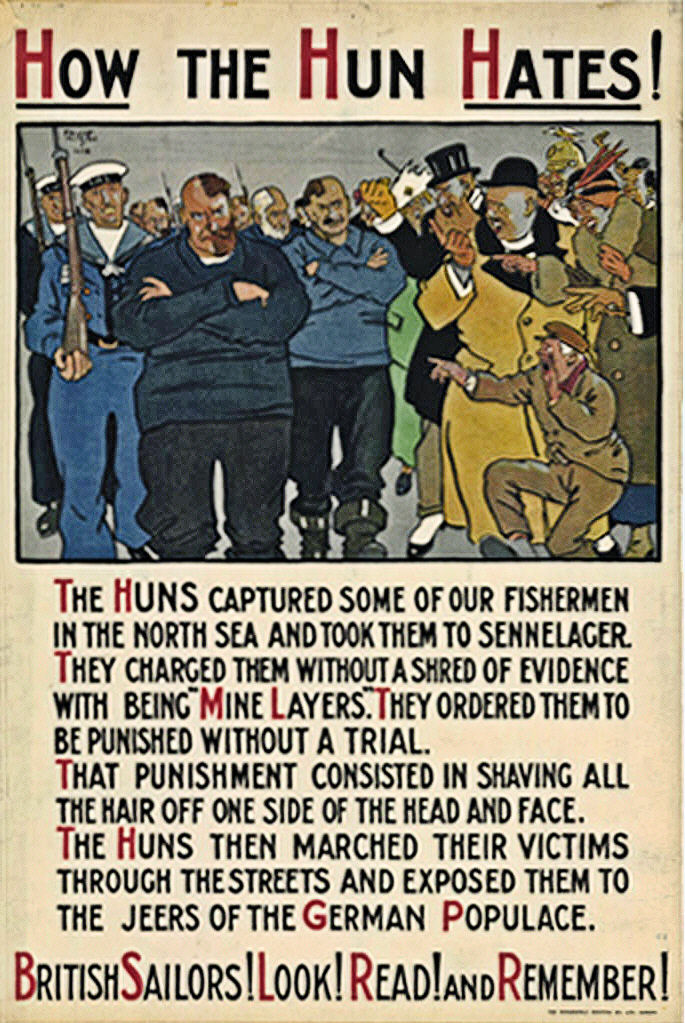
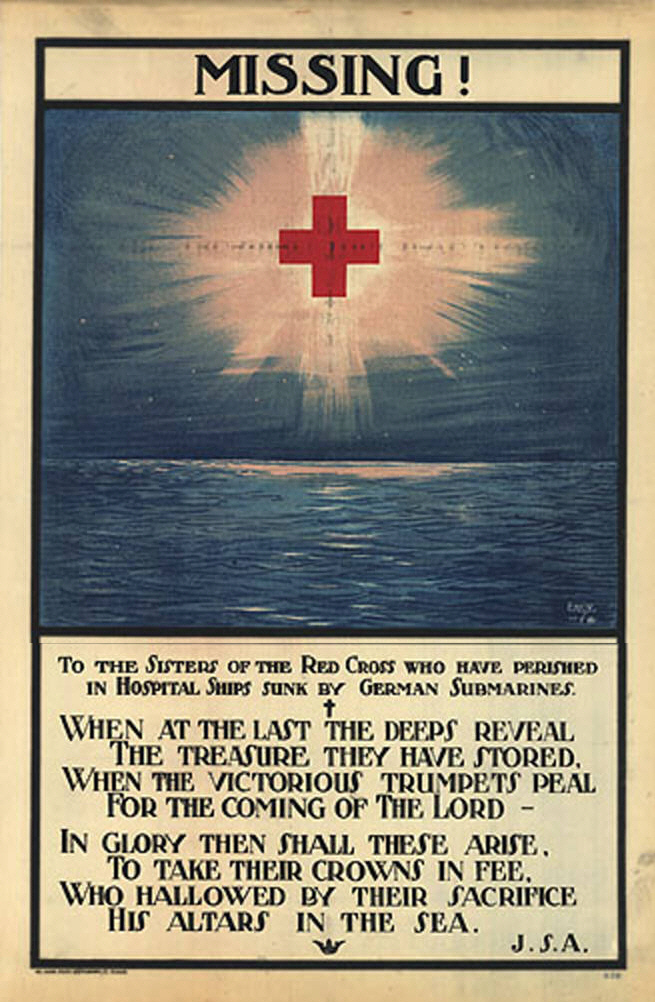
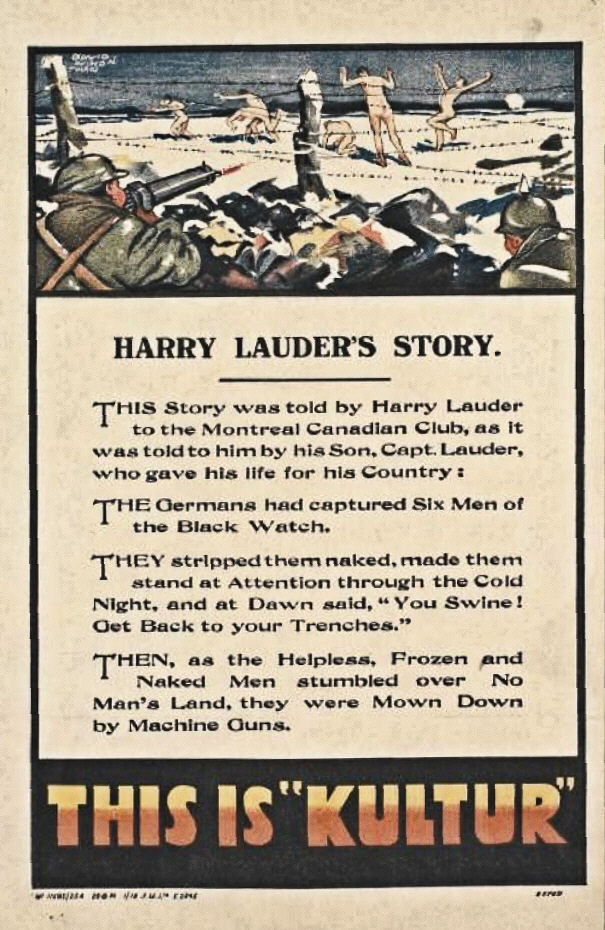
Roads contributor Sidney Clark has sent four examples from his collection of British posters from the Great War that seem solely intended to build intense hostility toward the German enemy rather than, say, for recruiting for the army or gaining general support for the war effort. The first, which is from late 1918, hits upon many of the most volatile themes: bayoneting babies, executing civilians, violating young ladies, and burning cities.  It also seems to suggest that even in the postwar period, Germans will still bear these cruel tendencies.  The remaining three posters each single out particular victims of German vileness:  fishermen, nurses, and frontline soldiers.
Click on Image to Expand


Click on Image to Expand


.
Click on Image to Expand


Click on Image to Expand


Saturday, September 14, 2013

How Important Was the Arab Revolt?

THE ARAB REVOLT 1916–1918:  SUCCESS or SUSPECT?

By Neil Dearberg


Click on Image to Expand

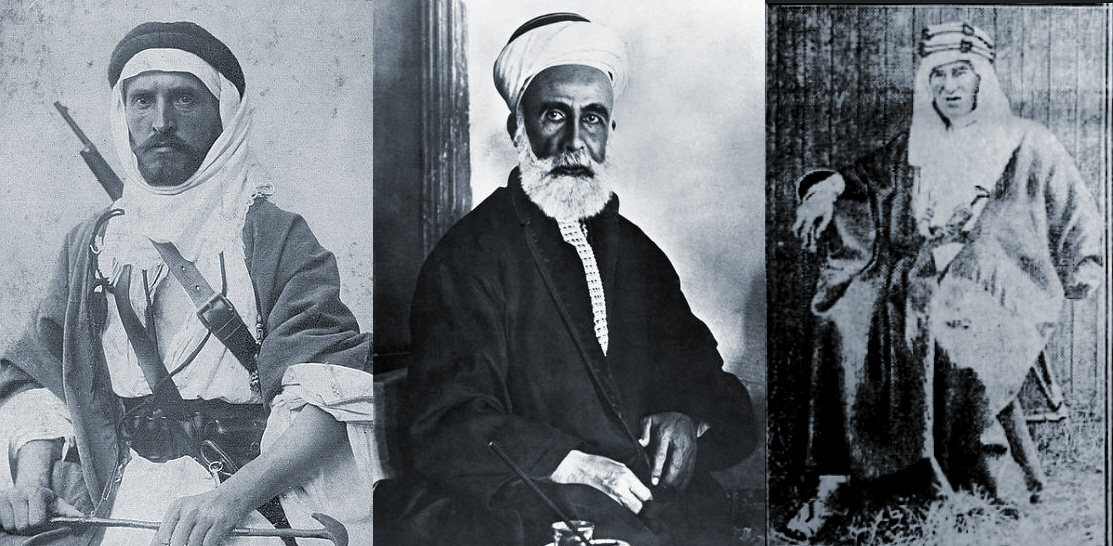
Key Actors in the Arab Revolt
Austrian Alois Musil, Sherif Hussein, T.E. Lawrence


Some people argue that the military consequences of the Arab forces and the overall Arab Revolt (AR) were insignificant. This, however, is to not fully appreciate the effect of the AR. The consequences of that time have had a dramatic impact, albeit at the time unexpected, on the world into the 21st century.

The Middle East today is a conglomeration of contradictions: of family oil wealth, abject poverty, and absence of civic pride in village life; a focus of nuclear possibilities, national economic distress amidst refugee, and ethnic migrations; seething anti-western attitude, the home of wonderfully hospitable hosts to visitors of any religion or nationality; the cradle of monuments and treasures of the planets earliest civilized inhabitants; a plethora of unrest and confrontation between the Islamic sects; and the focus of world attention.

World War I and the nonsensical "peace" accords immediately thereafter was the catalyst of today’s Middle East; a proper understanding of the Arab Revolt and its role in this campaign is a small start in understanding today’s Middle East.

Putting aside the military results, let’s look at other effects because winning sometimes results from what you don’t get as much as what you do get!

Sheik Hussein, the Emir of Mecca, leader of local Muslims and of great influence among many Muslims of the region, had the choice of joining the Christian British or remaining linked to his fellow Muslims, the Ottomans. Had he remained with the Ottomans, here are some likely effects:

  • All Arab forces could have been against the British. This would have denied the British armed support, intelligence, local food supplies, potable water for men and animals, guides, and local knowledge,
  • The Ottoman Sultan’s Jihad could have had a much greater effect as all Arabs may have joined, rather than have it dwindle as it did,
  • The Muslims in the Indian/British Army may have deserted and taken up the Jihad call,
  • Aqaba would not have been captured and that sea port denied as a supply route,
  • General Allenby would have had an exposed right flank during the EEF’s advance through Palestine,
  • The large Ottoman garrisons in Medina and Ma’an would have been available for redeployment against the British,
  • The Egyptians may have risen against the British, not only denying a stable logistic base, but also creating a military/guerilla style conflict and jeopardizing the vital sea link of the Suez Canal.
  • It would have denied the EEF the extremely valuable tens of thousands of workers in the labor and transport corps, without whom the campaign would have failed (the railway line across Sinai and following water pipeline would not have been built, nor the roads system, and the camel supply line would not have been available),
  • Local tribes and villagers may have actively opposed and interdicted the British in Egypt, Sinai, Palestine, and the Arabian Peninsula.

The traditional Arab independent way of life ensures there is little cohesion between tribes and clans and the Arabian Peninsula was a hotbed of differences. Although Hussein did support the British, other Arabs favored the Ottomans. Others disfavored Hussein and the Hejaz Arabs without necessarily favoring the Ottomans. The Austrian archaeologist and Ottoman sympathizer/spy, Alois Musil, (there are no kangaroos in Austria!) was actively seeking the support of the northern (Syrian) Arabs for the Ottomans (just one reason Lawrence and Feisal were not fully successful in gaining Syrian Arab support).

Meanwhile, the Rashids of the northeastern Arabian Peninsula had sided with the Ottomans and were engaged in hostilities with the Sauds of the central Arabian Peninsula, who had indicated a preference for the British but not Hussein. This effectively kept both these sizable forces out of the main conflict — this may have changed in favor of the Ottomans had Sheik Hussein endorsed the Jihad, bringing both these groups into conflict with the British.

And of course, tribal Arabs simply wanted gold and didn’t care whose it was – had their fellows taken Ottoman gold, it is likely more could have done so.

Click on Image to Expand

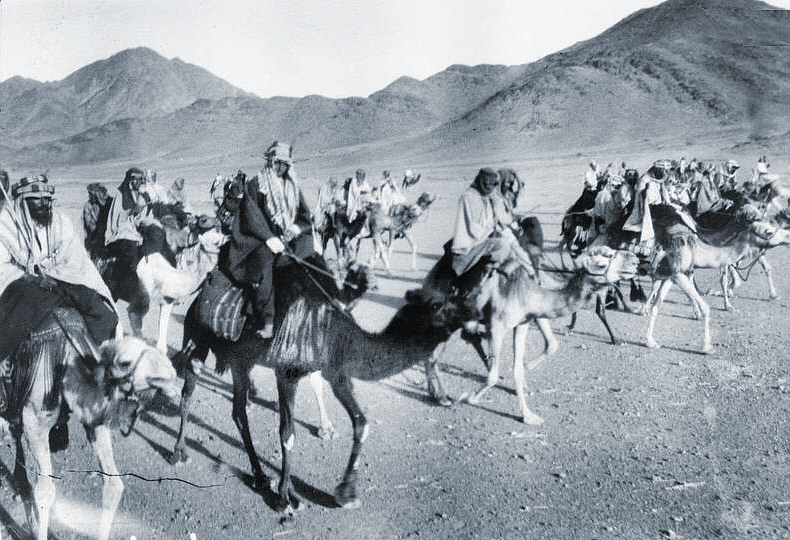
Lawrence with Irregulars in the Desert (IWM Photo)


That Sheik Hussein convinced his sons and influential Arabs to side with the British is a mystery. Arabs tend to favor a winner. At the time of the commencement of the Arab Revolt, Gallipoli had been a disaster, as had the British surrender at Kut in Mesopotamia and France was in stalemate, going nowhere near any victory — so the British really had little with which to impress anyone. For various reasons, perhaps Arab nationalism and his own future glory as “King of the Arabs,” and of course his memory of incarceration for fifteen years in Constantinople by the Sultan, Hussein sided with the British.

Muslim Indians and Egyptians throwing their weight against the British would have seen a rapid loss of this campaign, leaving hundreds of thousands of Ottoman troops available for service in France and the Western Front. Then arguably, this too would have been lost quickly and the Germans successful — perhaps this would have saved tens of thousands of lives in WWI then, WW II avoided. Zionism may not have "got up," and Russia may not have embraced Communism. But it didn’t happen that way, so we can think about it, but never know.

The impact of mass desertions of Muslims from the Indian Army should not be underestimated. Despite little detail of the Indian contribution in official histories and popular historical novels, these forces made up the bulk of the EEF so the British could withdraw the infantry to France. Had this not happened, France could well have been lost, as may the Suez Canal – and World War I may have had a very different ending and you, dear reader, may have been speaking Arabic or German today!

What is also little known, is that tens of thousands of Egyptian "natives" were drafted into the Egyptian Labor Force (ELF) and the Camel Transport Corps (CTC). The ELF built the railway from Suez to Haifa, the water pipeline that followed the railway, roads through desert sands of Sinai and rocky plains of Palestine, and the telegraph for communications. The CTC brought resupplies from railheads and sea ports to the forward troops so they could maintain their advances. Had the Egyptians not supported as they did, the EEF would have gone nowhere and the British campaign failed. Simply, it is impossible to conduct a successful campaign over vast distances without strong logistics and local support.

Further, the local populations may well have actively damaged or destroyed the vital water cisterns and wells and contaminated local food sources. If an army does indeed travel on its belly, this would have been disastrous. Ask Alexander the Great, Julius Caesar, and Napoleon, whose armies had done this trip in earlier times.

So the Arab Revolt provided the British with several beneficial effects:

  • The Hejaz Arabs and their regular Northern and Southern Armies gave limited military support.
  • Many Bedouin tribes, at times, sided with the Arab Revolt and the British, providing a mixture of consistent to inconsistent and unreliable military support, but at least they were not anti-British.
  • Many Arabs stayed out of the conflict and so did not give support to the Ottomans or hinder the British.
  • Those Arabs siding with the Ottomans were of little consequence to the British and Arab Revolt cause.
  • General Allenby did not need to take valuable troops from his main force to deploy to his right flank and his logistics were secure
  • The Muslims of the Indian Army and Egypt stayed loyal and gave immeasurable fighting and logistic support.
  • The Suez Canal remained open and accessible.
  • The campaign was won, convincingly, with General Allenby in command.
  • Ottoman troops did not go to France in support of the German offensive.
  • Despite the Sykes-Picot Agreement carving up Arab lands and denying Hussein his “King of the Arabs” title, of which Sheik Hussein and his sons were aware, the Arab Revolt continued to favor the British,

One can argue the military merits of the Arab Revolt. But had the coalition forces in Vietnam, Iraq, and Afghanistan achieved local support as the British did in this campaign (even with the lies, deceit, bribery, and betrayals), the ends of these latter campaigns may have been quite different, and a lot sooner.


© Neil Dearberg, 2010 

Friday, September 13, 2013

St. Mihiel Offensive, Part II:
Victory Commemorated

Yesterday, we presented a review of the St. Mihiel Offensive as it was fought in 1918. Even though the subsequent battle, the Meuse-Argonne Offensive was a larger, longer, and bloodier effort, the victory at St. Mihiel was—after the war—treated with equal gravity in the various projects to commemorate the American sacrifices during the war. Possibly, this is because the American commander, John J. Pershing, was the first head of the American Battle Monuments Commission, the nation's caretaker of its cemeteries and major monuments overseas. He—it's clear—gave his two biggest victories equal weighting.

Below are a number of the major American sites in the former salient. The area is also filled with monuments to the French and German relentless war of attrition fought for four years before the Yanks arrived in 1918. One other point—there has not yet been a definitive battle history of the St. Mihiel Offensive published. Hopefully, this will be corrected during the centennial. John Eisenhower told me once that his father had written an excellent analysis of the battle when he was on the staff of the American Battle Monuments Commission, but the manuscript has been lost. General Pershing had ordered it prepared for inclusion in his memoir, My Experiences in the World War (one of the most boring military histories ever written, IMHO), but rejected it. [Ike and Pershing were not mutual admirers; that story is for another day.]


Click on Image to Expand

On the hill known as Mont Sec from which the German army had a commanding view of the St. Mihiel Salient is the major American monument to the battles of 1918. (There was a second brief battle just before the Armistice.) The Mont Sec monument is a Greek-style circular colonnade. Show in the photo are: the monument as approached from the parking lot; the inside of the colonnade with the dedication and order of battle inscribed; the outstanding view of the entire battlefield from within the memorial; your editor holding forth with my 2013 group over the bronze relief map of the battlefield (excellent design, but needs cleaning for readability).


Click on Image to Expand

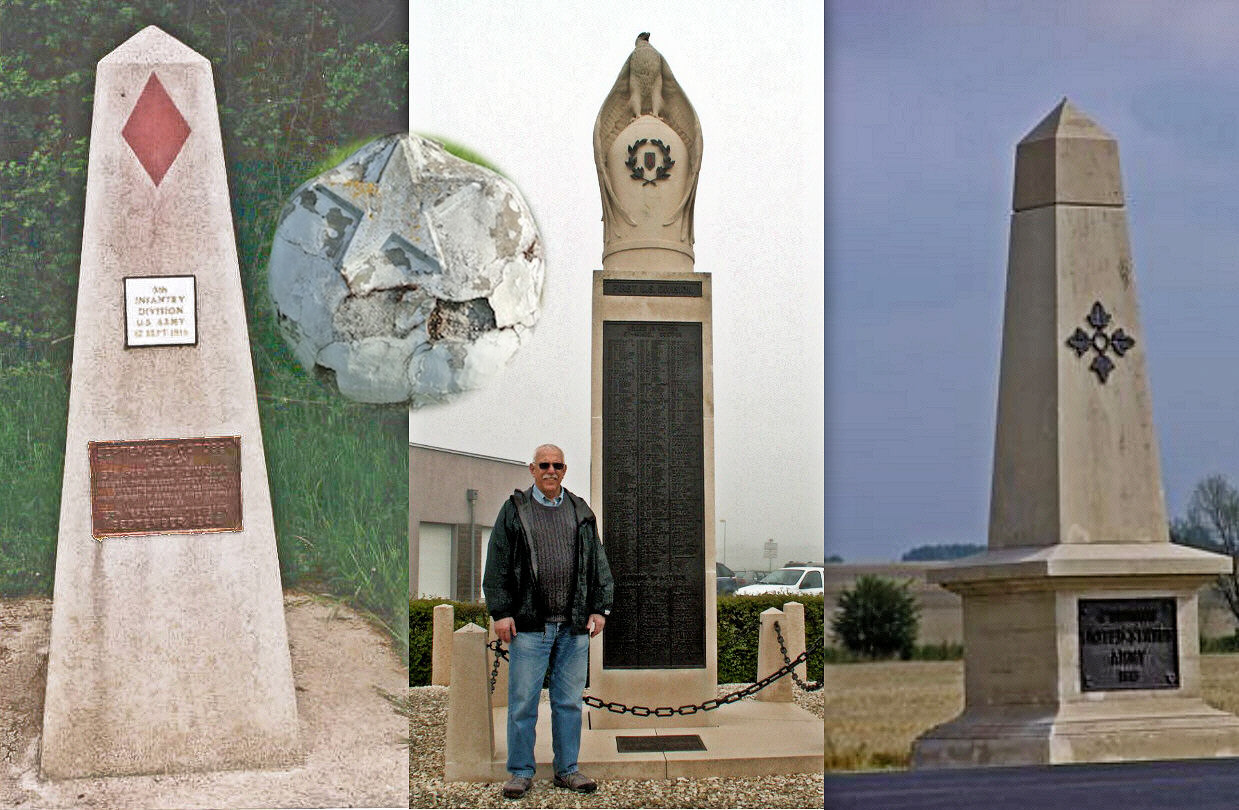
Several of the divisions that fought in the battle have their own monuments. They are all from a series spread over the Western Front by their divisional associations. On the left is the 5th Division Marker at Regnieville; its white WWI plaque is supplemented by a bronze WWII plaque because the division attacked from the very same position in both September 1918 and September 1944. In the middle Tom Bolz is standing at the the 1st Division Monument, said to be placed where the 1st Division, attacking from the south, met up with the 26th "Yankee" Division, attacking from the west, to close the salient. On the right is the 4th Division marker at Manheulles. The 4th was the only American division to attack on the first day of both the St. Mihiel and Meuse-Argonne Offensives. The inset is the sadly neglected 2nd Division marker on the Thiacourt-Jaulny road that indicates the division's farthest advance in the battle.


Click on Image to Expand

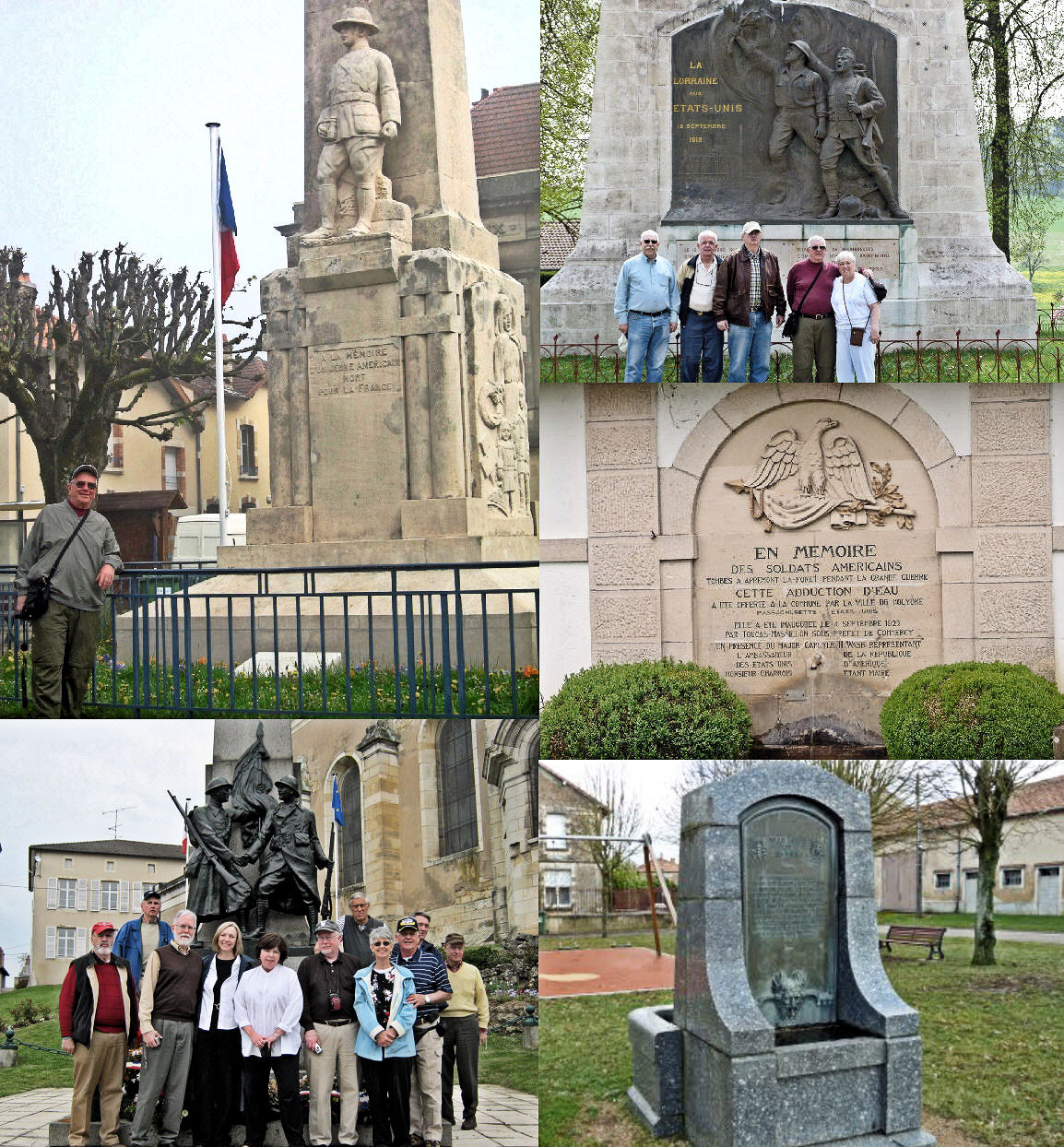
There are a number of impressive monuments scattered around the battlefield that were built by U.S., French, or joint groups. At Vignuelles, Ed Root stands at a privately funded statue to Doughboy Moses Taylor of the 2nd Division who was killed nearby. Some of my 2013 group at the U.S.-Lorraine memorial at Flirey, where the 89th Division jumped off on 12 September. Below them is the fountain at the village of Apremont contributed by the town of Holyoke, Massachusetts, in memory of the Americans who fell nearby. My 2010 group at the French-American friendship monument in Thiaucourt next to the town church. Another fountain, at Seicheprey, was contributed by the state of Connecticut in memory of the fallen of the 102nd Infantry (from that state's National Guard) who were killed when deployed nearby.


Click on Image to Expand

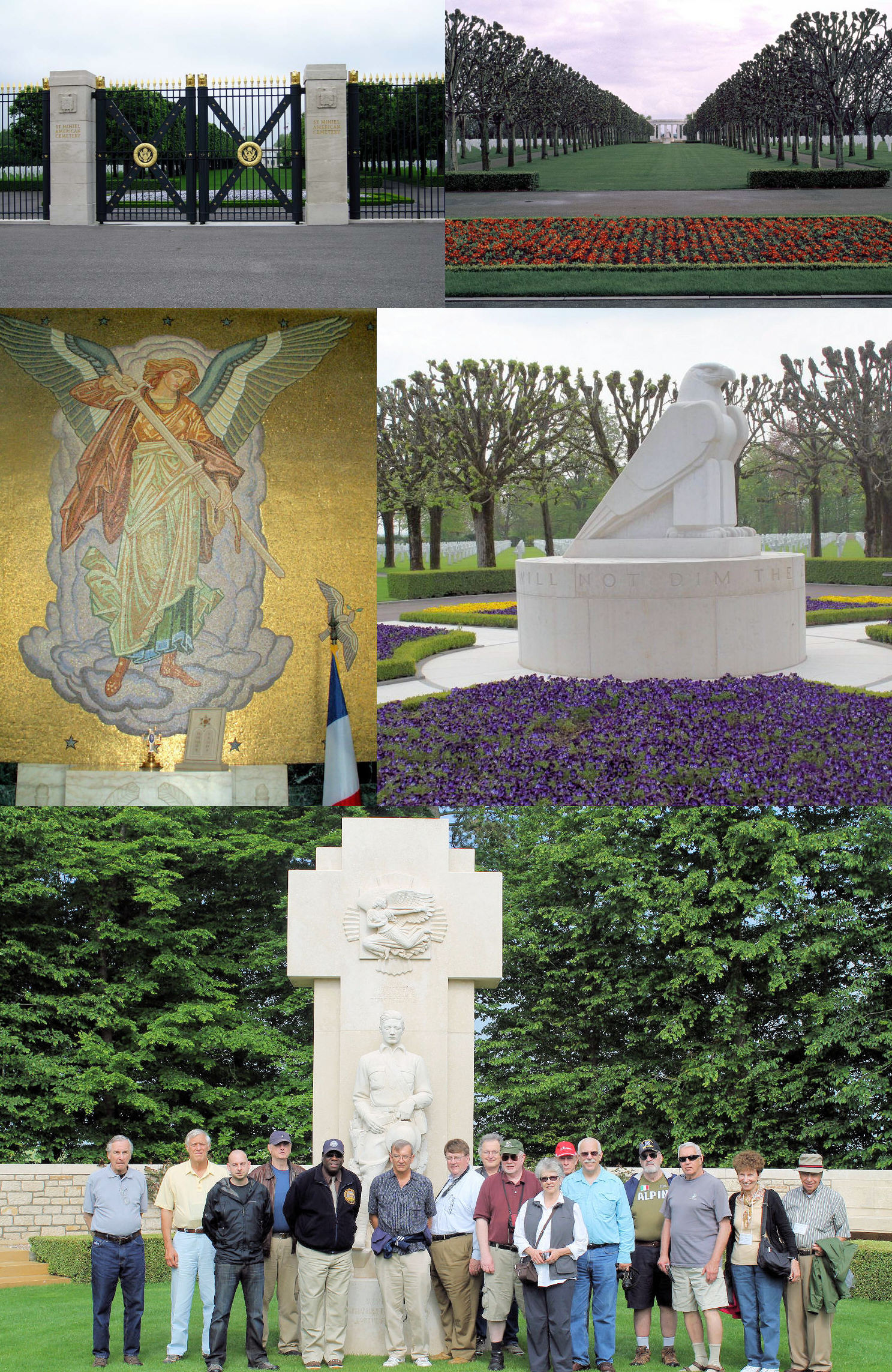
The American St. Mihiel Cemetery, which stands outside of what was a key objective of the September 1918 battle, the road-hub of Thiaucourt. American burials here total 4,153. Also, 284 fallen, who were never found, are honored in its memorial. The town was captured by the 2nd Division and the cemetery grounds by the 89th Division. Shown in the photo are the the entrance—both the front gate and just inside and some of the art works for which the cemetery is notable : a mosaic of the Archangel Michael sheathing his sword; the American eagle sundial; and my 2012 group posing with Superintendent Mike Coonce at a family-sponsored statue—accepted by General Pershing for the cemetery—of Capt. Oliver Cunningham, 78th Division, who is buried in a nearby cemetery plot.

Sources: Steve Miller, ABMC publications, Holts Guide-Western Front South, and American War Memorials Overseas

Thursday, September 12, 2013

12 September 1918: The St. Mihiel Offensive Opens

Quick Facts About the St. Mihiel Offensive:

Where: Southeast of Verdun

When: 12 – 16 September 1918

Allied Units Participating: First American Army (Pershing), three U.S. corps totaling nine
divisions initially + one French corps

German Forces: German Detachment C (Gallwitz)

Memorable for:


  • Elimination of the strategic threat of the St. Mihiel Salient to the Allied transportation network in eastern France
  • First U.S. operation and victory by an independent American army in the Great War
  • First U.S. tank attack (personally led by Lt. Col. George S. Patton)
  • First exposure to large-scale offensive operations for numerous future World War II commanders, including: Army Generals George Marshall, Douglas MacArthur, George Patton, Mark Clark, Joseph Stillwell, and Marine Generals Holland Smith and Thomas Holcomb.
  • History's first D-Day
  • St. Mihiel was an area of detailed study assigned to Dwight D. Eisenhower when he served on the American Battle Monuments Commission

    Click on Image to Expand

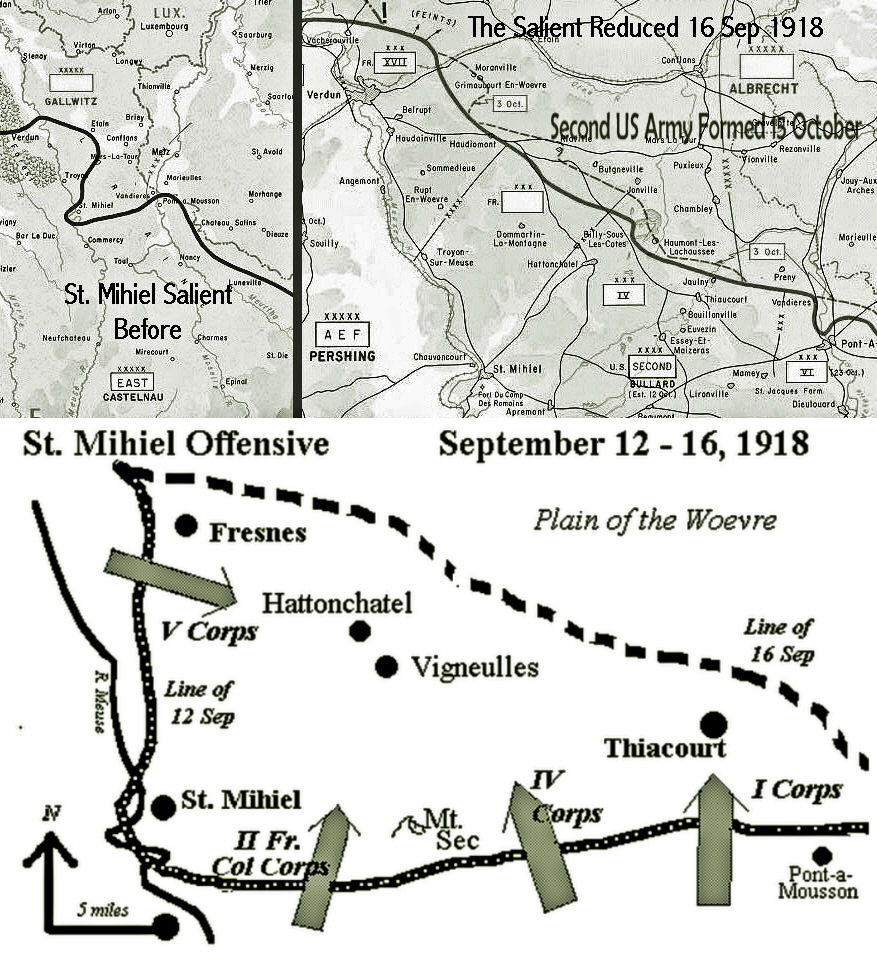
  • Top: Before and After – Note Vedun Top Left in Each Map; 
    Bottom: Opening Plan and Final Line


    Brief Operational Description:

    Allied counteroffensives in mid-1918 eliminated most of the German salients on the Western Front. But the St. Mihiel salient remained, projecting into the Allied line since 1914. Its elimination was critical to securing lines of communication to eastern France and the Vosges Mountain Sector, as preparation for an Allied effort in the fall to push German forces out of occupied territory. On 10 August 1918, the U.S. First Army was activated, commanded by General John J. Pershing. It included fourteen American and four French divisions. It was given the mission to reduce the salient. Nearly 1,500 aircraft participated, the largest use of airpower in World War I. In early September final plans for the St. Mihiel offensive included a main drive against the southern face of the salient, a secondary blow against the western face, plus holding attacks and raids against the tip around the occupied town of St. Mihiel.

    Click on Image to Expand

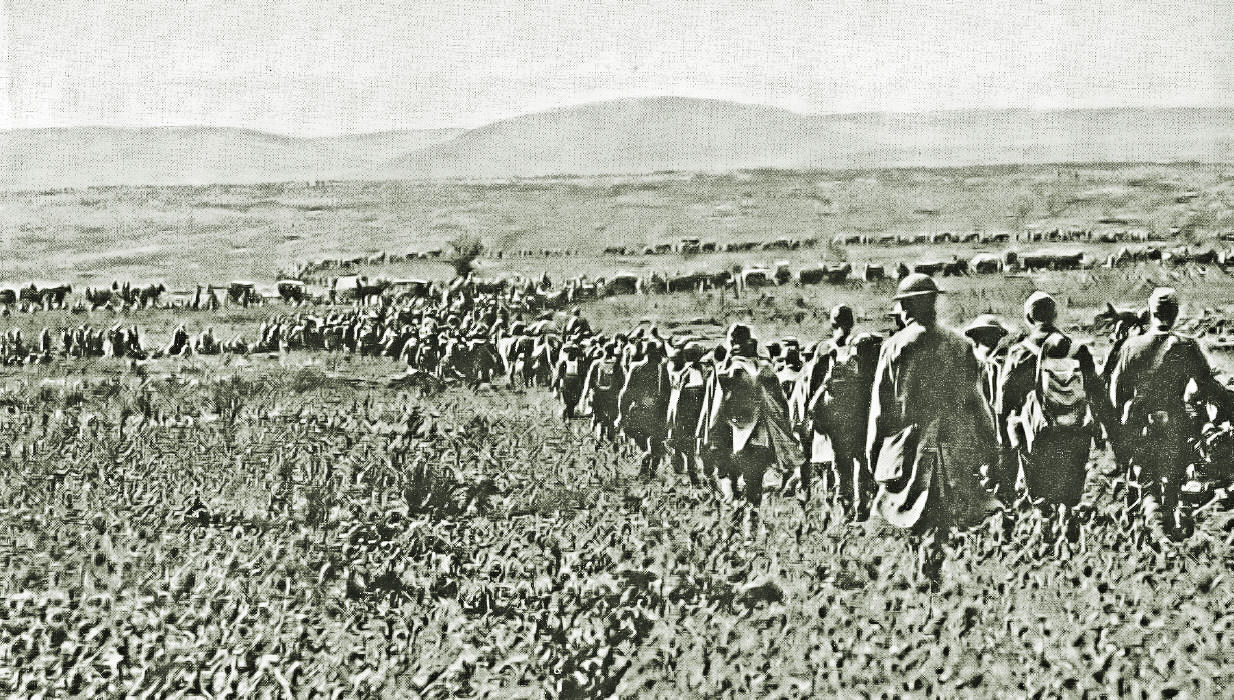
    U.S. Troops Moving Toward Key German Position on Mont Sec


    Firsthand Accounts – Friday 13 September 1918:
    The attack began on 12 September (D-Day) at 1:00 a.m. with twelve massive aerial and artillery bombardments of German positions. The main ground attack on the southern face began at 5:00 a.m (H-Hour) with the assault on the western face starting at 8:00 a.m. The Germans, who were beginning a withdrawal from the salient, were caught by surprise.

    Within a day, the 26th Division attacking from the west and the 1st Division driving north effectively severed the salient at Vigneulles. The other divisions attacking from the south pushed northward until 16 September when the offensive was suspended in anticipation of the next operation, the Meuse-Argonne Offensive starting in less than two weeks. The advance of the 42nd "Rainbow" Division was supported by two battalions of tanks personally led by George Patton. The 2nd Division liberated the road hub at Thiaucourt, and adjacent to them the 89th Division captured the ground that became the U.S. cemetery for the salient. Over 550,000 members of the AEF were involved in the St. Mihiel Offensive.

    Click on Image to Expand

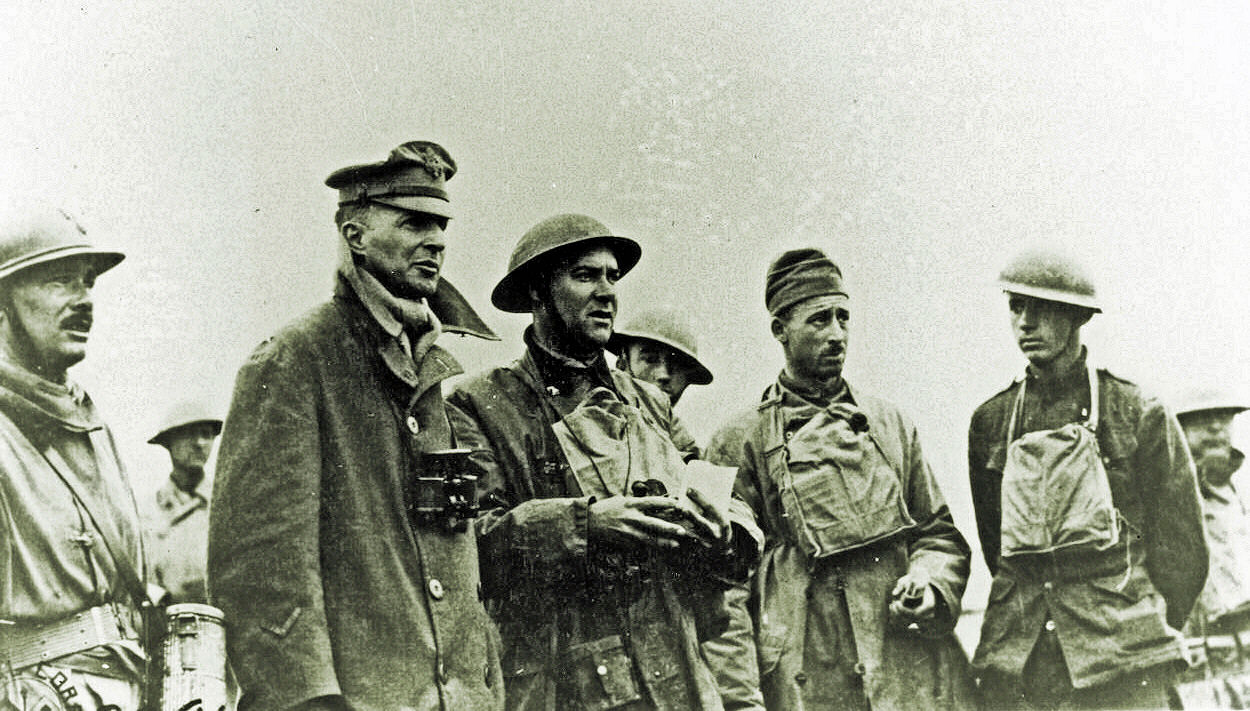
    BG Douglas MacArthur During the St. Mihiel Offensive, Lt. Col. Walter Bare, 167th Inf., on His Left, French Liaison Officer on His Right. MacArthur Was Only One of Many Key Officers Who Would Gain Important Experience for WWII at St. Mihiel.


    Firsthand Accounts – Friday 13 September 1918:


    Hiked through dark woods. No lights allowed; guided by holding on the pack of the man ahead. Stumbled through and under brush for about half-mile into an open field where we waited in a soaking rain until about 10 PM. We then started on our hike to the St. Mihiel Front arriving on the crest of a hill about 1am. I saw a sight which I shall never forget. It was the zero hour. In one instant the entire front as far as the eye could reach in either direction was a sheet of flame while the heavy artillery made the earth quake. The barrage was so intense that for a time we could not make out whether the Americans or Germans were putting it over. After timing the interval between flash and report we knew that the heaviest artillery was less than a mile away and consequently it was ours.
    ~Corporal Eugene Kennedy, 78th Division
    Diary

    The St. Mihiel Drive was on! Leaping out of bed I put my head outside the tent. We had received orders to be over the lines at daybreak in large formations. It was an exciting moment in my life as I realized that the great American attack upon which so many hopes had been fastened was actually on. ... At 60 feet above ground [flying] straight east to St. Mihiel, we crossed the Meuse River and turned down its valley towards Verdun. Many fires were burning under us as we flew, most of them well on the German side of the river. Villages, haystacks, ammunition dumps and supplies were being set ablaze by the retreating Huns. ...One American army was pushing towards it from a point just south of Verdun while the other attack was made from the opposite side of the salient. Like irresistible pincers, the two forces were drawing nearer and nearer to this objective point....we found the Germans in full cry to the rear...
    ~Capt. Eddie Rickenbacker, 94th Aero Squadron
    Memoir


    Firsthand Accounts – Friday 13 September 1918:


    A Great Day for the Americans! Our infantry is still pushing 'em back. Many prisoners are going by. We were at guns all morning, but had to stay in camp all afternoon. We are out of range and await orders to move up. Steady stream of men and material going up constantly. Two of our boys sneaked off and went up to the old Hun trenches and brought back lots of Hun souvenirs -- razors, glasses, pictures, equipment, etc.
    ~Sgt. Edwin Gerth, 51st Coastal Artillery
    Diary

    That same night we were advised that the victorious Americans had taken Thiaucourt - that scene of so many of our operations back of the lines...And we were also informed that at last Montsec had fallen! Its high crest dominated the entire landscape......The capture of Montsec was a remarkably fine bit of strategy, for it was neatly outflanked and pinched out with a very small loss indeed. Our infantry and Tank Corps accomplished this feat within twenty hours.
    ~Capt. Eddie Rickenbacker, 94th Aero Squadron
    Memoir

    Click on Image to Expand

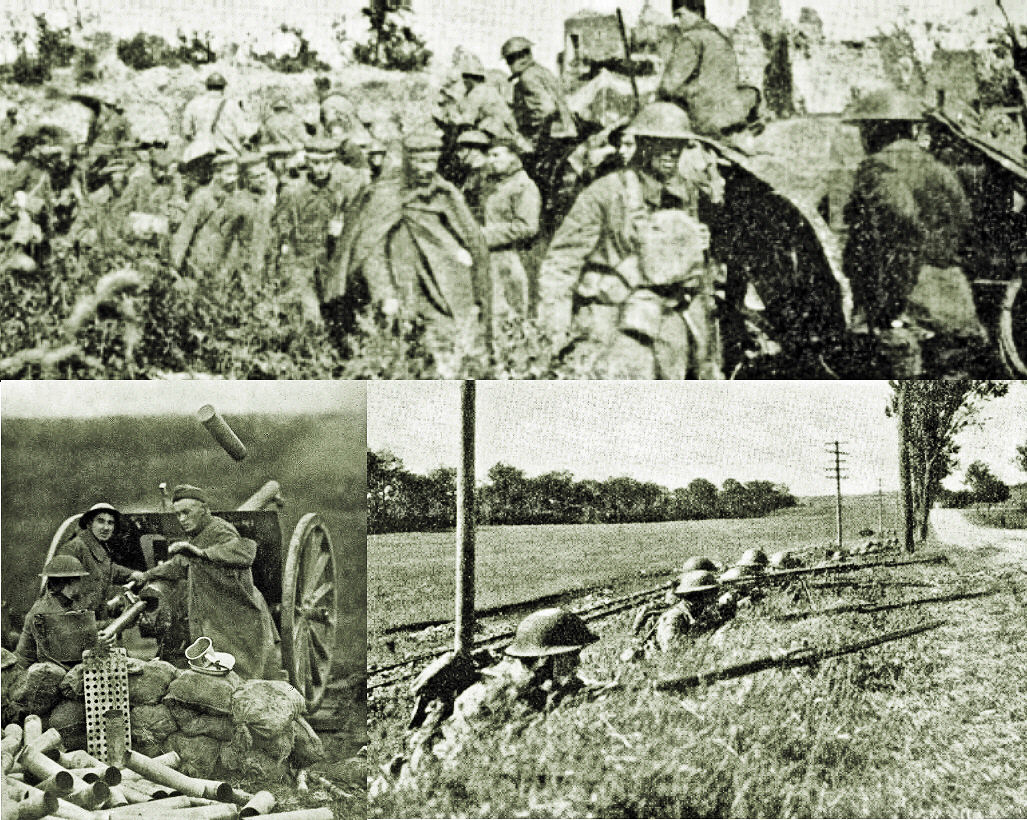
    Top: German Prisoners and U.S. Supply Train Crossing Paths; Bottom; American Gunners Firing French 75 Against Mont Sec; 42nd Division Troops During Advance


    Sources: MacArthur Memorial, ABMC, Doughboy Center Website

    Wednesday, September 11, 2013

    Russian Expeditionary Force in France


    Click on Image to Expand

    Russian Expeditionary Force Memorial, 8th Arrondissement, Paris


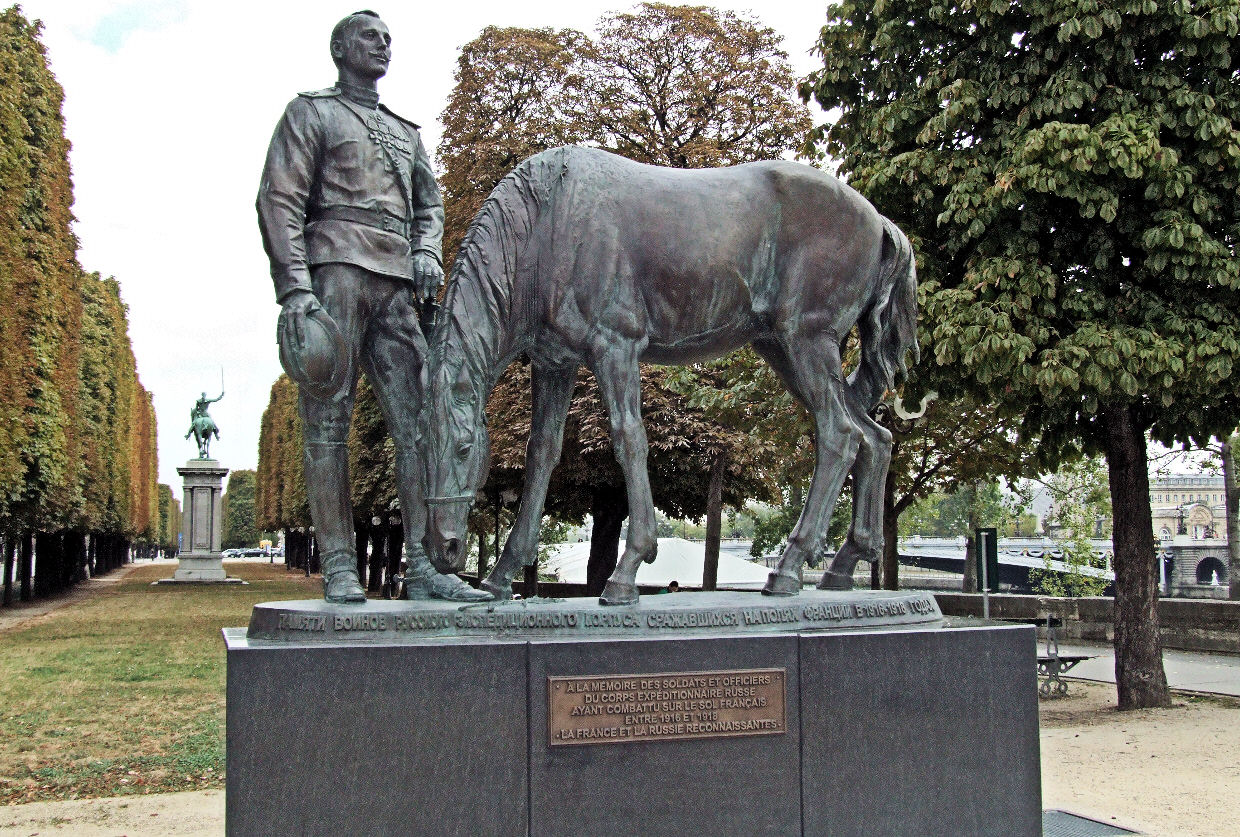
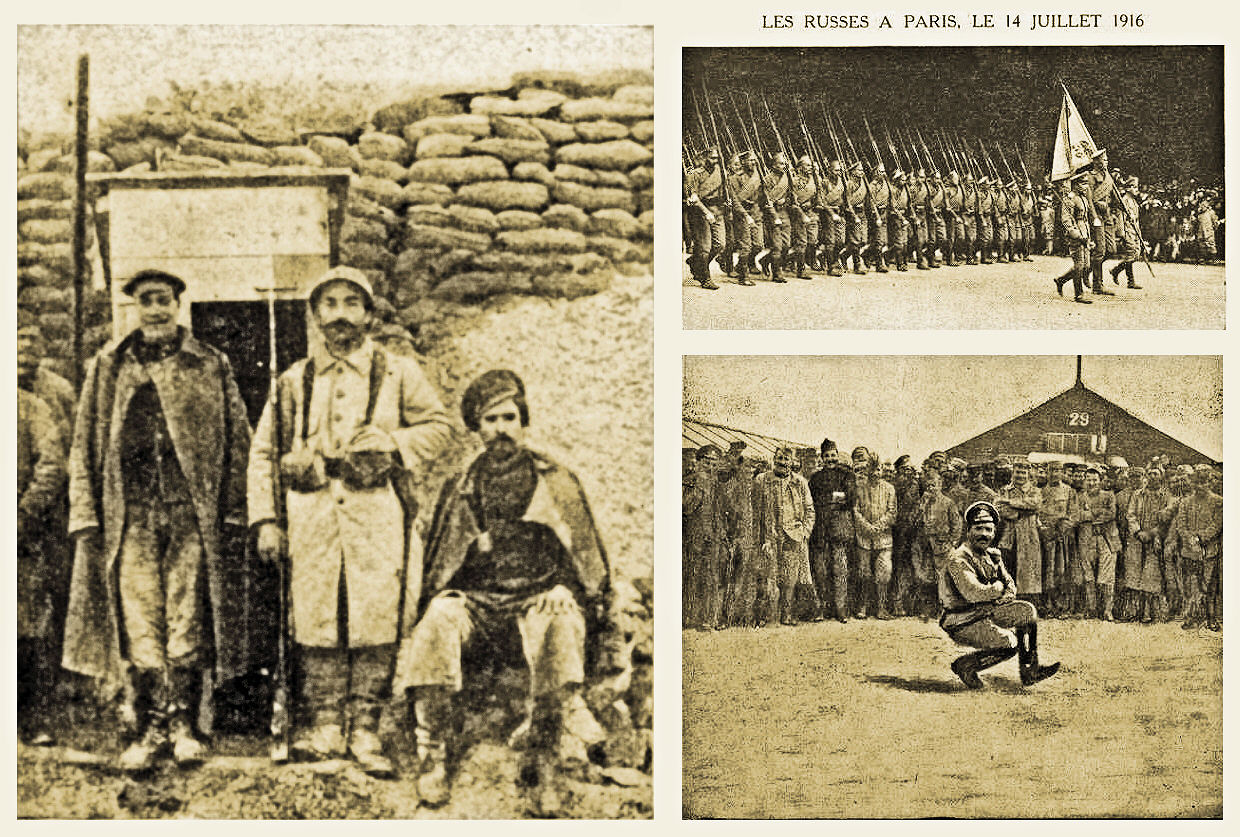
    Why is there a Russian World War I monument (pictured above) near the banks of the River Seine in Paris? One of the unknown epic and tragic stories of the Great War is that of the Russian Expeditionary Force (REF) which fought on the Western Front under French command. In something of a Faustian bargain engineered by French diplomats an politicians, Tsar Nicholas was convinced to send two brigades of troops to France plus two more to the Salonika Front in return for shells and guns that the halting Russian economy was unable to produce on its own. The troops were greeted with adulation upon their arrival in France, then progressively abused, radicalized, exiled from the battlefield, turned against one another to suppress mutineers, broken up, partly repatriated, partly send back into combat, partly stuck in France permanently, and partly vanished. It is a remarkable story.

    As it turns out, the Russian troops in France were all deployed to the Champagne. They manned besieged Fort Pompelle near Reims and participated in the Nivelle Offensive of 1917. There are many traces of their service there that visitors can find. The most interesting is the complex in the bottom photo between Mourmelon-le-Grand and St. Hilaire-le-Grand, just south of their main quarters at Camp Mailly.


    Click on Image to Expand

    Images of the Russian Forces in France


    Click on Image to Expand

    Russian Memorial, Cemetery, and Chapel in the Champagne


    We featured the Russian Expeditionary Force in the January 2010 issue of our subscription magazine, OVER THE TOP. All of our 80-plus past issues are available for downloading, as well as annual compilations on CDs, and, of course, a 2013 subscription can be purchased.

    All of our products can now be purchased through PayPal.
    (downloadable flyer)


    Tuesday, September 10, 2013

    Hell’s Observer: The Epic Wartime Journal of Private William J. Graham
    Reviewed by Jolie Velasquez


    Hell’s Observer: The Epic Wartime Journal of Private William J. Graham, American Expeditionary Forces

    Transcribed and Edited by C. Stephen Badgley
    Published by the Badgley Publishing Company, 2012 

    This book is a rare gem: the daily journal of a serving American soldier who faced danger and saw the results of total warfare.  Journals were prohibited by the military, and all letters were censored during the war, so this “real time” account’s existence as well as its survival until discovered by the editor in 2001, make it a unique opportunity to learn what the AEF soldier saw every day on the Western Front.  We are used to memoirs written after the fact, sometimes by years, when recall has been altered by time.  This document lets the reader know in detail what daily wartime experience was for the soldiers of the AEF.


    Order Now
    It should be noted that Private Graham did not see battle on the front lines as an ordinary soldier. At 39 he was older than most other privates, and his maturity lent itself to a position with more latitude for decision making. He was part of a mobile (as in mounted) unit that served several functions for the infantry: reconnaissance, messaging, and traffic control. And the latter task was particularly crucial for the AEF as the war in the last months of conflict was not trench-based but highly fluid as American units were pushing forward on complex routes to capture areas long held by well-fortified Germans. Movement of men, artillery, animals, trucks, supplies, and casualties along unmapped or poorly mapped roads was a dangerous and vital service. Graham often came under shelling or gunfire as he rode over ground quickly changing hands, and he saved many lives by redirecting lost soldiers wandering leaderless into waiting machine gun placements. At one point he got lost himself behind enemy lines.

    Graham also experienced the same privations and organizational nonsense that all soldiers find in war. Supplies, especially food, was often bad or missing altogether for long periods, and the collusion between NCOs and  suppliers  to pamper the officer class comes in for a lot of deserved grousing. 

    The tone of Graham’s writing may be a little hard for the modern reader to appreciate. While his empathy for the participants, even the Germans, was clear, and his horror at the devastation and death was heartfelt, his expressions of patriotism and enthusiasm are so very different from the war-weariness of most war writers. Paul Johnson, conservative British historian, argues that America’s greatest contribution to the war effort was the soldiers’ unflagging optimism. Graham displays this characteristic time and again, despite every trial or setback. The “gung-ho” alacrity seen in so many American war movies was actually quite genuine among many of those serving, and Graham certainly felt it.  

    A unique feature of this book is the format, a large folio style with large typeface. And most of the illustrations are of never-before-seen photos from a private collection. It is a serious subject, but easy to read, and the pictures will be a great help for any novice WWI students to see images that Graham may have seen. The one suggestion I have for future editions of Hell's Observer is that the reproduction of the photos should be sharper to allow the reader to see the details sometimes referred to in the captions.

    Jolie Velazquez 


    Monday, September 9, 2013

    Remembering a Veteran:
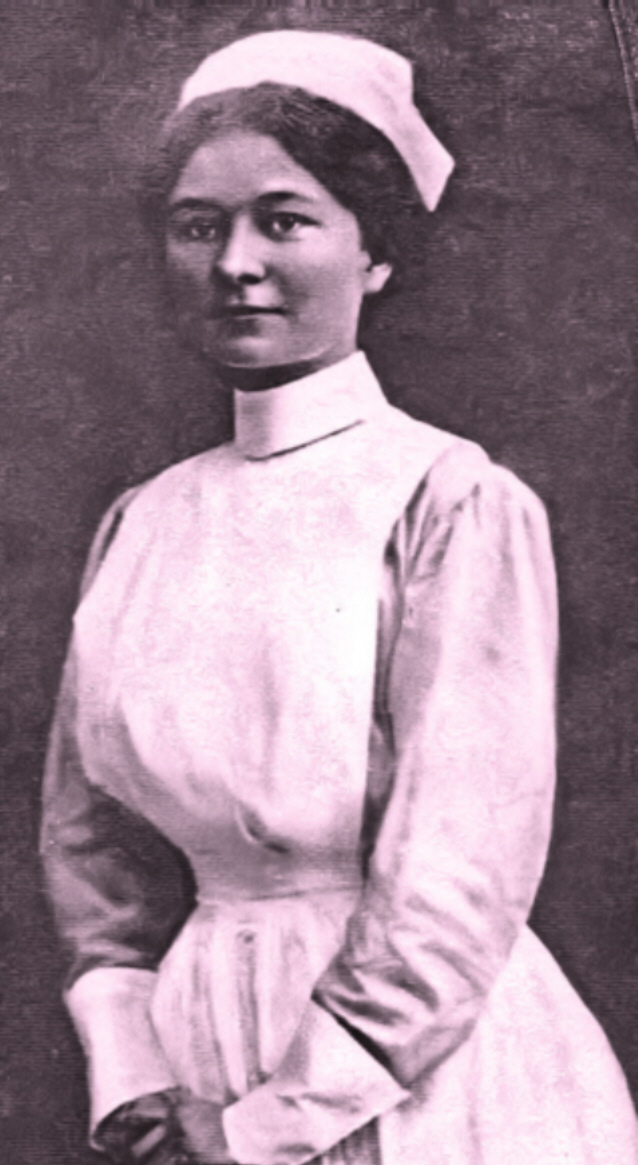
    Nurse Helen Fairchild, U.S. Army, Base Hospital 10

    Nurse Helen Fairchild


    Click on Image to Expand


    In January 1918 a family in Allenwood, Pennsylvania, received this letter:
    January 24, 1918
    WAR DEPARTMENT
    OFFICE OF THE SURGEON GENERAL

    My dear Mr. Fairchild:

    It is with much regret that I have to announce to you the death of your daughter, Miss Helen Fairchild, on January 18, 1918 of yellow atrophy of the liver, while on duty with Base Hospital No. 10, American Expeditionary Forces, France.


    With much sympathy to you in your bereavement, believe me, 

    Yours very sincerely, Dora E. Thompson, Superintendent, Army Nurse Corps.

    An ensuing letter from Dr. Krumbhaar, chief pathologist at Base Hospital, gave more details on Helen's death:

    Helen had spent from June 22 to August 18, 1917, near the front three miles northeast of Poperinghe, at the onset of the Third Battle of Ypres-Passchendaele. She was a surgical nurse with a team from Base Hospital 10, at the request of the British. On August 18 her casualty clearing station was shut down "due to lack of personnel," following the bombing by the Germans. 

    She was removed back to Base 10 by ambulance, accompanied by Dr. Richard Hart, for whom she was surgical nurse. She developed tonsillitis and jaundice, and her health began to fail, but she would not let Nursing Director, Miss Dunlop, inform her mother. After exploratory surgery for suspected ulcers, Helen died three days later [18 January] of "acute yellow atrophy of the liver," from the chloroform anesthesia, according to the autopsy report. There is chlorine in chloroform, chlorine in Mustard gas, and chlorine in the solution surgical nurses and doctors used to cleanse wounds.

    It has always been my belief that this small woman, 5' 2", 125 pounds, was overcome by this combination, especially since "more Mustard gas was used that night than ever before or after."


    Click on Image to Expand

    Helen's Burial Service, Treport, France


    Helen Fairchild was born in Milton, Pennsylvania, on 21 November 1884. Her brother was a doctor and that may have influenced her decision to become a nurse. She graduated as a nurse from Pennsylvania Hospital in 1913 and joined the Reserve Army Nurse Corps in 1916. After arriving at Base Hospital 10 in Treport, she was sent to Casualty Clearing Station No. 4 at Passchendaele on 22 July 1917. Exposed to mustard gas during November 1917, Fairchild began suffering from severe abdominal pains leading to her hospitalization and death described above. Her death led to a great outpouring of sympathy. Many of her fellow nurses, doctors, and soldiers of Base Hospital 10 attended the funeral on 19 January. It was described in the hospital's war history:

    A gloom and sadness was felt throughout the camp, she being the first nurse who had died at the hospital. She was given a military funeral, a most solemn and impressive ceremony. Representatives from all the military organizations in the area and all nurses who could be spared were present, and floral emblems were sent by all the organizations in the Hospital area. The English nurses from Canadian Stationary Hospital No. 3, where Miss Fairchild was cared for, lined the grave with evergreens. The service was conducted by Chaplain Jeffereys, and after all military honors, the “Last Post” was sounded by Sergeant Jack P. Cooper.


    Click on Image to Expand


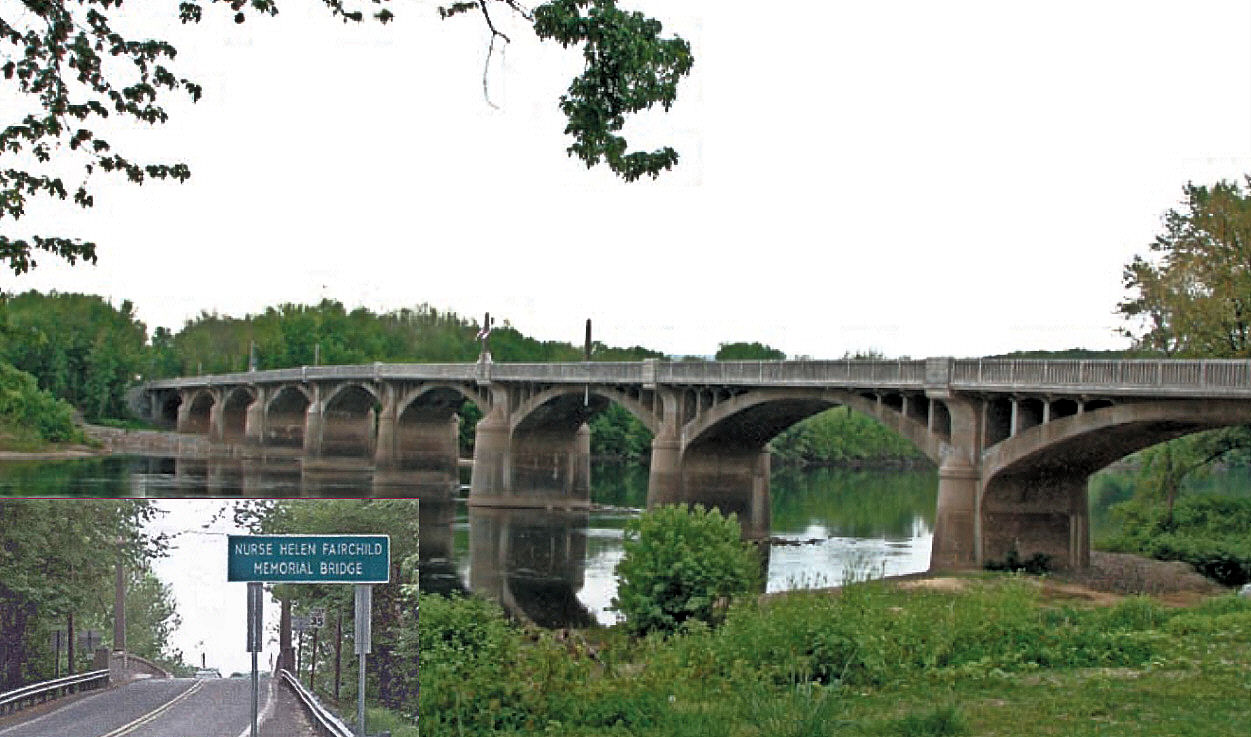
    Helen Fairchild Bridge, Susquehanna River, Watsontown, Pennsylvania


    Helen's service and sacrifice in the war has never been forgotten, in good part due to her niece and biographer Nelle Rote. The Nurses' Post of the American Legion in Philadelphia was named the Helen Fairchild Nurses' Post #412 in her honor and the Watsontown-Deer Valley bridge over the west branch of the Susquehanna River near her home town was renamed the Nurse Helen Fairchild Memorial Bridge in 2005.

    Click on Image to Expand


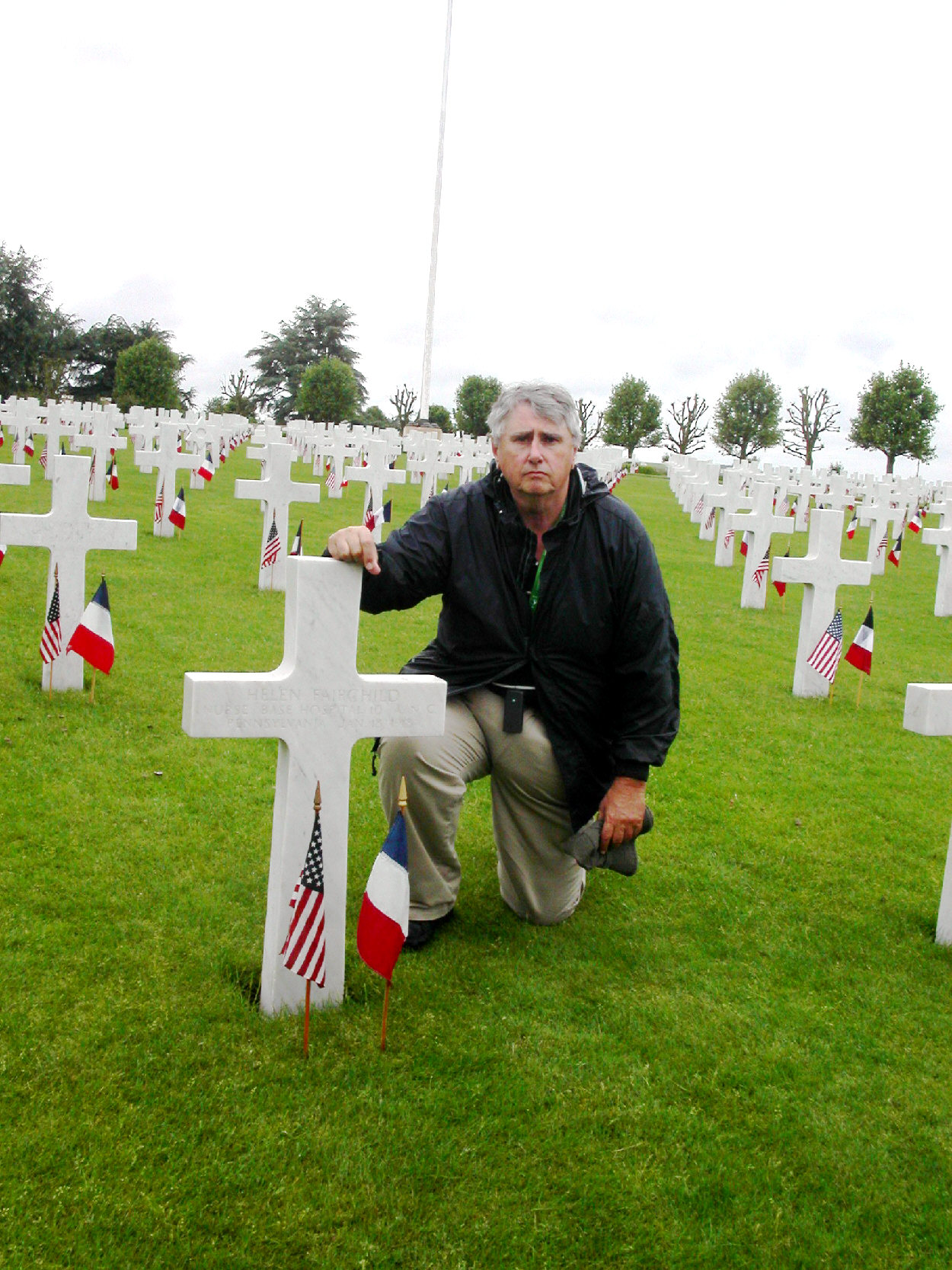
    Editor Mike Hanlon at Helen's Grave, U.S. Somme Cemetery, Bony, France


    Nelle Rote's biography Nurse Helen Fairchild is out of print but can be found in secondary outlets. Lisa Budreau, however, has published a comprehensive work on the U.S. Army Nurse Corps in the Great War that we recommend.

    Order Now

    Sunday, September 8, 2013

    99 Years Ago: Quotes from September 1914


    September 1914

    Click on Image to Expand

    A drawing of early trench warfare during the September 1914 post-Marne fighting along the Aisne. It was during this battle that systematic trench warfare began on the Western Front.

    Citizens of Paris: The members of the Republican Government have left Paris. . . I have been empowered to defend Paris against the invader.  This task I shall carry out to the end.
    General Joseph Gallieni, Military Governor of Paris, 3 September 1914

    Thorny wilderness strangles the town.
    From the bloodstained steps the moon
    Harries the frightened women.
    Wild wolves have broken through the gate.
    Austrian Medic Georg Trakl (Suicide November 1914), September 1914

    We are about to engage in a battle on which the fate of our country depends...the moment has passed for looking at the rear...Troops that can advance no farther must, at any price, hold the ground they have conquered and die on the spot rather than give way.
    General Joseph Joffre, Order of the Day, 5 September  1914

    This day is the decisive one.  One whole army, stretching from Paris to upper Alsace, has been fighting in a battle since yesterday.  If I had to give my life today to gain victory, I would relinquish it with rapture, as thousands of our comrades in arms have already done.
    General Helmuth von Moltke, 7 September 1914

    The terrible difficulty of our situation often stands like a black wall in front of me, seeming quite impenetrable.
    General Helmuth von Moltke, 8 September 1914

    My center is giving way, my right is retreating, situation excellent, I am attacking.
    Ferdinand Foch, 9th Army Commander,  8 September 1914

    I don't know who won the Battle of the Marne, but if it had been lost, I know who would have lost it.
    Marshal Joseph Joffre, After the War

    We have lost the war.  It will go on for a long time, but it is already lost.
    Crown Prince Wilhelm After the Marne


    Their infantry are holding strong lines of trenches among and along the edge of the numerous woods, which crown the slopes. These trenches are elaborately constructed and cleverly concealed. In many places there are wire entanglements and length of rabbit fencing.
    Col. (later Maj-General) Edward D. Swinton, DSO, During the Battle of the Aisne,  18 September 1914

    We have been living in a sheltered valley for generations. We have been too  comfortable, too indulgent, many perhaps too selfish. And the stern hand of fate has scoured ust to an elevation where we can see the great everlasting things that matter for a nation; the great peaks of honor we had forgotten — duty and patriotism, clad in glittering white, the great pinnacle of sacrifice pointing like a rugged finger to heaven.
    David Lloyd George, 19 September 1914

    They shall not grow old, as we that are left to grow old:
    Age shall not weary them, nor the years condemn.
    At the going down of the sun and in the morning,
    We will remember them.
    "For the Fallen," Laurence Binyon, First Published 21 September 1914


    If we did not have the Navy, we would have had two more army corps and would not have lost the Marne battle.
    German War Minister von Falkenhayn to Admiral Tirpitz, September 1914

    Saturday, September 7, 2013

    Full-Color Aviation Images
    from the Collection of Tony Langley

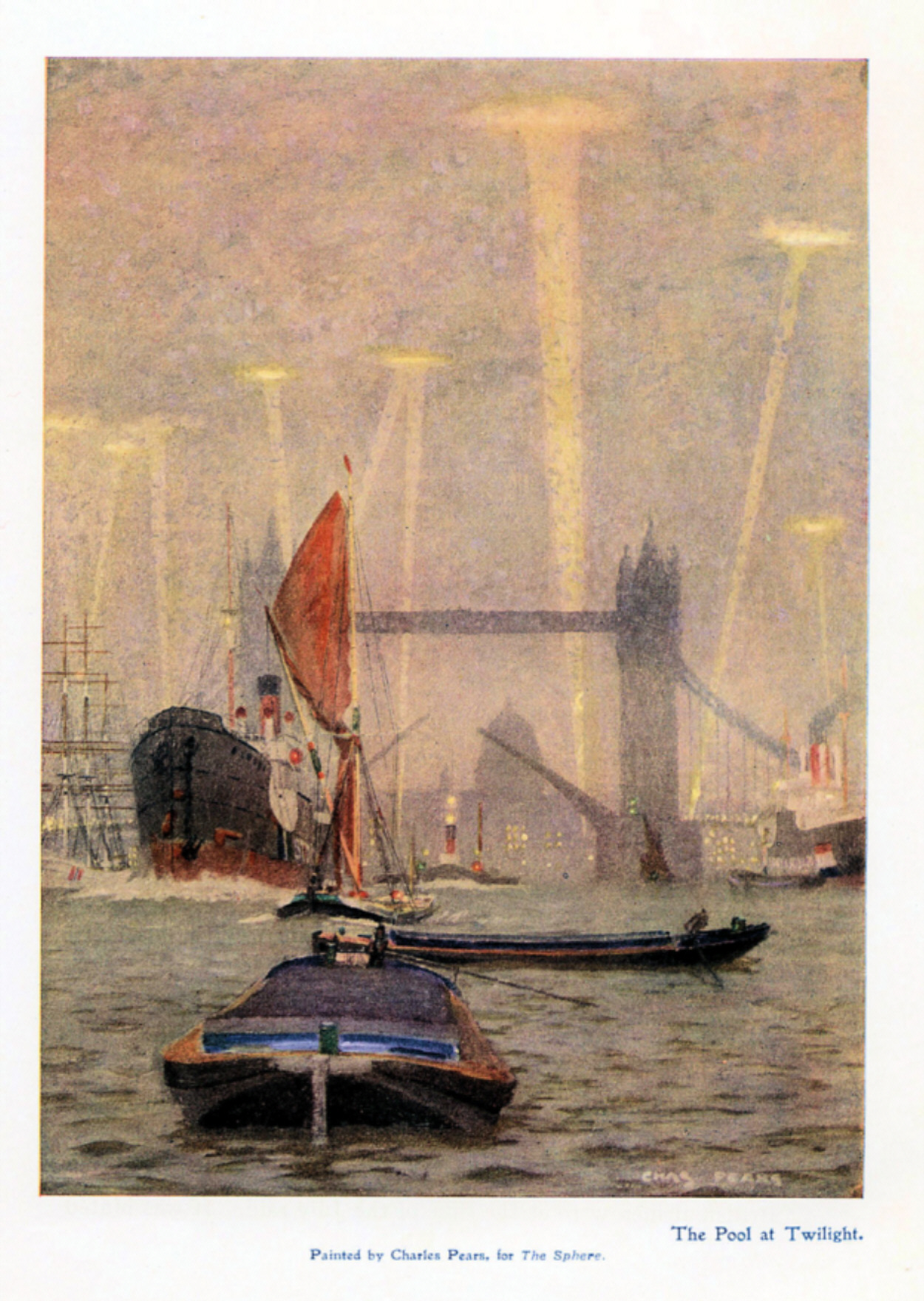
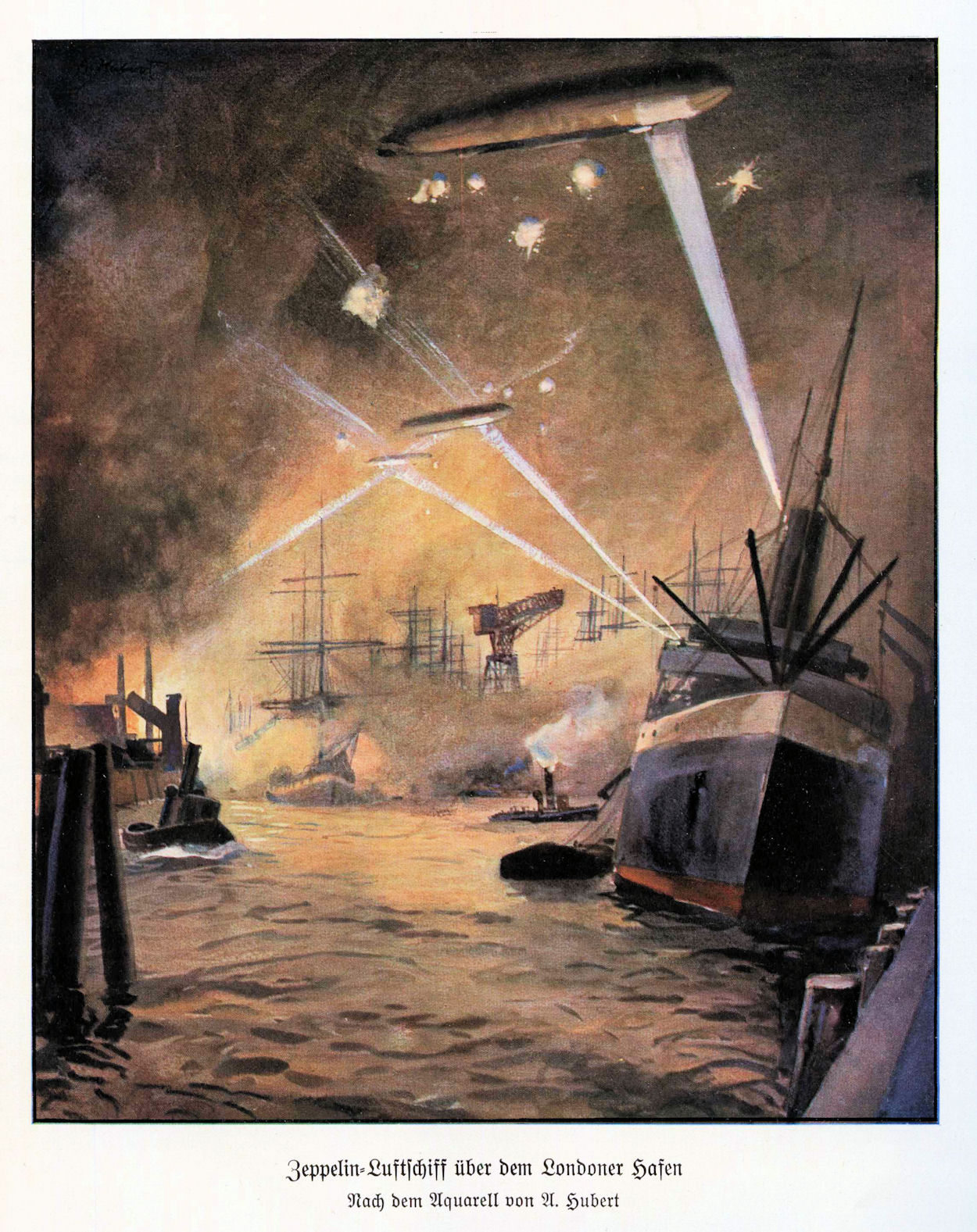
    Regular Roads contributor Tony Langley's vast collection of World War I photos and illustrations from wartime includes some terrific full-color aviation images. Here are four of my favorites.

    Click on Image to Expand

    A British view of a Zeppelin attack over the River Thames, London


    Click on Image to Expand


    A German version of a Zeppelin attack over the Thames
    .
    Click on Image to Expand


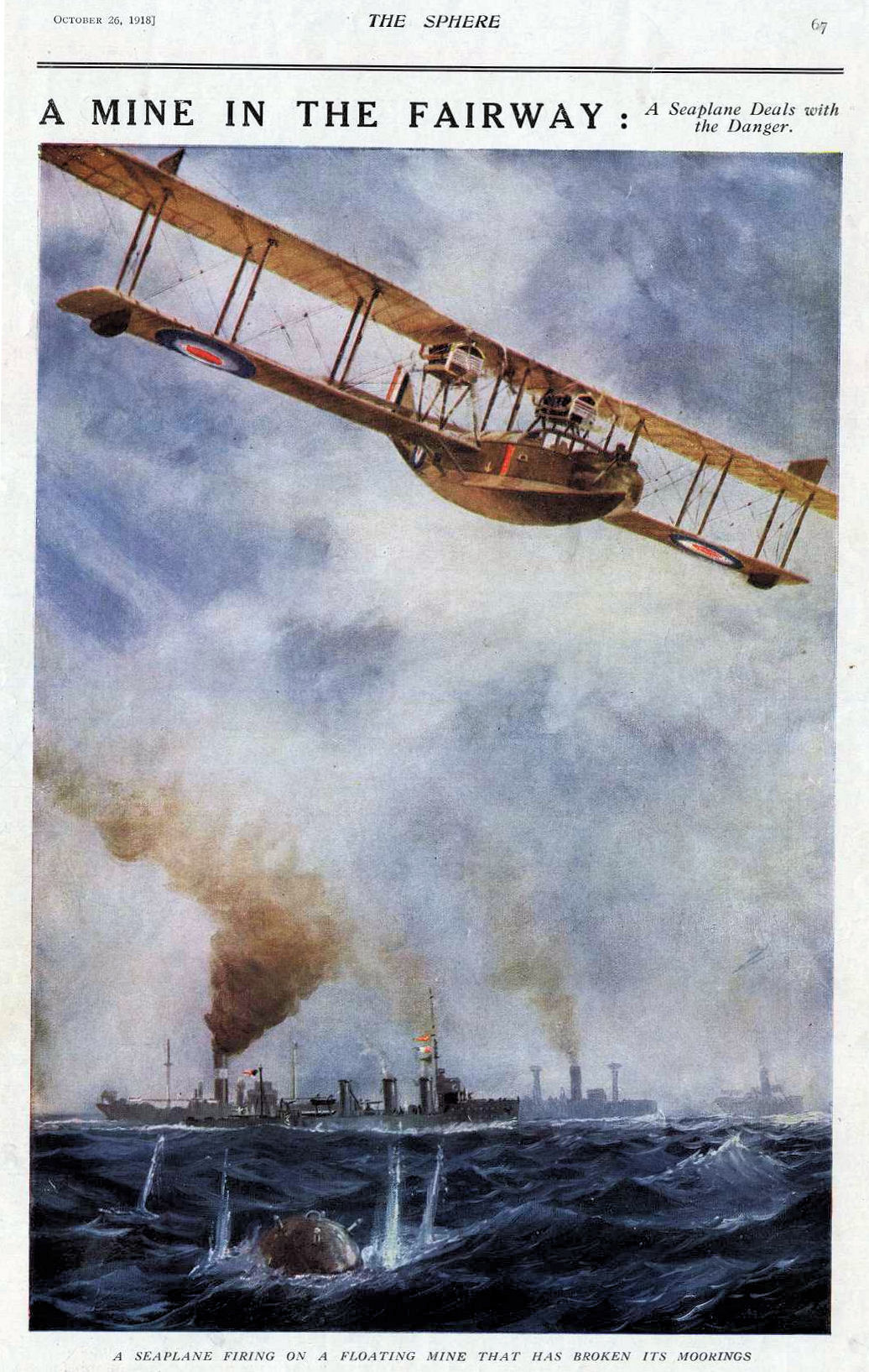
    A seaplane attempting to destroy a mine threatening an Atlantic convoy

    Click on Image to Expand


    A German aviator "buys the farm."


    Friday, September 6, 2013

    The Great War's Most Memorable Religious Event
    The Apparitions at Fatima


    Click on Image to Expand

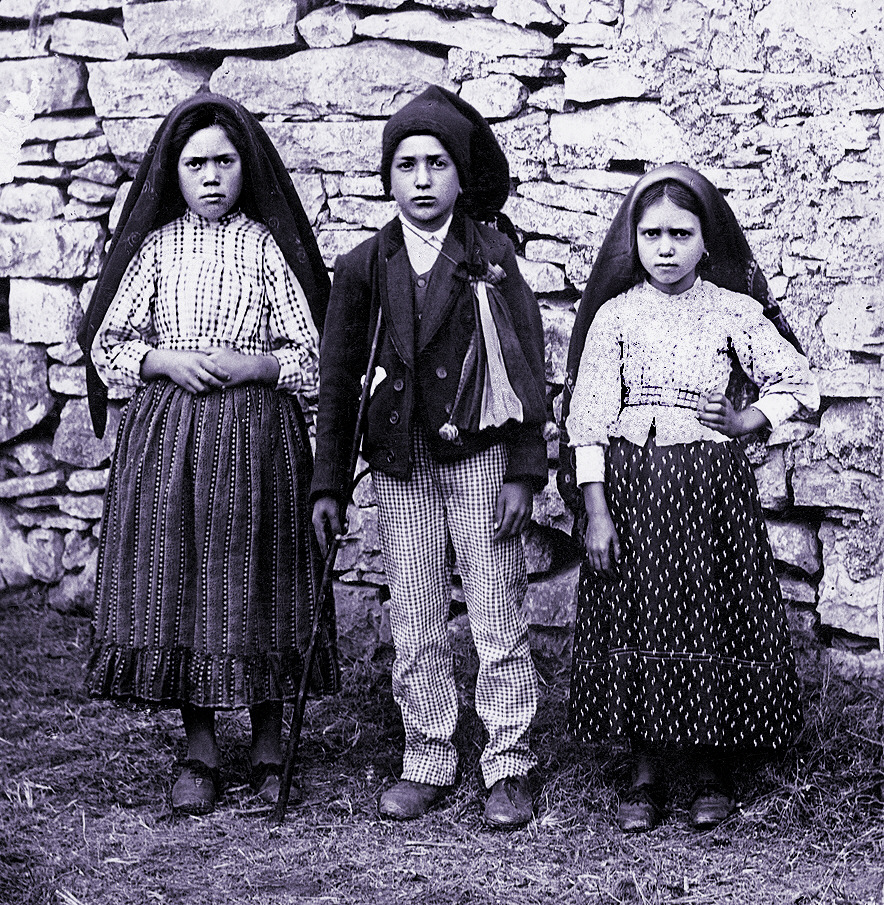
    Lucia dos Santos, Cousins Francisco and Jacinta Martos


    The three intense-looking children in the photo above were the central figures in the most memorable religious event of the Great War, their reported visions of the Virgin Mary near Fatima, Portugal, in 1917. They became well-known international figures at the time, but—if their moment had come in the age of 24-hour nonstop personality-oriented news coverage—they might have been the biggest celebrities in history. Yes, even bigger than the Kardashians or Oprah.

    It's hard to put all of the cavalcade of events together coherently, but here are some of the key elements. Serving as shepherds, the three children started having visions of an angel identifying himself as the Guardian Angel of Portugal, in 1916. They agreed to keep these visits secret. The following spring, the Virgin Mary appeared and spoke to them. She promised to return on the 13th of the five subsequent months. One of the children, Jacinta, could not bear to keep the secret further and told her parents, who told their neighbors, and, soon, all Portugal was in an uproar—the public somehow interpreting things as a miraculous call for world peace.

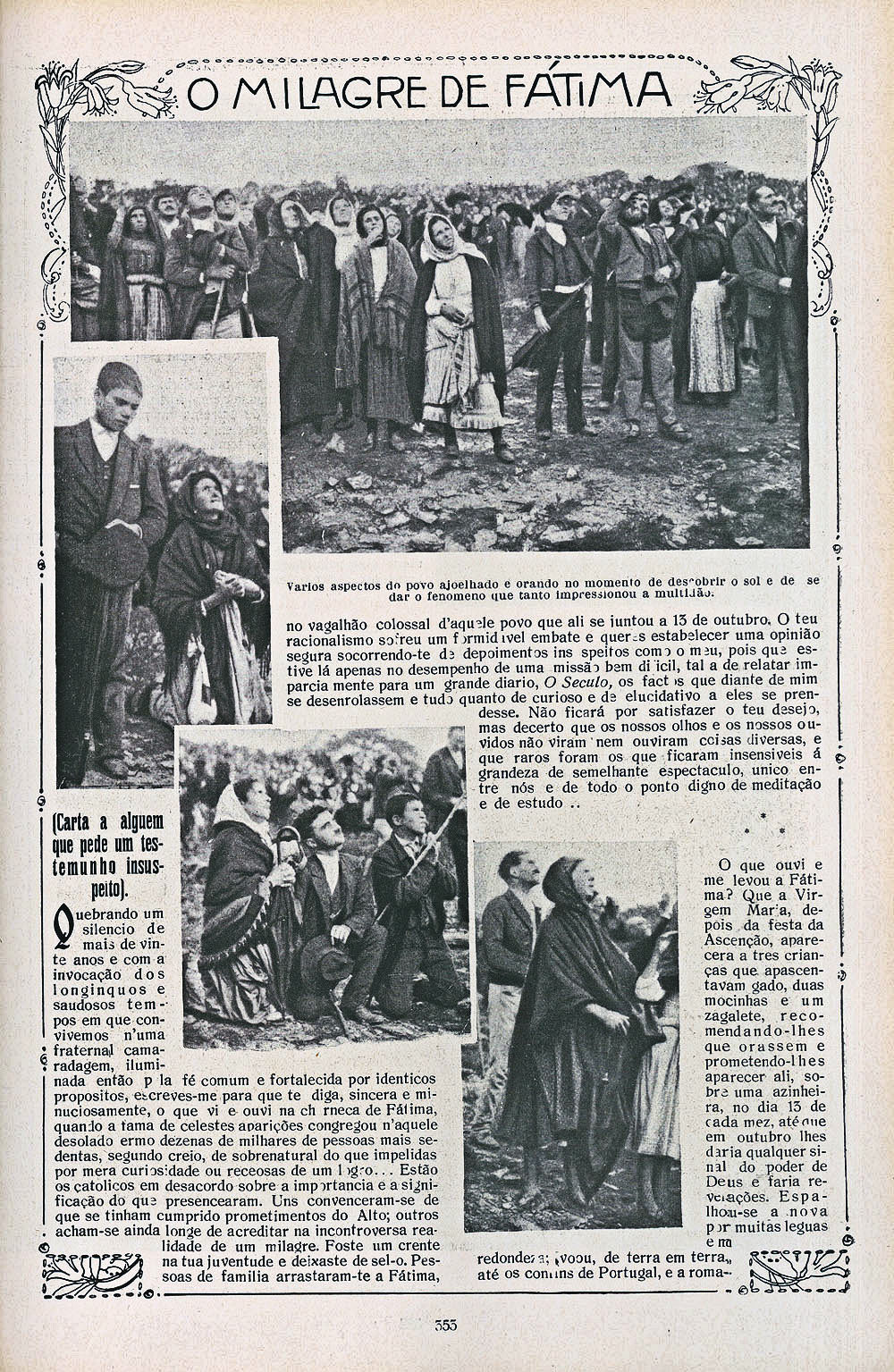
    That was just the start. Then, things really snowballed. Crowds started showing up at the monthly events. The children received revelations from the Virgin on a coming second great war, the spread of communism, that two of them would die young, and a final mysterious secret that ended up suppressed for 70 years. Most commentators, both religious and secular, believe the central theme of the revelations was a strong anti-communism. In August, alarmed Portuguese officials—recall at the time Portugal was a combatant in the war and had a highly anti-clerical government—arrested the children, then released them after a public outcry. The crowds at the monthly visit grew to 70,000 when it was reported that the Virgin had promised a "visible" sign. Below is a news report of what happened that day: The Miracle of the Dancing Sun. (Again, try to imagine if this were to transpire in today's berserk mega-media age.)

    Click on Image to Expand


    Whether it was mass hysteria, a news media conspiracy, or something miraculous, I don't know, but, clearly, it was reported as a miracle. Yet, peace did not come. Notably for Portugal, its small expeditionary force to the Western Front was nearly annihilated in the April 1918 Ludendorff Offensive. After the war, a cult among Catholics grew out of "Our Lady of Fatima" that exists to this day, although it diminished considerably over the 20th century — EXCEPT for speculation about that last remaining revelation. It was supposed to be made public in 1960, but continued to be suppressed by the Church. But then, on 13 May 1991, Pope John Paul II made his second visit to Fatima, drawing the huge crowds he always attracted. While there, he did something curious and, at the time, inexplicable: He took the bullet with which he had been shot 10 years before and placed it in the crown of the statue of Mary at the site of the original apparitions.

    It wasn't till 2000, when Francisco and Jacinta were finally beatified, that the Vatican offered an explanation — and, along the way, revealed the text of the final secret of Fatima, locked in the Vatican archives since 1957. The hidden part of the vision of July 1917 predicted the persecution of the Church and the shooting of a pope. John Paul II had come to the conclusion that the prophecy was fulfilled by the murder attempt of 13 May 1981, when the Turkish assassin Mehmet Ali Agca shot him in St. Peter's Square. My research on the Internet indicates there is still considerable discussion within the Catholic Church as to whether Church members are obliged to believe that the apparitions took place, or to believe the revelations, so I will leave that discussion to others.

    One last point, though: what happened to the children? As prophesied, Francisco and Jacinta died young from the Spanish Flu. However, their cousin Lucia lived on as a cloistered nun until 2005. She was, reportedly, joyful over the fall of Communism and was able to visit several times with Pope John Paul II. Portugal declared a national day of mourning upon her death, and the Church initiated beatification proceedings.

    Sources:  Images from Wikipedia; CatholicEducation.org

    Thursday, September 5, 2013

    5 September 1914 — The Battle of the Marne Begins a Day Early at Villeroy

    Opening Moves of the Battle of the Marne
    (Western Section Only)


    The Kaiser’s forces had spent the first month in the west apparently successfully executing the Schlieffen Plan to perfection, but French commander Joffre had spotted the weaknesses of the overly ambitious strategy and had prepared a counter stroke. Von Moltke, the German commander, meanwhile had belatedly discerned that his original scheme of sweeping around to the west of Paris was unachievable and issued new orders emphasizing a renewed assault on the Marne River line to the east of Paris. The Battle of the Marne—this is still not fully understood today—was actually two simultaneous offensives, both scheduled to be initiated the same day, 6 September 1914. Fate, however, decided it would begin a day earlier, at a tiny village named Villeroy, a claimant for the title of the locale where Brie cheese was first created, but without any military importance up to 1914. Villeroy was where the surprise element for both armies was ruined and where the revised German strategy would begin unraveling.


    Click on Image to Expand

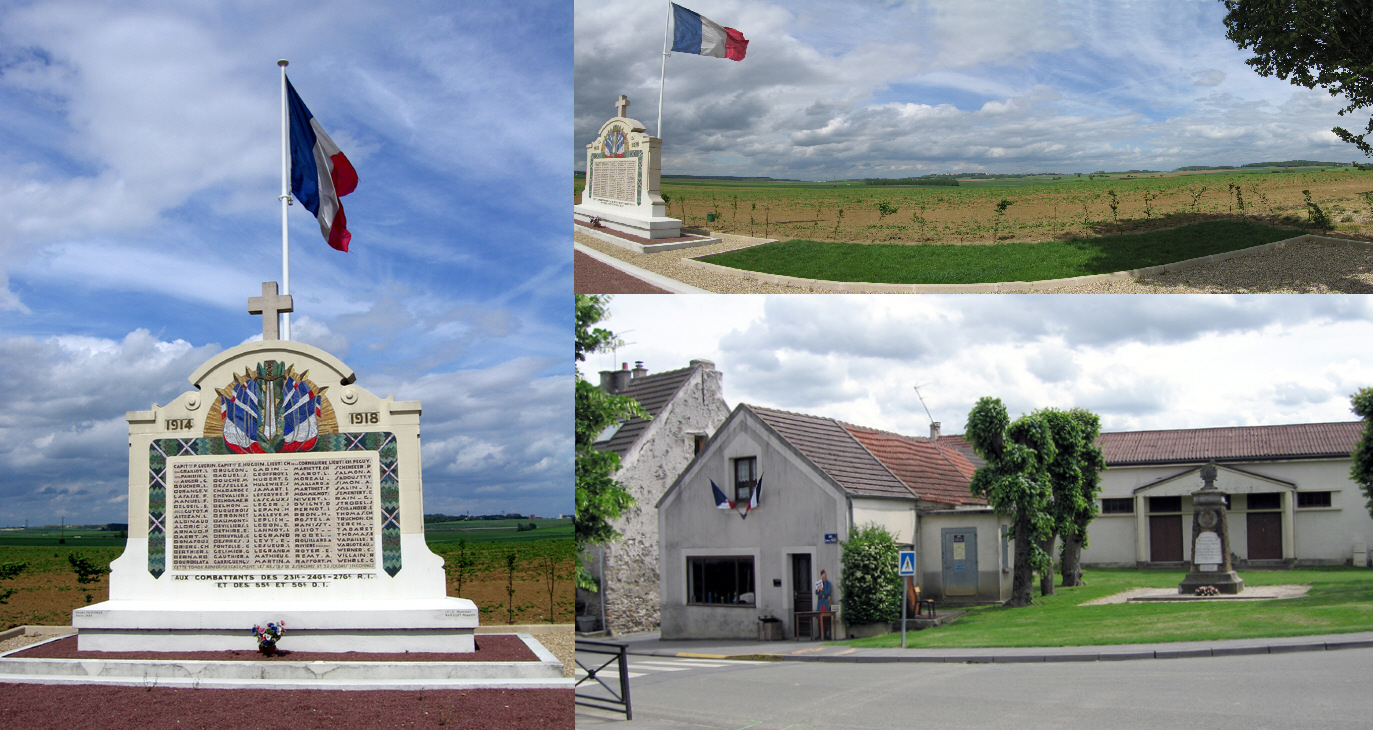
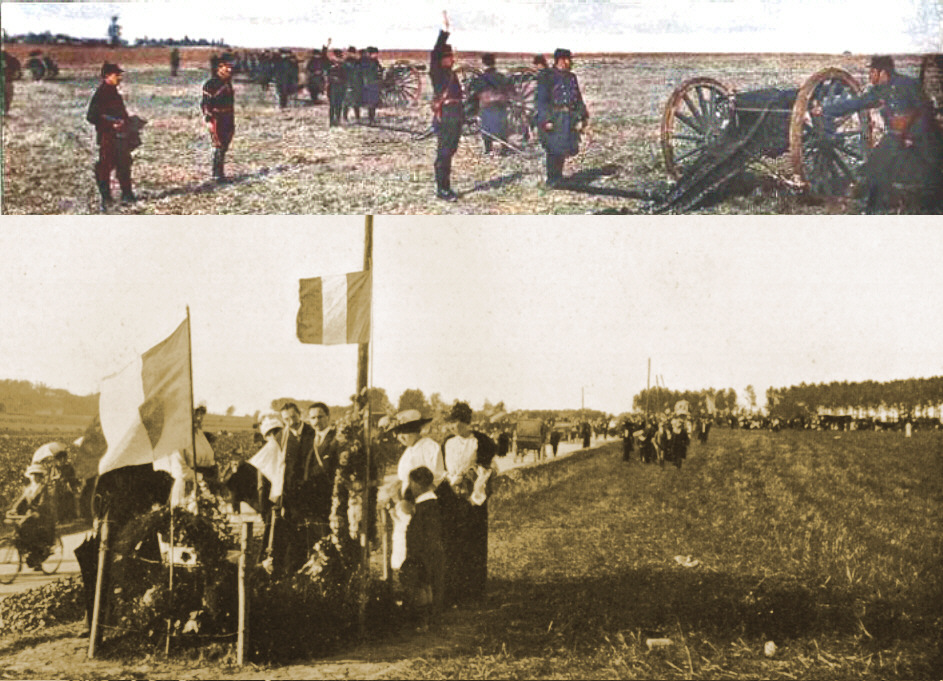
    Villeroy Today: La Grande Tombe at Villeroy Is the Burial Site for the 133 French Soldiers Who Fell Nearby in the Opening Action; the Field Behind the Memorial Is Where the Fighting Occurred; the Village Has an Excellent Small Battlefield Museum Located Next to Its Own War Memorial


    During the mutual redeployment of forces, as Joffre and Paris commander Gallieni anticipated, the swinging left flank of the German advance became exposed as it passed Paris. Two new French armies (the 6th, northeast of Paris, and the 9th, under Foch in the Champagne) were created to attack the tired Germans. On the afternoon of 5 September, a reserve corps of the German First Army was lingering behind the lines just where units of the new French Six Army started to deploy around Villeroy. The Germans began shelling them and the battle was joined on the fields in front of Villeroy shown above. Casualties were taken by the advancing French, but their sacrifice, and the threat they signaled, led to First Army commander von Kluck not only reinforcing his flank, but counterattacking in a direction away from the main thrust of the German advance. In drawing the Germans westward again, however, the action contributed to the famous gap that subsequently opened (see map above), through which the British Expeditionary Force (thought at the time to be "off the board") would come charging later in the week.


    Click on Image to Expand

    French 75s Deployed Just North of the Village During the Action; An Early Commemorative Event on the Future Site of the Grande Tombe


    The national centennial reenactment of the Battle of the Marne is to take place in Villeroy in 2014. Yet, most history books ignore the action at Villeroy, most stating categorically that the Battle of the Marne began on 6 September 1914. This has been the case for some time. Contributor Tony Langley sent me this contemporary newspaper account of the battle, which provides a succinct summary of what was unfolding in 1914  except it leaves out that initial action at Villeroy and its influence on the overall battle.

    There was really no mystery about it. The one object of the enemy was the destruction of the Allied armies, and Von Kluck, on the right of the enemy's advance, was closing to his own left to co-operate with Von Bulow in the advance across the Marne. In order to have an adequate idea of the importance of the great battle that began on Sunday, September 6th, one must not confine one's view only to the movements near Paris. From the Marne, near Meaux, the German advance was an enormous wave of men, horses and guns, massed in six huge armies, and covering a front that extended along the Marne valley beyond Chalons, then eastward by the plain south of the Argonne forest. Beyond this point the German front curved round outside the advanced fortifications of Verdun and still further east the Bavarian army, based on Metz, was moving against the barrier forts south of Verdun, and attacking the heights north of Nancy. The battle line extended from near Paris to the frontier of Lorraine. The hard fighting on the Marne was thus only the western part of this tremendous conflict in which, including the combatants on both sides, more than two millions of men were set in battle array.

    Credits:  Regulars Steve Miller and Tony Langley

    Wednesday, September 4, 2013

    Beersheba and Gaza Captured in Third Battle of Gaza, October & November 1917

    In late 1917, the appointment of General Edmund Allenby as theater commander led to a re-energized British effort in Egypt and Palestine. His first major operation involved the capture of Beersheba and Gaza in what is now called the Third Battle of Gaza. The battle took place over the end of October and early November and led quickly to the Christmas-time capture of Jerusalem.

    America was now in the war and had an observer along on the campaign, military attache Lt. Col. Edward Davis. I discovered his photos of the battles in the U.S. Army digital archives. They are not of the highest quality, but are interesting, and I've never seen them in other publications about the war in the Middle East. Here is a selection. Alas, they did not lend themselves to large formatting.

    Lt. Col. Davis on the Right in British Trench at Gaza


    British Desert Corps and Division HQ; Beersheba Road in Bed of Wadi Ghuzze; Camel Train Advancing on Beersheba


    Beersheba Before the Attack; Main Turkish Defensive Trench; 4th Brigade Australian Light Horse in Beersheba After Its Capture


    Damaged British Caisson and Dead Horses After the Attack on Gaza;  British Troops Entering Gaza


    Artillery Damage in Gaza Mosque Used to Store Ammunition; Captured Turkish Ambulance


    Tuesday, September 3, 2013

    Dance of the Furies: Europe and the Outbreak of World War I
    Reviewed by David F. Beer


    Dance of the Furies: Europe and the Outbreak of World War I

    By Michael S. Neiberg
    Published by The Belknap Press of Harvard University Press, 2011

    If you watched the first series of public television’s Downton Abbey, you may remember how the final episode concluded with an aristocratic garden party being interrupted when a servant brings a message on a silver tray to the lord of the manor. The message is loudly announced to all: "I regret to inform you we are at war with Germany." Guests, hosts, servants, all respond with a frozen posture of open-mouthed amazement and disbelief as the camera fades and the episode ends. This vignette of stunned surprise may well stand for the theme of Michael S. Neiberg’s lucid and engaging book on the months leading up to and following the outbreak of World War One.


    Order Now
    No shortage of books exists on why the Great War erupted in 1914. Excellent analyses are given by John Keegan, Martin Gilbert, and Hew Strachan in their impressive histories of the war, and many others have dealt with the topic as part of a survey. Jeremy Black, for instance, in The Great War and the Making of the Modern World (2011) simply labels his first, 29-page chapter "Causes." Some historians focus on specific sources of blame for the war, such as Sean McMeekin in his recent The Russian Origins of the First World War. Since 1988, James Joll’s The Origins of the First World War has been one of the most popular studies on why war came in 1914. This book, revised and updated by Gordon Martel in a third edition in 2006, now boasts a 76-page study guide produced by Cram101 Textbooks in 2009.

    Rather than delving into the various real and purported causes of the war, however, Dance of the Furies focuses on the raw unexpectedness of the outbreak of hostilities for the vast majority of the people it was to embrace. Thus the sudden gape-mouthed surprise of everybody on the lawns of Downton Abbey poignantly mirrors how the outbreak of war affected just about everyone concerned other than a small group of rulers and politicians. Even most of the soldiers of the various armies soon to be mobilized and gradually decimated were unaware that war was upon them until the last minute. In fact, Neiberg presents convincing evidence that most Europeans in July of 1914 were confident that there was not going to be a war over the events of Sarajevo, or for any other reason, no matter how much sabre rattling periodically took place here and there. People were confident that Europe was past the mentality that could allow a large-scale conflict. Surely nothing could erode the various unifying and like-minded organizations and attitudes that cemented peoples and economies in ways never before experienced in a Europe that had known no significant warfare in the memories of most living people.

    That people had been laboring under a deep illusion was rapidly proven by events which took place in July and August of 1914. That the results of these events dumbfounded, shocked, and depressed the majority of Europe’s population, rather than immediately stirring them to nationalistic fervor, is fully illustrated by the material the author presents. Neiberg also shows why stunned populations nevertheless could quickly undergo a transformation (with some exceptions) into patriotic and militaristic citizens. Such sentiments weren’t to last long, however, as the realities of war and a tragic sense of all that had been lost quickly became apparent.

    I strongly recommend Dance of the Furies to anyone who wants to read a well-written, carefully documented, and convincing account of the hopes prevalent in Europe before and at the start of the war. Neiberg’s study is unique in that it focuses on the feelings, attitudes, and moods of ordinary people of the time and shows how these sentiments were so cruelly shattered by events beyond their control. As you read this book it’s perhaps worth remembering that the Furies in ancient mythology were the Daughters of the Night, three bloody specters who primarily concerned themselves with anger and vengeance.

    David F. Beer


    David Beer, the Literary Contributing Editor for all our publications has a major article on the War Poets and his recommendations for the very best war poetry anthologies in the next issue of our subscription magazine, OVER THE TOP.

    All of our back issues with many special extra features on CDs can now be purchased through PayPal.
    (downloadable flyer)

    Monday, September 2, 2013

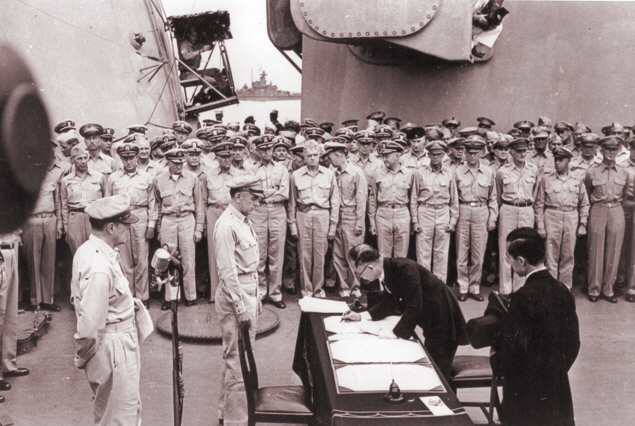
    28 June 1919, Palace of Versailles,
    7 December 1941, Pearl Harbor,
    2 September 1945, USS Missouri,
    Any Connections?

    Of course, the main connection is that the two end events were the ceremonial endings of the two greatest wars in history. But there is another interesting link between them. Among the group of senior American officers shown below on the deck of the battleship Missouri that day in 1945 is the only individual (sorry, I can't pick him out), who was also present at the signing of the Versailles Treaty twenty-six years earlier. That officer also has a strong connection to the 1941 event.

    Click on Image to Expand


    That officer is U.S. Army Brigadier General Elliot R. Thorpe (1898-1989). In the Second World War and Occupation of Japan, he was Douglas MacArthur's chief of counterintelligence. In 1919, Lt. Thorpe was an intelligence officer assigned to Paris. On the day of the treaty signing, he was attached to the security detail for the event.

    Thorpe's career had some other interesting highlights. In December 1941 he was a military attache in Dutch-controlled Java when the Dutch broke a Japanese diplomatic code. One of the intercepted messages referred to planned Japanese attacks on Hawaii, the Philippines, and Thailand. Informed of the message by a Dutch general, Thorpe immediately cabled the information to Washington. But he found that his warning was not taken seriously. A week later, the Japanese attacked Pearl Harbor.

    Later, after the campaign through the South Pacific, when he served as General MacArthur's chief of civil intelligence in postwar Japan, General Thorpe played a major role in reorganizing Japanese society. He set up a screening system to keep militarists out of the Japanese government, supervised the release of political prisoners, and helped determine which Japanese officials should be tried as war criminals. In 1969 he wrote East Wind, Rain, an account of his years as an intelligence officer. It can be purchased on Amazon HERE.


    Sunday, September 1, 2013

    The Case of the Invisible World War I Art Show

    Your editor prides himself on keeping up with the latest news regarding the First World War. Contacts from around the world send me emails every day and I travel to the battlefields every year, allowing me to catch up on things with my friends overseas. Consequently, I was shocked – I mean, really, really shocked – to discover recently that a world-class WWI art show in France came and went without my ever hearing about it.

    Here are some details I've learned. There is a satellite version of the Pompidou Centre in Paris in Metz that provided the venue. Titled simply 1917, according to the exhibit's catalog,  it addressed "the theme of artistic creation in wartime, on the scale of a single 'impossible year' when the world floundered in endless, devastating conflict." The program included a mixture of mainstream non-military works and many pieces by war artists or artists who were inspired by the war. The theme piece, shown below with other works from the show, was Pablo Picasso's "Parade", an overture curtain he designed in 1917  for a ballet. It had not been displayed in France for over twenty years. Sadly, the show opened on 26 May 2012 and closed on the subsequent 24 September. I've never heard from anyone who attended the exhibit.

    Click on Image to Expand

    Centre Pompidou-Metz, exterior and 1917 gallery with "Poilu," by Theophile Alexandre Steinlen in the forefront ; Picasso's curtain from "Parade"


    Click on Image to Expand

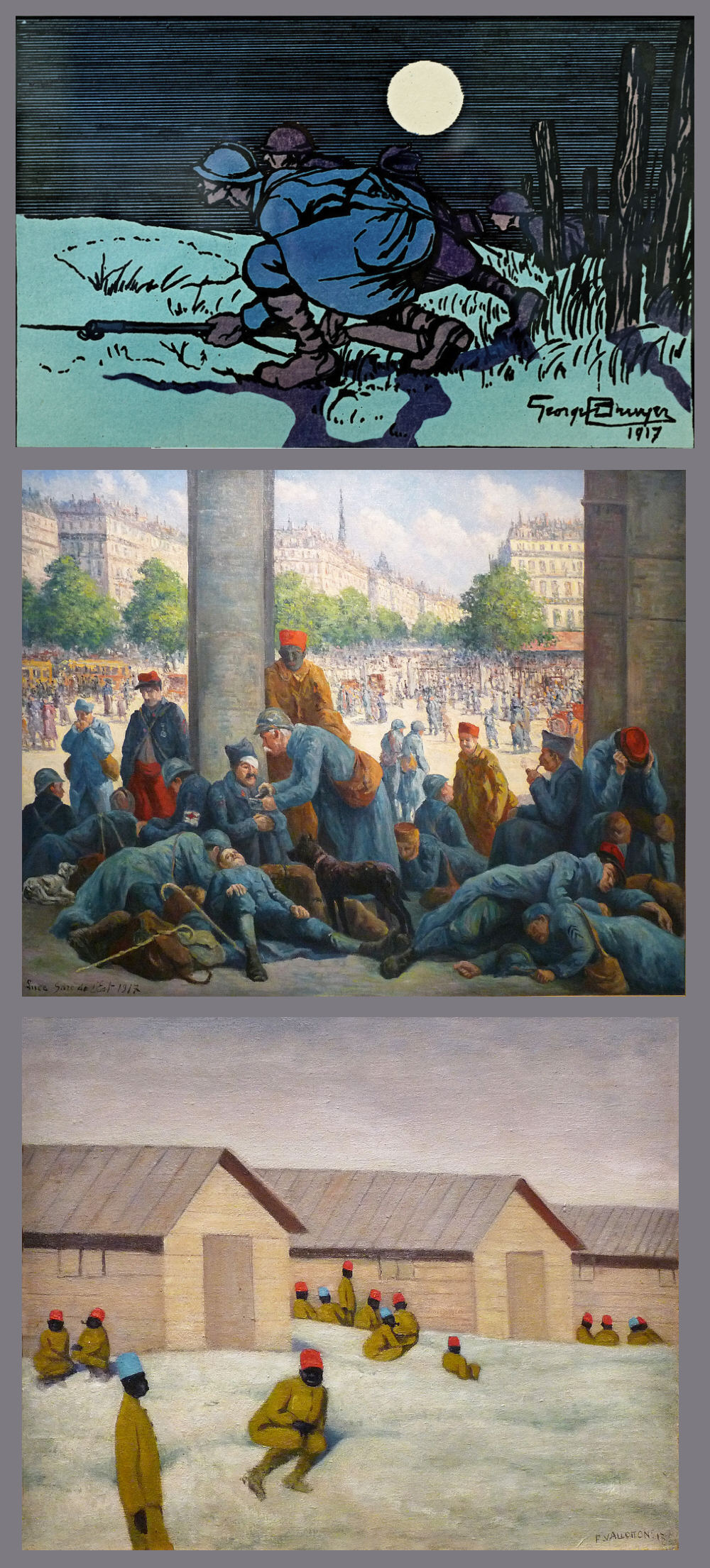
    Three works focusing on the French Army: "Estampe sur la Guerra," Georges-Leon Bruyer; "Gare de Est," by Maximilien Luce; and "Senegalais au Camp Mailly," by Felix Vallotton


    Click on Image to Expand

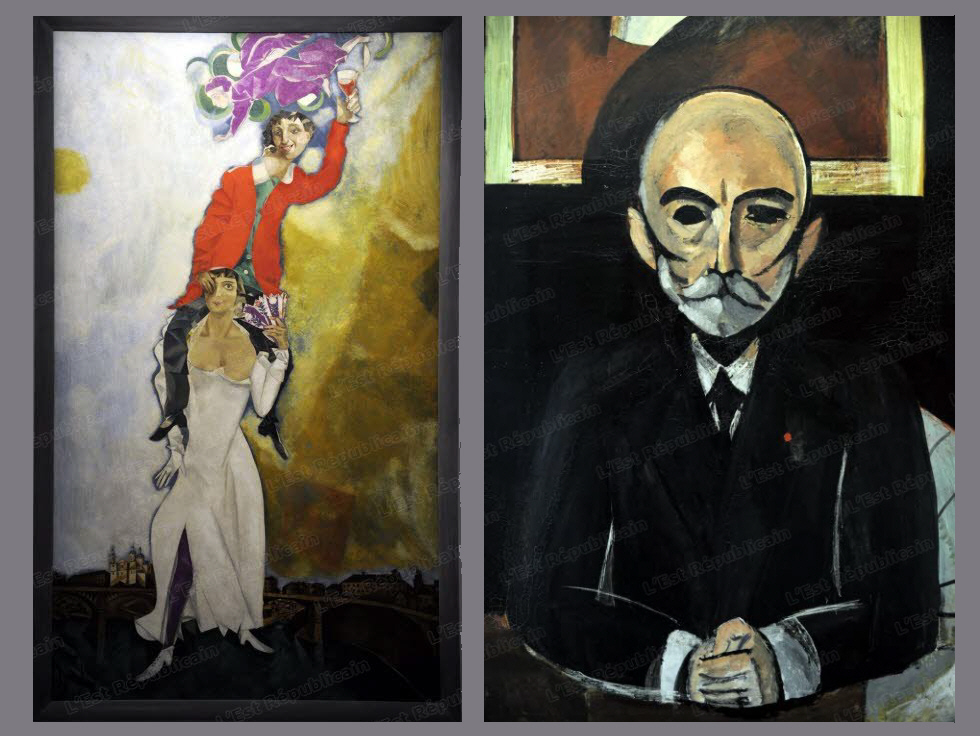
    Works by "name" artists included a double portrait by Marc Chagall and portrait titled "Auguste Pellerin" by Matisse


    Hot Off the Presses:
    The September St. Mihiel Trip-Wire

    The September issue of our sister publication, the St. Mihiel Trip-Wire is now online at:

    www.worldwar1.com/tripwire/smtw.htm

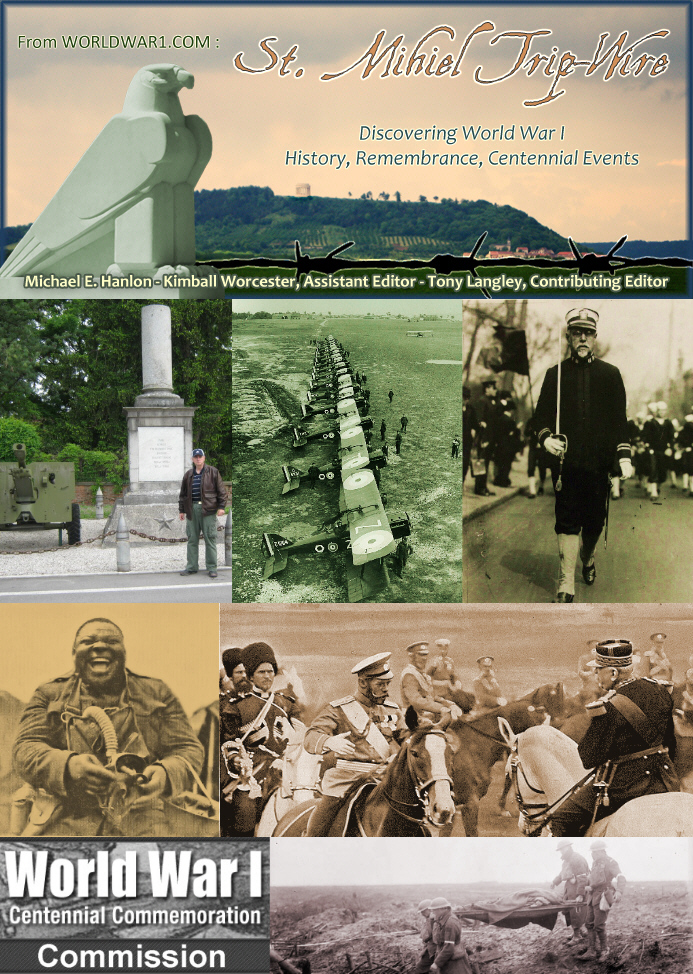
    If you haven't visited the Trip-Wire before, imagine a full-month's entries of Roads to the Great War in a single, easy-to-read issue. Pictured here are some of the sites, battles, and personalities featured in the latest issue, including: the 1918 Battle of the Piave, the S.E. 5a fighter of the RFC/RAF, John Philip Sousa at war, Big Nims of the 92nd Division, Tsar Nicholas and General Joffre, breaking news on the U.S. Centennial Commemoration Commission, and the Battle of Passchendaele.

    Click on Image to Expand

    Saturday, August 31, 2013

    The Centennial at the Grass Roots Series
    The World War I
    Memorial Inventory Project, Part II

    Introducing the World War I
    Memorial Inventory Project, Part II

    Yesterday in Roads to the Great War, we gave a photographic preview of the preliminary work done by Mark Levitch of the very promising World War I Memorial Inventory Project. Today, we would like to provide Mark a platform so he can tell you about his hopes and plans for the project. The "bottom line," of course, is that to succeed the Project needs both financial support and workers. I hope you have seen in yesterday's posting the potential of this effort, if it receives enthusiastic backing from the World War I community. If you do, now is your chance to enlist.

    Project Director's Discussion

    The World War I Memorial Inventory Project, which was recently endorsed by the National World War I Museum, is a volunteer-based effort to assemble an online inventory of all World War I memorials and monuments in the United States.  Numbering in the thousands, spread across the country, and ranging from simple honor rolls to grandiose architectural complexes, these memorials are tangible and potent reminders of the significance the nation attached to the conflict and to commemorating those who participated in it.

    Click on Image to Expand


    The first rationale for the inventory project is preservation.  Even many well-known memorials are in poor condition; others have disappeared entirely due to theft, neglect, or vandalism.  An inventory will identify, document, and preliminarily assess the condition of the memorials, providing a baseline record that is a prerequisite for any preservation effort.

    The second rationale is education.  The inventory, to be conducted by volunteers – including schoolchildren – will encourage historical research to uncover the stories of local memorials and the people they commemorate (which research will be added to the memorial's record). The project will bring attention to the memorials, singly and collectively, and to the war that occasioned them.

    The inventory aims, too, to be a significant public history resource.  Basic survey and historical information, photos, and mapping capabilities will facilitate research.  The memorial database will include the names inscribed on memorials, and these, in turn, can be linked to other resources, such as the ABMC World War I database. The website will also feature short, scholar-authored interpretive essays.

    The Memorial Inventory Project’s website and database – to which researchers will be able upload information remotely – are under construction.  In the meantime, we are looking for volunteers to help coordinate the effort and (tax-deductible) donations to help defray costs.  Contact and donations can be made at the placeholder website: http://wwi-inventory.org
    Mark Levitch